In short
- A native species, found on damp meadows and in open woodland throughout Poland.
- It tolerates shade and moisture — including heavy clay and periodic flooding.
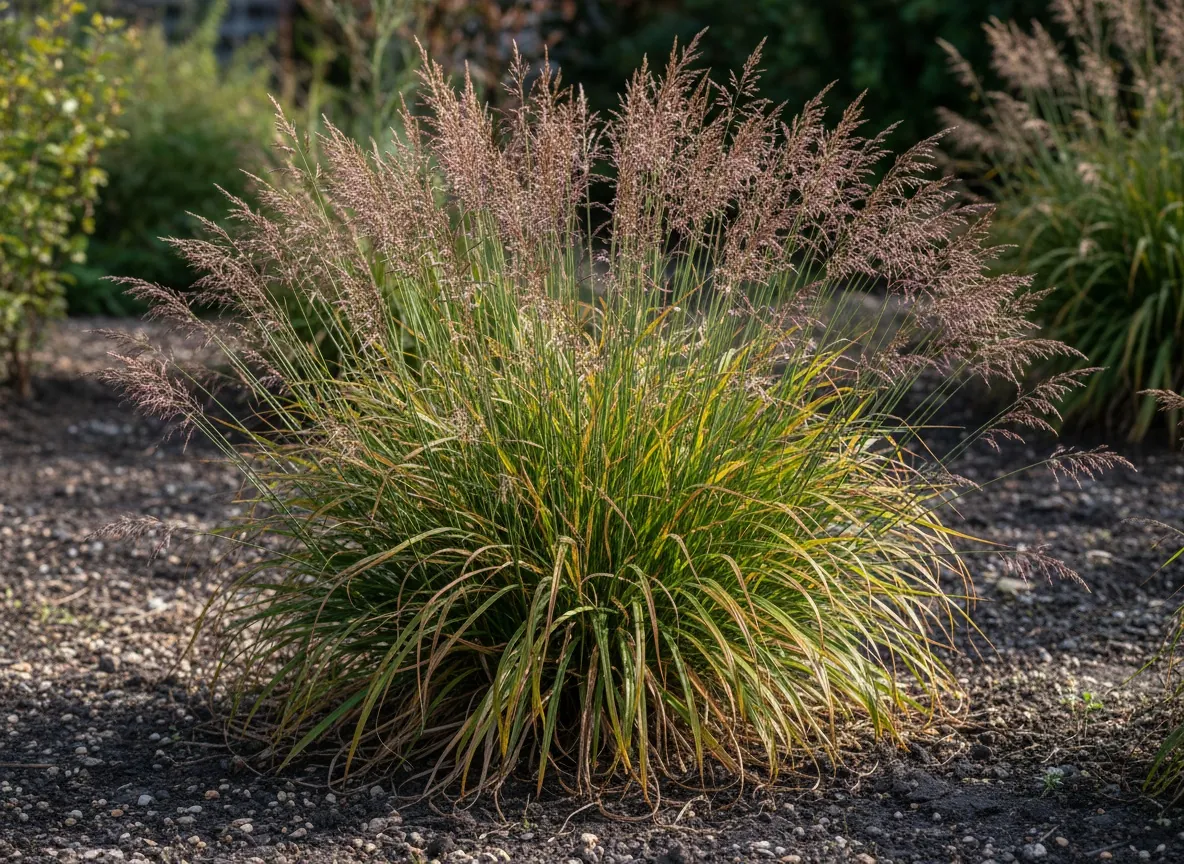
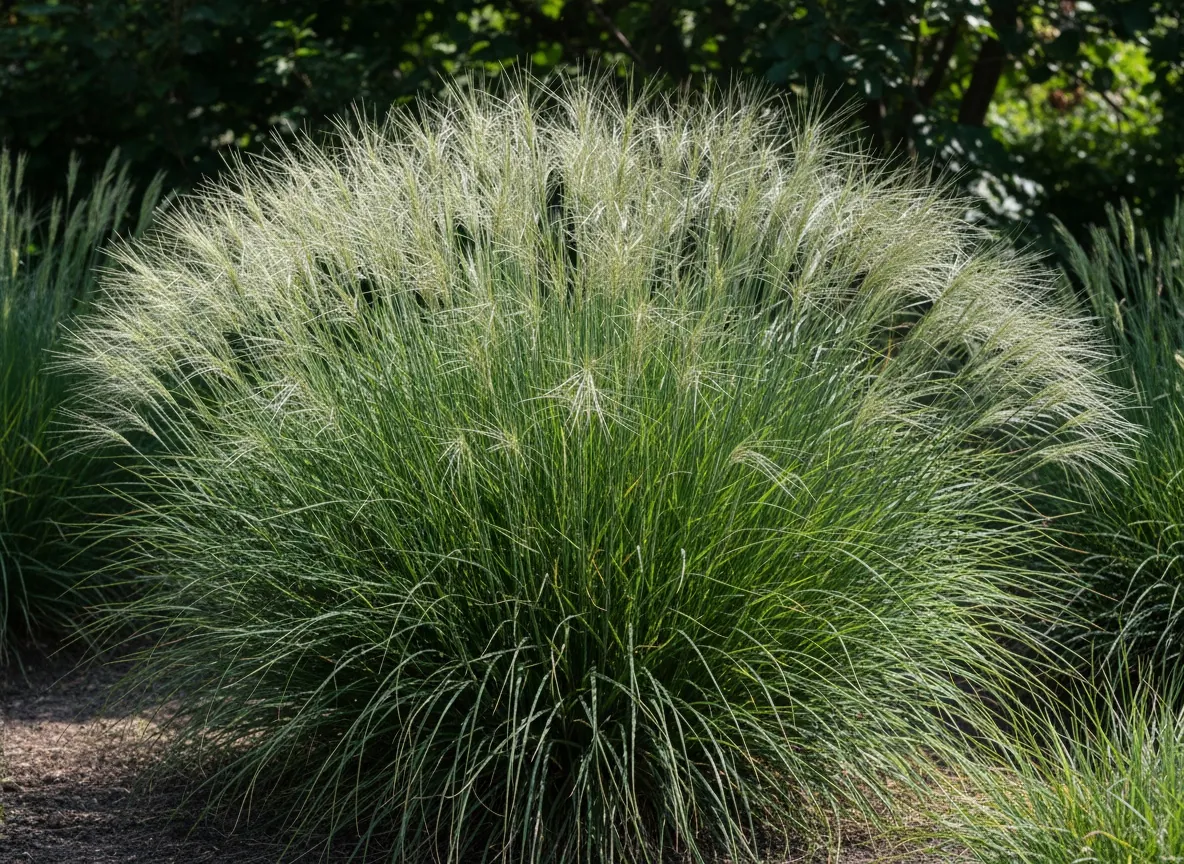
- Flowers from June to August; the enormous panicles give the effect of a golden-green haze.
- The leaves stay green almost all winter — the clump is ornamental out of season.
- It self-seeds abundantly; cutting the panicles before the seeds ripen solves the problem.
- The leaf margins are sharply rough — wear gloves when tending it.
Botanical data
- Family
- Poaceae (Poaceae)
- Height
- 0.6–1.2 m
- Width
- 0.4–0.7 m
- Habit
- Clump-forming
- Growth rate
- Moderate
- Position
- Full sun, Partial shade, Shade
- Soil
- Loamy, Humus-rich, Peaty, Clay
- pH reaction
- pH 4.5–7.5
- Moisture
- Moderate, Moist, Wet
- Bloom
- June–August
- Hardiness
- USDA 4a–9a
- Propagation
- By division, From seed
Characteristics
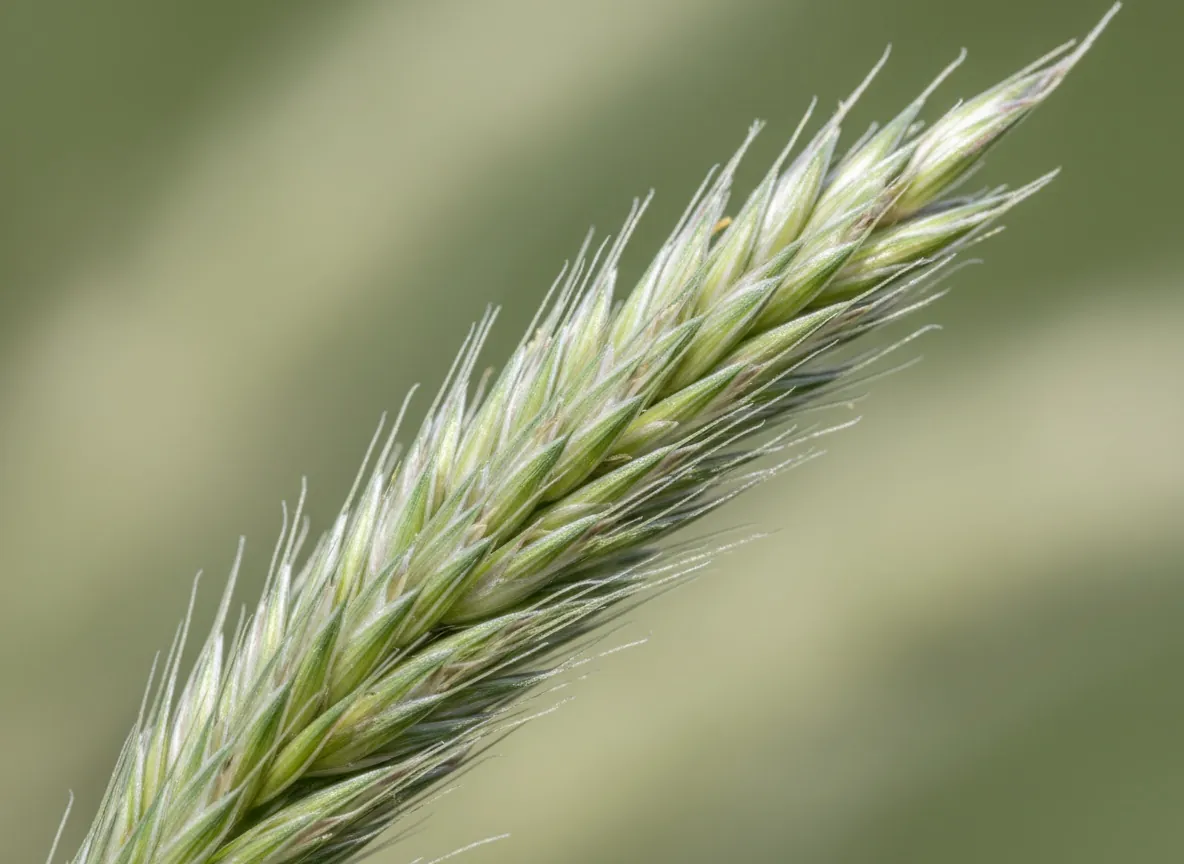
It forms a compact, dense turf 30–50 cm tall, from which slender flowering stems rise to 1.2 m from June. The flower heads are enormous in relation to the plant and very loose — composed of thousands of fine, glistening spikelets spread on hair-fine branchlets. The colour changes through the season: young panicles are greenish with a silvery or slightly purple sheen, in summer they lighten, and in autumn they pass into a warm, straw-coloured gold. As in all grasses the flowers have no coloured petals — the effect comes solely from the number of spikelets and the way they catch the light. The leaves are narrow, dark green, evergreen or semi-evergreen, and their margins are impregnated with silica and so rough that they can cut the skin.
Growing and care
Watering
A species of moist and heavy soils — it tolerates even periodic flooding and compacted clay ground, but in drought it quickly dries out and loses its ornamental quality. In a sunny position it requires decidedly more water than in shade.
Fertilizing
A very undemanding plant; excess nitrogen causes the flowering stems to flop and the clump to fall apart.
Planting
It needs no special preparation — it copes on compacted and moist soils on which most ornamental grasses fail. On light, drying ground it is worth adding compost and applying a mulch.
Pruning
Comb the dried leaves out of the clump and remove the spent flowering stems; neglected clumps can be cut back to about 10 cm. If you want to limit self-seeding, the panicles must be cut earlier — before the seeds ripen towards the end of summer.
Companion plants
Good companions
Both species like moist partial shade, and the airy haze of the hair grass panicles balances the heavy, broad leaves of the hosta perfectly.
Identical requirements — moist, humus-rich soil and partial shade; the feathery flower heads of the astilbe and the transparent panicles of the hair grass flower at a similar time.
A natural combination from the understorey of damp woodland — fern and hair grass grow side by side in nature too, so together they create a convincing woodland border.
Bad companions
It needs dry, well-drained and alkaline soil in full sun; the moisture necessary for hair grass causes root rot in lavender.
A drought-loving grass of poor positions — in conditions suitable for hair grass it falls apart and loses its blue-grey colour.
The evidence level indicates whether the relationship is backed by research, observation, or gardening tradition.
Toxicity
| For whom | Level | Notes |
|---|---|---|
| Humans | None | A non-toxic plant, but the leaves have sharply rough margins impregnated with silica, which easily cut the skin — it is worth putting on gloves to tidy up the clump. |
| Dogs | None | — |
| Cats | None | — |
| Horses | None | Not toxic, but tough and of little value as fodder — animals avoid it in pastures. |
History and origin
Tufted hair grass has long accompanied people as a common component of meadows and pastures, where it was regarded rather as a nuisance — cattle avoid its tough leaves, so the clumps grew into tussocks that took over the pasture. It owes its garden career to 20th-century German nurseries: Karl Foerster brought cultivars such as “Goldtau” and “Bronzeschleier” into cultivation, appreciating the effect of the luminous haze. Today it is one of the fundamental grasses of the naturalistic movement, valued especially because it succeeds where sun- and drought-loving grasses fail.
Uses
For naturalistic and woodland borders, damp gardens, the margins of water bodies, parks and plantings in the shade of trees, where most ornamental grasses fail. Planted in larger groups it gives the effect of a uniform, luminous haze; it also works as a plant linking the border with the wild part of the garden and supporting local insects.
Trivia
- Clumps of hair grass on grazed meadows can survive for decades and grow into distinct mounds known in English as tussocks — animals do not graze them, so they grow while the grass around them is kept constantly short.
- The panicles of hair grass are sometimes called the best grass to photograph against the light — a single spikelet is almost invisible, but thousands of them together create the effect of a glowing mist.
- The species is so adaptable that it grows from the lowlands to the alpine zone, and even on subantarctic islands — it is among the most widely distributed grasses in the world.
Frequently asked questions
Does tufted hair grass grow in shade?
Yes — it is one of the few ornamental grasses that genuinely tolerate shade and partial shade, because in nature it grows among other places in the understorey of open woodland. In shade it flowers a little more modestly than in sun, but keeps a fine, dense turf and needs markedly less watering. In full sun it looks most impressive, provided the soil stays moist.
Will hair grass seed itself around the garden?
It may — it self-seeds quite abundantly, especially on moist and open soil, and seedlings can appear throughout the border. The plant has no stolons, however, and the clump itself does not spread sideways. If the self-seeding is a nuisance, it is enough to cut the panicles towards the end of summer, before the seeds ripen; you then lose the winter ornament, though.
When should tufted hair grass be cut?
In early spring, in March, before growth starts — like all ornamental grasses. It is not cut in autumn: the frosted panicles are an ornament of the winter border, and the dry leaves protect the heart of the clump from frost. Usually it is enough to comb the clump through with a gloved hand and remove the old flowering stems; a neglected plant can be cut back to about 10 cm.
Sources
- Plants of the World Online (POWO)Database (GBIF, POWO…)
- RHS — Deschampsia cespitosaInstitution / botanical garden
My note
A private note for this plant — saved in your browser.