In short
- Grows in shade and partial shade — does not tolerate full sun.
- Requires consistently moist, fertile soil.
- The foliage is the main ornamental feature; the flowers are secondary.
- Prone to slug damage — protection is advisable.
- Toxic to dogs and cats if eaten.
Botanical data
- Family
- Asparagaceae (Asparagaceae)
- Height
- 0.4–0.7 m
- Width
- 0.6–1 m
- Habit
- Clump-forming
- Growth rate
- Slow
- Position
- Partial shade, Shade
- Soil
- Humus-rich, Loamy
- pH reaction
- pH 6–7.5
- Moisture
- Moist
- Bloom
- July–August
- Hardiness
- USDA 3a–8b
- Propagation
- By division
Characteristics
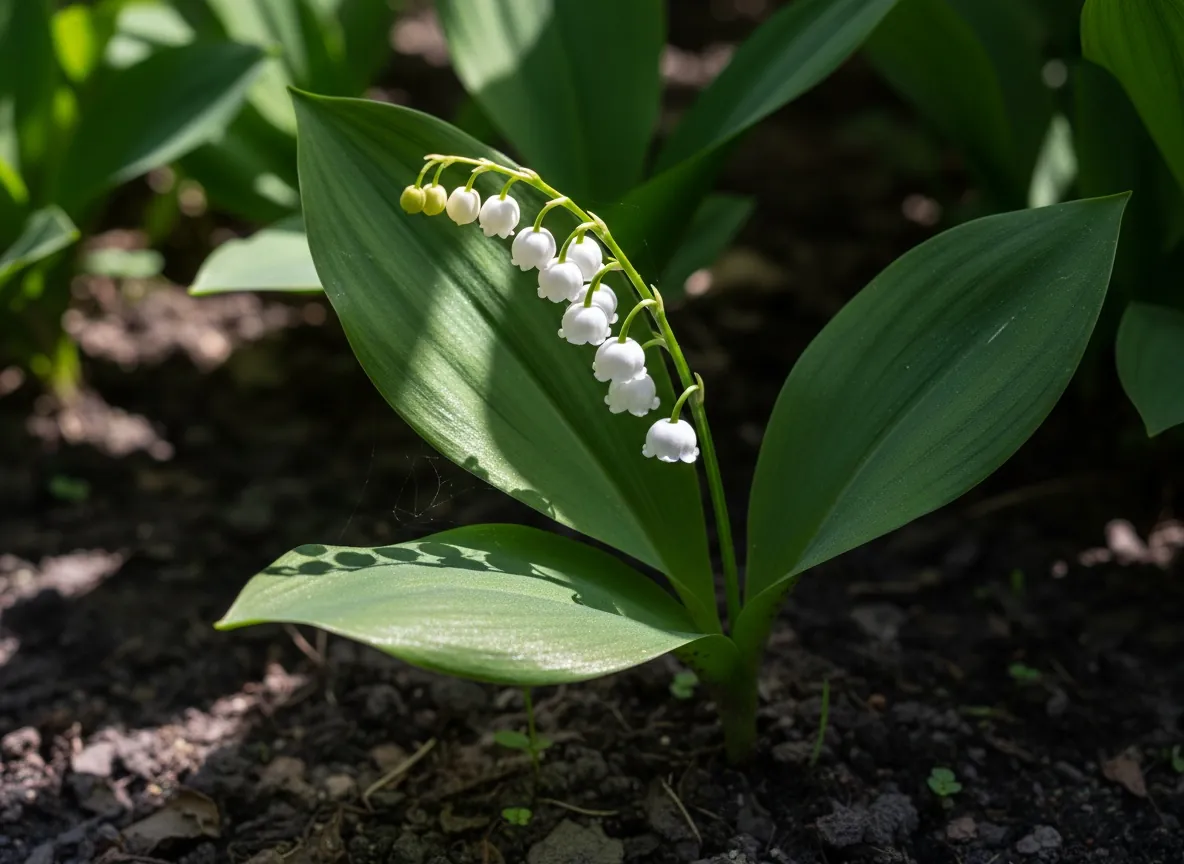
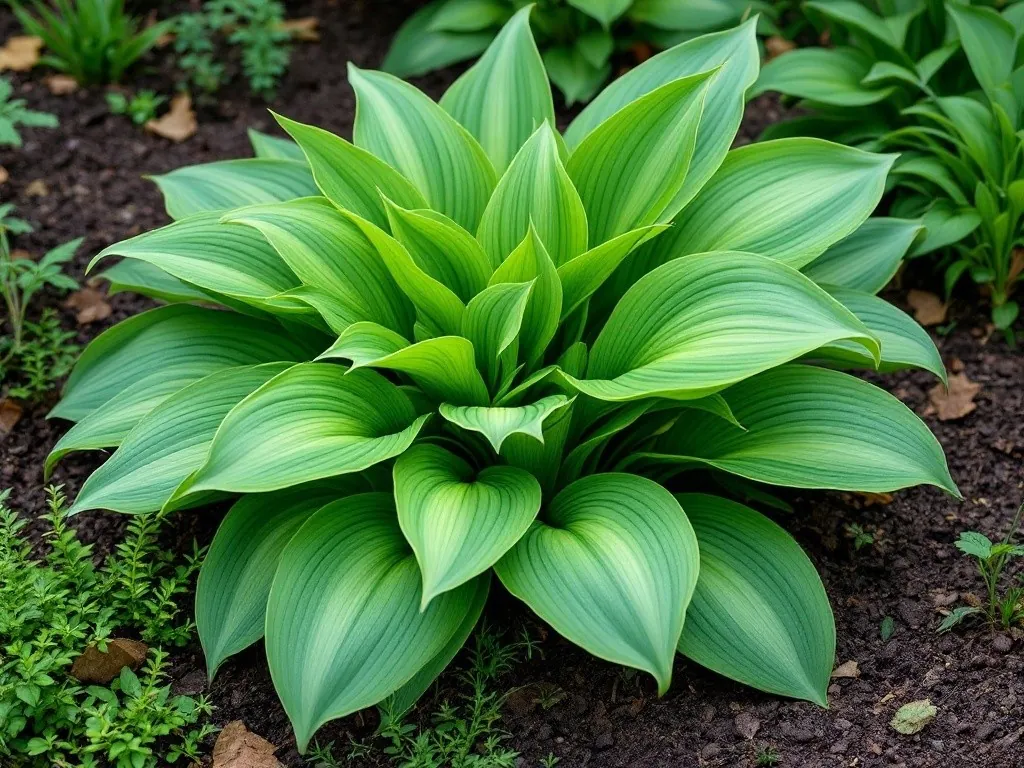
Forms dense clumps of large, heart-shaped, blue-green leaves with prominent veining. The flowers are small, bell-shaped, pale violet or white, carried on tall flower stems above the foliage.
Growing and care
Watering
The large leaves transpire a great deal of water — the plant needs consistently moist soil, especially on hot days.
Fertilizing
Moderate feeding supports large, decorative leaves.
Planting
Fertile, moist, humus-rich soil in shade or partial shade; add compost before planting.
Pruning
Remove the withered leaves and flower stalks at the base.
Companion plants
Good companions
Shares a preference for partial shade and moist, humus-rich soil — a good shade-loving combination.
Similar water and light needs; the contrasting leaf texture makes for a striking pairing.
The hosta's leaves emerge later than the tulips and hide their yellowing foliage after flowering.
Bad companions
Conflicting light and water requirements make healthy joint cultivation impossible.
The evidence level indicates whether the relationship is backed by research, observation, or gardening tradition.
Diseases and pests
Small (1–3 mm) soft-bodied insects, green, black or pink, feeding in clusters on young shoots and the underside of leaves. They excrete sticky honeydew.
Slugs and snailsSlugs and shelled snails that feed at night and after rain. Symptoms: irregular holes in the leaves and young seedlings eaten off completely, silvery slime trails on leaves and soil. The greatest damage occurs in damp, shaded spots — particularly on lettuce, strawberries and hostas.
Toxicity
| For whom | Level | Notes |
|---|---|---|
| Humans | Mild | Eating large amounts may cause stomach upset. |
| Dogs | Moderate | Contains saponins that are harmful to dogs if ingested. |
| Cats | Moderate | — |
History and origin
Hostas gained enormous popularity in ornamental gardens during the 20th century thanks to their easy cultivation and the hundreds of cultivars bred, differing in leaf colour and size.
Uses
For shady beds, edgings under trees, woodland gardens, and as a ground cover that suppresses weeds in the shade.
Trivia
- There are over 2,500 registered hosta cultivars.
- The young shoots of the hosta are edible and used in Japanese cuisine as "urui".
Frequently asked questions
Why do hosta leaves have holes?
The most common cause is slug feeding, as slugs are the main pest of hostas. Ash barriers, beer traps or slug-controlling nematodes all help.
Does the hosta grow in full sun?
It is not recommended — the leaves, especially of blue-leaved cultivars, fade and scorch in full sun. It grows best in shade or partial shade.
How long does a hosta take to reach full size?
The hosta grows slowly — a clump usually reaches its full size 4–5 years after planting.
Sources
- Plants of the World Online (POWO)Database (GBIF, POWO…)
- RHS — Hosta sieboldianaInstitution / botanical garden
My note
A private note for this plant — saved in your browser.