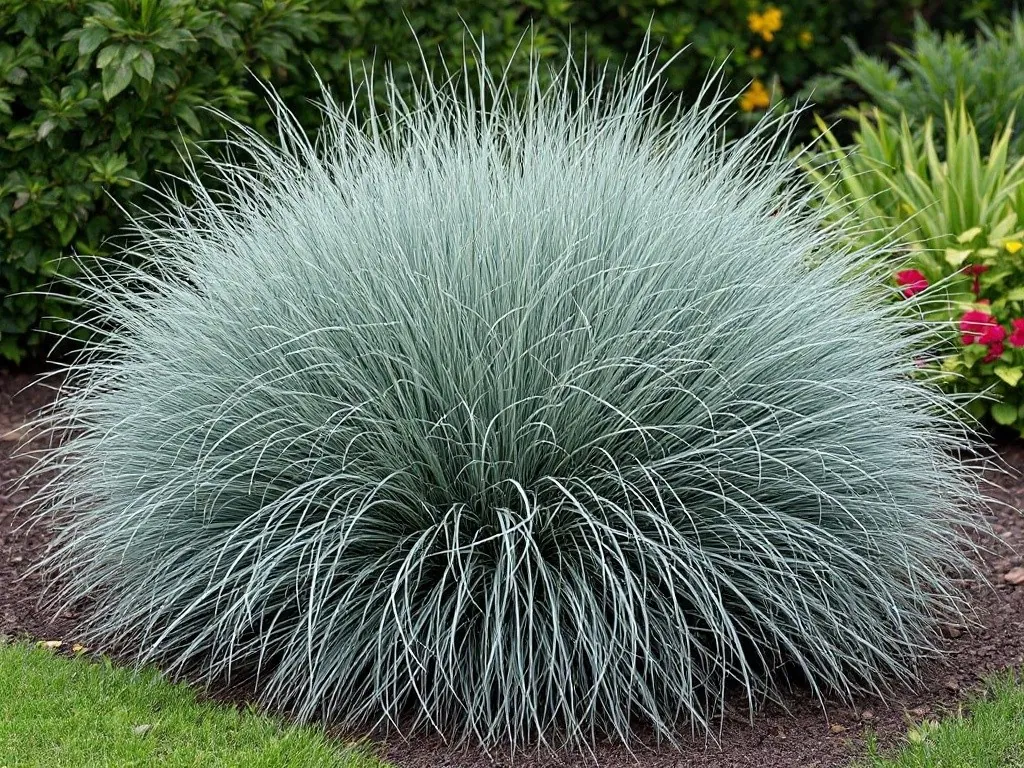
In short
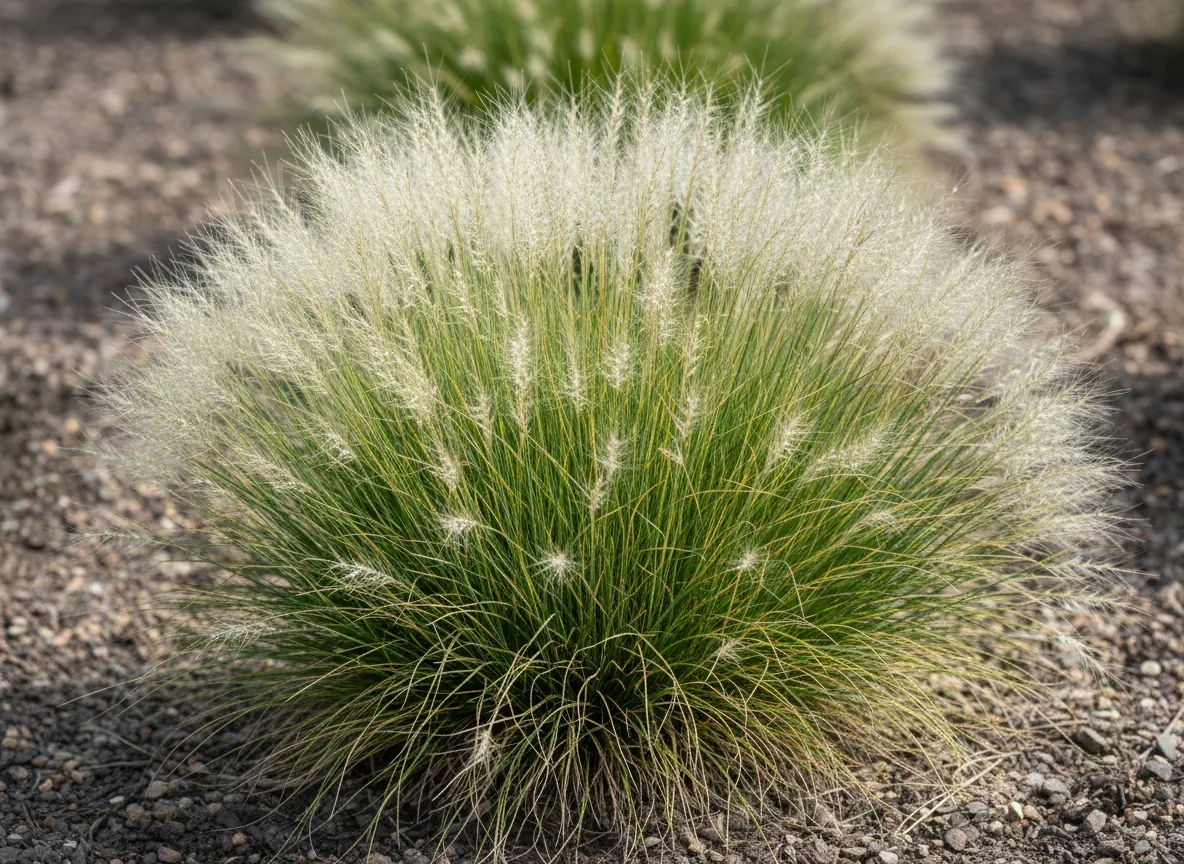
- Forms dense, rounded tufts just 20–30 cm high and wide.
- Needle-like leaves in an intense blue-grey or silvery colour.
- Requires full sun — in shade it fades and loses its compactness.
- Very drought-resistant, but tolerates waterlogging poorly.
- The tuft thins out from the centre over time — worth dividing and rejuvenating every 2–3 years.
- Ideal for edgings, gravel beds and rock gardens.
Botanical data
- Family
- Poaceae (Poaceae)
- Height
- 0.2–0.3 m
- Width
- 0.2–0.3 m
- Habit
- Rounded
- Growth rate
- Slow
- Position
- Full sun
- Soil
- Sandy, Chalky
- pH reaction
- pH 6–8
- Moisture
- Dry, Moderate
- Bloom
- June–July
- Hardiness
- USDA 4a–8b
- Propagation
- By division, From seed
Characteristics
A fine, densely rooted turf grass producing compact, rounded tufts of narrow, stiff, needle-like leaves. The leaf colour ranges from steel-blue to distinctly silvery, with the fescue taking on its most intense colour in full sun and on dry, poor soil — in shade and on fertile, moist soil it turns green and loses its compactness. In summer it sends up low, unremarkable flower panicles in yellowish-brown shades, which some gardeners remove, considering them less decorative than the leaves themselves.
Growing and care
Watering
Very drought-resistant once established; excess water, especially in winter on poorly drained soil, is a greater threat to it than a shortage.
Fertilizing
Practically undemanding — an excess of fertiliser weakens the intensity of the blue leaf colour and encourages lush, less compact growth.
Planting
Requires a light, well-drained soil; on heavy, clay sites it is worth mixing the substrate with sand or fine gravel to avoid standing water.
Pruning
Comb through the tuft by hand or with a rake, removing dried and browned leaves; every 2–3 years, when the centre of the tuft begins to die back and thin out, dig up the whole plant, divide it and replant it from the rejuvenated pieces.
Companion plants
Good companions
Identical requirements — full sun, well-drained, dry soil; together they create the classic picture of a gravel garden.
Similar site requirements and season of interest; the blue-silver leaves of the fescue emphasise the purple flowers of the lavender.
Bad companions
Different water and soil requirements — watering suited to moisture-loving plants leads to root rot in the fescue.
The evidence level indicates whether the relationship is backed by research, observation, or gardening tradition.
Toxicity
| For whom | Level | Notes |
|---|---|---|
| Humans | None | — |
| Dogs | None | — |
| Cats | None | — |
History and origin
Festuca glauca has been grown in European gardens since the mid-20th century as a ground-cover and edging plant; its popularity grew along with the fashion for gravel and xerothermic gardens, where its drought resistance and minimal maintenance requirements are appreciated.
Uses
Excellent for bed edgings, rock and gravel gardens, group plantings as ground cover, and for containers and window boxes on sunny terraces. Planted in larger groups it forms a striking, colour-uniform carpet contrasting with the greenery of other plants.
Trivia
- The species epithet 'glauca' refers precisely to the blue-grey bloom on the leaves, characteristic of many plants of dry, sunny habitats.
- Blue fescue is sometimes crossed with and confused in the trade with the closely related species Festuca cinerea — both are offered under the common trade name 'blue fescue'.
- Despite its small size, when well composed in a larger group it creates a 'blue river' effect — a popular motif in gravel-bed design.
Frequently asked questions
Why is my blue fescue losing its blue colour and turning green?
The most common cause is lack of light — the fescue takes on its most intense colour only in full sun. Too fertile or too moist soil and an excess of nitrogen also weaken the intensity of the colour and the compactness of the tuft.
Does blue fescue need dividing, and how often?
Yes — after 2–3 years the centre of the tuft usually begins to die back and go bald, which is a natural feature of this grass. In early spring it is worth digging up the whole tuft, dividing it into smaller, living pieces and replanting them, discarding the woody and dry parts.
Is blue fescue evergreen?
Yes, it keeps its leaves all year round, although in harsh winters they may partly turn brown. In spring it is worth combing through the tuft and removing damaged leaves to encourage fresh growth.
Sources
- Plants of the World Online (POWO)Database (GBIF, POWO…)
- RHS — Festuca glaucaInstitution / botanical garden
My note
A private note for this plant — saved in your browser.