In short
- A native species — excellent for naturalistic borders and wildlife-friendly gardens.
- Requires moist, rather acidic soil; it does not tolerate drought, but waterlogging it does.
- Flowers from July to September with fine spikelets of a violet-brown sheen.
- In autumn the whole clump turns an intense gold — this is its finest moment.
- It starts into growth late in spring; the clump is well-behaved and does not sprawl across the border.
- It dies down of its own accord after frosts — raking is enough, no autumn cutting needed.
Botanical data
- Family
- Poaceae (Poaceae)
- Height
- 0.6–1.2 m
- Width
- 0.4–0.7 m
- Habit
- Clump-forming
- Growth rate
- Moderate
- Position
- Full sun, Partial shade
- Soil
- Peaty, Humus-rich, Loamy, Sandy
- pH reaction
- pH 4.5–7
- Moisture
- Moderate, Moist, Wet
- Bloom
- July–September
- Hardiness
- USDA 4a–9a
- Propagation
- By division, From seed
Characteristics
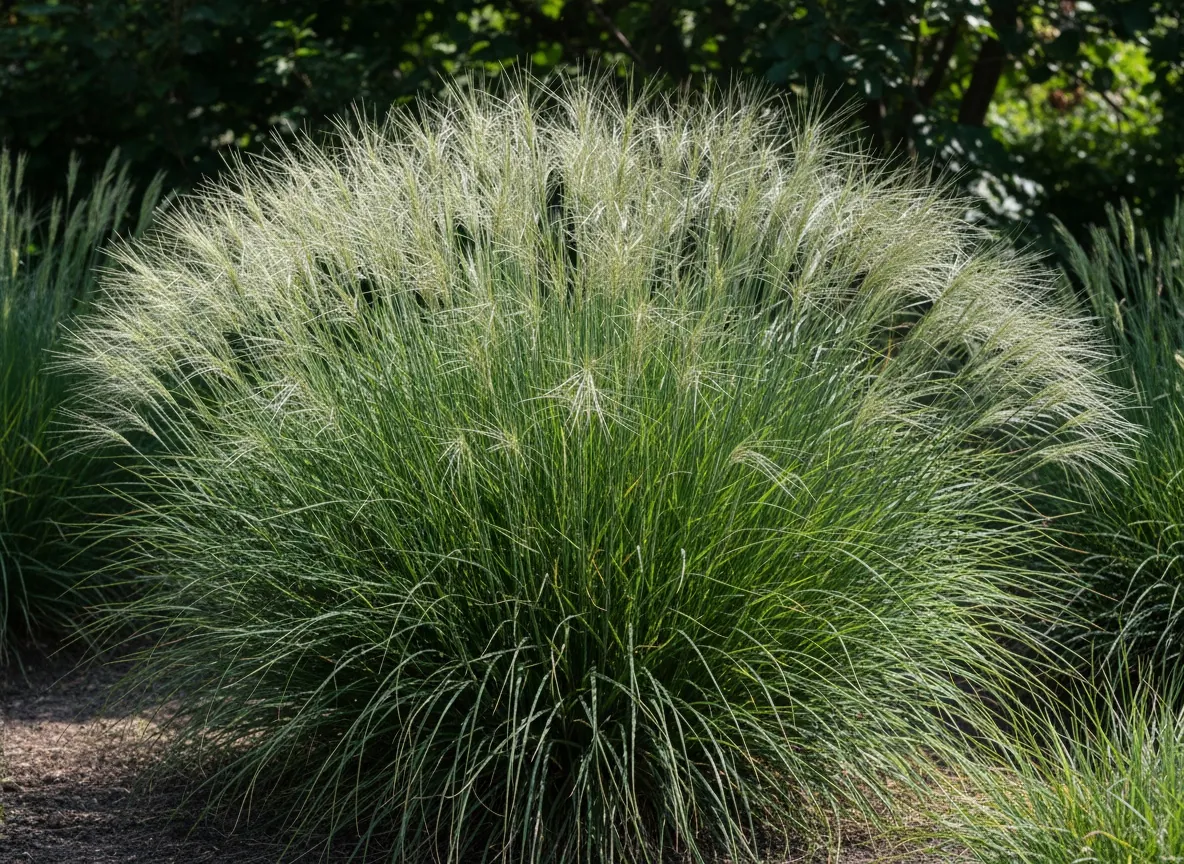
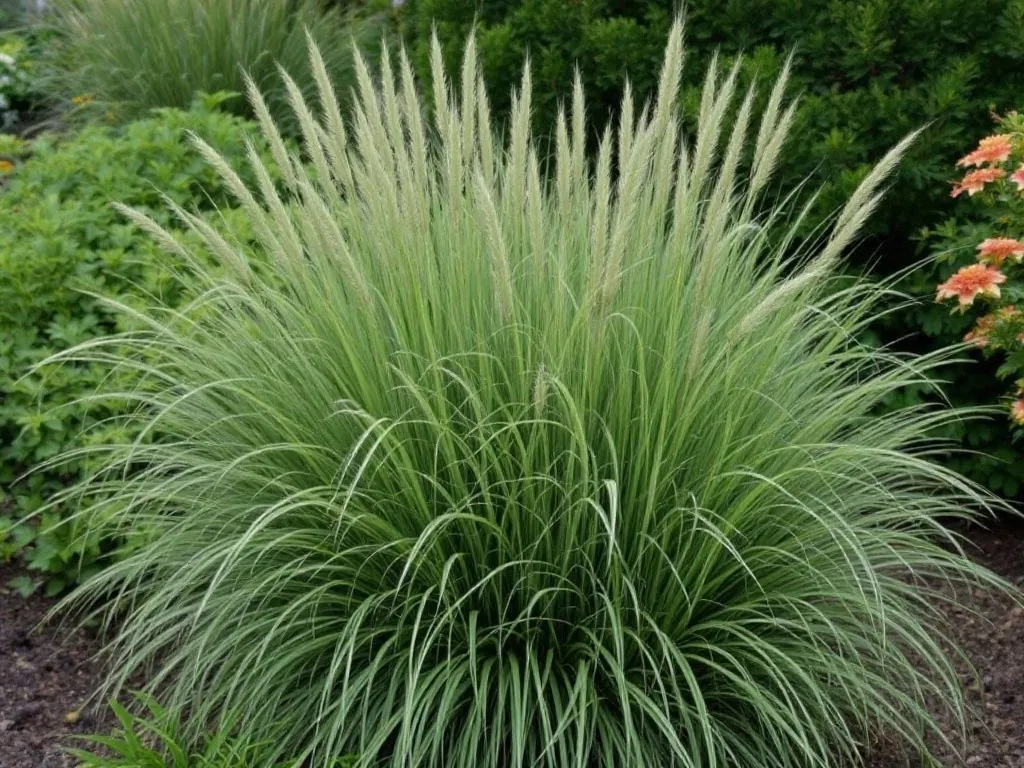
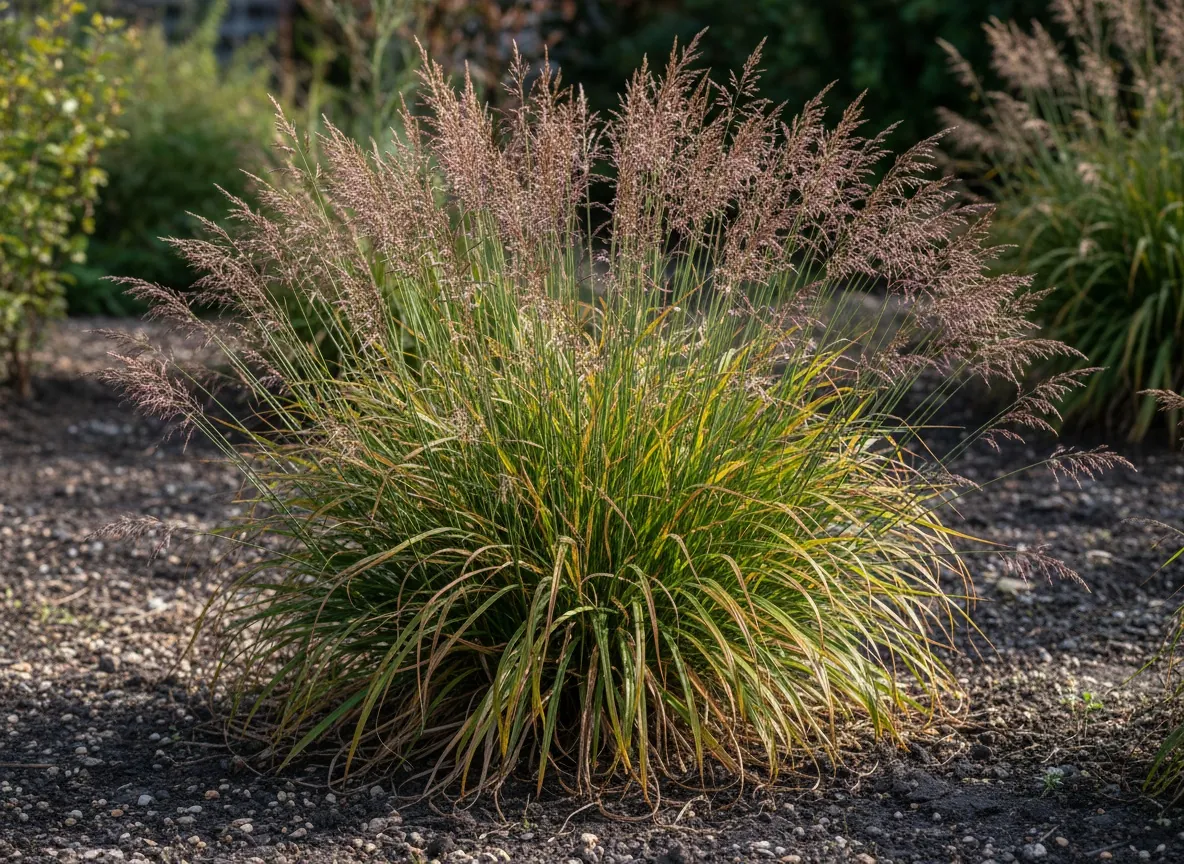
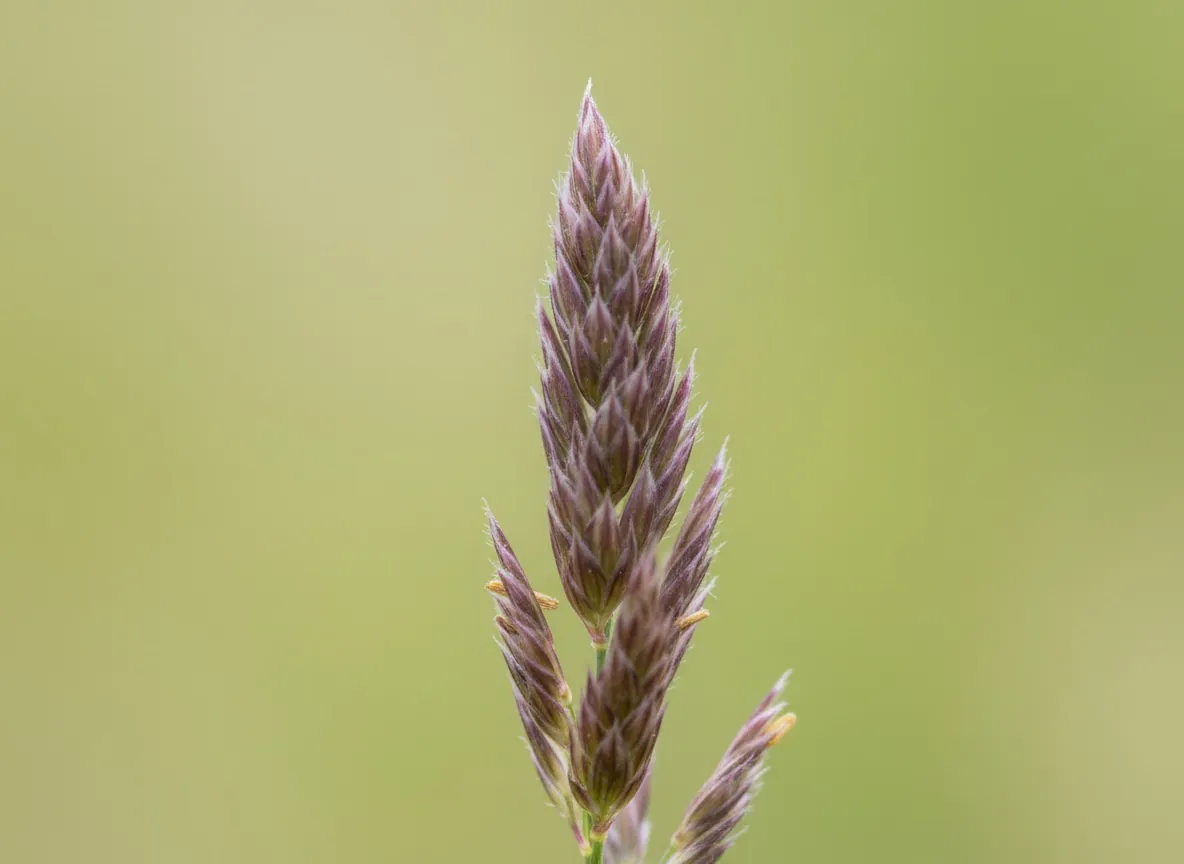
It forms compact, dense clumps 40–60 cm tall, from which stiff, entirely leafless flowering stems rise to 1.2 m, and in the tall cultivars of subspecies arundinacea even to 2 m. Flowering in grasses is by definition inconspicuous, but in purple moor grass it is exceptionally effective: the fine spikelets, gathered into narrow, loose panicles, have a dark, violet-brown sheen, and it is from them that the specific name caerulea, meaning blue, derives. The panicles are so transparent that plants growing behind the clump remain visible — designers therefore also place it at the front of the border. In autumn the leaves and stems colour to a uniform, warm gold, after which the plant sheds its entire above-ground part thanks to a natural abscission layer at the base of the stems.
Growing and care
Watering
A plant of damp habitats — it grows best where other ornamental grasses suffer from excess water. Prolonged drought causes premature drying and checks flowering.
Fertilizing
A species of nutrient-poor habitats; fed too generously it flops and loses the stiff, upright habit that is its main asset.
Planting
Enrich the soil with compost or acidic peat; on light, drying soils a mulch that retains moisture is essential. It tolerates periodically waterlogged positions, including the margins of garden ponds.
Pruning
Cut the whole clump back to about 10 cm. In practice purple moor grass often sheds its leaves and flowering stems on its own natural schedule — they have an abscission layer at the base, so after the first frosts the whole above-ground part breaks off and can simply be raked up.
Companion plants
Good companions
The basic combination of the naturalistic border — the stiff, transparent panicles of the moor grass weave around the coneflower's blooms, and both plants keep decorative stems through winter.
Both species are native to damp habitats — they grow well side by side at the margin of a garden pond or in a border with constantly moist soil.
The aster's autumn flowering coincides with the golden colouring of the moor grass; similar water and light requirements.
Bad companions
It requires dry, alkaline and well-drained soil, whereas purple moor grass needs moist and rather acidic ground — the requirements of the two plants are mutually exclusive.
A drought-loving grass of poor, calcareous positions; the moisture that purple moor grass needs causes its clump to rot.
The evidence level indicates whether the relationship is backed by research, observation, or gardening tradition.
Toxicity
| For whom | Level | Notes |
|---|---|---|
| Humans | None | — |
| Dogs | None | — |
| Cats | None | — |
| Horses | None | Not toxic; as fodder, however, it is regarded as tough and of little value, which is why animals avoid it in meadows. |
History and origin
Purple moor grass grew for centuries on the mown, damp meadows of Europe, where its tough stems were gathered for bedding rather than fodder — cattle avoided it. It reached gardens late, only in the 20th century, and its real career began with the German and Dutch perennial nurseries and the New Perennial movement, in which native grasses came to be treated as fully fledged design material. Today cultivars such as “Transparent”, “Moorhexe” and “Karl Foerster” belong to the canon of the naturalistic border.
Uses
For naturalistic and prairie borders, damp gardens, the margins of garden ponds, flower meadows and parks. Thanks to its transparent panicles it works both in the background and singly at the front of a border, where it forms an airy curtain through which the rest of the composition is visible. A very good species for wildlife gardens and plantings that support local insects.
Trivia
- The German name Pfeifengras, meaning “pipe grass”, comes from the old custom of running the stiff, smooth stems of the grass through the stems of clay pipes — the stems have no nodes along their whole length and were therefore perfectly suited to this.
- Purple moor grass is a food plant for the caterpillars of several butterflies, including rare and protected species tied to the vanishing purple moor grass meadows — its presence in a garden is a real conservation value, not merely an ornamental one.
- It is one of the few grasses that “tidies up” after itself at the end of the season: the stems have an abscission layer at the base and break off from the clump after frosts, gathering at its foot like leaves under a tree.
Frequently asked questions
When should purple moor grass be cut back?
In principle in early spring, in March, like all ornamental grasses — the clump and the spent panicles are an ornament of the winter border and protect the plant. In practice purple moor grass very often does the gardener's work: after the first frosts the stems break off at the base thanks to a natural abscission layer, and it is enough to rake them up from under the clump.
Is purple moor grass suitable for a pond margin?
Yes, and this is one of its best uses. It is a species of damp meadows and bogs, so it tolerates constantly moist and even periodically waterlogged soil — that is, conditions in which most ornamental grasses rot. It is planted in the marginal zone, outside the water itself, on rather acidic ground.
Is purple moor grass native and will it seed itself around the garden?
It is a species native to Poland, common on damp meadows — an advantage in a naturalistic garden. It grows in clumps, without stolons, so it does not sprawl across the border. It self-seeds moderately and mainly where the soil is moist and open; individual seedlings are easy to remove, and cutting the panicles before the seeds ripen eliminates the problem entirely.
Sources
- Plants of the World Online (POWO)Database (GBIF, POWO…)
- RHS — Molinia caeruleaInstitution / botanical garden
My note
A private note for this plant — saved in your browser.