In short
- The best tree for a formal hedge — it tolerates clipping and thickens up after every cut.
- Marcescence: the brown, dry leaves stay on the branches until spring, giving cover in winter.
- Very shade-tolerant — it works where other species will not regenerate.
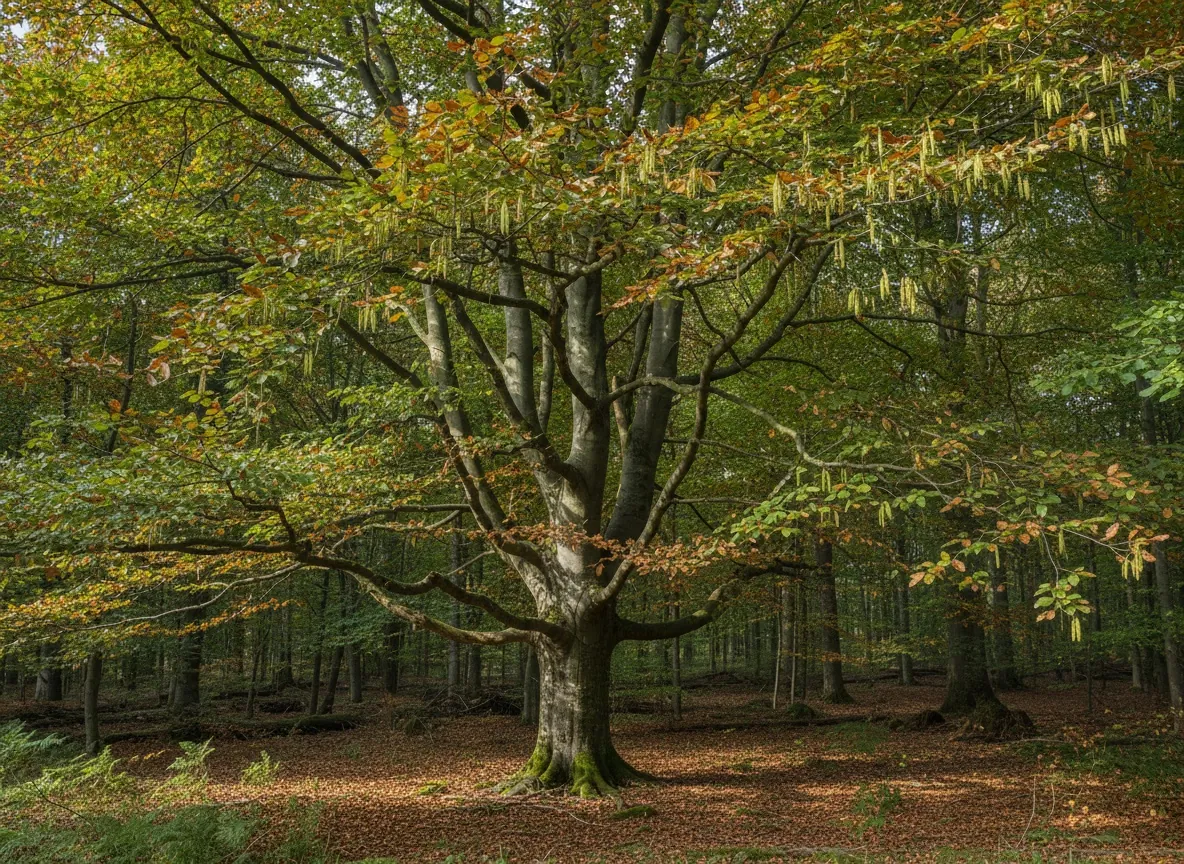
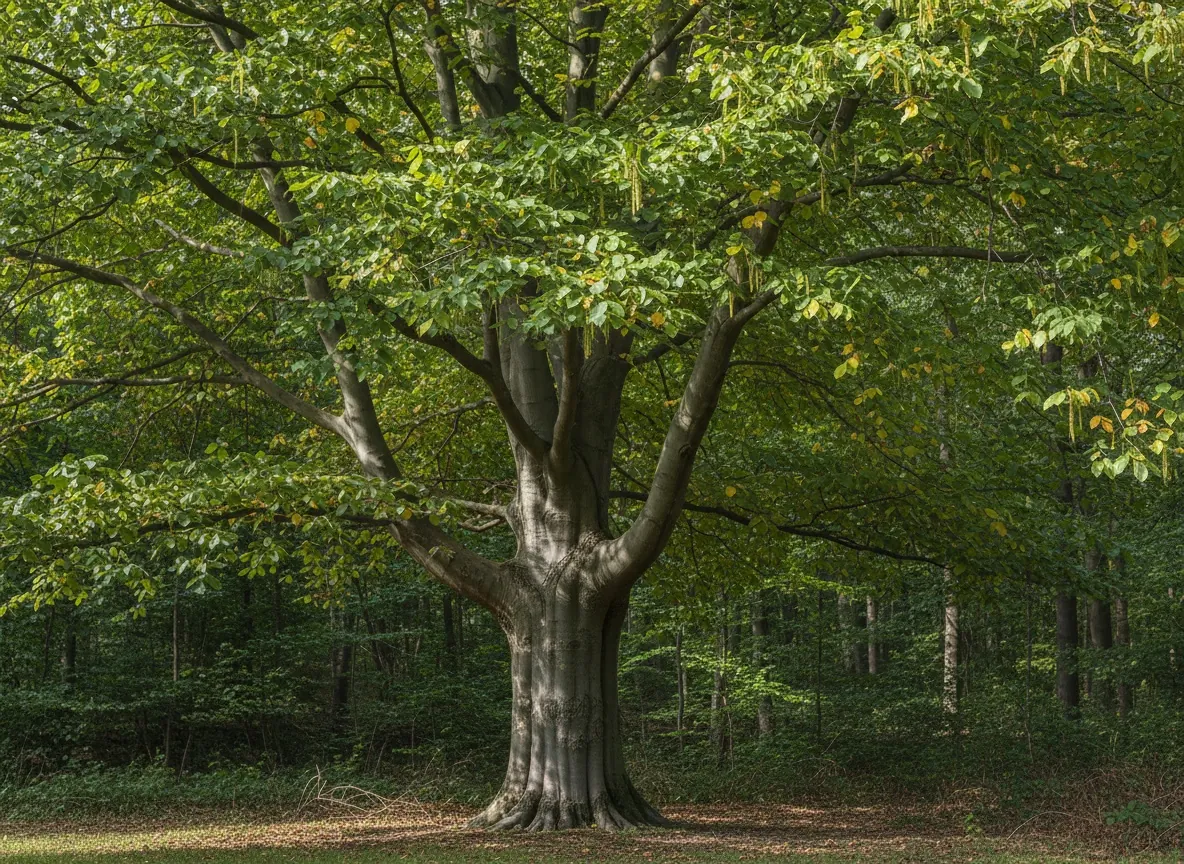
- Bark smooth and grey, with characteristic longitudinal fluting resembling muscles.
- Non-toxic and of high ecological value; clip twice a year, outside the bird nesting season.
Botanical data
- Family
- Betulaceae (Betulaceae)
- Height
- 12–25 m
- Width
- 8–15 m
- Habit
- Spreading
- Growth rate
- Moderate
- Position
- Full sun, Partial shade, Shade
- Soil
- Loamy, Humus-rich, Clay, Chalky
- pH reaction
- pH 5.5–8
- Moisture
- Moderate, Moist
- Bloom
- April–May
- Hardiness
- USDA 4a–8b
- Propagation
- From seed, By layering
Characteristics
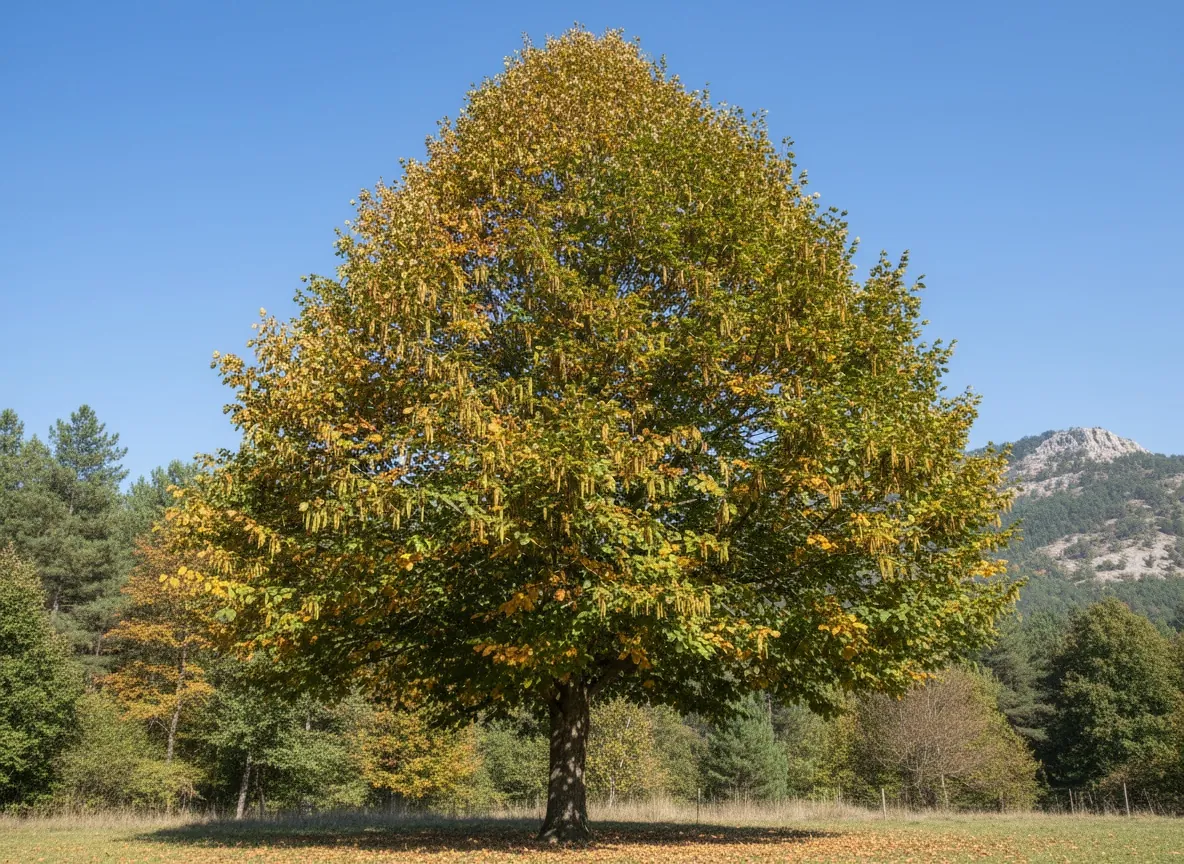
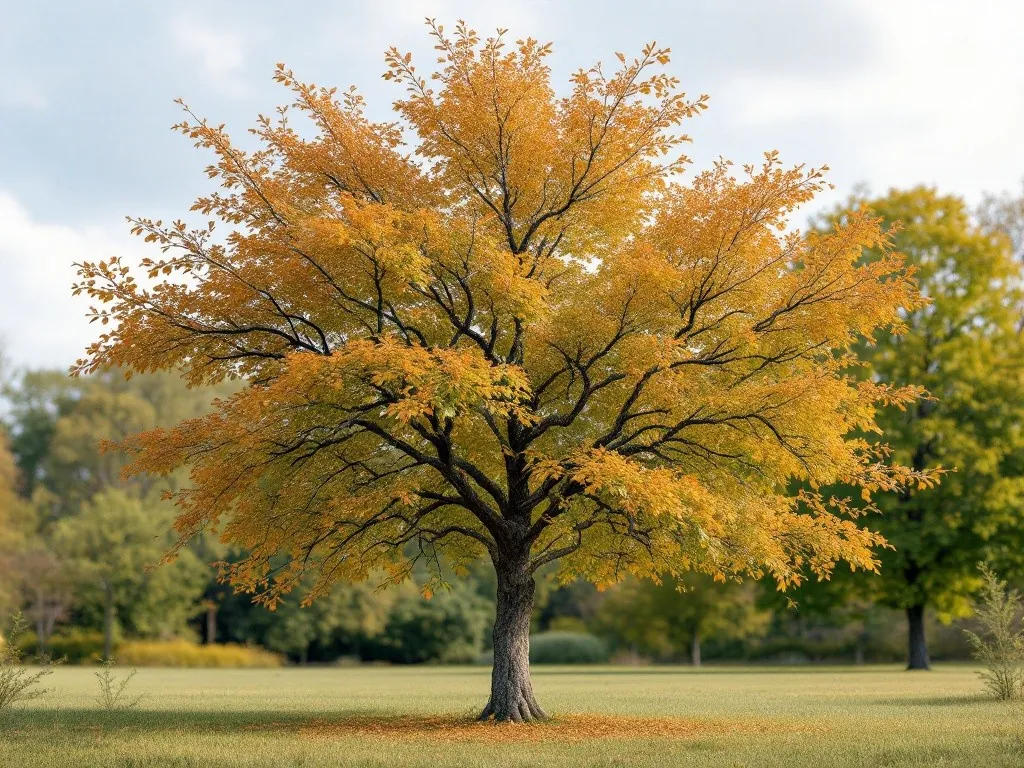
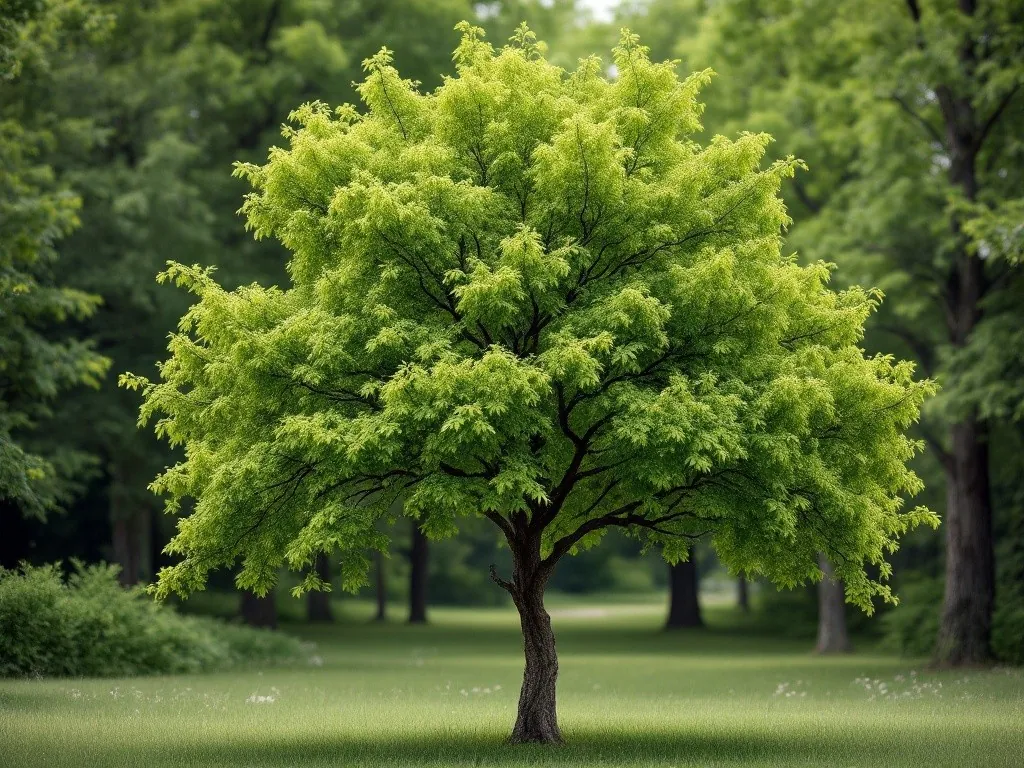
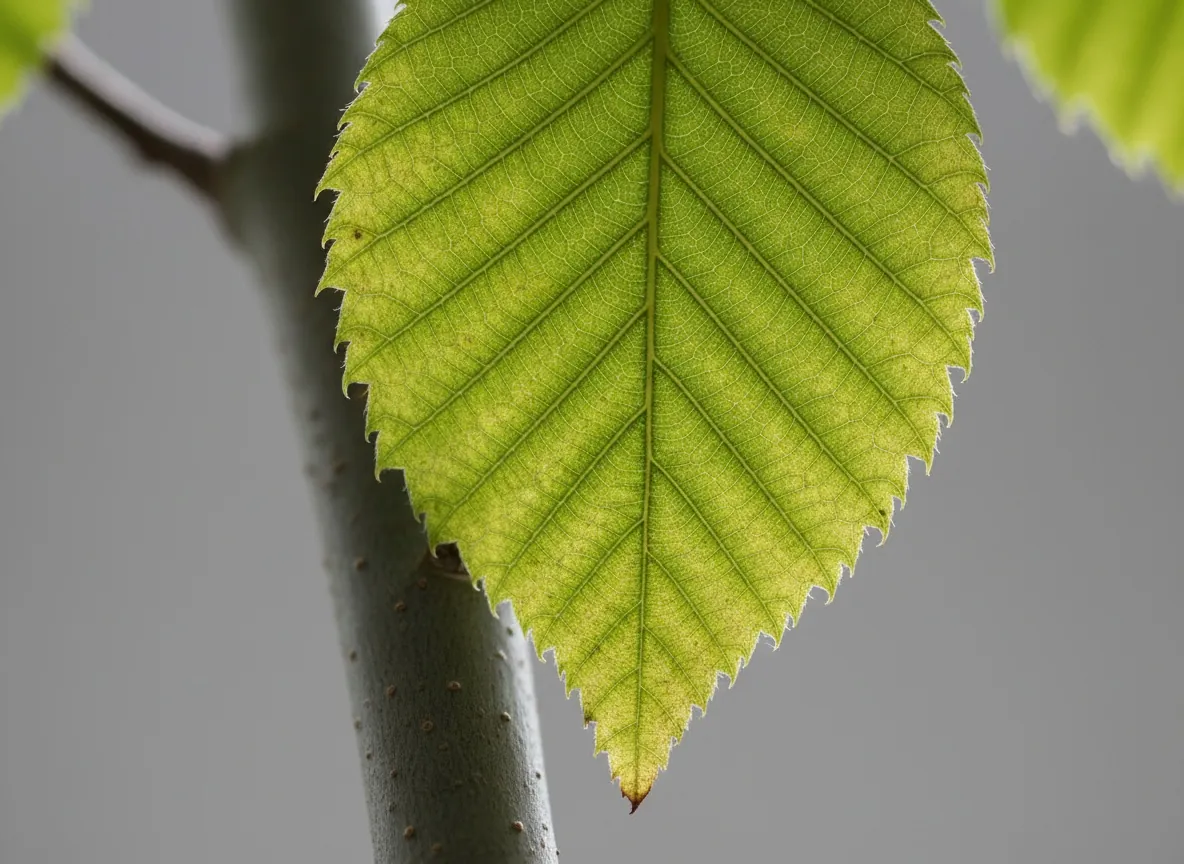
A tree with a dense, ovate crown and a trunk that is rarely perfectly round — it is fluted lengthwise, which makes it look like taut muscles. The leaves are ovate, doubly serrate, with distinctly impressed veins. The unisexual flowers are gathered into catkins, and the fruits are nutlets set at the base of a three-lobed, leafy bract that acts like a propeller.
Growing and care
Watering
Hornbeam hedges need regular watering in their first two seasons and during longer droughts — otherwise they turn brown from the bottom up.
Fertilizing
For a clipped hedge, 50–70 g of fertiliser per running metre in spring — frequent cutting increases the requirement.
Planting
For a hedge, plant 3–4 per running metre in a prepared trench, not in individual holes. Specimens need 6–8 m of spacing.
Pruning
Cut with shears into a shape tapering slightly towards the top (a trapezoid), so that the lower parts get light and do not go bare.
Companion plants
Good companions
A natural combination from the oak-hornbeam forest — the hornbeam tolerates the oak's shade and forms a lower layer of the stand beneath it.
The second of the classic components of the oak-hornbeam forest; both plants have similar soil requirements and coexist well.
This shade-tolerant ground cover grows well on the dark ground beneath the hornbeam, where grass does not persist.
Bad companions
A dense hornbeam hedge heavily shades and dries out the strip of soil for 1–1.5 m around it, competing for water.
The evidence level indicates whether the relationship is backed by research, observation, or gardening tradition.
Toxicity
| For whom | Level | Notes |
|---|---|---|
| Humans | None | Hornbeam is not a toxic plant — this is one of the reasons it is recommended for gardens with children. |
| Dogs | None | — |
| Cats | None | — |
History and origin
Planted in Europe since the Middle Ages as material for hedges, screens and clipped bosquets in Baroque gardens. Hornbeam wood is the hardest native timber — it was used for the teeth of mill wheels, wheelwrights' hubs and tools that had to resist abrasion.
Uses
Above all for clipped formal hedges, screens and green walls — including in cities, since it tolerates pollution and dense development. As a specimen it is planted in parks; the cultivar Fastigiata, of columnar habit, is popular in avenues and along narrow streets.
Trivia
- Despite the folk name biała buczyna, meaning white beech, the hornbeam is not related to the beech — it belongs to the birch family.
- Hornbeam wood is so hard and heavy that freshly cut it sinks in water.
Frequently asked questions
Hornbeam or beech for a hedge?
Hornbeam is the safer choice. Both species hold their dry leaves through the winter, but hornbeam tolerates heavier, wetter and more compacted soils, grows better in shade and reacts more forgivingly to pruning mistakes. Beech requires well-drained soil and does not forgive waterlogging.
Why does my hornbeam not drop its brown leaves for the winter?
This is not a fault but marcescence — a natural feature of the species. In autumn the hornbeam does not form a complete abscission layer at the base of the leaf stalk, so the withered leaves remain on the branches until spring, when new buds push them off. Thanks to this a hornbeam hedge gives cover in winter too, even though it is a deciduous tree.
When and how often should a hornbeam hedge be clipped?
Twice a year: at the end of June, after the first flush of growth, and again in August or September. It should not be cut from April to the end of June because of the birds nesting in hedges. It is worth shaping the hedge into a trapezoid tapering towards the top, so the lower parts do not go bare for lack of light.
Sources
- Plants of the World Online (POWO)Database (GBIF, POWO…)
- RHS — Carpinus betulusInstitution / botanical garden
My note
A private note for this plant — saved in your browser.