In short
- Position: partial shade or shade, fertile, humus-rich and constantly moist soil.
- Blooms from June to August with fluffy plumes of flowers.
- Does not tolerate drying out — in drought the leaf margins turn brown.
- Frost-hardy to USDA zone 4; ideal under trees and beside garden ponds.
- Propagated by division of the clump, best every 3–4 years.
Botanical data
- Family
- Saxifragaceae (Saxifragaceae)
- Height
- 0.5–1 m
- Width
- 0.4–0.6 m
- Habit
- Clump-forming
- Growth rate
- Moderate
- Position
- Partial shade, Shade
- Soil
- Humus-rich, Loamy
- pH reaction
- pH 5.5–6.5
- Moisture
- Moist, Wet
- Bloom
- June–August
- Hardiness
- USDA 4a–8b
- Propagation
- By division
Characteristics
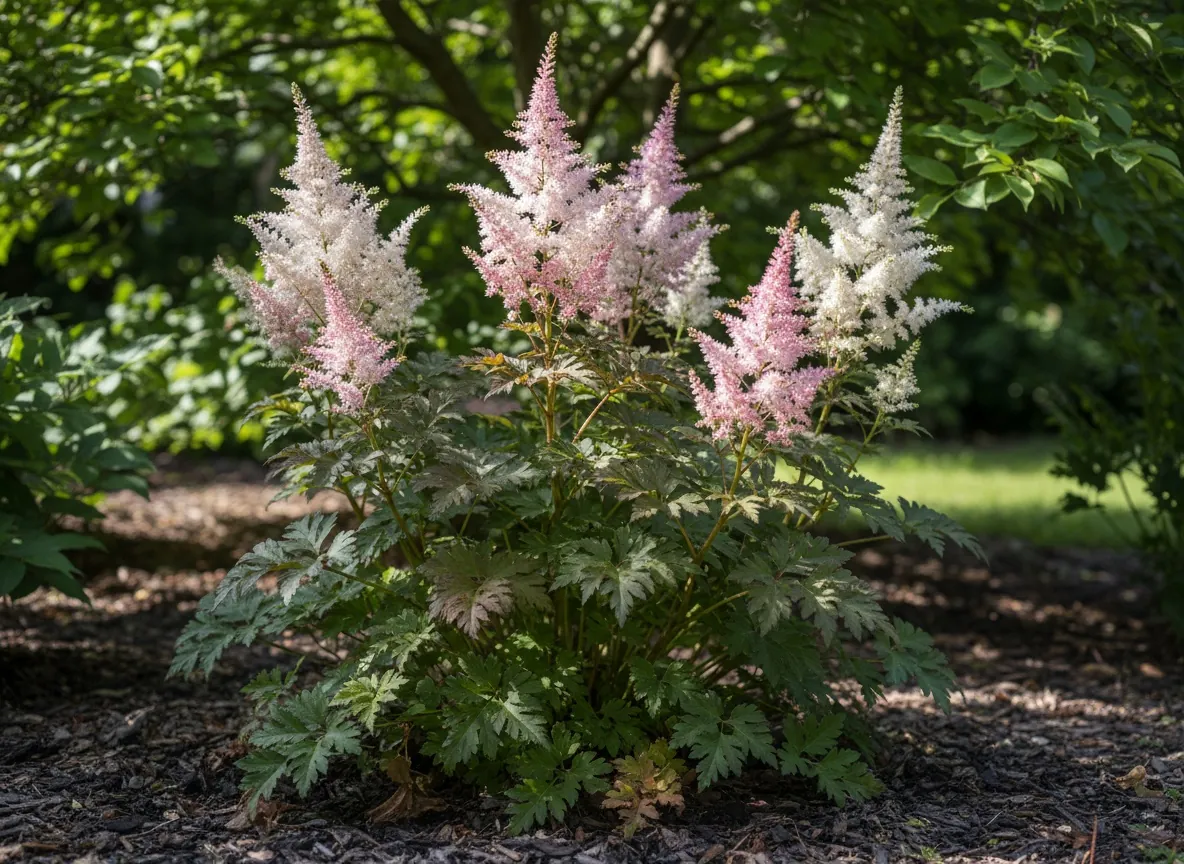
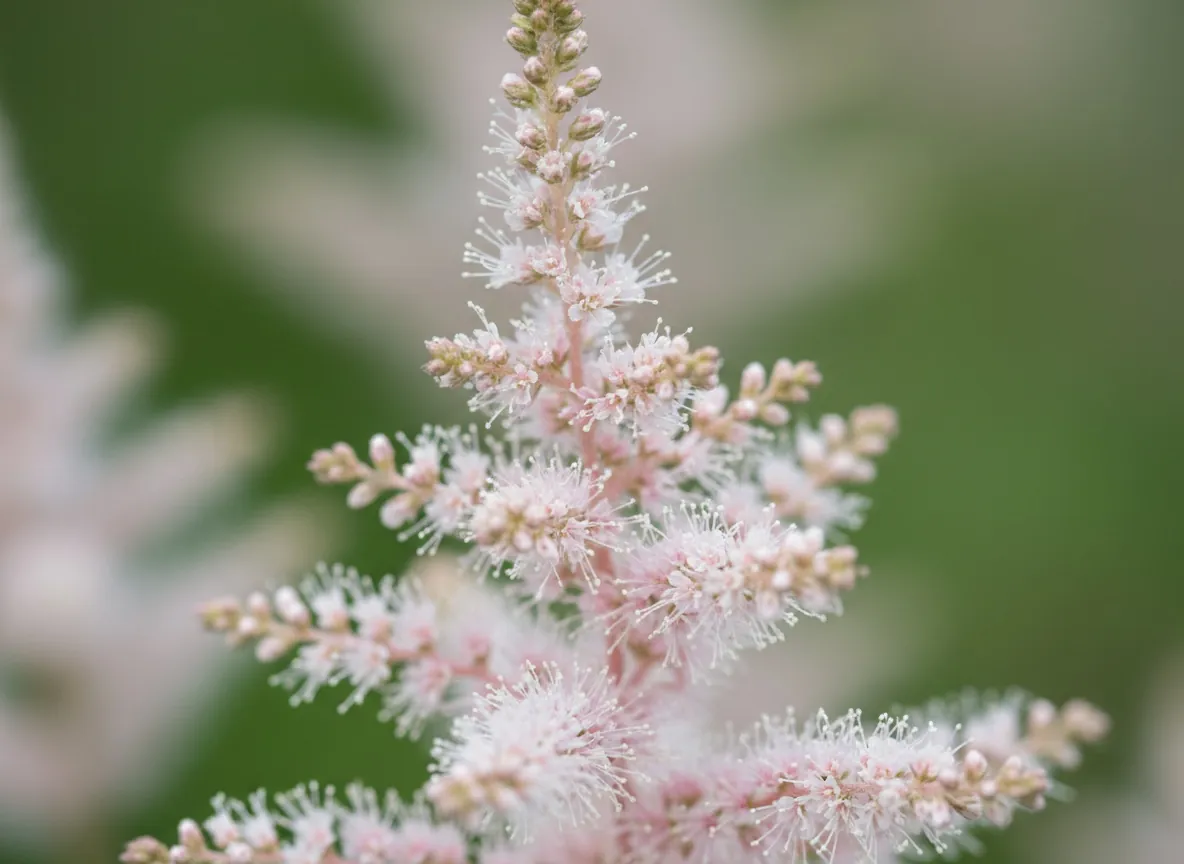
It forms dense clumps 50–100 cm tall of dark green leaves with serrated margins, often flushed brownish when young. In summer stiff stems rise above them, ending in dense, feathery panicles of small flowers that give the plant a light, “fluffy” appearance. The flower clusters remain decorative for a long time and, after flowering, dry into ornamental brown plumes.
Growing and care
Watering
The key is constantly moist soil — when it dries out, the leaf margins quickly turn brown and wither. It tolerates moist sites well, including near a garden pond, but dislikes prolonged stagnant water in winter.
Fertilizing
Moderately; mulching with compost additionally retains moisture in the soil, which benefits this perennial most.
Planting
Shady or semi-shady position, fertile, humus-rich and constantly moist soil; before planting, enrich the soil with compost or water-retaining peat.
Pruning
The withering plumes can be left over winter as decoration and food for birds, and the old stems removed only in spring before the new leaves emerge. Every 3–4 years it is worth dividing the spreading clumps.
Companion plants
Good companions
A classic combination for shade and partial shade — hostas provide ornamental, broad leaves and astilbes light, upright plumes; both species like the same moist, fertile soil.
Similar requirements for moisture and protection from full sun — together they form a lush composition in the shady part of the garden.
A natural companion of moist shade; the delicate fern fronds contrast well with the dense flower clusters of the astilbe.
Bad companions
Diametrically opposite requirements — lavender needs a dry, well-drained and sunny site, while astilbe needs constant moisture in shade; growing them together will harm one of the plants.
The evidence level indicates whether the relationship is backed by research, observation, or gardening tradition.
Toxicity
| For whom | Level | Notes |
|---|---|---|
| Humans | None | — |
| Dogs | None | — |
| Cats | None | — |
History and origin
The hybrid group was created in the early 20th century at the nursery of Georg Arends in Wuppertal (Germany), who crossed several Asian astilbe species and obtained plants with larger and more colourful flower clusters than the wild forms. To this day it is the cultivars of this group that are most commonly grown in European shade gardens.
Uses
Excellent for shady and semi-shady borders, beneath tree canopies, along the banks of garden ponds and streams, and for naturalistic woodland gardens. It combines well with hostas, ferns and hydrangeas; it can also be grown in containers placed in shade, provided it is watered regularly.
Trivia
- The plumes dried in autumn persist on the plant for a long time and look attractive when covered with frost in winter — which is why many gardeners cut astilbe back only in spring.
- The flower clusters are suitable for dried bouquets.
Frequently asked questions
Why are the leaves of my astilbe turning brown and drying at the edges?
This is almost always a sign of drying out. Astilbe requires constantly moist soil and reacts quickly to it drying, especially in a sunny spot. It is worth moving it into shade, mulching the soil and watering regularly.
Can astilbe grow in full sun?
It can, but only with constant, abundant soil moisture — for example right beside water. In an average sunny spot it quickly suffers from drought. The safest position is partial shade or shade.
How and when should Arends astilbe be propagated?
The simplest way is by dividing the clump in early spring or autumn, every 3–4 years. The procedure rejuvenates plants, which with age move outward and flower more weakly in the centre of the clump. The hybrid cultivars do not come true from seed.
Sources
- Plants of the World Online (POWO)Database (GBIF, POWO…)
- RHS — AstilbeInstitution / botanical garden
My note
A private note for this plant — saved in your browser.