In short
- Evergreen — ornamental in winter too, when most grasses are cut back or turned brown.
- One of the few ornamental “grasses” for partial shade and shade; it dislikes full sun.
- Needs constantly slightly moist, humus-rich soil — drought browns the leaf margins.
- Botanically a sedge, not a grass — a different family and a triangular stem.
- Flowers inconspicuously in spring with brownish spikes; the merit lies in the leaves, not the flowers.
- Comb through in early spring, do not cut back in autumn.
Botanical data
- Family
- Cyperaceae (Cyperaceae)
- Height
- 0.2–0.4 m
- Width
- 0.3–0.5 m
- Habit
- Clump-forming
- Growth rate
- Slow
- Position
- Partial shade, Shade
- Soil
- Humus-rich, Loamy, Peaty
- pH reaction
- pH 5–7
- Moisture
- Moderate, Moist
- Bloom
- April–May
- Hardiness
- USDA 5a–9a
- Propagation
- By division, From seed
Characteristics
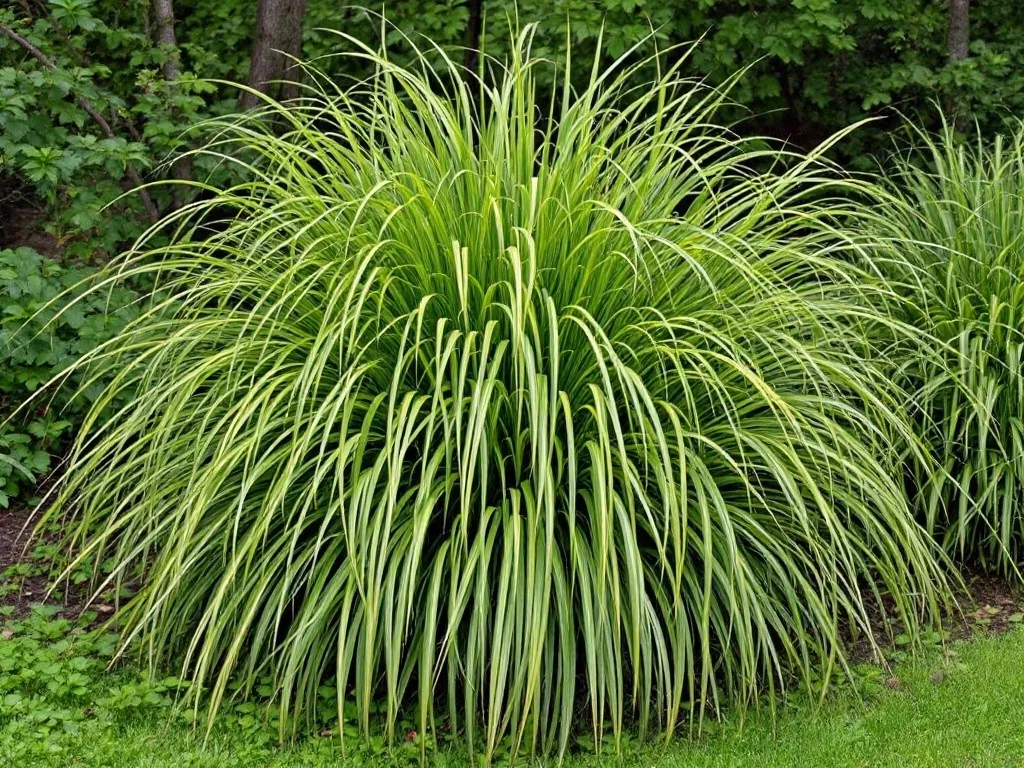
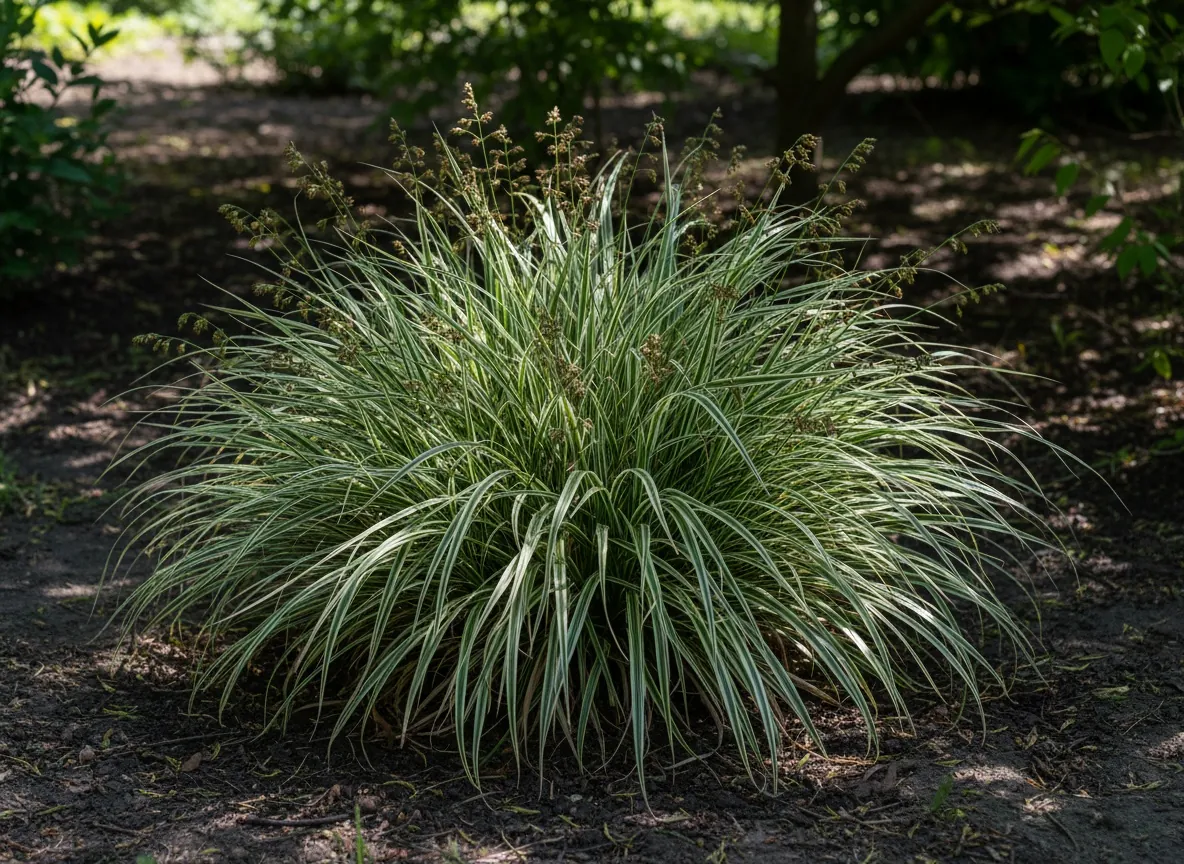
It forms dense, fountain-like arching clumps 20–40 cm tall and up to half a metre wide. The leaves are stiff, leathery, distinctly glossy and stay green all winter. The botanical species has uniformly dark green leaves, but in gardens cultivars with creamy white margins or stripes predominate — the most popular being “Variegata” and “Ice Dance”, the latter spreading by short stolons to form a close cover, while the others remain well-behaved clumps. It flowers early, in April and May, sending up stiff stems with inconspicuous, brownish-green spikes — from an ornamental point of view these matter little and are sometimes cut out.
Growing and care
Watering
Requires constantly slightly moist soil — during drought, especially in a position with sun breaking through, the leaf margins quickly turn brown. It tolerates brief flooding without harm.
Fertilizing
A thin layer of compost around the clump is enough; the plant has very modest nutritional requirements.
Planting
Enrich the soil with compost or composted leaves; on light, drying soils it is worth adding organic matter that retains moisture.
Pruning
Comb the clump through with a gloved hand or a rake, pulling out the frost-damaged and browned leaves; badly damaged clumps may be cut back to about 10 cm, after which they quickly rebuild their foliage.
Companion plants
Good companions
A classic duo of the shade border — the broad leaves of the hosta contrast with the narrow leaves of the sedge, and in spring the sedge masks the spot where the hosta is only just emerging.
Identical requirements (partial shade, humus-rich, moist soil); the fern's pinnate fronds combine well with the variegated clumps of the sedge.
Both plants like moist partial shade, and the bright leaf margins of the sedge accentuate the feathery flower heads of the astilbe.
Bad companions
It requires full sun and dry, well-drained soil — the conditions that suit one of these grasses are harmful to the other.
The watering and the moist, humus-rich soil that the sedge requires lead to root rot in them.
The evidence level indicates whether the relationship is backed by research, observation, or gardening tradition.
Toxicity
| For whom | Level | Notes |
|---|---|---|
| Humans | None | A non-toxic plant; the sharp, serrated leaf margins can, however, cut the skin when working with bare hands. |
| Dogs | None | — |
| Cats | None | — |
History and origin
The species was described from Japan in the 19th century, and its name commemorates James Morrow, the American naturalist who took part in Commodore Perry's expedition to Japan in the 1850s. Ornamental sedges reached European gardens more widely only in the second half of the 20th century, along with the fashion for shade borders and naturalistic perennial plantings.
Uses
For shady and partly shaded borders, beneath the crowns of trees and shrubs, as path edging in woodland gardens, and as ground cover in difficult, dry corners of partial shade (provided it is watered during drought). It grows well in containers on shaded balconies and terraces, where in winter it replaces seasonal flowering plants.
Trivia
- Sedges are not grasses, although they look like them — they belong to the Cyperaceae. The simplest test is to roll the stem between your fingers: a sedge has a distinctly triangular stem, solid with pith inside, a grass a round, hollow one with palpable nodes. An English school rhyme sums it up neatly: “sedges have edges”.
- Its evergreen leaves mean Japanese sedge is often planted by entrances and paths, where in winter one otherwise mostly looks at bare ground.
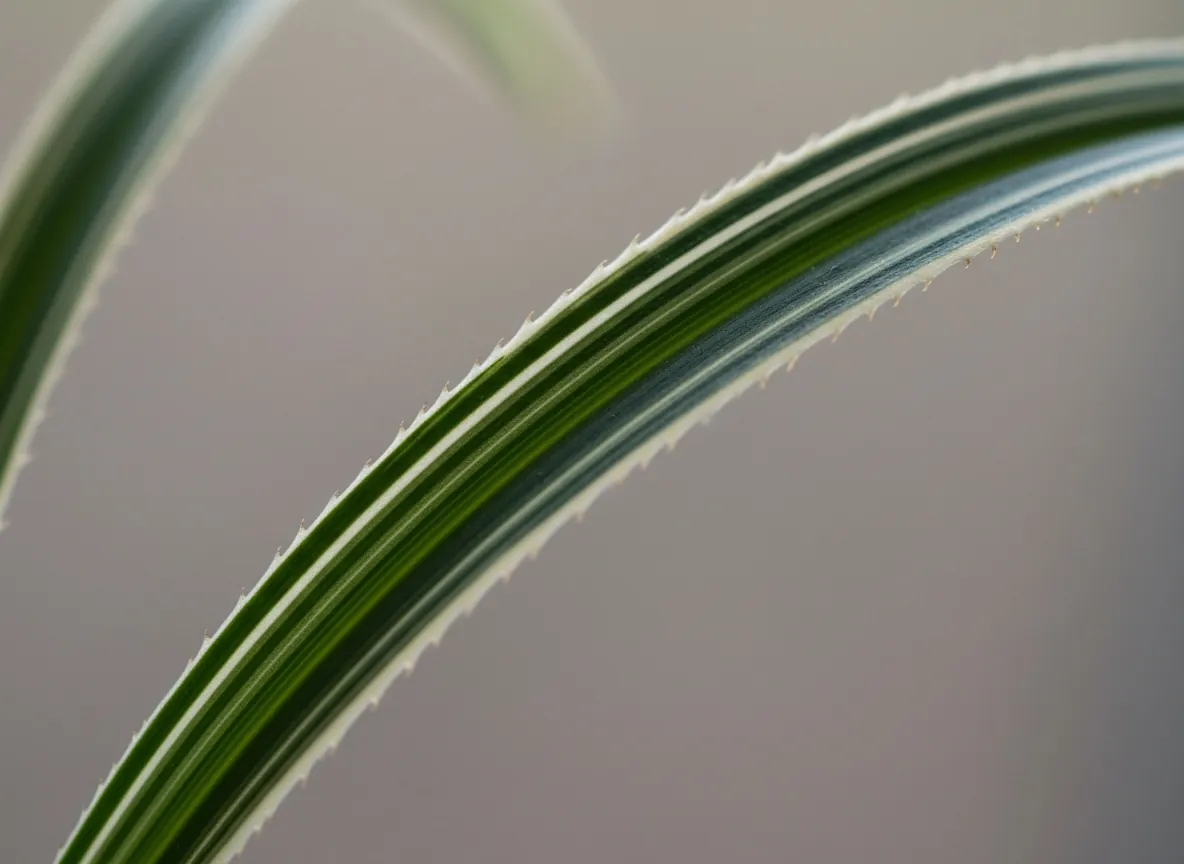
- The leaf margins are finely serrated and can cut the skin like paper — it is worth putting on gloves to tidy up the clump.
Frequently asked questions
Does Japanese sedge grow in shade?
Yes — this is its greatest asset and the feature that sets it apart from ornamental grasses, which almost without exception require sun. It looks best in partial shade and shade, for example beneath tree crowns. In full sun the leaves, especially in variegated cultivars, scorch and brown at the margins.
When should sedge be pruned, and is it necessary at all?
Sedge is evergreen, so it is not cut back in autumn — the leaves adorn the border through winter and protect the heart of the clump. In early spring, in March, it is enough to comb the clump with a gloved hand and pull out the browned leaves. Clumps badly damaged by frost may exceptionally be cut back to about 10 cm, after which they quickly rebuild their foliage.
Is Japanese sedge a grass?
No, although in horticulture it is counted among ornamental grasses because of its appearance and the way it is used. Botanically it belongs to the Cyperaceae, not the Poaceae. The difference shows in the stem: in sedges it is triangular and filled with pith, in true grasses round, hollow and divided by nodes.
Sources
- Plants of the World Online (POWO)Database (GBIF, POWO…)
- RHS — Carex morrowiiInstitution / botanical garden
My note
A private note for this plant — saved in your browser.