In short
- Evergreen: it adorns the bed 12 months a year, even under snow.
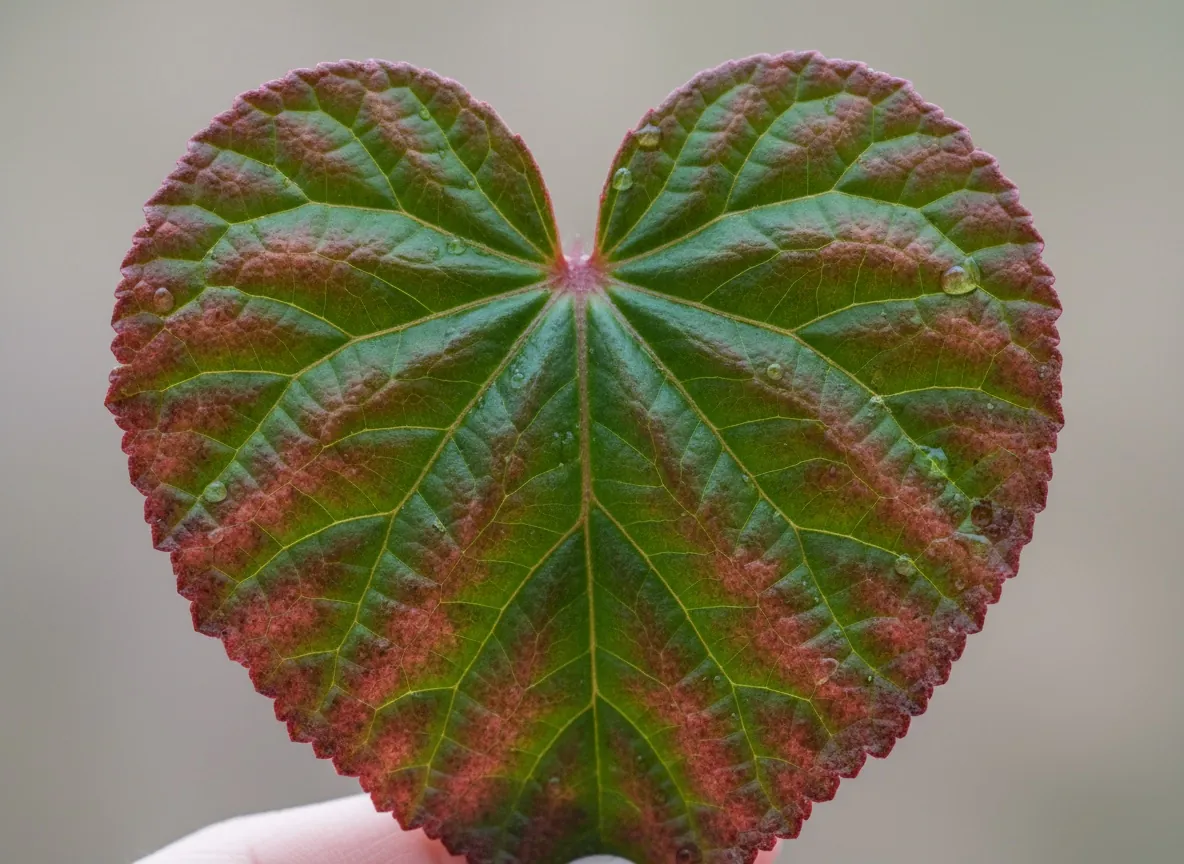
- In winter the leaves turn red and burgundy — this is not a sign of disease but a natural reaction of the plant.
- Exceptionally tough: it withstands frost down to USDA zone 3, drought, shade and poor soil.
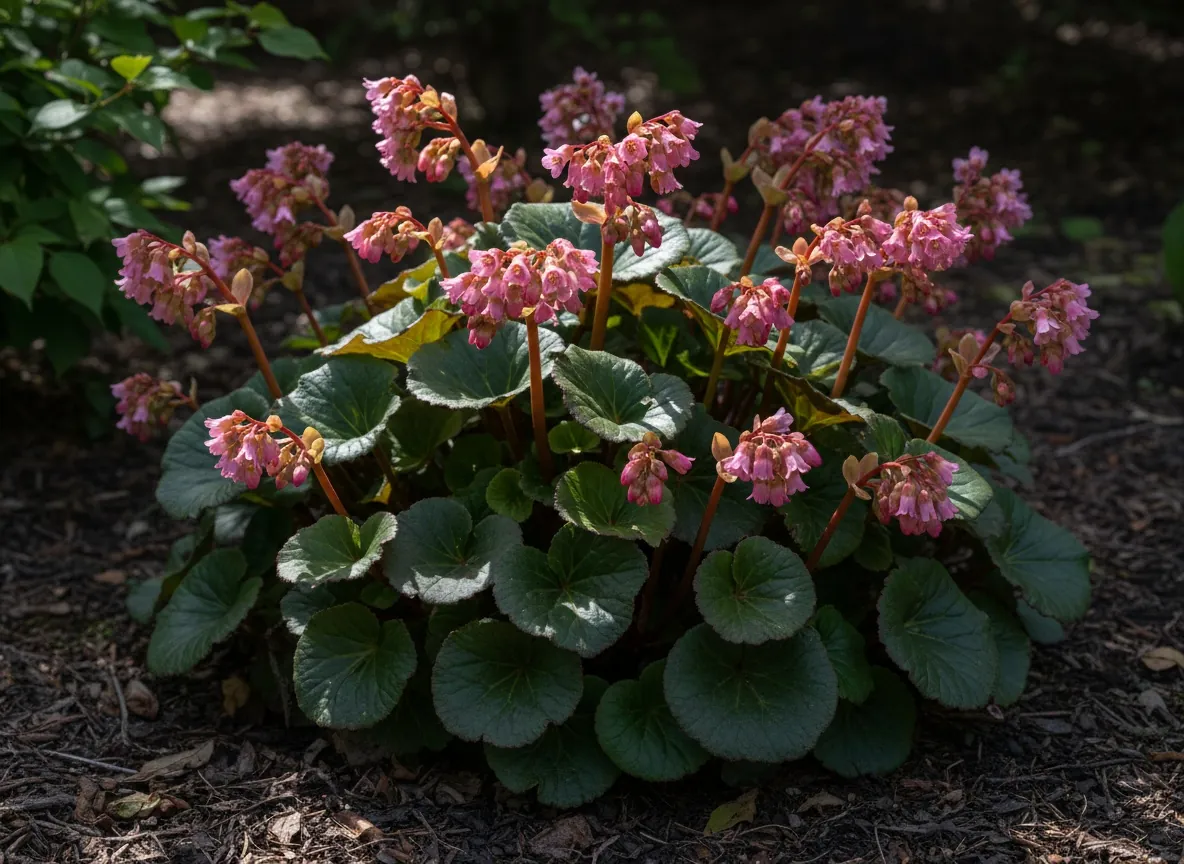
- Flowers early, in April and May, with pink flowers on reddish, fleshy stems.
- Grows in sun, partial shade and shade — one of the few perennials this tolerant.
- Plant the rhizome shallowly, just below the surface — planting too deep inhibits flowering.
Botanical data
- Family
- Saxifragaceae (Saxifragaceae)
- Height
- 0.3–0.45 m
- Width
- 0.4–0.6 m
- Habit
- Clump-forming
- Growth rate
- Moderate
- Position
- Full sun, Partial shade, Shade
- Soil
- Humus-rich, Loamy, Sandy
- pH reaction
- pH 5.5–7.5
- Moisture
- Dry, Moderate
- Bloom
- April–May
- Hardiness
- USDA 3a–8b
- Propagation
- By division, By runners, From seed
Characteristics
It forms a compact clump from a creeping, thick rhizome lying just below the soil surface. The leaves are very large (up to 20–30 cm long), rounded or heart-shaped at the base, leathery, glossy, with a wavy margin, growing in a rosette on short stalks — they stay green all winter and, in cold weather and full light, turn red, purple and burgundy thanks to accumulated anthocyanins. In early spring a fleshy, reddish stem grows from the centre of the rosette, topped with a corymb of bell-shaped, pink flowers rising above the leaves.
Growing and care
Watering
An established clump gets through drought without watering — the thick, fleshy leaves and the rhizome store water. In extremely dry shade under trees it will survive, but the leaves will be smaller and less striking; watering in hot weather improves its appearance, though it is not necessary for survival.
Fertilizing
Very undemanding. A handful of compost around the clump is entirely sufficient; over-fertilised, it grows at the expense of flowering.
Planting
Plant shallowly — the rhizome should lie just below the surface, partly visible. Planting too deep is the most common reason a bergenia refuses to flower.
Pruning
Remove frost-damaged and browned leaves along with spent flower stems — the clump immediately looks tidy and quickly puts out fresh, healthy leaves.
Companion plants
Good companions
A classic contrast combination for partial shade — both have large leaves, but the hosta dies back for winter, and then the red-tinted bergenia takes over the role of adorning the bed.
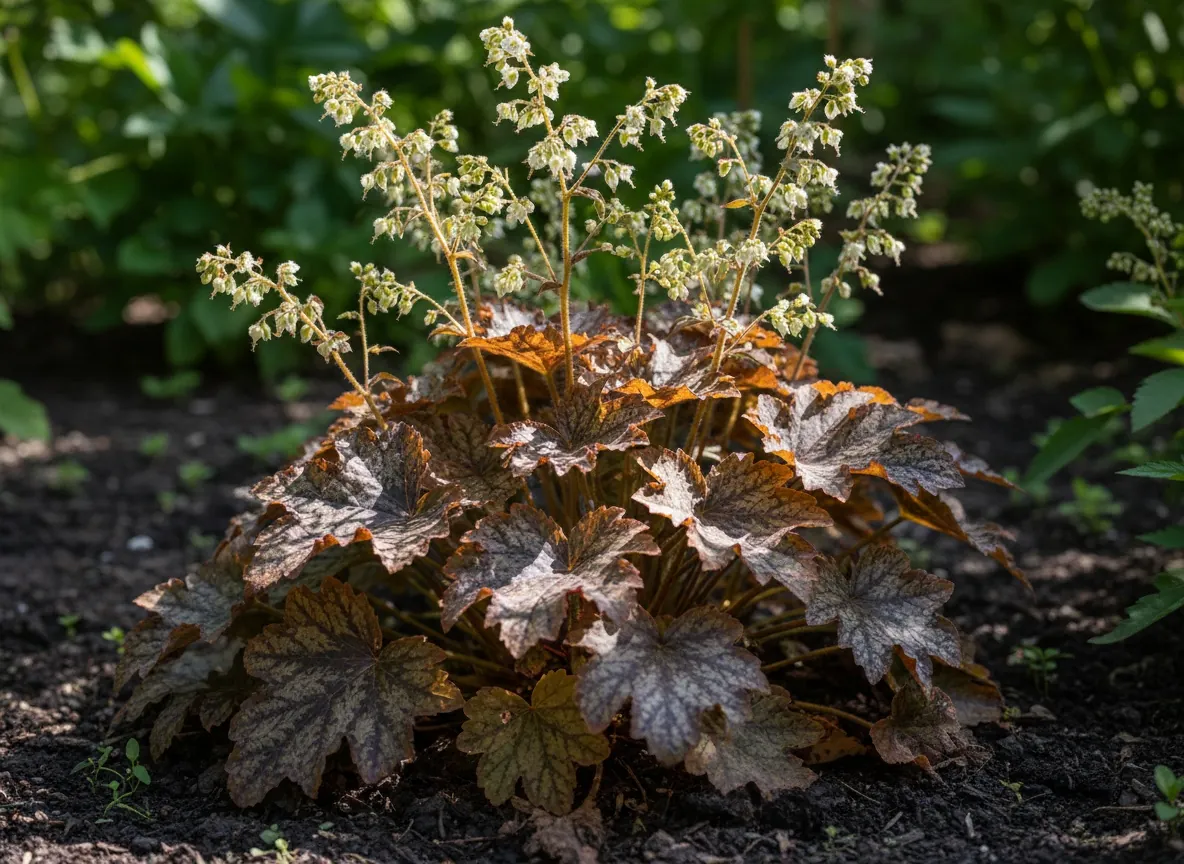
The small, colourful leaves of coral bells contrast beautifully with the heavy, leathery leaf of bergenia; both tolerate partial shade and well-drained soil.
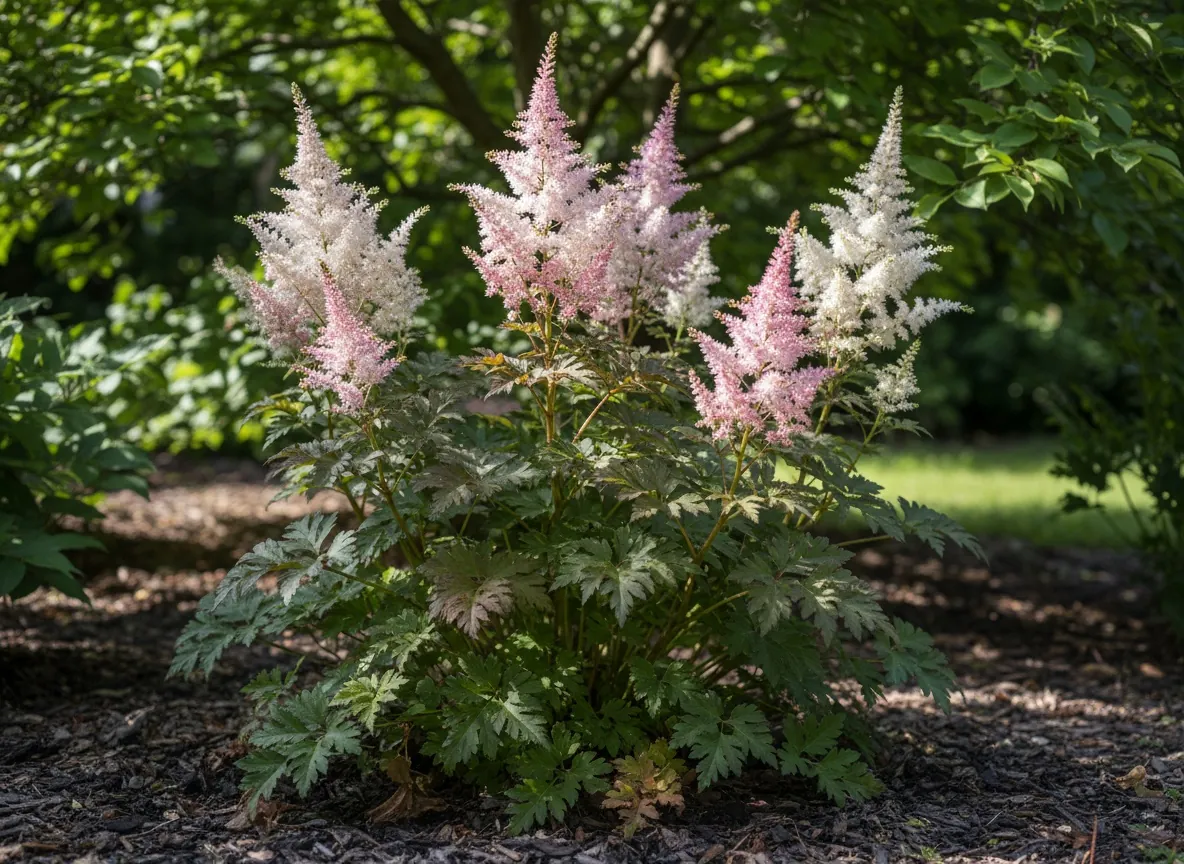
The feathery, delicate fronds of the fern balance the massive, compact form of the bergenia — a proven duo for a shady corner.
Bad companions
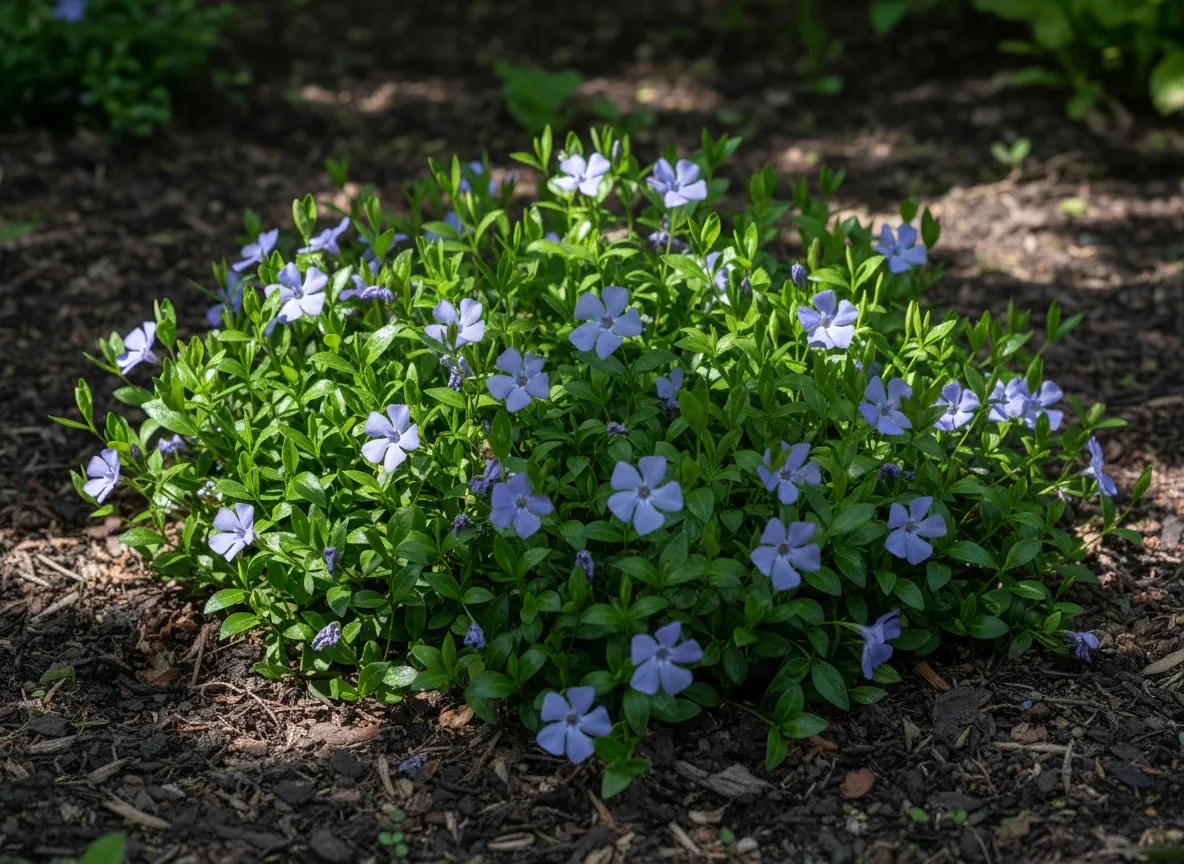
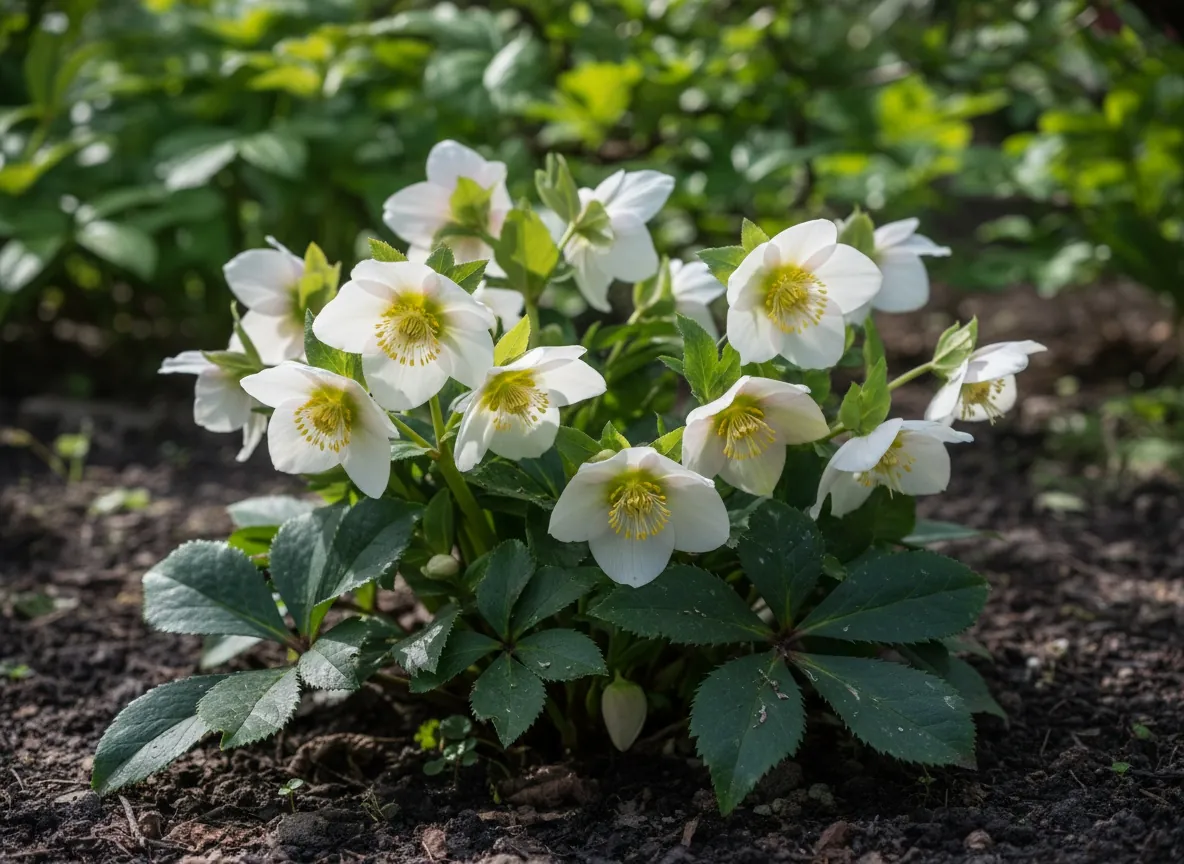
Bergenia tolerates drought but not a permanently wet substrate — its shallowly lying rhizome rots in such conditions.
The evidence level indicates whether the relationship is backed by research, observation, or gardening tradition.
Toxicity
| For whom | Level | Notes |
|---|---|---|
| Humans | None | The plant is not classed as toxic. The leaves contain a lot of tannins, which makes them astringent and very bitter. |
| Dogs | None | — |
| Cats | None | — |
History and origin
The genus was named after the German botanist and physician Karl August von Bergen. Bergenias reached Europe from Siberia in the 18th century and quickly became established in gardens — partly because they survive practically any neglect. In the 19th and 20th centuries they were a fixture of cottage gardens and churchyard beds, where they still grow untouched for decades, often long after the rest of the planting has disappeared.
Uses
For edgings and the front of beds, under shrubs and trees, on slopes and as a ground cover in difficult, neglected places. It looks very good beside stone, low walls and steps, where the massive leaf has a backdrop. It is also suitable for large containers on a terrace and for beds that must look decent all year round without any work.
Trivia
- The English common name pigsqueak comes from the sound a leaf makes when rubbed firmly between the fingers — it is the best way to identify a bergenia without a key.
- The German name Wickelblatt (“wrapping leaf”) alludes to the former uses of the large, durable leaves; they are very rich in tannins, and the related leather bergenia (Bergenia crassifolia) is still brewed in Siberia as badan tea — from leaves that have overwintered under the snow.
- The red colouring of the leaves in winter is not frost damage but anthocyanins — pigments that act as a filter protecting the photosynthetic apparatus from excess light at low temperatures.
Frequently asked questions
Why have my bergenia leaves turned red in winter — is the plant sick?
No, this is completely normal and even desirable. At low temperatures and in strong light, bergenia accumulates anthocyanins in its leaves, which colour them red and burgundy while also protecting the leaf from damage. The effect is strongest in sunny positions. In spring, remove only those leaves that have actually turned brown and dried up.
Why is my bergenia not flowering?
The most common cause is planting too deep — the rhizome should lie just below the soil surface, partly visible. Flowering is also weakened by deep shade, an excess of nitrogen (the plant then grows at the expense of flowers), and the freezing of buds already set early during a sharp frost. An overly dense, old clump rejuvenated by division usually returns to flowering.
Will bergenia cope in dry shade under a tree?
Yes — this is one of its strongest uses and it is one of the few perennials that really survive in such a place. You do have to accept, however, that in dry, deep shade the leaves will be smaller and flowering more modest than in partial shade. For the first year after planting it is worth watering so that the clump has time to root.
Sources
- Plants of the World Online (POWO) — Bergenia cordifoliaDatabase (GBIF, POWO…)
- RHS — Bergenia cordifoliaInstitution / botanical garden
My note
A private note for this plant — saved in your browser.