In short
- Blooms abundantly from June to September, tolerating heat and drought.
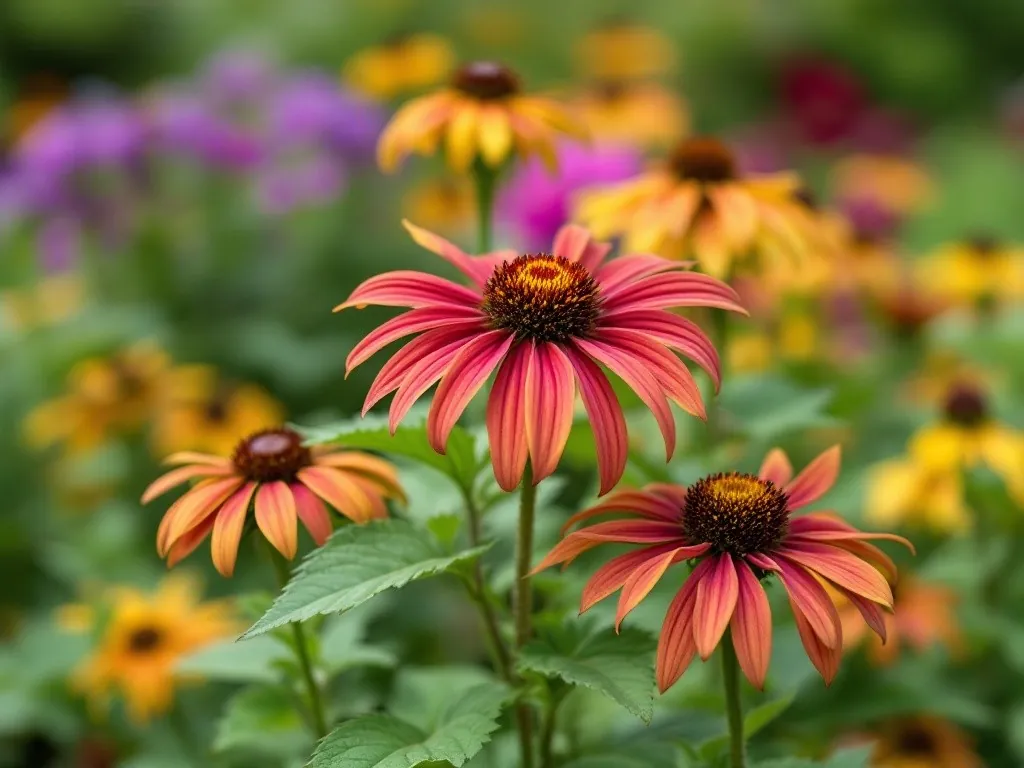
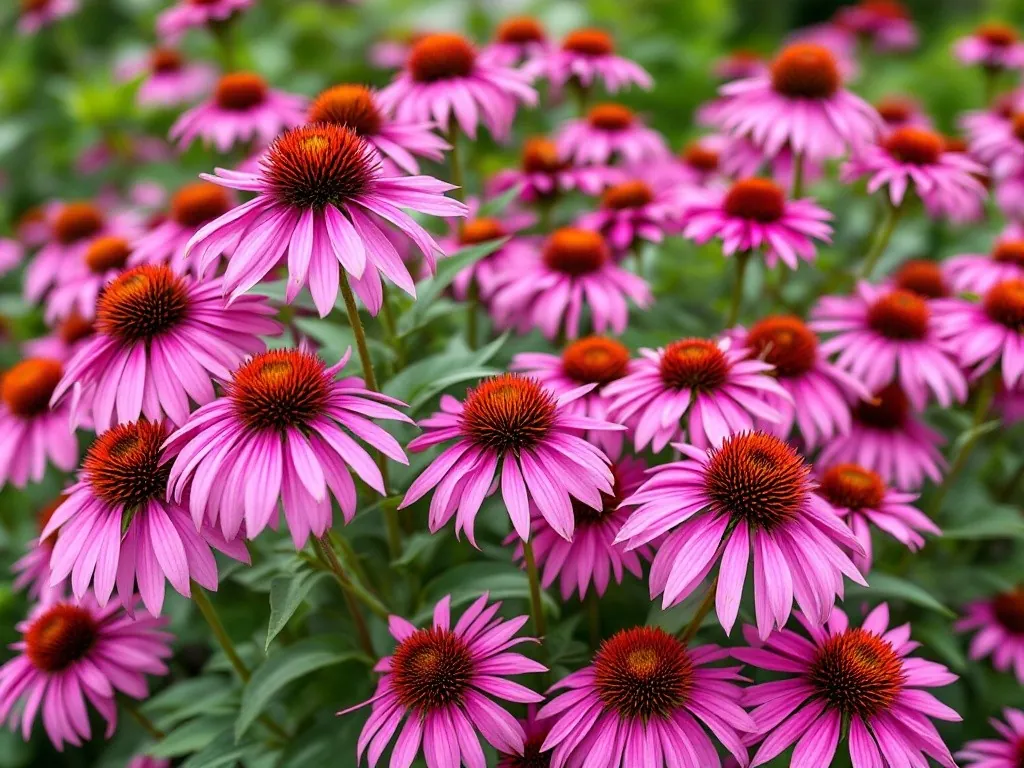
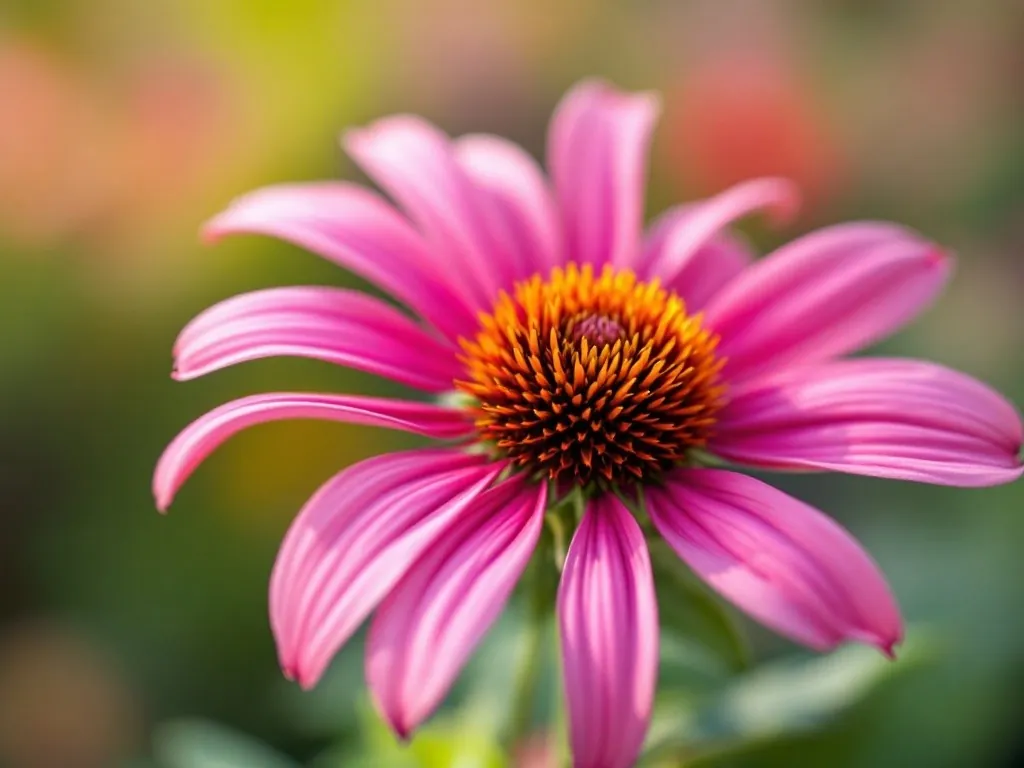
- The characteristic, raised, spiny centre of the flower resembles a hedgehog — hence the plant's common name.
- One of the best perennials for bees, butterflies, and other pollinators.
- Dried flower heads are a source of seed for birds in winter — it's worth not cutting them back in autumn.
- The root and above-ground parts have a long tradition of use in the herbal medicine of Indigenous peoples of North America.
- Easy to grow in a sunny, well-drained spot, with little need for fertilizing.
Botanical data
- Family
- Asteraceae (Asteraceae)
- Height
- 0.6–1.2 m
- Width
- 0.4–0.6 m
- Habit
- Upright
- Growth rate
- Moderate
- Position
- Full sun
- Soil
- Loamy, Sandy, Humus-rich
- pH reaction
- pH 6–7.5
- Moisture
- Dry, Moderate
- Bloom
- June–September
- Hardiness
- USDA 3b–9a
- Propagation
- From seed, By division
Characteristics
An upright perennial with stiff, roughly hairy stems and dark green, lance-shaped leaves. The flower heads are large composite blooms with drooping or horizontally held, pink-purple ray petals surrounding a strongly raised, spiny, brown-orange centre made up of small tubular disc florets.
Growing and care
Watering
Once established, it tolerates drought very well thanks to its deep taproot system. It does not tolerate permanently wet, cold soil in winter.
Fertilizing
Undemanding — excess nitrogen produces weaker, floppy stems and shortens the clump's lifespan.
Planting
Well-drained soil, not necessarily fertile, in full sun; heavy, moist soils are best improved with sand or grit.
Pruning
Spent flower heads can be removed as they fade to prolong flowering, but some should be left standing over winter as food for birds.
Companion plants
Good companions
A classic pairing for the naturalistic prairie-style garden — ornamental grasses provide a backdrop and structure against which the coneflower's blooms stand out clearly through summer and autumn.
Similar requirements (sun, well-drained soil) and an overlapping bloom period — together they create a long-lasting, colour-contrasting prairie-style planting.
Bad companions
The coneflower needs well-drained, rather dry soil — the constant watering that moisture-loving plants require causes its roots to rot.
The evidence level indicates whether the relationship is backed by research, observation, or gardening tradition.
Diseases and pests
A white, powdery coating on leaves, shoots and buds. The leaves turn yellow, become deformed and drop prematurely.
AphidsSmall (1–3 mm) soft-bodied insects, green, black or pink, feeding in clusters on young shoots and the underside of leaves. They excrete sticky honeydew.
Slugs and snailsSlugs and shelled snails that feed at night and after rain. Symptoms: irregular holes in the leaves and young seedlings eaten off completely, silvery slime trails on leaves and soil. The greatest damage occurs in damp, shaded spots — particularly on lettuce, strawberries and hostas.
Toxicity
| For whom | Level | Notes |
|---|---|---|
| Humans | None | — |
| Dogs | None | — |
| Cats | None | — |
History and origin
Echinacea has been used for centuries by Indigenous peoples of North America, including the Lakota and Cheyenne, as a medicinal plant traditionally used for colds and infections. It reached Europe as an ornamental and medicinal plant in the 18th–19th centuries, and since the 20th century has been widely researched and cultivated for the herbal industry.
Uses
For perennial borders, naturalistic and prairie-style gardens, and pollinator-friendly plantings. As a cut flower it lasts well in a vase, and the dried flower heads decorate the garden in winter while feeding birds.
Trivia
- The genus name Echinacea comes from the Greek echinos (hedgehog) — a reference to the spiny, raised centre of the flower head.
- Dried root and herb of Echinacea purpurea is one of the world's most popular herbal supplements, traditionally associated with supporting immunity — even so, these uses should be regarded as part of herbal tradition, not a substitute for medical advice.
Frequently asked questions
Is the purple coneflower difficult to grow?
No — it's one of the easier garden perennials. It mainly needs a sunny site and well-drained soil; once established it's very drought-tolerant and doesn't need frequent watering or fertilizing.
Is it worth cutting back the coneflower for winter?
It's not necessary, and is actually disadvantageous for birds — the dry, spiny flower centres provide seed in winter, especially for goldfinches. It's best to cut back in spring, before new growth begins.
Does the purple coneflower attract pollinators?
Yes, very strongly — it's one of the best perennials for bees, bumblebees, and butterflies, blooming abundantly from June to September when many other plants have already finished flowering.
Sources
- Plants of the World Online (POWO)Database (GBIF, POWO…)
- RHS — Echinacea purpureaInstitution / botanical garden
My note
A private note for this plant — saved in your browser.