In short
- Requires full sun, very fertile soil and large amounts of water.
- Greedy — needs a clear nitrogen feed during the leaf growth phase.
- Do not plant after other brassicas: clubroot persists in the soil for years.
- Neutral to slightly alkaline soil reaction; liming reduces clubroot.
- Uneven watering causes the heads to split.
Botanical data
- Family
- Brassicaceae (Brassicaceae)
- Height
- 0.3–0.5 m
- Width
- 0.4–0.7 m
- Habit
- Clump-forming
- Growth rate
- Moderate
- Position
- Full sun
- Soil
- Humus-rich, Loamy
- pH reaction
- pH 6.5–7.5
- Moisture
- Moderate, Moist
- Bloom
- May–June
- Hardiness
- —
- Propagation
- From seed
Characteristics
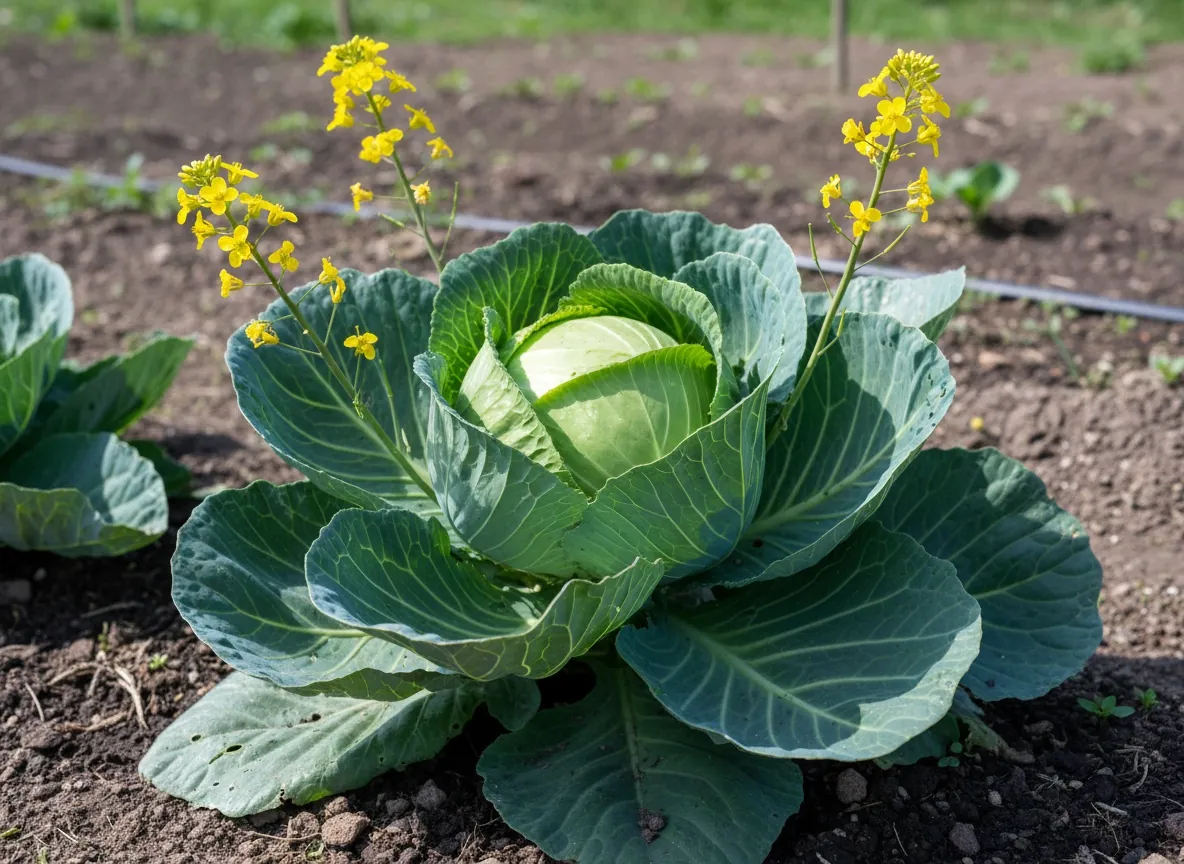
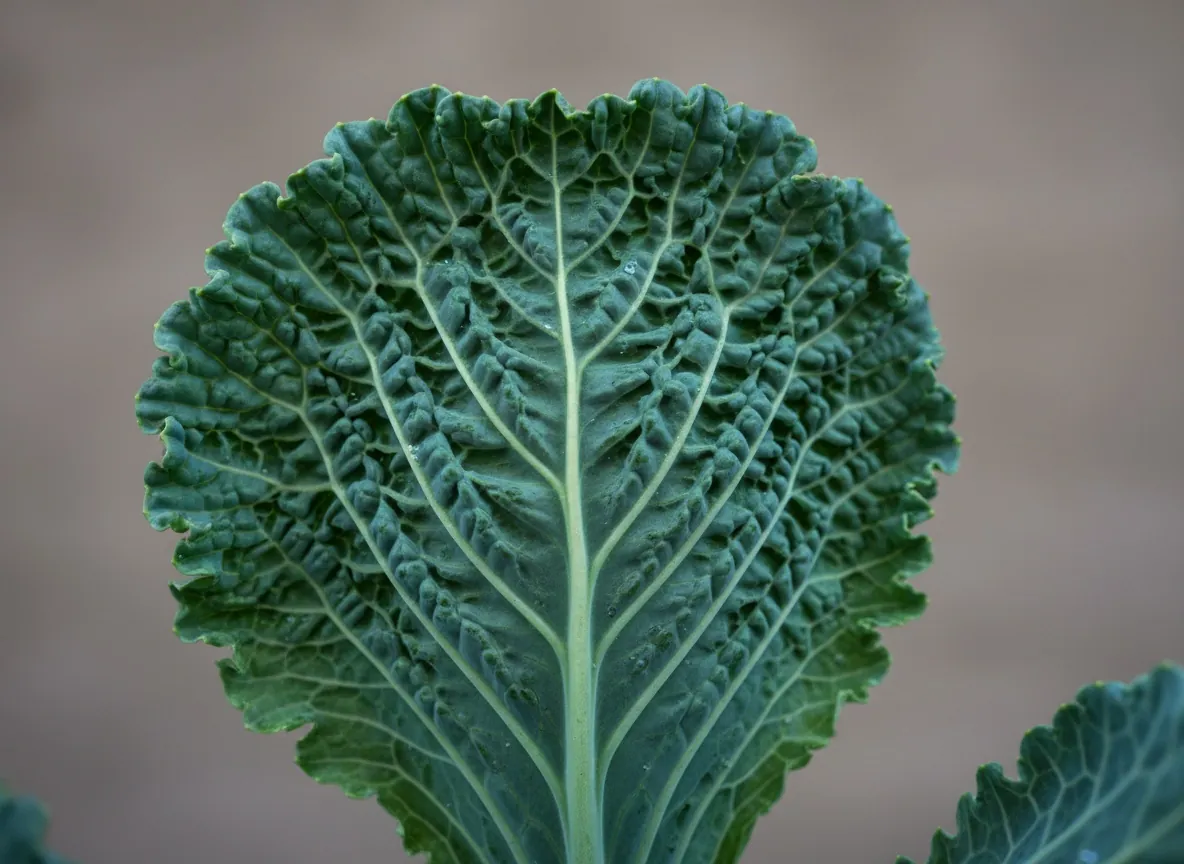
A biennial grown as an annual: in the first year it builds a firm head, and only in the second, after overwintering, does it send up a flowering stem with yellow flowers and set seed — which is why one almost never sees cabbage in flower in the garden. The head forms from leaves set on a shortened stem, overlapping ever more tightly. The outer wrapper leaves are loose, often covered with a bluish waxy bloom. Varieties differ in ripening time, size and colour — from whitish-green to the intensely purple red cabbage.
Growing and care
Watering
Requires a lot of water and even moisture. Drought interrupted by heavy watering causes rapid growth and splitting of the heads just before harvest.
Fertilizing
Cabbage is very greedy and needs a lot of nitrogen while building its leaves. Stop nitrogen fertilising a few weeks before harvest to limit the accumulation of nitrates in the heads.
Planting
Fertile, humus-rich soil, well supplied with compost or well-rotted manure, with a neutral to slightly alkaline reaction — liming reduces the risk of clubroot. Absolutely keep a four-year break in growing brassicas on the same bed.
Pruning
During cultivation remove only the lower, yellowing and infected leaves, which improves airflow and limits the development of diseases.
Companion plants
Good companions
Kwitnący koper wabi owady pożyteczne, m.in. bzygowate i błonkówki pasożytnicze, które ograniczają mszyce i gąsienice na kapuście.
Silny aromat szałwii utrudnia bielinkowi kapustnikowi odnalezienie rośliny żywicielskiej po zapachu.
Szybko dojrzewa i wykorzystuje wolną przestrzeń między młodymi kapustami, zanim te rozrosną się na całe pole.
Korzeni się głębiej niż kapusta, więc obie rośliny czerpią wodę i składniki z innych warstw gleby, ograniczając konkurencję.
Aromatyczne zioło tradycyjnie sadzone przy kapustnych jako roślina maskująca ich zapach przed szkodnikami.
Bad companions
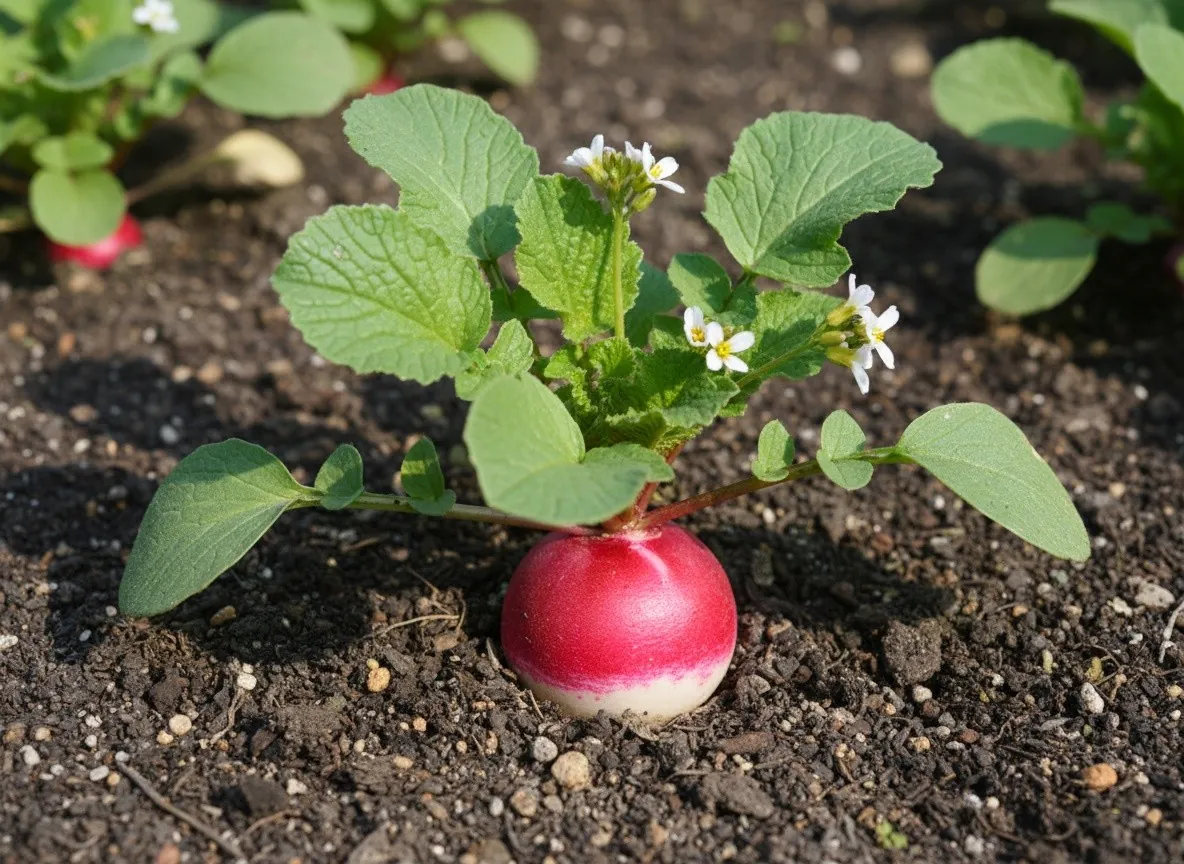
To ta sama roślina co kapusta — Brassica oleracea, tyle że inna odmiana uprawna. Dzielą wszystkie choroby i szkodniki, w tym kiłę kapusty, więc sadzone obok wzajemnie zwiększają presję chorobową.
Należy do tej samej rodziny kapustowatych i jest żywicielem tych samych patogenów, przede wszystkim kiły kapusty utrzymującej się w glebie latami.
Klasyczna zła para w ogrodzie — konkurują o wodę i miejsce, a truskawka wyraźnie słabiej rośnie w sąsiedztwie żarłocznej kapusty.
Oba warzywa są bardzo wymagające pokarmowo i wzajemnie konkurują o azot, przez co plonują słabiej niż uprawiane osobno.
The evidence level indicates whether the relationship is backed by research, observation, or gardening tradition.
Toxicity
| For whom | Level | Notes |
|---|---|---|
| Humans | None | A fully edible vegetable. Large amounts eaten raw on a regular basis may affect thyroid function in people with iodine deficiency. |
| Dogs | None | Harmless, but in larger amounts it causes bloating and gas. |
| Cats | None | — |
History and origin
All brassicas descend from the unassuming wild cabbage growing on Europe's sea cliffs. The Romans already knew forms with rolled-up leaves, but cabbage in its present form took shape in medieval northern Europe. As a vegetable that could be stored for a long time and fermented, it was for centuries the basic source of vitamin C in winter — sauerkraut protected ships' crews and the inhabitants of cool Europe from scurvy.
Uses
A basic bed vegetable in the home garden and in field cultivation. Early varieties are harvested fresh in summer, late ones in autumn — for cold storage and for fermenting. In the kitchen it is eaten raw, boiled, braised and fermented; red cabbage is sometimes also planted ornamentally for its intense leaf colour.
Trivia
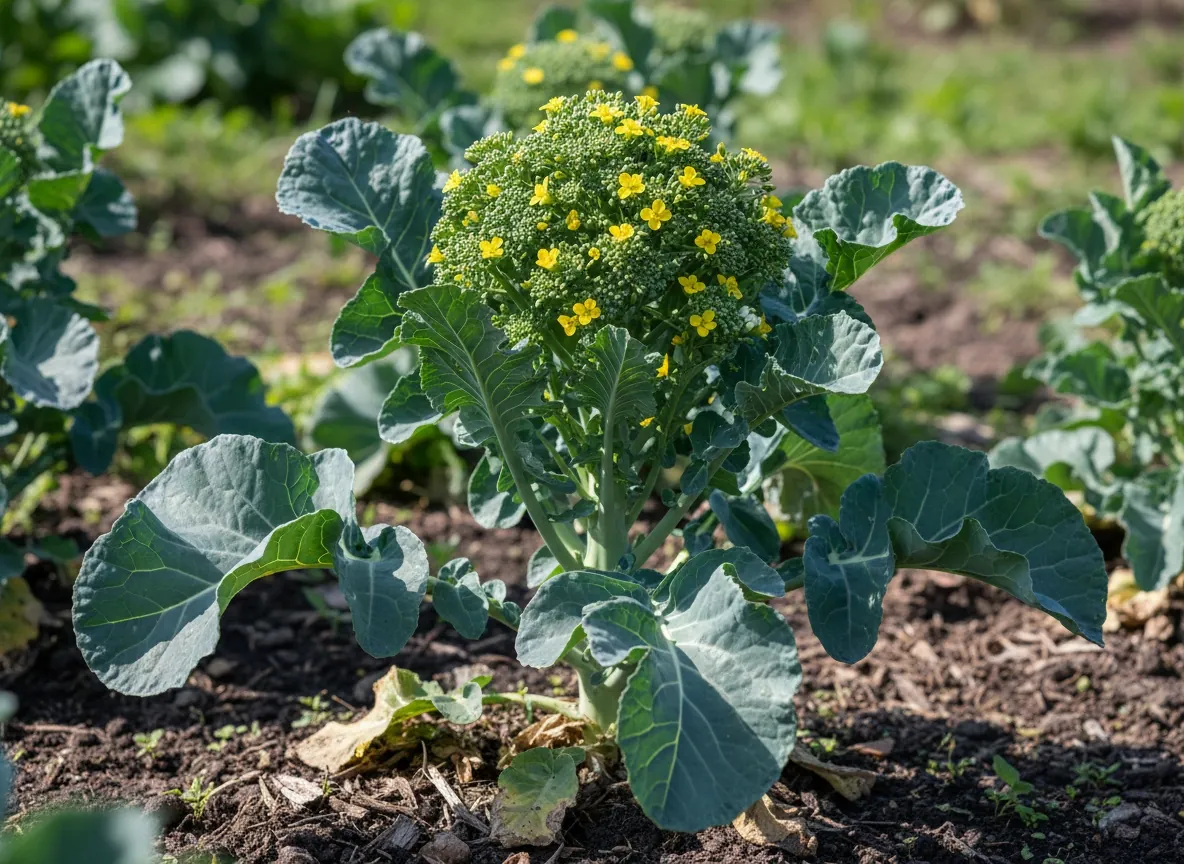
- Cabbage, broccoli, cauliflower, kale, Brussels sprouts and kohlrabi are one and the same species — Brassica oleracea. They differ solely in which part of the plant people strengthened by selection over the centuries: cabbage is the overgrown terminal bud, broccoli and cauliflower are flower heads, Brussels sprouts are the lateral buds, and kohlrabi is the thickened stem.
- Charles Darwin invoked this example of artificial selection in “On the Origin of Species” — he used it to show that if people bred such different forms from one plant in a few hundred years, then natural selection over millions of years can do considerably more.
- The characteristic smell of cooking cabbage comes from sulphur compounds released from glucosinolates — the very substances that give brassicas their slightly pungent taste and health-promoting effect.
Frequently asked questions
Why are my cabbage heads splitting?
This is the effect of uneven watering: after a dry spell, heavy rain or watering causes a sudden influx of water, the inside of the head grows faster than the outer leaves and the shell splits. Regular watering and mulching help, and with mature heads — harvesting on time, without leaving them standing in the bed.
What is clubroot and how can it be prevented?
It is a disease caused by a soil organism that produces galls on the roots — the plant wilts and fails to form a head. The resting spores persist in the soil for even a dozen or more years, so there is no effective control after the fact. The only real protection is prevention: at least a four-year break in growing brassicas on the given bed, and keeping the soil reaction close to neutral by liming.
Are cabbage and broccoli the same plant?
Botanically yes — both are Brassica oleracea, the same species in different cultivated varieties, much like cauliflower, kale, Brussels sprouts and kohlrabi. For the gardener this has practical significance: since it is the same plant, they share the same diseases and pests, so they should not be planted one after another or right next to each other.
Sources
- Plants of the World Online (POWO)Database (GBIF, POWO…)
- RHS — CabbagesInstitution / botanical garden
My note
A private note for this plant — saved in your browser.