In short
- Site: full sun, poor, well-drained soil, preferably calcareous.
- Very drought-resistant — excess water and heavy soil are the most common cause of losses.
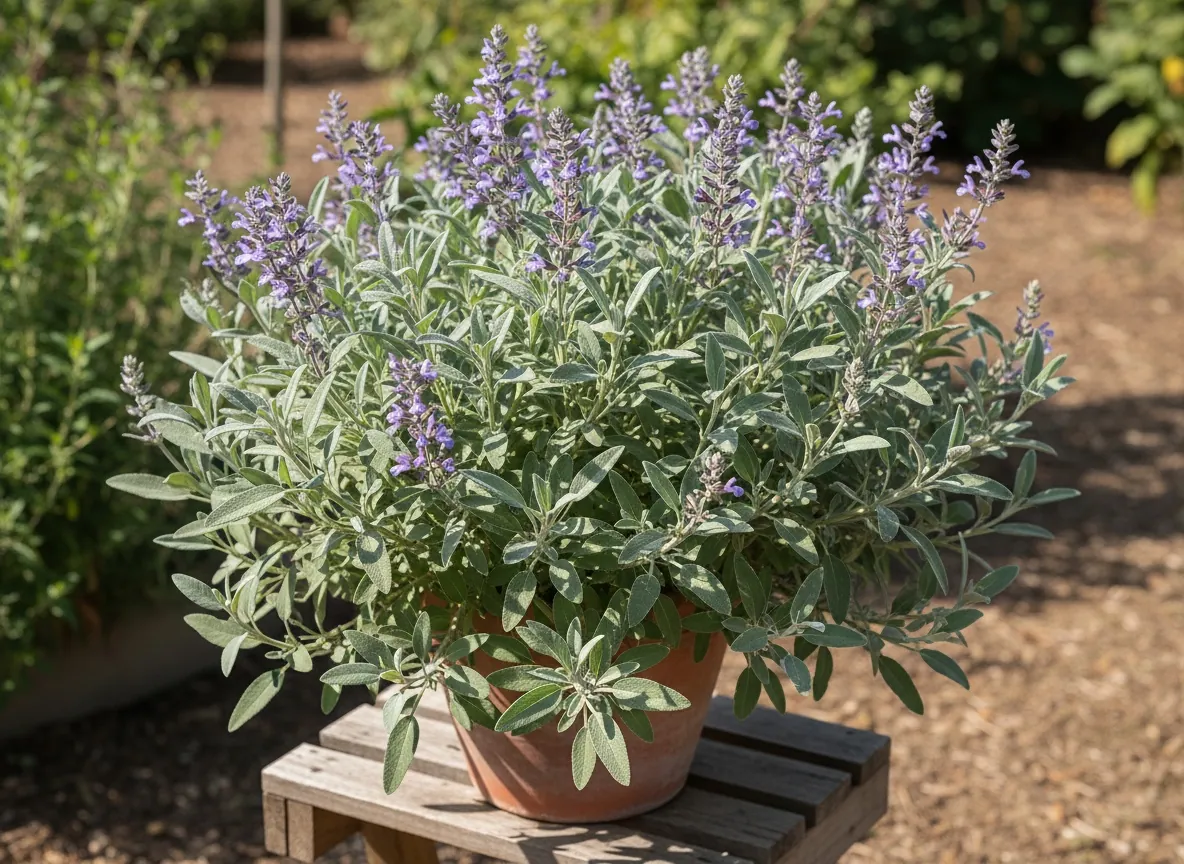
- Flowers in June and July; the violet-blue flowers are a valuable forage for bees and bumblebees.
- Hardy to USDA zone 5, but young plants are worth covering with conifer branches.
- Prune in spring, never into old wood; renew the clump from cuttings every 4–5 years.
Botanical data
- Family
- Lamiaceae (Lamiaceae)
- Height
- 0.4–0.7 m
- Width
- 0.5–0.8 m
- Habit
- Clump-forming
- Growth rate
- Moderate
- Position
- Full sun
- Soil
- Sandy, Chalky, Humus-rich
- pH reaction
- pH 6–7.5
- Moisture
- Dry, Moderate
- Bloom
- June–July
- Hardiness
- USDA 5a–9a
- Propagation
- From cuttings, By layering, From seed
Characteristics
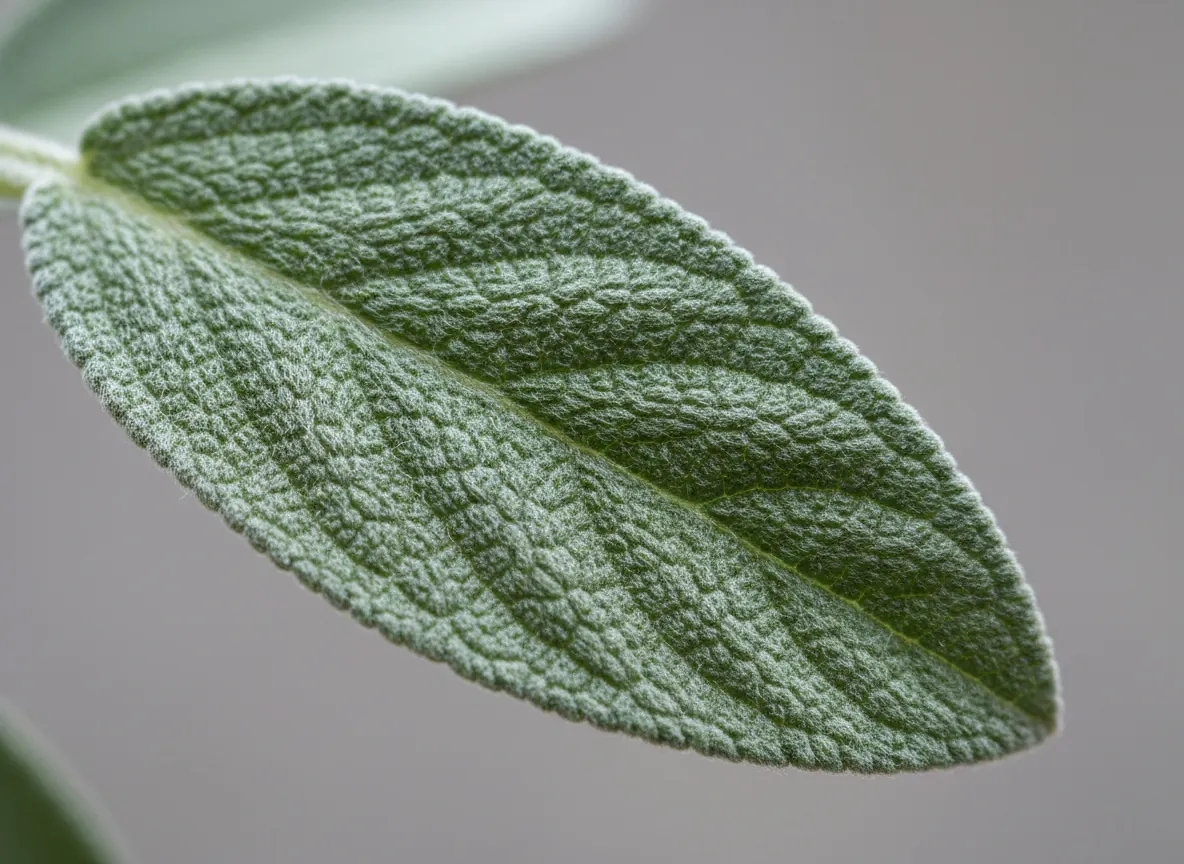
It forms a compact, branched sub-shrub with a woody base and four-angled shoots. The elongated, somewhat thick leaves are covered with a velvety felt that gives them a grey-silver tone; in mild winters some of them remain on the plant. The lipped flowers are gathered in distinct whorls at the tips of the shoots. Popular ornamental cultivars have purple, yellow-green or variegated leaves, usually at the cost of slightly lower winter hardiness.
Growing and care
Watering
Water rarely and only once the top layer of soil has dried out. Winter moisture on heavy soil harms sage more than frost itself.
Fertilizing
Sparingly. Abundant nitrogen feeding produces lush, soft shoots with a weaker aroma and poorer winter hardiness.
Planting
A warm, sheltered and well-drained site. On clay soils add gravel or coarse sand to the planting hole; planting on a slight mound works well.
Pruning
Shorten the shoots by roughly a third, always leaving green leaves or visible buds on them. Every 4–5 years it is best to replace the clump with a new plant grown from a cutting.
Companion plants
Good companions
The strong aroma of sage makes it harder for the cabbage white butterfly to find its host plant — one of the oldest recommendations of monastery gardens.
The scent of sage oils masks the smell of carrots and makes it harder for the carrot fly to home in on the bed.
A Mediterranean companion with almost identical requirements — sun, poor and well-drained soil, infrequent watering.
Bad companions
Cucumber needs constant moisture and fertile soil, that is, the very conditions in which sage rots; it is also traditionally held that the proximity of sage inhibits the growth of cucumbers.
Mint spreads by runners and quickly moves into the sage clump, taking away its space and keeping excessive moisture around its roots.
The evidence level indicates whether the relationship is backed by research, observation, or gardening tradition.
Toxicity
| For whom | Level | Notes |
|---|---|---|
| Humans | None | Safe in culinary amounts and in typical infusions. The concentrated essential oil contains thujone and is not suitable for unsupervised internal use. |
| Dogs | None | — |
| Cats | None | — |
History and origin
The Romans called it herba sacra — the sacred herb, and its Latin name derives from the verb salvare, meaning to save, to heal. In the Middle Ages it belonged to the canon of monastery garden plants and was listed in the capitulary of Charlemagne. It reached Poland together with monks and has been growing in cottage gardens for centuries.
Uses
For herb gardens, sunny borders, edgings and dry banks, as well as for growing in containers on the terrace. In the kitchen the leaves take frying very well — classically they are combined with butter, pork, liver, pumpkin and Italian pasta. The aroma is very intense, so it is added sparingly, at the start of cooking. Cultivars with purple and variegated leaves also serve a purely ornamental role.
Trivia
- The genus Salvia contains close to a thousand species — it is one of the largest genera of flowering plants in the world.
- An infusion of sage leaves has been used for gargling for generations; the plant is present in European pharmacopoeias to this day.
Frequently asked questions
Why does sage become bare and woody in the middle after a few years?
This is the natural growth pattern of this sub-shrub — over time the base turns woody and stops producing leaves. Regularly shortening the shoots by a third in spring helps, and every 4–5 years it is best simply to replace the plant with a new one raised from a cutting taken in summer.
Will common sage overwinter in a Polish garden?
Yes, the species is hardy to USDA zone 5. The key, however, is a well-drained site — plants are most often lost not to frost but to winter water standing around the roots. Young specimens and cultivars with coloured leaves are worth covering with conifer branches.
When should sage leaves be harvested?
They contain the most essential oils just before flowering, in May and June. They are picked in the morning, once the dew has dried. The last larger harvest is best done by the end of August, so that the plant has time to prepare for winter.
Sources
- Plants of the World Online (POWO) — Salvia officinalisDatabase (GBIF, POWO…)
- RHS — Salvia officinalisInstitution / botanical garden
My note
A private note for this plant — saved in your browser.