In short
- An annual plant — sow it every year directly into the ground, from the end of April, on warm soil.
- A sunny site, well-drained soil, rather calcareous and moderately fertile.
- The seeds germinate in light — sow very shallowly, only pressing them in.
- Harvest at the start of flowering; later the shoots turn woody and lose their pungent sharpness.
- The flowers from July to September are readily visited by bees and bumblebees.
- The classic neighbour of beans — it limits attacks of black bean aphid and makes legumes easier to digest.
Botanical data
- Family
- Lamiaceae (Lamiaceae)
- Height
- 0.2–0.4 m
- Width
- 0.15–0.3 m
- Habit
- Upright
- Growth rate
- Fast
- Position
- Full sun
- Soil
- Sandy, Humus-rich, Chalky
- pH reaction
- pH 6.5–7.5
- Moisture
- Dry, Moderate
- Bloom
- July–September
- Hardiness
- —
- Propagation
- From seed
Characteristics
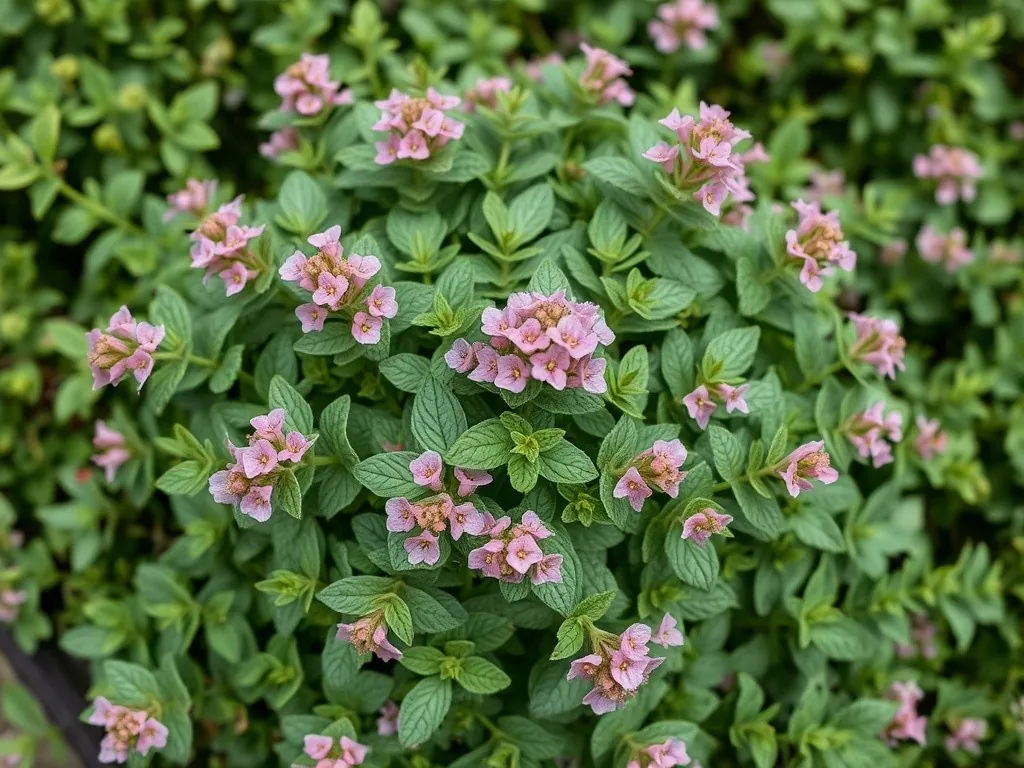
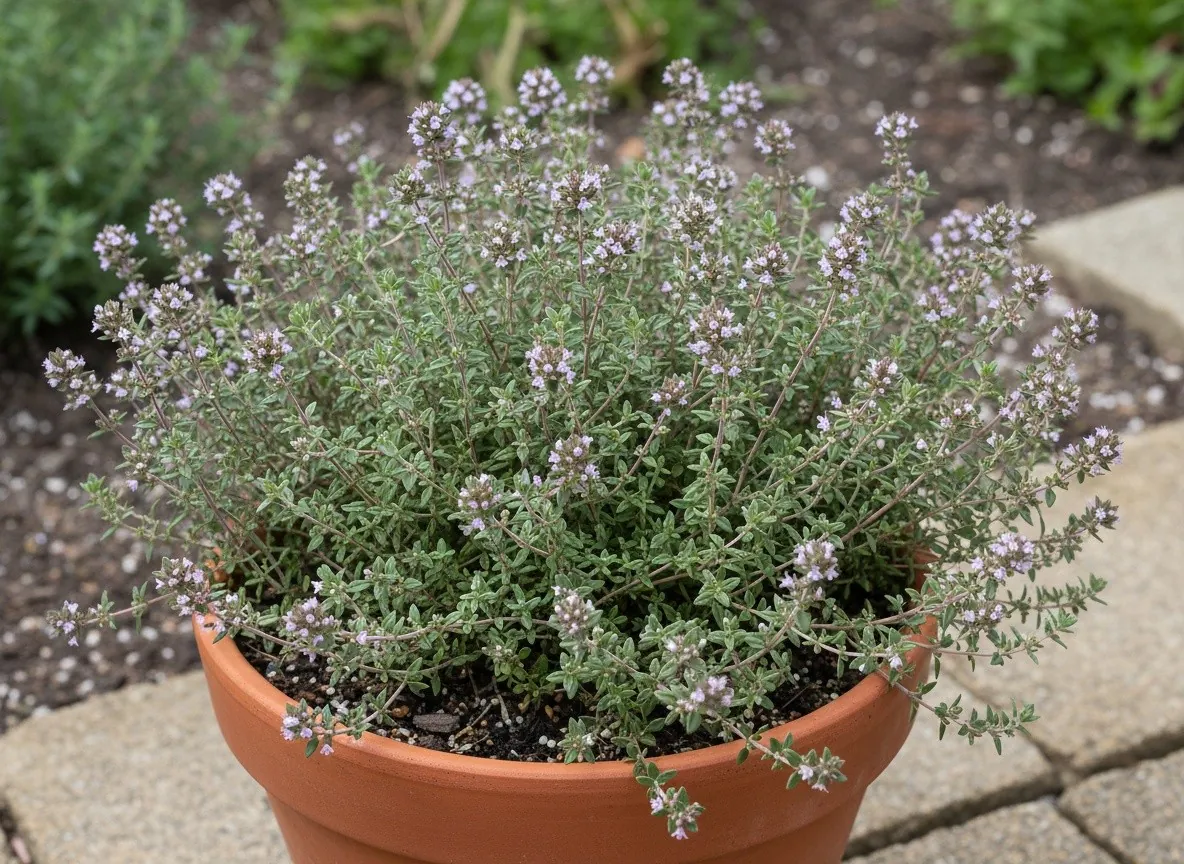
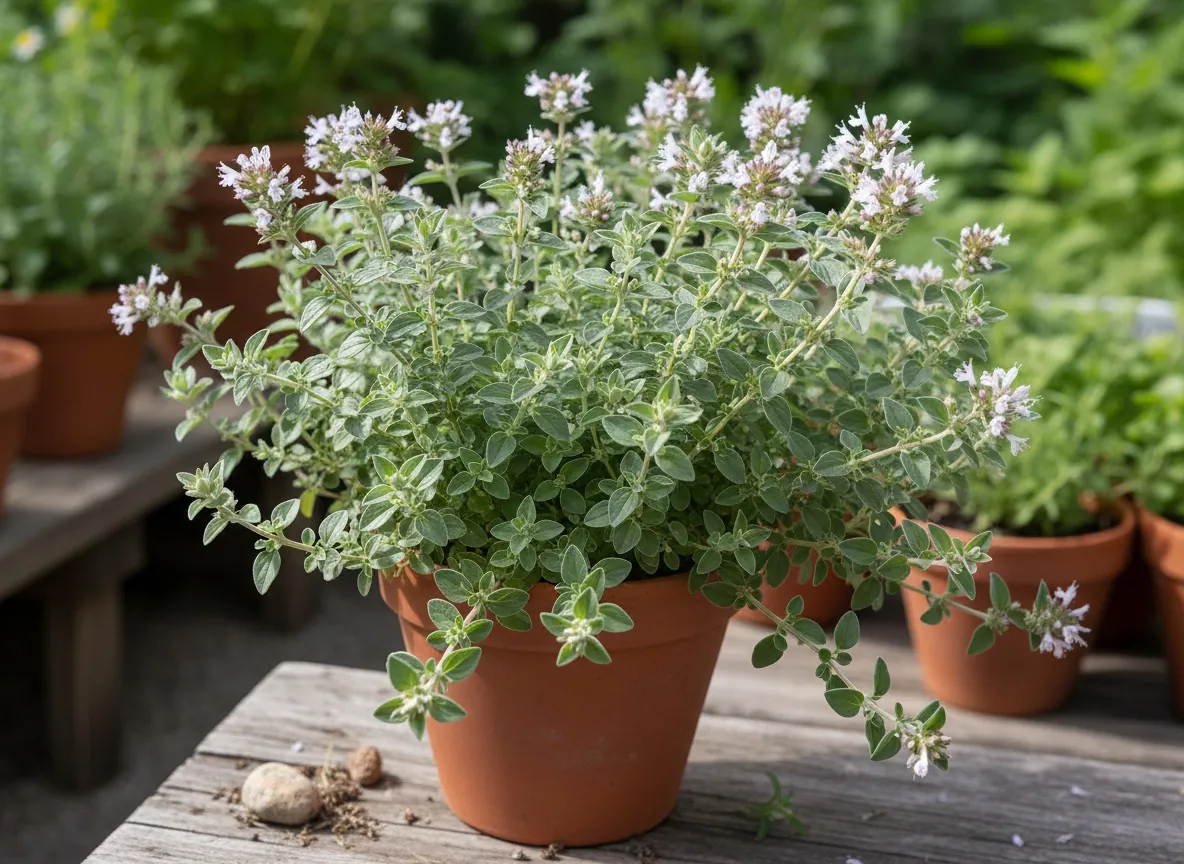
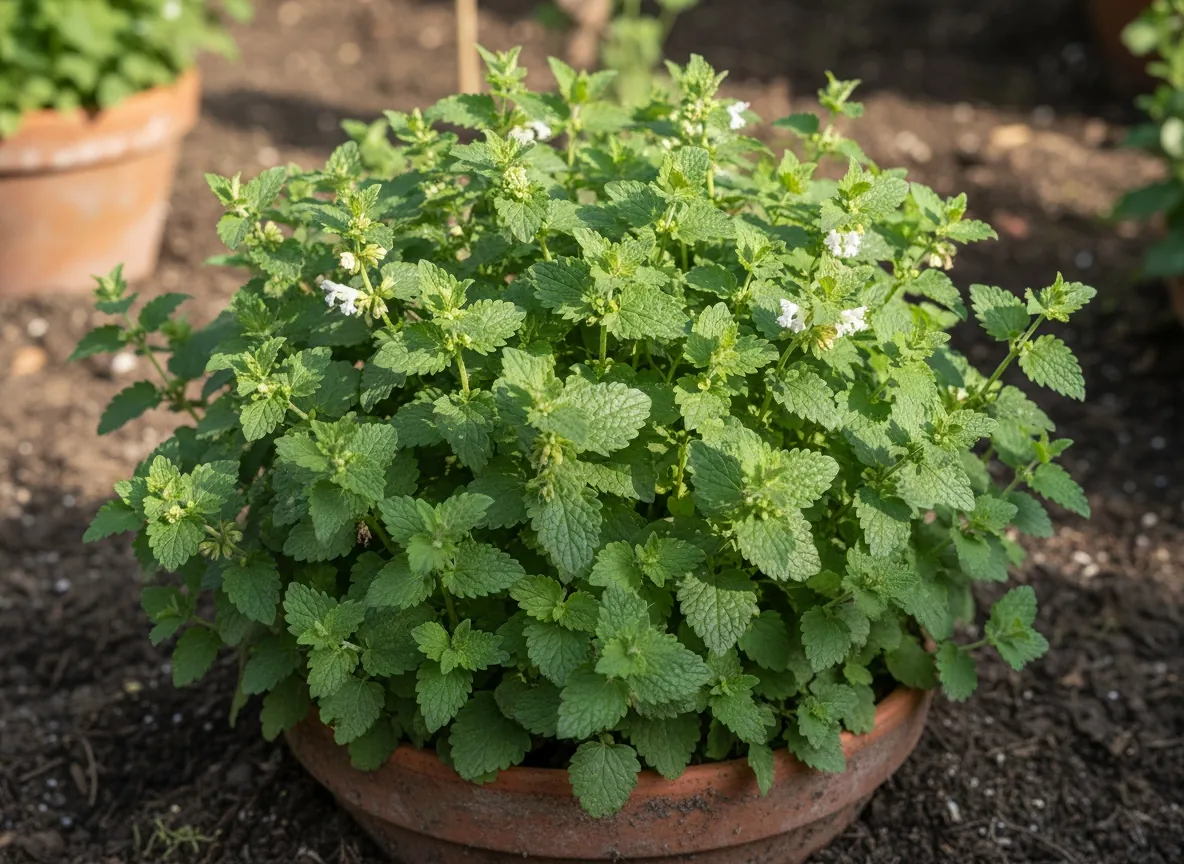
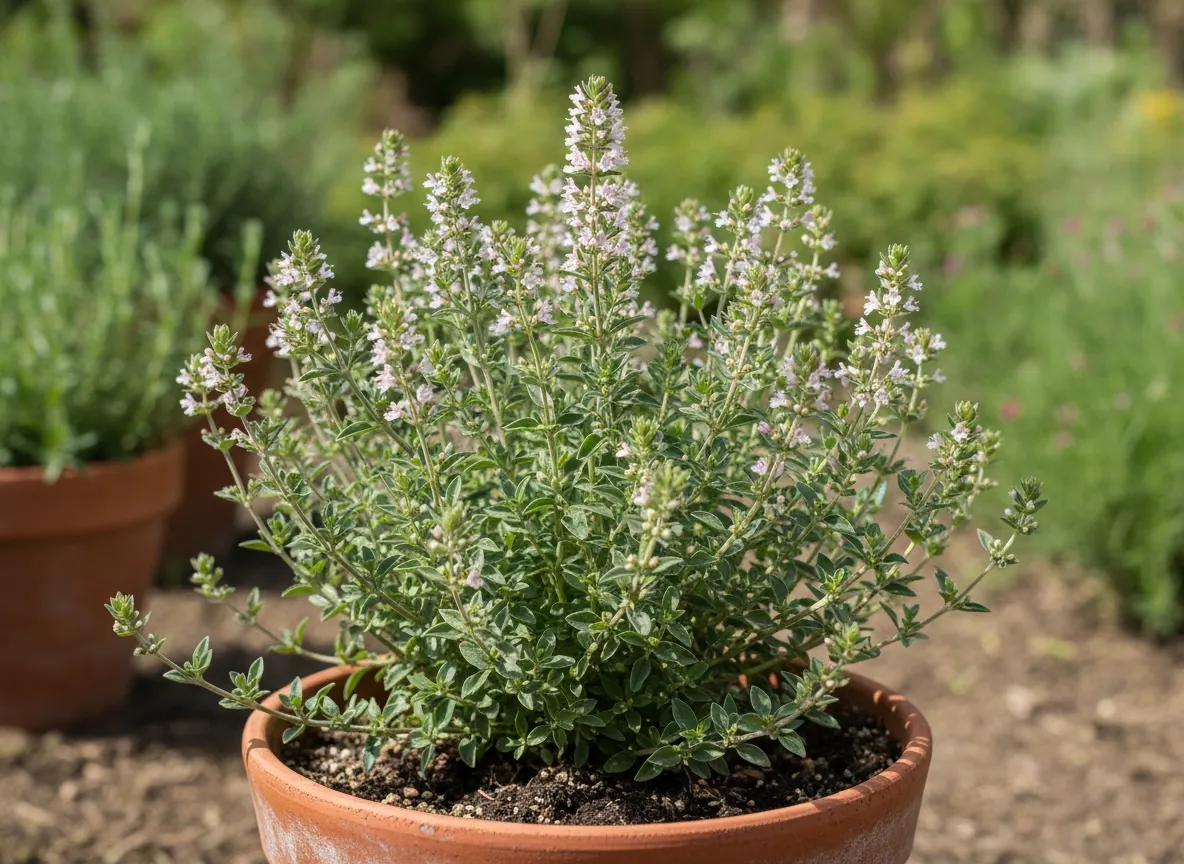
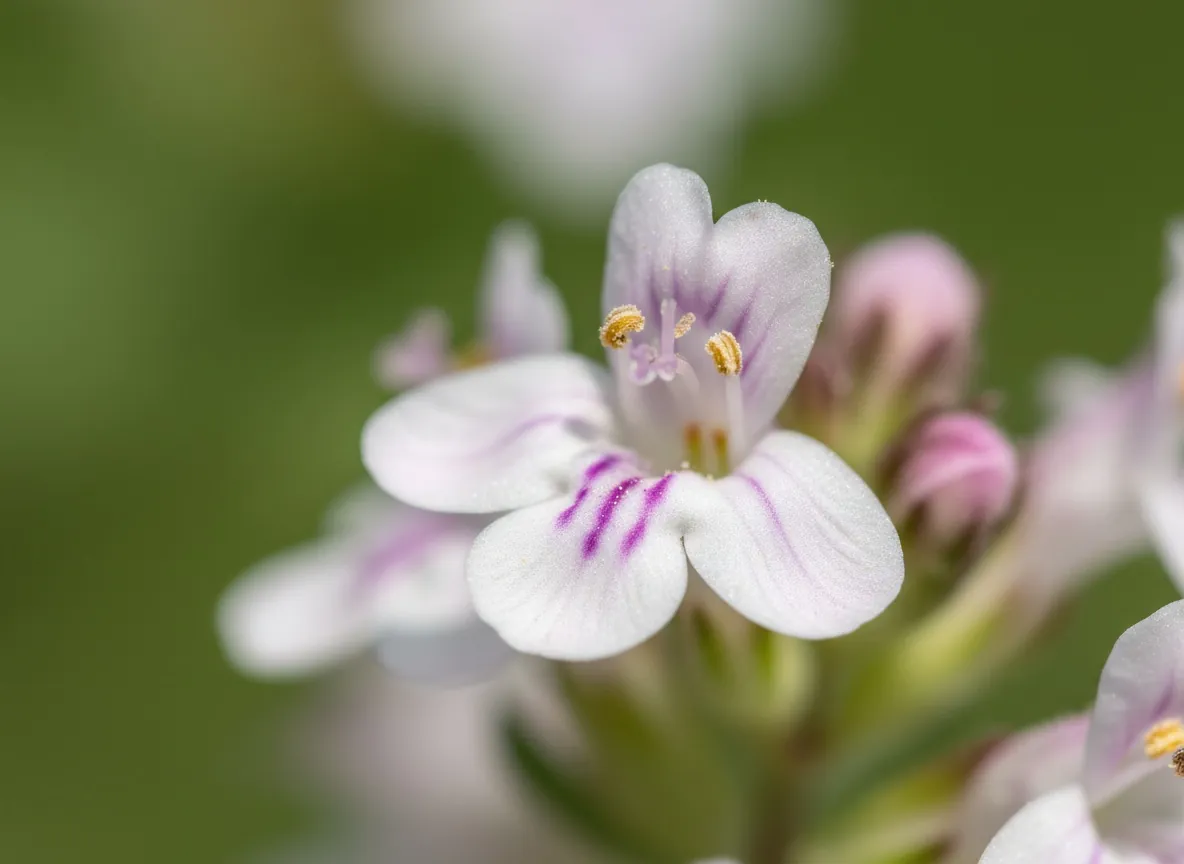
It forms a slender, branched little plant 20–40 cm tall, with thin shoots that become woody at the base and narrow, lanceolate leaves of a dark green colour. The small, white-pink or pale lilac flowers grow in the leaf axils along the whole length of the shoots and are very rich in nectar. The aroma is sharp, spicy and distinctly peppery — stronger and more biting than that of thyme, with which savory is sometimes confused.
Growing and care
Watering
Water sparingly, only once the top layer of soil has dried out. On a moist, heavy site the shoots flop and rot at the base, and the aroma weakens noticeably.
Fertilizing
Minimally — savory does best on moderately fertile soil. Nitrogen feeding produces rank, floppy shoots with a weaker, less pungent aroma.
Planting
A sunny, warm site, the soil well-drained and rather calcareous. The seeds germinate with access to light — sow very shallowly and only press in, do not cover with a thick layer of soil.
Pruning
Cut whole shoots 5–8 cm above the ground on a sunny day, once the dew has dried — that is when the oil content is highest. With an early first harvest the plant will manage to regrow and give a second one.
Companion plants
Good companions
The most famous pair in companion planting — savory planted between rows of beans limits attacks of black bean aphid, and in the kitchen these two plants end up in the same pot anyway. The German name Bohnenkraut, meaning bean herb, says it all.
Very similar requirements (sun, well-drained soil, sparing watering), and low-growing savory does not take light from the onions.
Planted at the edge of a lettuce bed it is held to repel aphids; fast-growing lettuce leaves the bed before savory has spread.
Bad companions
Mint spreads by runners and in a single season smothers the small savory seedlings, keeping the substrate around them too moist.
Cucumber requires constant moisture and fertile soil — in such conditions savory flops, rots at the base and loses its pungent aroma.
The evidence level indicates whether the relationship is backed by research, observation, or gardening tradition.
Toxicity
| For whom | Level | Notes |
|---|---|---|
| Humans | None | A classic culinary seasoning, safe in normal consumption. |
| Dogs | None | — |
| Cats | None | — |
History and origin
Savory was one of the basic seasonings of ancient Rome — it was used long before black pepper reached Europe, and it was savory that gave dishes their sharpness. The Romans associated it with satyrs, which is probably the source of the genus name Satureja. In Central Europe it became permanently bound up with legume cookery: in Germany, Austria and Switzerland there is no green bean dish or bean soup without savory.
Uses
For the vegetable garden, the herb garden and balcony containers in a sunny position. In the kitchen it is above all a seasoning for beans, peas, lentils, broad beans and cabbage, but it also works well with roast meats, sausages, marinades, pickled cucumbers and potatoes. The aroma is sharp, so it is added in moderation, usually during cooking. Dried, it keeps its strength very well all year round, which is why the bunches cut in July are dried as a store.
Trivia
- Savory was the European substitute for pepper in the days when real pepper was a luxury commodity available only to the wealthiest.
- The tradition of adding savory to beans has a practical justification — the herb is held to ease the flatulence that follows legume dishes.
Frequently asked questions
Why does summer savory have to be sown every year?
Because it is an annual by nature — it completes its life cycle in a single season by setting seed, and dies after the first frosts. There is nothing here that covering can improve. If we want a perennial savory, we have to reach for a different species — winter savory (Satureja montana), a frost-hardy sub-shrub with a similar, though slightly sharper, aroma.
When should savory be harvested for the most aroma?
At the very start of flowering, usually in July — that is when the content of essential oils is highest. The shoots are cut on a sunny day once the dew has dried, about 5–8 cm above the ground. After full flowering the shoots turn woody and the leaves lose their characteristic sharpness. With an early first harvest the plant will manage to regrow and give a second crop at the end of summer.
Does savory really help against aphids on beans?
This is one of the best-established recommendations of companion planting — gardeners have for generations observed fewer attacks of black bean aphid on beans growing next to savory, probably thanks to the strong essential oils masking the scent of the host plant. It is worth treating this as support rather than a guarantee, however — under heavy pest pressure, proximity alone is not enough.
Sources
- Plants of the World Online (POWO) — Satureja hortensisDatabase (GBIF, POWO…)
- Missouri Botanical Garden — Satureja hortensisInstitution / botanical garden
My note
A private note for this plant — saved in your browser.