In short
- Needs sun, fertile soil, and consistent moisture.
- Plant with the crown (central bud) level with the soil surface.
- Propagates easily by runners (stolons).
- Replace plants every 3–4 years — yields decline with age.
- Mulching protects the fruit from rot and soil splash.
Botanical data
- Family
- Rosaceae (Rosaceae)
- Height
- 0.15–0.3 m
- Width
- 0.3–0.5 m
- Habit
- Creeping
- Growth rate
- Fast
- Position
- Full sun, Partial shade
- Soil
- Humus-rich, Loamy
- pH reaction
- pH 5.5–6.5
- Moisture
- Moderate
- Bloom
- April–June
- Hardiness
- USDA 4a–9a
- Propagation
- By runners, By division
Characteristics
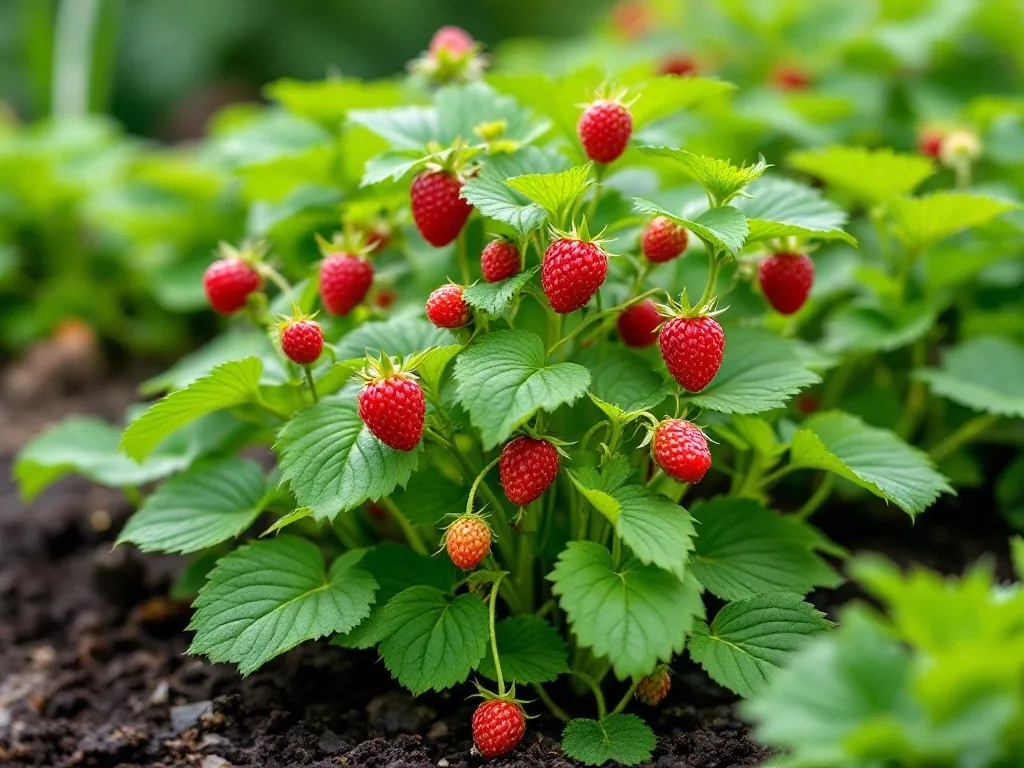
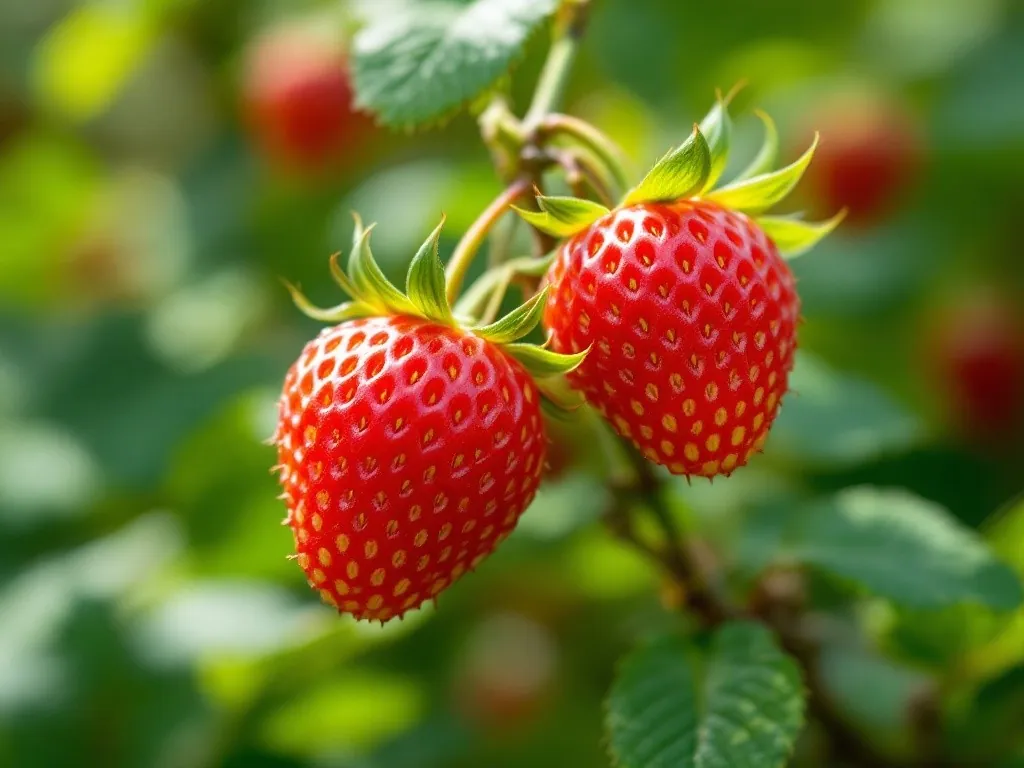
A low perennial with trifoliate leaves and white flowers that spreads by aboveground runners. The edible "fruit" is actually an enlarged floral receptacle studded with tiny achenes (the true fruits) on its surface.
Growing and care
Watering
Needs consistent moisture, especially during fruiting. Water at the base — wet fruit and leaves rot and develop disease easily.
Fertilizing
Excess nitrogen produces lush foliage at the expense of fruit.
Planting
Fertile, humus-rich soil; plant so the crown (central bud) sits level with the ground — too deep and it rots, too shallow and it dries out.
Pruning
Remove runners (unless kept for propagation) along with old or diseased leaves; tidy the bed in autumn.
Companion plants
Good companions
Low-growing leafy vegetables make good use of the space between strawberry rows before the plants fill out.
Garlic's scent may help limit the fungal diseases and pests that attack strawberries.
Bad companions
Nightshade family plants (tomato, potato) share susceptibility to verticillium wilt, which is also dangerous for strawberries.
The evidence level indicates whether the relationship is backed by research, observation, or gardening tradition.
Diseases and pests
A white, powdery coating on leaves, shoots and buds. The leaves turn yellow, become deformed and drop prematurely.
Grey mouldA grey-brown, fluffy coating of mycelium on flowers, fruit, leaves and shoots, preceded by watery, rotting spots. It attacks weakened and damaged tissue and develops rapidly in humidity and cool conditions and where air circulation is poor. Common on strawberries, begonias, peonies and roses.
AphidsSmall (1–3 mm) soft-bodied insects, green, black or pink, feeding in clusters on young shoots and the underside of leaves. They excrete sticky honeydew.
Slugs and snailsSlugs and shelled snails that feed at night and after rain. Symptoms: irregular holes in the leaves and young seedlings eaten off completely, silvery slime trails on leaves and soil. The greatest damage occurs in damp, shaded spots — particularly on lettuce, strawberries and hostas.
Toxicity
| For whom | Level | Notes |
|---|---|---|
| Humans | None | — |
| Dogs | None | — |
| Cats | None | — |
History and origin
The modern garden strawberry originated in 18th-century France from an accidental cross between the North American scarlet strawberry and the South American Chilean strawberry, combining the aroma of the former with the fruit size of the latter.
Uses
For gardens, fruit beds, pots, and balcony boxes, as well as hanging cultivation. Fruit is eaten fresh and used in preserves.
Trivia
- The strawberry is a false fruit — the red part is an enlarged floral receptacle, while the true fruits are the tiny "seeds" (achenes) on its surface.
- The strawberry is the only common fruit that carries its seeds on the outside rather than the inside.
Frequently asked questions
Why are my strawberries small and producing poorly?
Common causes include plants that are too old (yields drop after 3–4 years), excess nitrogen (lush foliage at the expense of fruit), overcrowding, or too much shade.
What should I do with strawberry runners?
Runners (stolons) can be rooted to produce new plants, or removed if you want to direct the plant's energy into fruiting instead. For propagation, choose the first, strongest plantlets along the runner.
How do I protect strawberry fruit from rot?
Mulch the bed with straw or matting so fruit doesn't sit on damp soil, water at the base rather than over the leaves, and keep enough spacing between plants for good air circulation.
Sources
- Plants of the World Online (POWO)Database (GBIF, POWO…)
- RHS — StrawberriesInstitution / botanical garden
My note
A private note for this plant — saved in your browser.