In short
- Flowers in winter, from December to March — it often pushes through the snow.
- Evergreen, the leathery dark leaves persist all year round.
- Strongly poisonous: the rhizome and leaves contain cardiac glycosides and protoanemonin, and the sap irritates the skin.
- Requires alkaline or neutral, well-drained soil — it tolerates neither acid peat nor standing water.
- Grows slowly and does not tolerate transplanting — plant it once, for years.
- Cut out the old leaves in December: this reveals the flowers and limits black spot.
Botanical data
- Family
- Ranunculaceae (Ranunculaceae)
- Height
- 0.2–0.35 m
- Width
- 0.3–0.45 m
- Habit
- Clump-forming
- Growth rate
- Slow
- Position
- Partial shade, Shade
- Soil
- Chalky, Loamy, Humus-rich
- pH reaction
- pH 6.5–8
- Moisture
- Moderate
- Bloom
- December–March
- Hardiness
- USDA 3b–8a
- Propagation
- From seed, By division
Characteristics
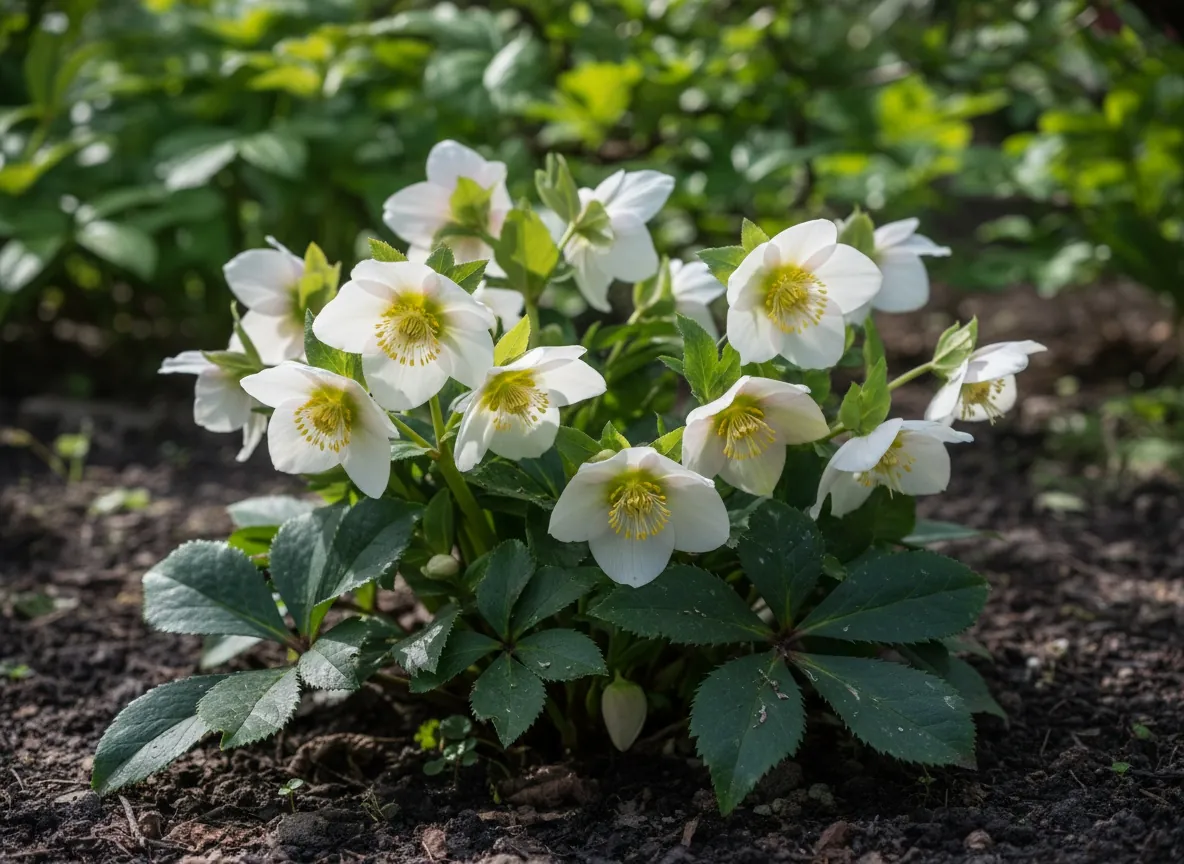
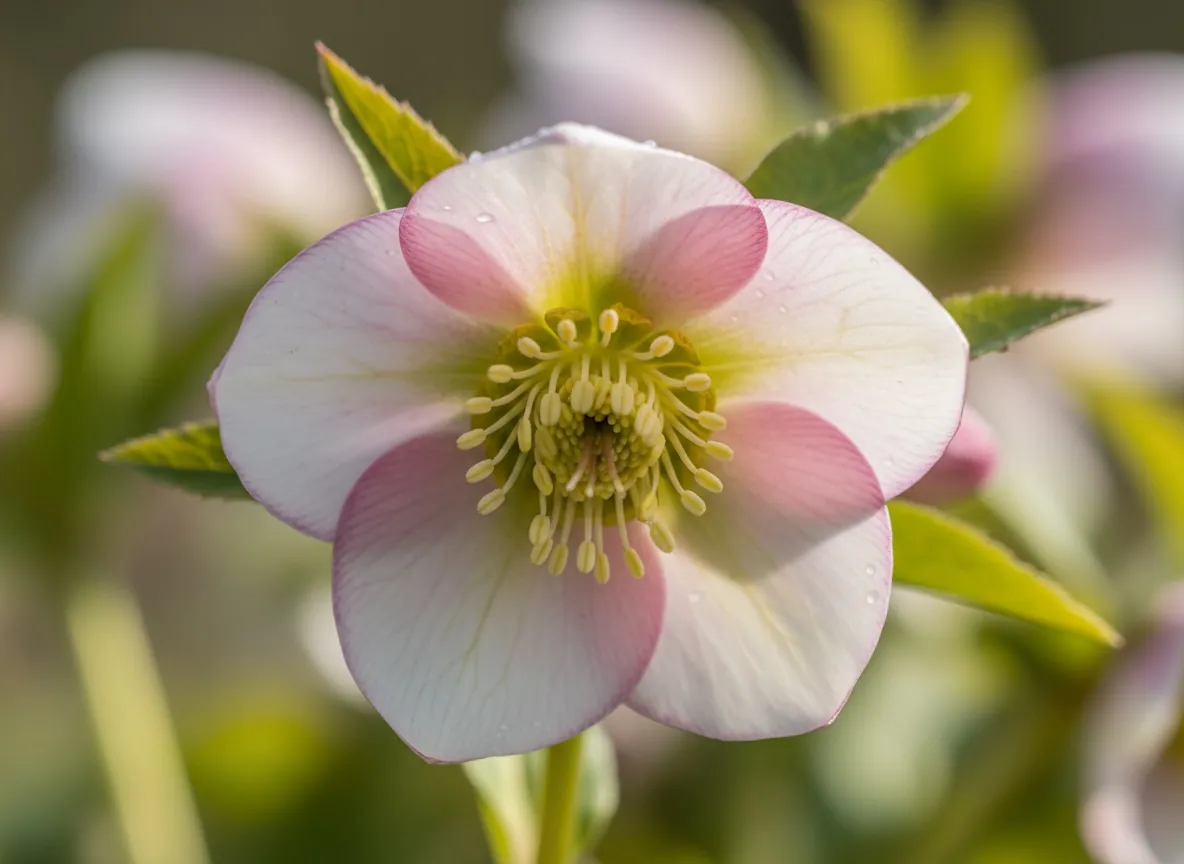
It forms a low, compact clump from a short, black rhizome. The leaves are basal, palmately composed of 7–9 leathery, dark green segments toothed at the margin, set on stiff stalks — they stay green all winter. The flowers, 5–8 cm across, grow singly or in pairs on fleshy stems, are pure white at first and turn pink and green with age. What we take for petals are in fact sepals; the true petals have been transformed into small, tubular nectaries around the bunch of yellow stamens. That is precisely why the flower does not drop after blooming but lasts for weeks, gradually changing colour.
Growing and care
Watering
In summer, when the Christmas rose is in vegetative dormancy, it is enough to prevent it drying out completely — a mulch is useful. It does not tolerate standing water around the crown; on heavy soil it simply rots in winter.
Fertilizing
A handful of compost around the clump in autumn. On acid soils it is worth applying dolomitic lime every few years — the Christmas rose is a plant of calcareous substrates.
Planting
A deeply dug planting hole with compost and gravel; on acid soil add lime. Plant in a place where the Christmas rose can stay for years — it does not tolerate transplanting and after each move it may fail to flower for a season or two.
Pruning
Cut out the old, previous year's leaves at the base. The operation has two purposes: it reveals the flowers, which otherwise disappear in the thicket of leaves, and it removes the source of infection by hellebore black spot, whose lesions overwinter precisely on the old leaves.
Companion plants
Good companions
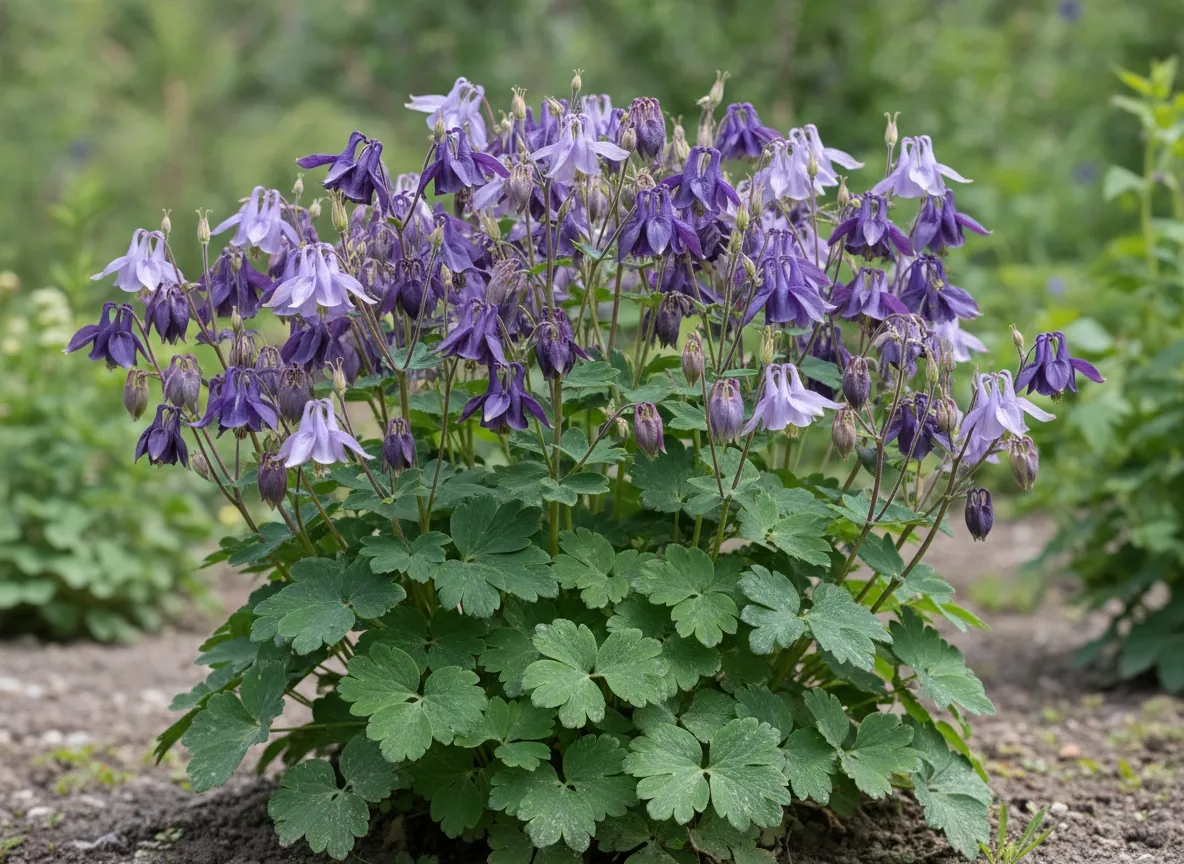
The early bulbs begin flowering exactly when the Christmas rose is finishing — together they keep the bed in flower from December to April, while the rest of the garden is still asleep.
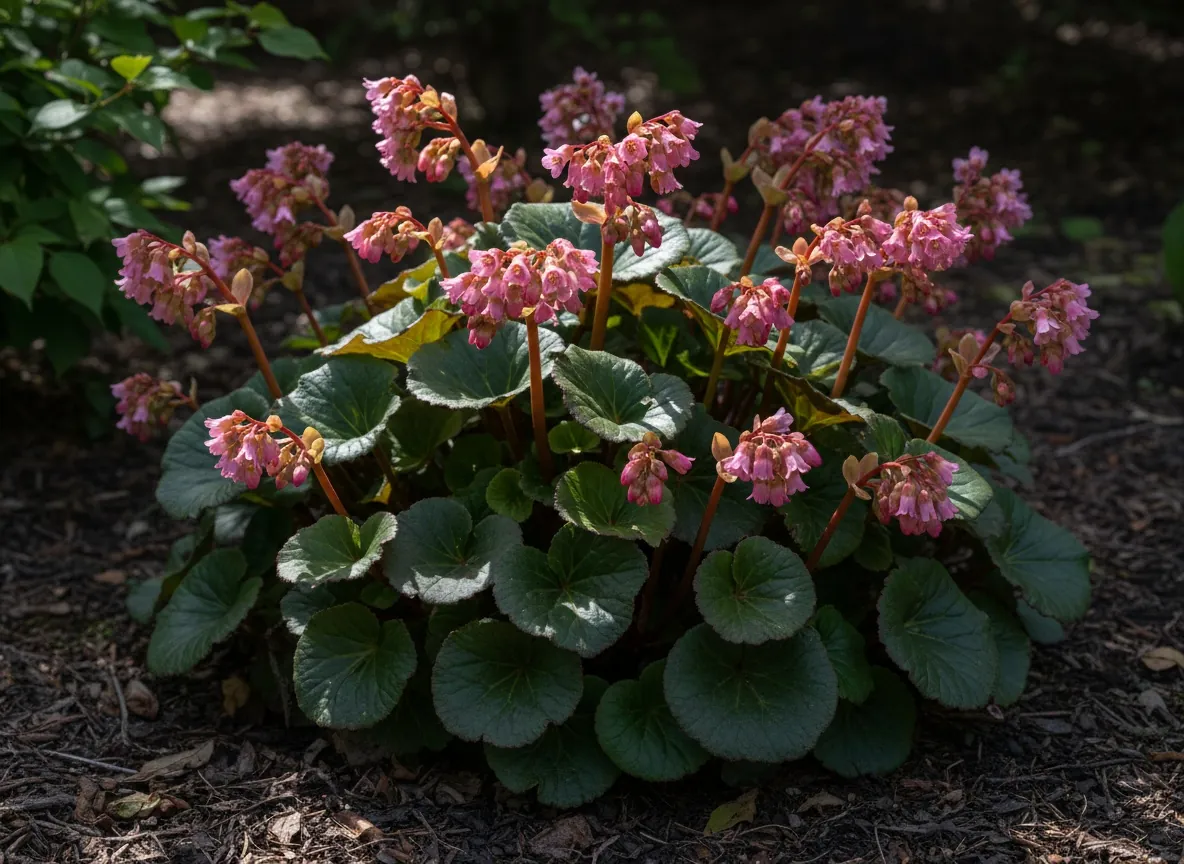
Both are evergreen, tolerate partial shade and do not fear frost — thanks to them the winter bed has both leaf and flower, and the large bergenia leaf provides a backdrop for the white flowers of the Christmas rose.
They recreate the conditions of the natural site: in winter and early spring, when the Christmas rose flowers, the canopy is leafless and lets light through, and in summer it gives it the shade it needs.
Bad companions
Conflicting soil requirements: the rhododendron requires acid soil and acid mulch, while the Christmas rose is a plant of calcareous substrates — fertilising for one of these plants harms the other.
The same conflict of soil reaction — the azalea needs acid peat, the Christmas rose lime; side by side neither will grow well.
The Christmas rose grows very slowly and stays in the same place for years — a spreading carpet smothers it and makes the necessary autumn cleaning of the clump impossible.
The evidence level indicates whether the relationship is backed by research, observation, or gardening tradition.
Toxicity
| For whom | Level | Notes |
|---|---|---|
| Humans | High | The whole plant, and most strongly the rhizome, contains bufadienolide glycosides (hellebrin) and protoanemonin. Eating it causes burning of the mouth, severe vomiting, diarrhoea, dizziness and heart rhythm disturbances; severe poisoning is life-threatening. The fresh sap irritates the skin and can cause inflammation — gloves are obligatory when cutting and dividing. |
| Dogs | High | Eating the leaves or a dug-up rhizome causes drooling, vomiting, diarrhoea and disturbances of heart function. Requires urgent veterinary help. |
| Cats | High | Symptoms as in dogs; cats rarely eat the Christmas rose because of its burning taste, but the poisoning is serious. |
| Horses | High | Poisonous also after drying in hay — it causes colic and heart rhythm disturbances. |
History and origin
Under the name “black hellebore” the plant runs through the whole history of ancient medicine: the Greeks and Romans used the rhizome as a drastic purgative and a remedy for “madness”, and the myth of the seer Melampus, who was said to have cured the mad daughters of King Proetus with it, gave rise to a long tradition of treatment with hellebore. In reality it was a risky remedy — the boundary between a therapeutic and a lethal dose is very narrow here, and accounts of deaths after a “cure” with hellebore recur in the sources. Modern medicine does not use it. The name “Christmas rose” comes from a medieval legend about a girl who had nothing to give the Christ Child and whose tears in the snow turned into white flowers.
Uses
For beds in partial shade, under deciduous trees and shrubs, in naturalistic gardens and by entrances, where the winter flowering will be visible close up. It looks very good in large containers on a sheltered terrace — a flower at eye level is appreciated far more. Cut flowers last a long time in water if the stem is slit lengthways. In a garden with small children it calls for caution because of its strong toxicity.
Trivia
- The adjective “black” in the name Helleborus niger does not refer to the flower but to the rhizome — it is almost black. It is one of the most misleading names in botany: a white flower, a black name.
- On warm winter days, when bees leave the hive for a cleansing flight, the Christmas rose is sometimes one of the very few sources of pollen and nectar in the garden — its flowers are then visited by both honeybees and early flies.
- A Christmas rose flower lasts as long as 6–8 weeks, because its “petals” are sepals which do not fall after pollination but turn green and go on photosynthesising, nourishing the ripening seeds.
Frequently asked questions
Does the Christmas rose really flower in winter and doesn't frost harm it?
Yes, it flowers from December to March, depending on the weather and cultivar. Frost does it no harm — when the temperature drops sharply the flowers and leaves simply wilt and lie down on the ground, and after a thaw they return to their original position within a few hours. This is a normal mechanism, not damage. The plant is fully frost-hardy, and the flowers can push through a thin layer of snow.
Is the Christmas rose poisonous?
Yes, strongly. The whole plant, and especially the rhizome, contains bufadienolide glycosides and protoanemonin. Eating it causes burning pain in the mouth, vomiting, diarrhoea and heart rhythm disturbances — severe poisoning is life-threatening to people and animals. The sap alone irritates the skin, so when cutting the old leaves and dividing clumps you must work in gloves and not touch your eyes afterwards. The name “Christmas rose” can be misleading — this is not a rose, and nothing in this plant is suitable for eating or for home infusions.
Why is my Christmas rose not flowering?
Most often it is a matter of time and place. The Christmas rose grows very slowly — after planting or transplanting it often needs 2–3 years to flower properly, and it does not like being moved. The second common cause is soil that is too acid: it is a plant of calcareous substrates, so on acid ground it is worth adding dolomitic lime. Flowering is also weakened by deep shade in summer and by a permanently wet, heavy substrate in which the crown starts to rot.
Sources
- Plants of the World Online (POWO) — Helleborus nigerDatabase (GBIF, POWO…)
- RHS — Helleborus nigerInstitution / botanical garden
My note
A private note for this plant — saved in your browser.