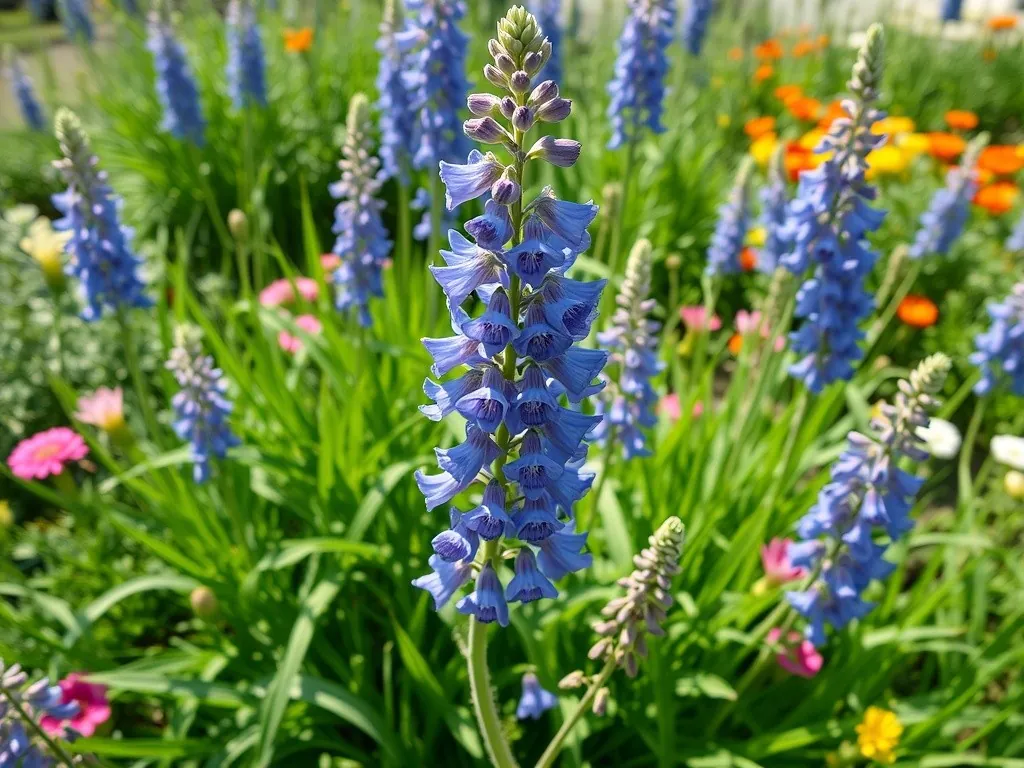
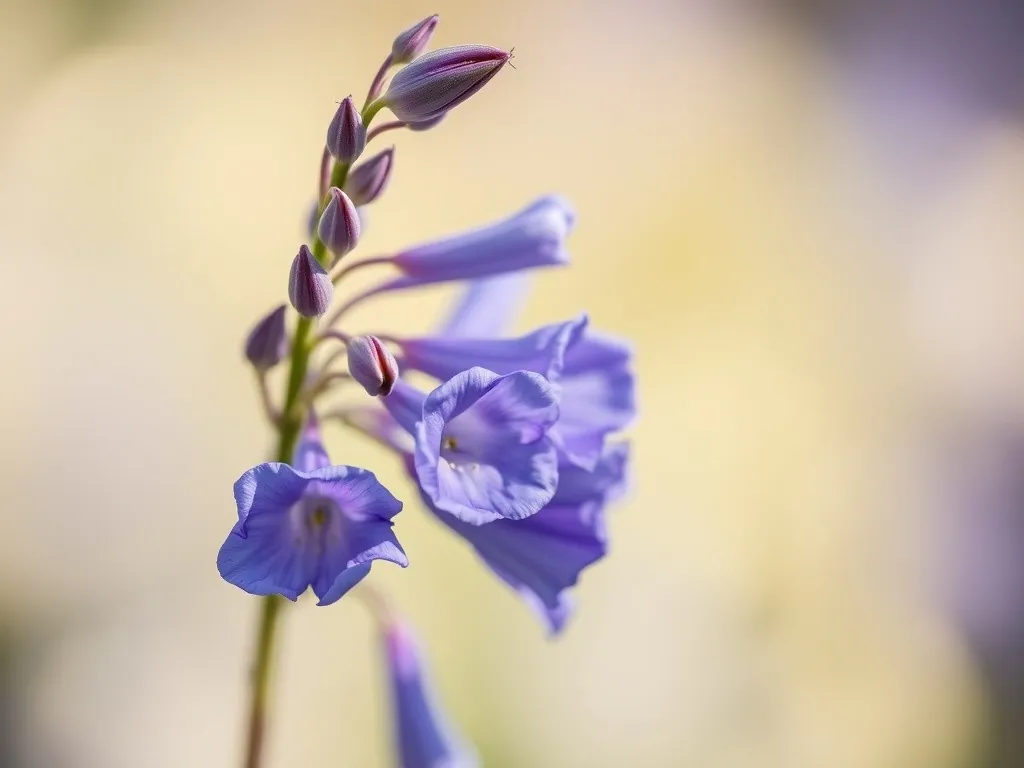
In short
- WARNING: the whole plant is highly toxic (diterpene alkaloids) — plant it out of the reach of children and pets.
- Position: sun or partial shade, fertile, moist but well-drained soil.
- The tall, heavy flower spikes need staking from early spring.
- Flowers in June–July; cutting back after flowering can trigger a second wave in autumn.
- Always work in gloves when caring for it — the plant's sap irritates the skin.
Botanical data
- Family
- Ranunculaceae (Ranunculaceae)
- Height
- 1–2 m
- Width
- 0.4–0.6 m
- Habit
- Upright
- Growth rate
- Moderate
- Position
- Full sun, Partial shade
- Soil
- Humus-rich, Loamy
- pH reaction
- pH 6–7.5
- Moisture
- Moderate, Moist
- Bloom
- June–August
- Hardiness
- USDA 3a–7b
- Propagation
- From seed, By division, From cuttings
Characteristics
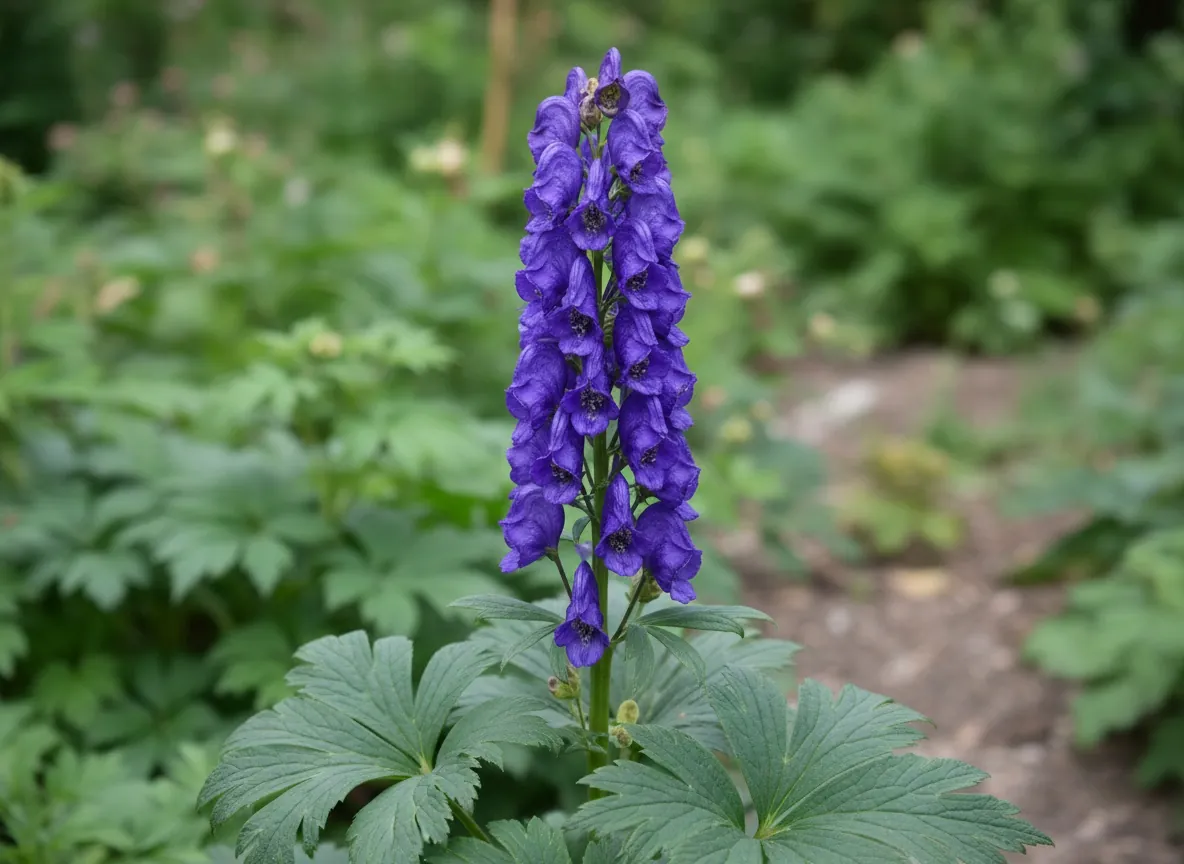
Forms upright, stiff stems reaching up to 2 metres tall, ending in long, dense spikes of spurred flowers. The leaves are deeply cut, palmate, and set mainly at the base of the shoot.
Growing and care
Watering
Requires constantly moist but well-drained soil — it tolerates neither drought nor waterlogging at the roots.
Fertilizing
Moderate, potassium-rich doses support the rigidity of the tall flower shoots.
Planting
Deeply dug, fertile soil; stakes or a support net are worth setting up straight away, before the shoots grow.
Pruning
Shortening the shoot after flowering often triggers a second, more modest wave of flowering in autumn; in autumn cut the whole plant back low to the ground.
Companion plants
Good companions
A classic combination of the English-style flower garden — contrasting inflorescence forms and similar site requirements.
A shared flowering time and similar soil requirements create an impressive, tall perennial border.
A similar habit of tall inflorescences and light requirements — together they form an impressive, layered border.
Bad companions
Because of the strong toxicity of the whole plant, it should not directly adjoin food crops, in order to avoid accidental contact or a mix-up during harvesting.
The evidence level indicates whether the relationship is backed by research, observation, or gardening tradition.
Toxicity
| For whom | Level | Notes |
|---|---|---|
| Humans | Lethal | The whole plant, especially the young leaves and seeds, contains highly toxic diterpene alkaloids (including delphinine). Ingestion can lead to heart rhythm disturbances, paralysis of the nervous system, and in extreme cases death. Plant out of the reach of small children. |
| Dogs | Lethal | Documented cases of fatal poisoning of pets after eating leaves or seeds. |
| Cats | Lethal | — |
| Horses | High | A classic plant poisonous to cattle and horses grazed on mountain meadows. |
| Rabbits | High | — |
History and origin
The species was described by Carl Linnaeus and has been cultivated in European gardens for centuries. Historically known both as a medicinal and a poisonous plant — in former folk medicine it was used, with great caution, externally against skin parasites; today any home use is discouraged because of its high toxicity.
Uses
A classic element of tall perennial borders and English-style gardens, a backdrop for lower plants. Because of its toxicity it is not advisable in gardens with small children, pets, or near pastures.
Trivia
- The genus name Delphinium comes from the Greek delphís (dolphin) — the flower bud resembles the shape of a dolphin's head.
- The larkspur is a relative of the buttercup and the monkshood — it belongs to the same alkaloid-rich family, the Ranunculaceae.
Frequently asked questions
Is larkspur dangerous to children and animals?
Yes, the whole plant — especially the young leaves and seeds — contains highly toxic diterpene alkaloids. Ingestion can be fatally dangerous to humans, dogs and cats, so it should not grow within reach of small children or pets, and it is worth wearing gloves when caring for it.
Why is my larkspur falling over?
The tall, heavy flower spikes are easily broken by wind and rain. The solution is early, systematic staking or a support net put in place at the very start of the shoots' growth.
Does larkspur flower a second time in the season?
Yes — after cutting the main shoot back just above the ground right after the first flowering, the plant often produces a more modest, second flowering in autumn.
Sources
- Plants of the World Online (POWO) — Delphinium elatumDatabase (GBIF, POWO…)
- North Carolina Extension Gardener Plant Toolbox — DelphiniumInstitution / botanical garden
My note
A private note for this plant — saved in your browser.