In short
- Site: partial shade, acidic, well-drained and consistently moist soil — as with rhododendron.
- Unlike most rhododendrons, it is deciduous (leaf-shedding), not evergreen.
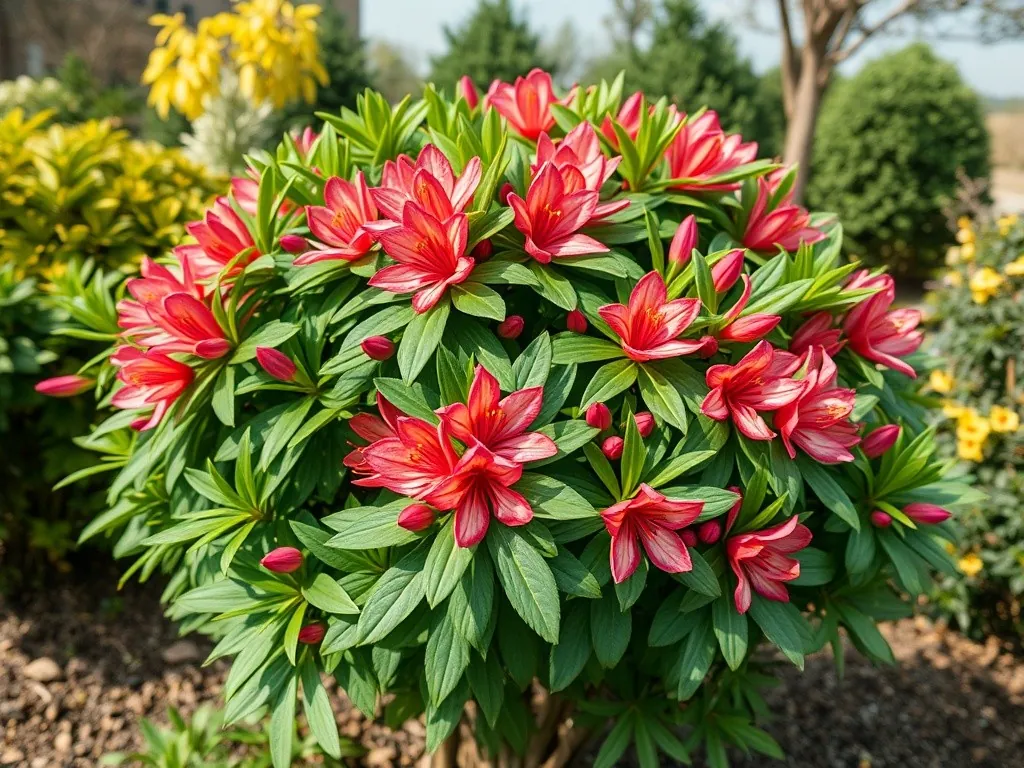
- Flowers early in spring, abundantly, in shades of orange and red.
- Strongly toxic — grayanotoxins are present in all parts of the plant, including the nectar.
- Requires soft water and peaty substrate, like other heath family plants.
Botanical data
- Family
- Ericaceae (Ericaceae)
- Height
- 1–1.5 m
- Width
- 1–1.5 m
- Habit
- Rounded
- Growth rate
- Slow
- Position
- Partial shade
- Soil
- Peaty, Humus-rich
- pH reaction
- pH 4.5–5.5
- Moisture
- Moist
- Bloom
- April–May
- Hardiness
- USDA 5a–8a
- Propagation
- From cuttings, By layering
Characteristics
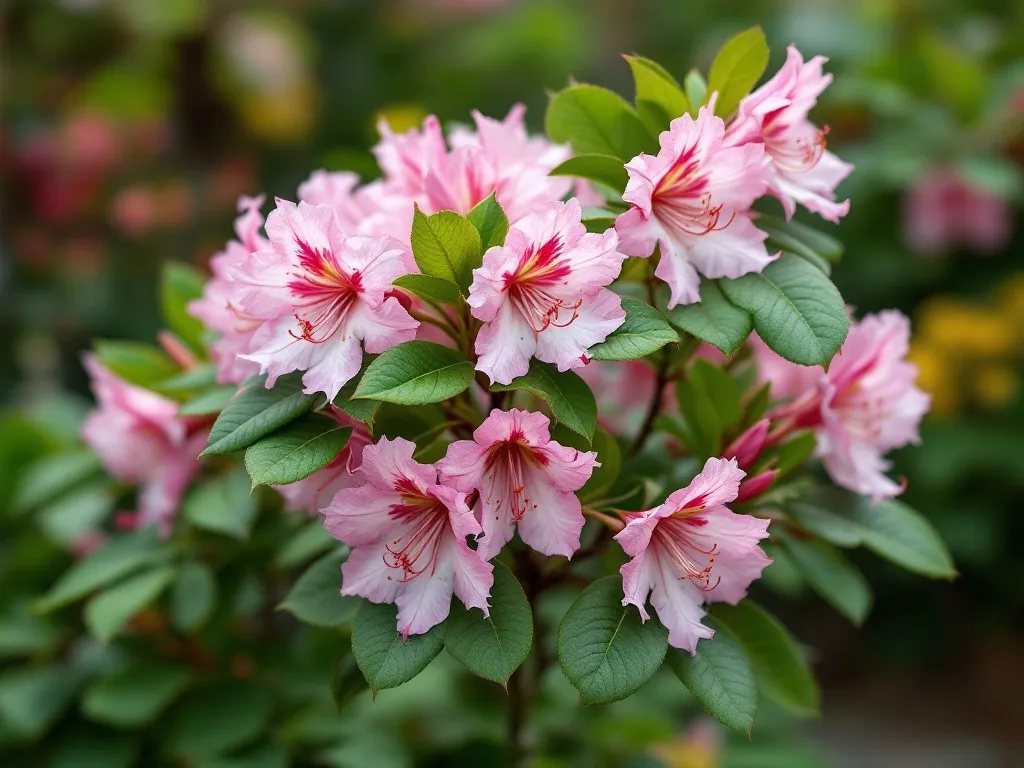
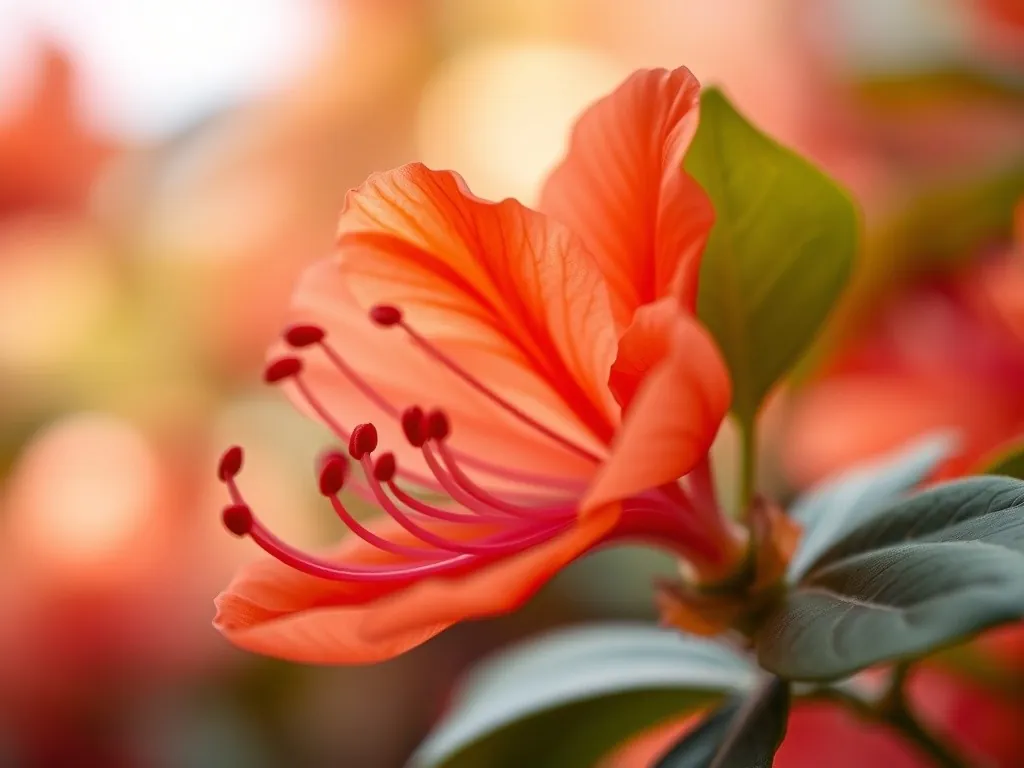
A compact, rounded shrub with smaller, ovate leaves than rhododendrons, which turn orange in autumn and drop in winter. Funnel-shaped flowers in shades of orange and red appear en masse in spring, often even before the leaves have fully developed.
Growing and care
Watering
Water only with soft water, preferably rainwater — hard, calcareous water raises the soil pH and harms the shallow root system.
Fertilizing
Only fertilisers intended for heath family plants (rhododendrons, azaleas, blueberries) — others lower the soil pH too slowly or even raise it.
Planting
Acidic, well-drained ericaceous soil required; plant the roots shallowly, do not bury the root collar.
Pruning
Remove spent flower clusters and individual, poorly growing shoots — azalea rarely needs formative pruning.
Companion plants
Good companions
The same botanical genus (Rhododendron) and identical soil requirements — they combine excellently together in a bed of acid-loving plants.
Ferns prefer the same acidic, moist, humus-rich soil and shade or partial shade as azalea, creating a naturalistic understorey composition.
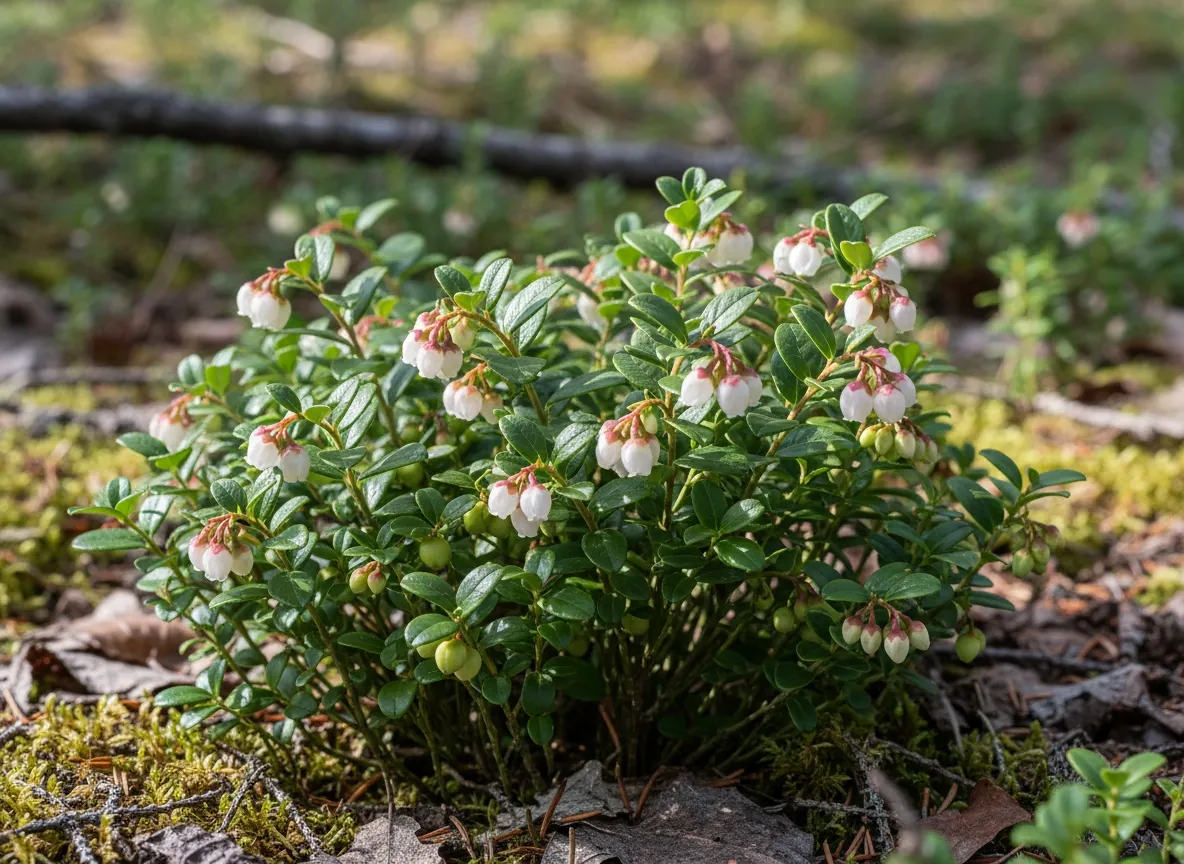
Shared requirements for acidic, peaty soil — a classic, proven combination in heather gardens.
Bad companions
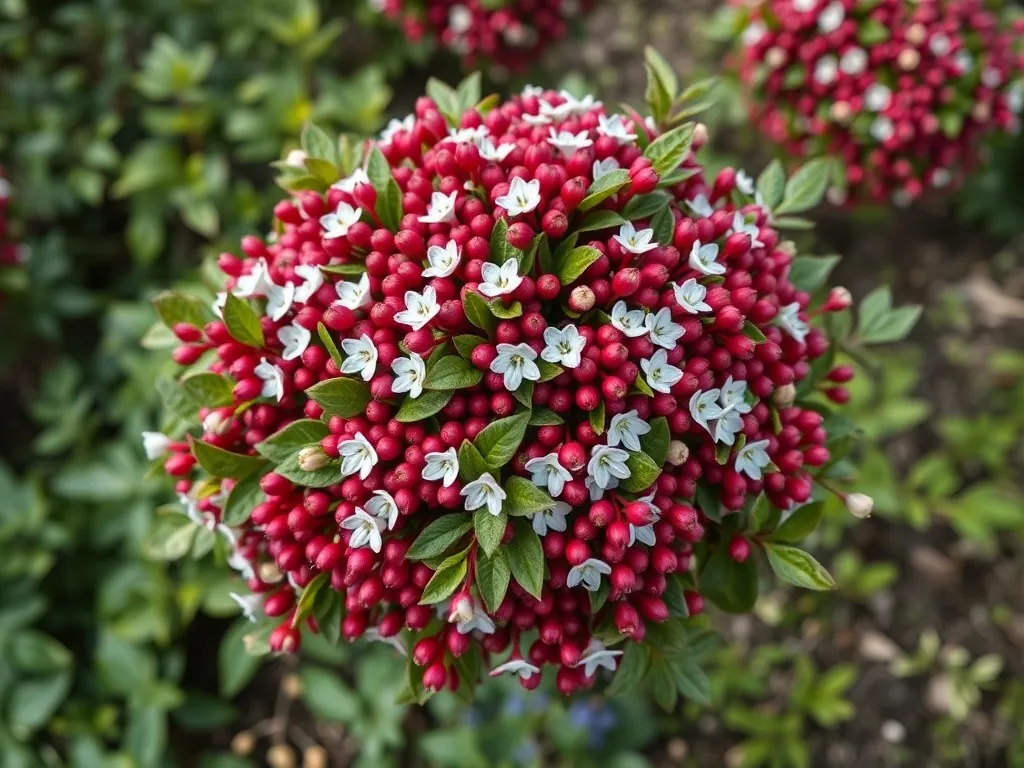
Privet tolerates alkaline and calcareous soils well, which is harmful to the acid-loving azalea — such proximity leads to leaf chlorosis and weakening of the plant.
The evidence level indicates whether the relationship is backed by research, observation, or gardening tradition.
Toxicity
| For whom | Level | Notes |
|---|---|---|
| Humans | High | All parts of the plant contain grayanotoxins, which after ingestion cause cardiac rhythm disturbances, a drop in blood pressure, vomiting and neurological disturbances. The toxins also pass into the nectar — the so-called "mad honey" from rhododendron flowers has occasionally been recorded as a source of poisoning. |
| Dogs | High | — |
| Cats | High | — |
| Horses | High | — |
History and origin
The genus Rhododendron comprises over a thousand species, among which two groups are conventionally distinguished in horticulture: the evergreen "true rhododendrons" and the deciduous, small-leaved "azaleas" — originating mainly from Japan and East Asia. Since the 19th century, Rhododendron japonicum has been one of the parent species of many popular garden azalea cultivars.
Uses
Excellent for beds of acid-loving plants together with rhododendrons, evergreen azaleas and blueberries, in heather gardens and as a spring accent in partly shaded corners of the garden.
Trivia
- The division into "rhododendrons" and "azaleas" is horticultural, not botanical — both groups belong to the same genus Rhododendron and differ mainly in leaf size, winter leaf drop and flowering rhythm.
- Honey produced from the nectar of some Rhododendron species is sometimes called "mad honey" because of the grayanotoxins it contains — cases of human poisoning from it have been recorded historically.
Frequently asked questions
Is Japanese azalea the same as rhododendron?
Botanically yes — both belong to the same genus Rhododendron. In horticulture, "azalea" is traditionally distinguished as a smaller, more often deciduous shrub with smaller leaves and a different flowering rhythm than the evergreen rhododendron.
Is Japanese azalea poisonous?
Yes, all parts of the plant contain grayanotoxins that are highly toxic to humans and pets, causing among other things cardiac rhythm disturbances. Do not plant within reach of small children or animals prone to chewing plants.
Why are my azalea's leaves turning yellow?
The most common cause is soil that is too alkaline or hard, calcareous water used for watering — azalea requires distinctly acidic soil (pH 4.5–5.5) and soft water, preferably rainwater.
Sources
- Plants of the World Online (POWO) — Rhododendron japonicumDatabase (GBIF, POWO…)
- RHS — Rhododendron (Azalea Group)Institution / botanical garden
My note
A private note for this plant — saved in your browser.