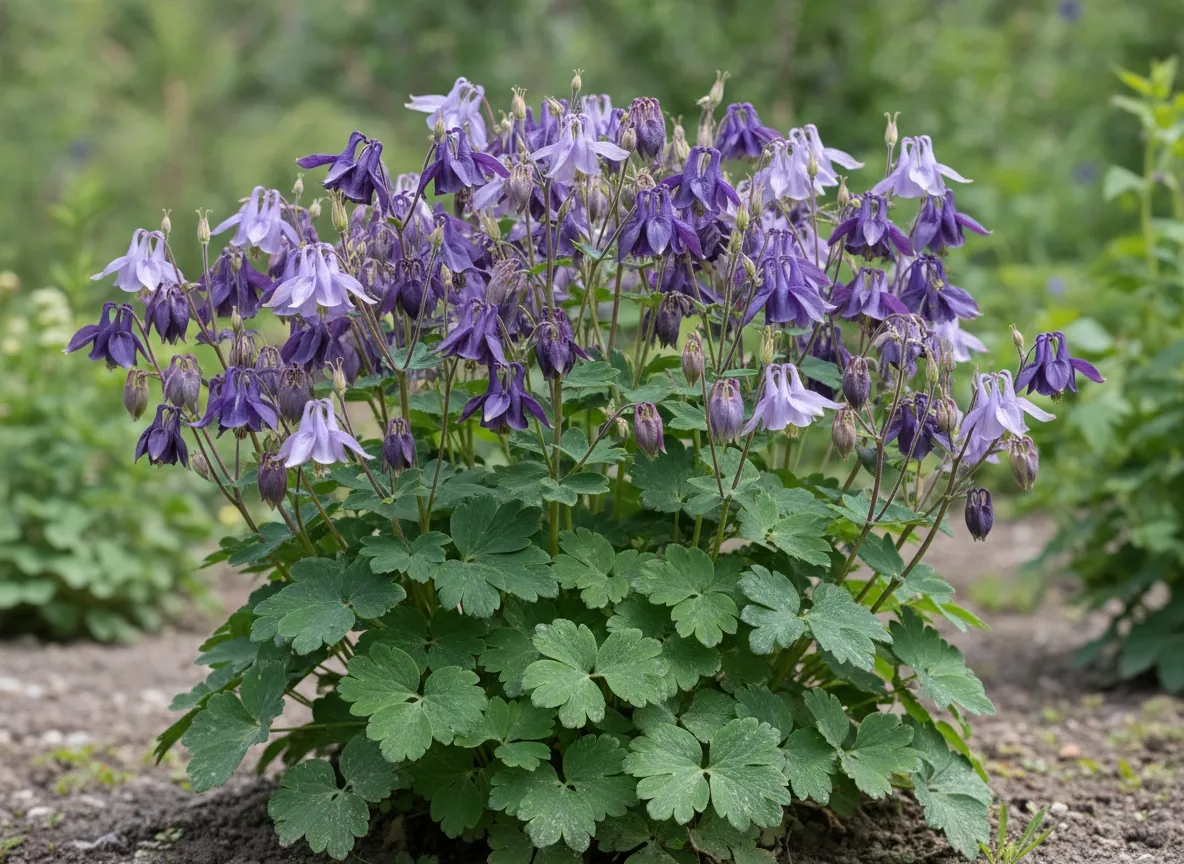
In short
- Flowers in May and June with striking, spurred flowers.
- Self-seeds and crosses easily, giving surprising colour variants.
- An undemanding perennial of partial shade and woodland edge, good for naturalistic gardens.
- Short-lived, but renews itself through abundant self-seeding.
- The whole plant is poisonous — the seeds and root contain cyanogenic compounds.
Botanical data
- Family
- Ranunculaceae (Ranunculaceae)
- Height
- 0.4–0.9 m
- Width
- 0.3–0.5 m
- Habit
- Clump-forming
- Growth rate
- Fast
- Position
- Full sun, Partial shade
- Soil
- Humus-rich, Loamy
- pH reaction
- pH 6–7.5
- Moisture
- Moderate, Moist
- Bloom
- May–June
- Hardiness
- USDA 3a–8b
- Propagation
- From seed, By division
Characteristics
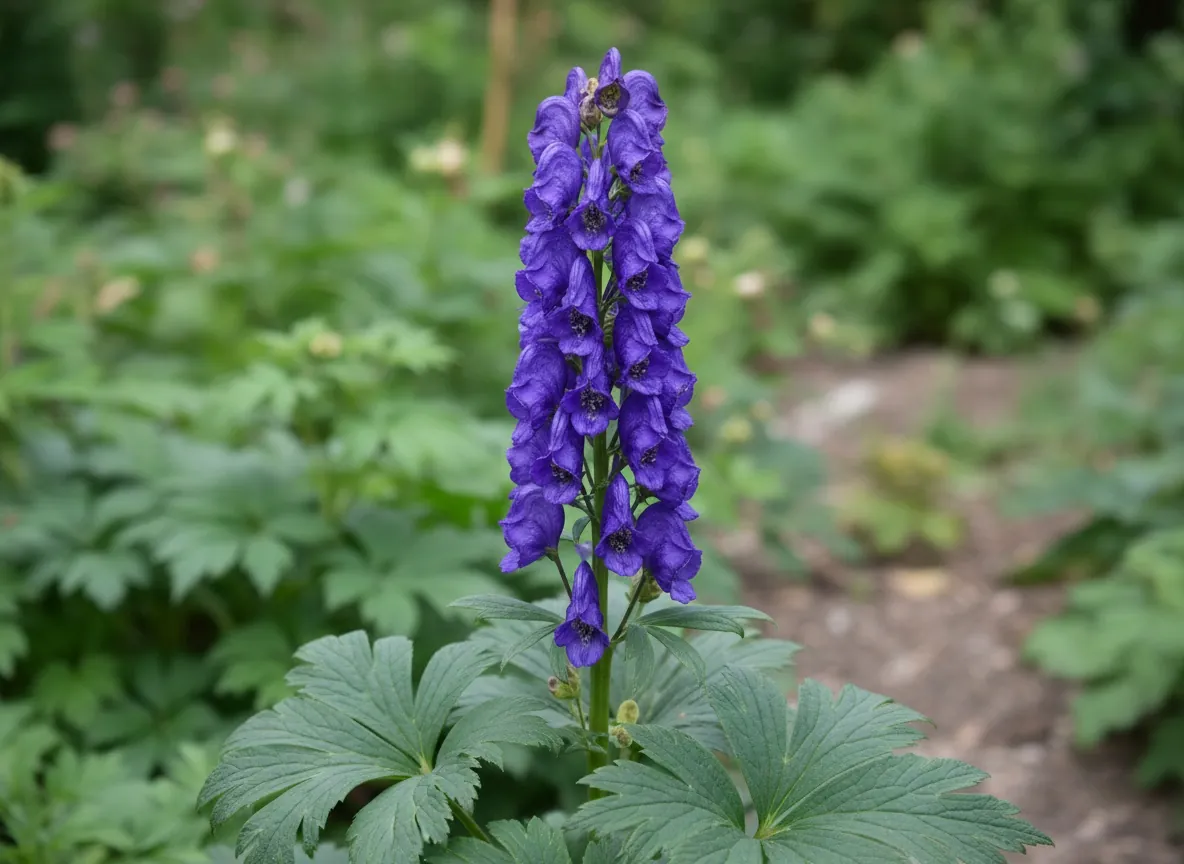
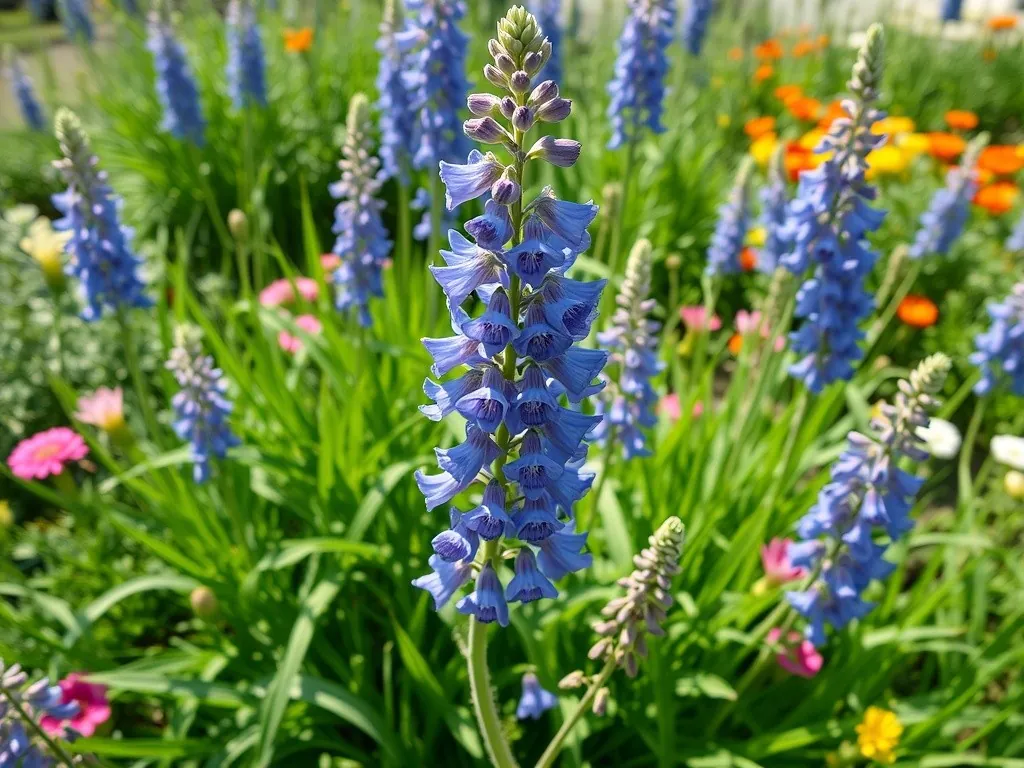
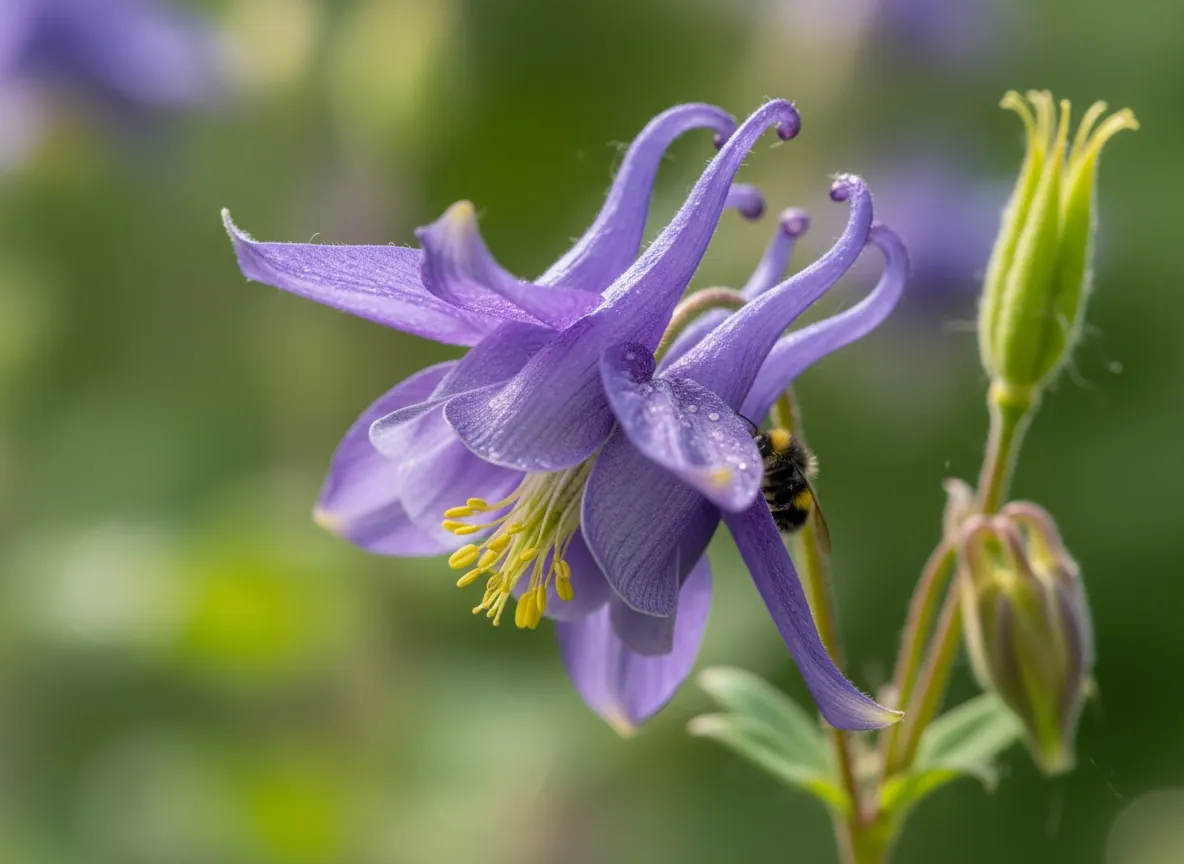
It forms a loose clump of delicate, palmately divided, blue-green leaves, above which thin, branched flower stems rise. The nodding flowers have five petals passing into characteristic, hooked spurs, in which nectar collects, accessible mainly to long-tongued insects such as bumblebees.
Growing and care
Watering
Likes fresh, moderately moist soil, especially in partial shade. It tolerates short droughts, but prolonged drying out shortens the already short life of this perennial.
Fertilizing
Undemanding — humus-rich soil and a spring dose of compost are enough.
Planting
Humus-rich, well-drained soil in sun or partial shade; the plant forms a taproot and tolerates transplanting of older specimens poorly.
Pruning
Remove spent shoots if you want to limit self-seeding; in the case of leaf-miner infestation, the whole leaves can be cut back to the ground — the plant will put out a fresh rosette.
Companion plants
Good companions
The hosta unfolds its leaves later and covers the base of the columbine when it loses its ornamental value after flowering; both like humus-rich soil in partial shade.
A classic cottage-garden pairing — they flower at a similar time, and the massive clumps of the peony contrast with the airy habit of the columbine.
Both species readily self-seed at the woodland edge and in partial shade, forming naturalistic, self-renewing plantings with similar requirements.
Bad companions
The abundant self-seeding of the columbine quickly smothers delicate, slow-growing plants and changes the composition of the rock garden.
The evidence level indicates whether the relationship is backed by research, observation, or gardening tradition.
Toxicity
| For whom | Level | Notes |
|---|---|---|
| Humans | Moderate | The whole plant, especially the seeds and root, contains cyanogenic compounds and other irritant substances — ingestion can cause gastrointestinal and cardiac disorders. Do not consume. |
| Dogs | Mild | — |
| Cats | Mild | — |
| Horses | Mild | — |
History and origin
Columbine has been cultivated since the Middle Ages in monastery and cottage gardens, where it was valued as an ornamental and, cautiously, a medicinal plant. In Christian symbolism its flower was associated with a dove (Latin columba), hence the English name “columbine”.
Uses
For perennial borders, cottage and naturalistic gardens, edgings, and plantings at the edge of trees and shrubs. It does well in partly shaded spots where it can seed freely.
Trivia
- The genus name Aquilegia probably derives from the Latin aquila (eagle) — the flower's curved spurs resemble the bird's talons, which is also reflected in the Polish name “orlik”.
- Thanks to the free crossing of different cultivars in a single garden, completely new colour combinations can arise from self-seeding.
Frequently asked questions
Why does columbine change its flower colour after a few years?
This is the result of self-seeding and the free crossing of cultivars. Plants grown from seed rarely repeat the colour of the mother plant, and in a garden with several colours of columbine, hybrids in new, often pastel shades come to dominate over time. To preserve a particular cultivar, you have to remove the self-sown seedlings and propagate it vegetatively.
Is columbine poisonous?
Yes. As a member of the buttercup family, it contains irritant substances throughout the plant, and cyanogenic compounds in the seeds and root. Ingestion can cause gastrointestinal and cardiac complaints, so the plant should not be eaten, and with sensitive skin it is worth working in gloves.
How long does columbine live and how do you keep it in the garden?
A single plant is short-lived and usually dies after 3–4 years. The species persists in the garden, however, thanks to abundant self-seeding — it is enough to leave some of the seed capsules for young specimens to appear each year, replacing the old clumps.
Sources
- Plants of the World Online (POWO)Database (GBIF, POWO…)
- RHS — Aquilegia vulgarisInstitution / botanical garden
My note
A private note for this plant — saved in your browser.