In short
- Absolutely requires acidic soil (pH 4.5–5.5).
- Half-shaded, sheltered site with moist soil.
- Shallow root system – plant shallowly and mulch.
- All parts are strongly toxic, including to animals.
- Water with soft water; hard water raises the pH and causes harm.
Botanical data
- Family
- Ericaceae (Ericaceae)
- Height
- 0.5–3 m
- Width
- 0.6–2.5 m
- Habit
- Spreading
- Growth rate
- Slow
- Position
- Partial shade, Shade
- Soil
- Humus-rich, Peaty
- pH reaction
- pH 4.5–5.5
- Moisture
- Moist
- Bloom
- April–June
- Hardiness
- USDA 4a–8b
- Propagation
- By layering, From cuttings
Characteristics
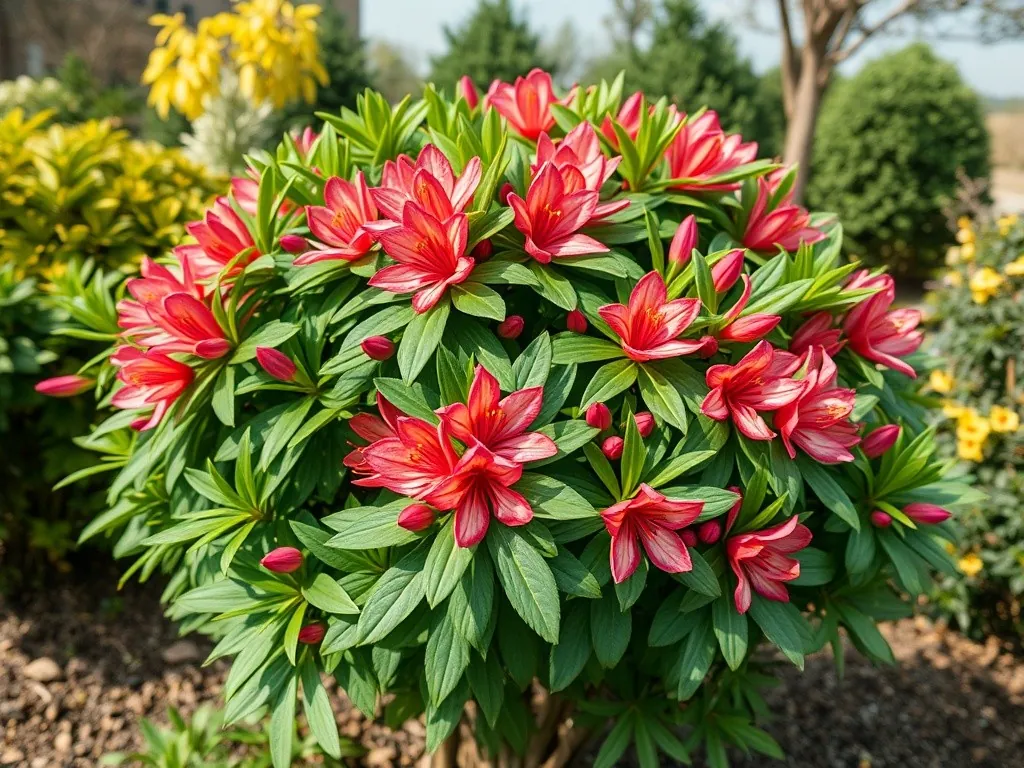
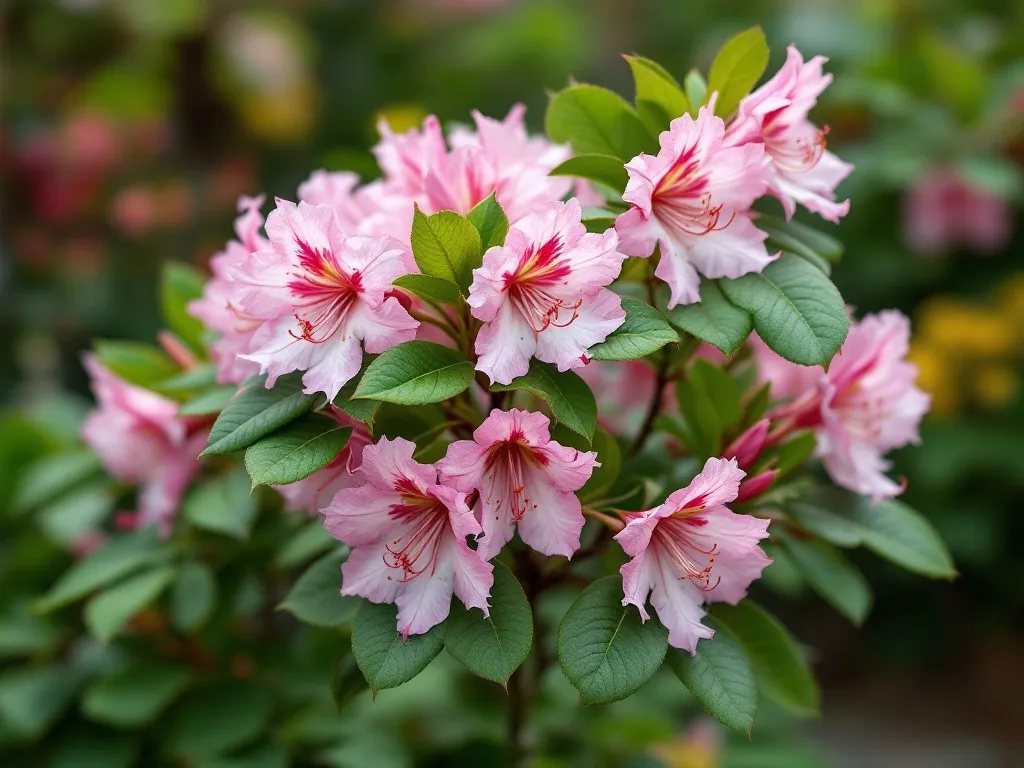
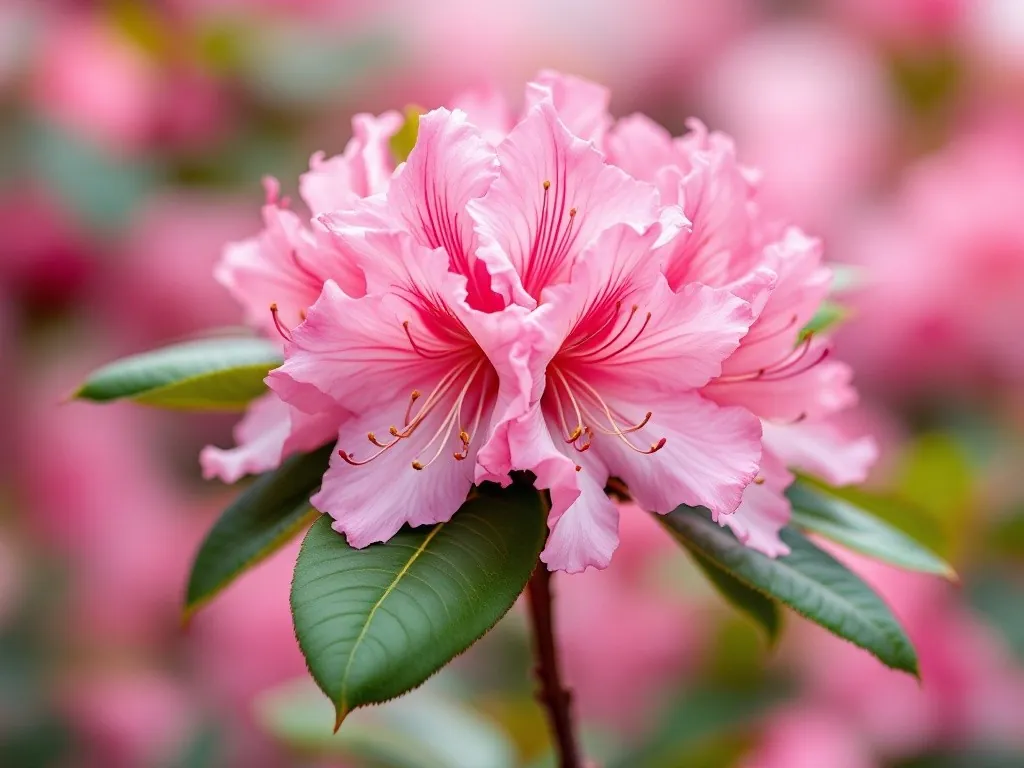
An evergreen (more rarely deciduous – azaleas) shrub with leathery leaves and large, bell-shaped flowers gathered into showy, rounded clusters at the tips of the shoots.
Growing and care
Watering
The shallow root system requires consistently moist soil; it is sensitive to drying out. Water with soft water (rainwater) – hard water raises the pH.
Fertilizing
Use only acidifying fertilizers; lime and general-purpose fertilizers are harmful.
Planting
Acidic, humus-rich substrate with added peat and bark; plant shallowly because of the flat root system, and mulch.
Pruning
Remove spent flower clusters (carefully, so as not to damage the buds at the base) as well as diseased and broken shoots.
Companion plants
Good companions
Both plants like acidic, moist soil and half shade – they share the same care requirements.
The hosta grows well in acidic half shade at the foot of the rhododendron, concealing its bare base.
Bad companions
Lavender requires alkaline, dry soil – the opposite of the rhododendron's acidic, moist site.
The evidence level indicates whether the relationship is backed by research, observation, or gardening tradition.
Diseases and pests
Toxicity
| For whom | Level | Notes |
|---|---|---|
| Humans | High | All parts contain grayanotoxins – eating the leaves or flowers is dangerous; the toxin also passes into honey ('mad honey'). |
| Dogs | High | — |
| Cats | High | — |
| Horses | High | — |
History and origin
Rhododendrons reached European gardens in the 18th and 19th centuries thanks to botanical expeditions to the Himalayas and China. Their breeding became a passion for gardeners, resulting in thousands of hybrid cultivars.
Uses
For shady beds, heath and woodland gardens on acidic soil, as a specimen plant or in groups. Azalea cultivars also do well in containers with acidic substrate.
Trivia
- Honey made from the nectar of some rhododendrons contains grayanotoxins and is sometimes called 'mad honey' for its intoxicating effect.
- The rhododendron is the national symbol of Nepal, where entire mountainsides are covered with its flowers in spring.
Frequently asked questions
Why do rhododendron leaves turn yellow?
The most common cause is chlorosis brought on by too high a soil pH, which blocks iron uptake. Acidifying the substrate, mulching with bark and watering with rainwater all help.
Can rhododendrons be planted in full sun?
Most cultivars prefer half shade. In full sun, especially when dry, the leaves scorch and the plant is weakened.
Is the rhododendron poisonous?
Yes, strongly – all parts contain grayanotoxins dangerous to people and animals. Care should be taken in gardens accessible to children and pets.
Sources
- Plants of the World Online (POWO)Database (GBIF, POWO…)
- RHS — RhododendronsInstitution / botanical garden
My note
A private note for this plant — saved in your browser.