In short
- Site: sun or partial shade, well-drained soil.
- Flowers very early — from February to April, often while patches of snow remain.
- An important early source of pollen and nectar for bees waking after winter.
- The bulbs are planted in autumn, at a depth of about 8 cm.
- The leaves must yellow naturally before removal, to rebuild the bulb.
Botanical data
- Family
- Iridaceae (Iridaceae)
- Height
- 0.08–0.15 m
- Width
- 0.05–0.1 m
- Habit
- Clump-forming
- Growth rate
- Moderate
- Position
- Full sun, Partial shade
- Soil
- Humus-rich, Sandy, Loamy
- pH reaction
- pH 6–7.5
- Moisture
- Moderate
- Bloom
- February–April
- Hardiness
- USDA 3b–8a
- Propagation
- From bulbs / tubers, From seed
Characteristics
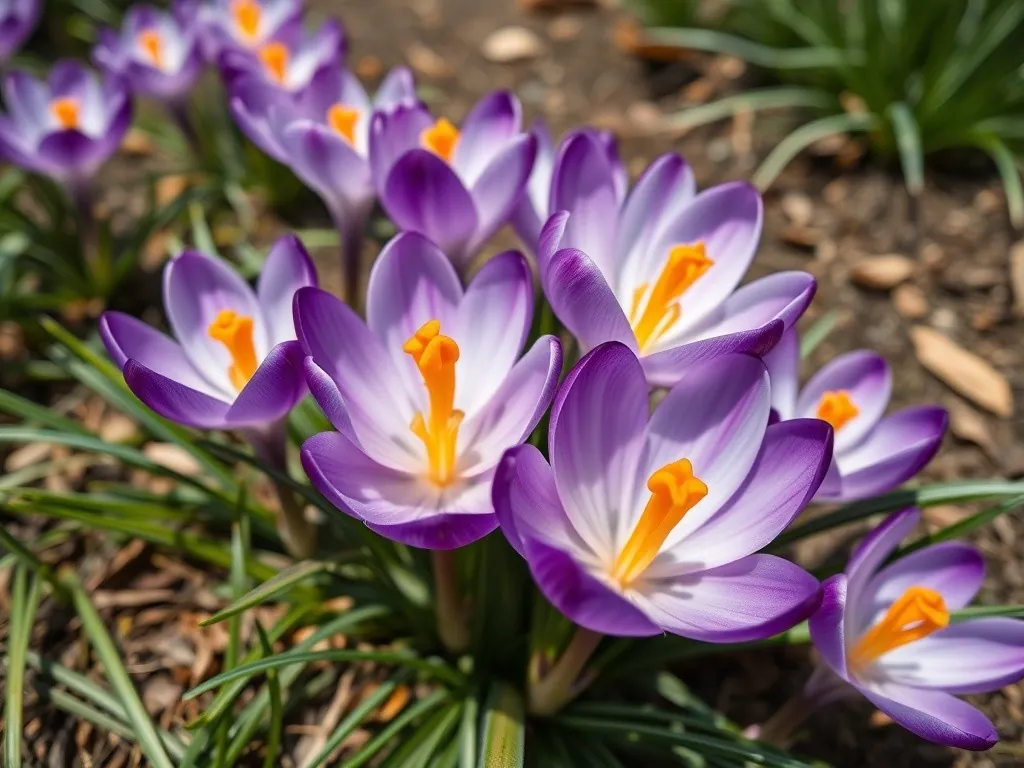
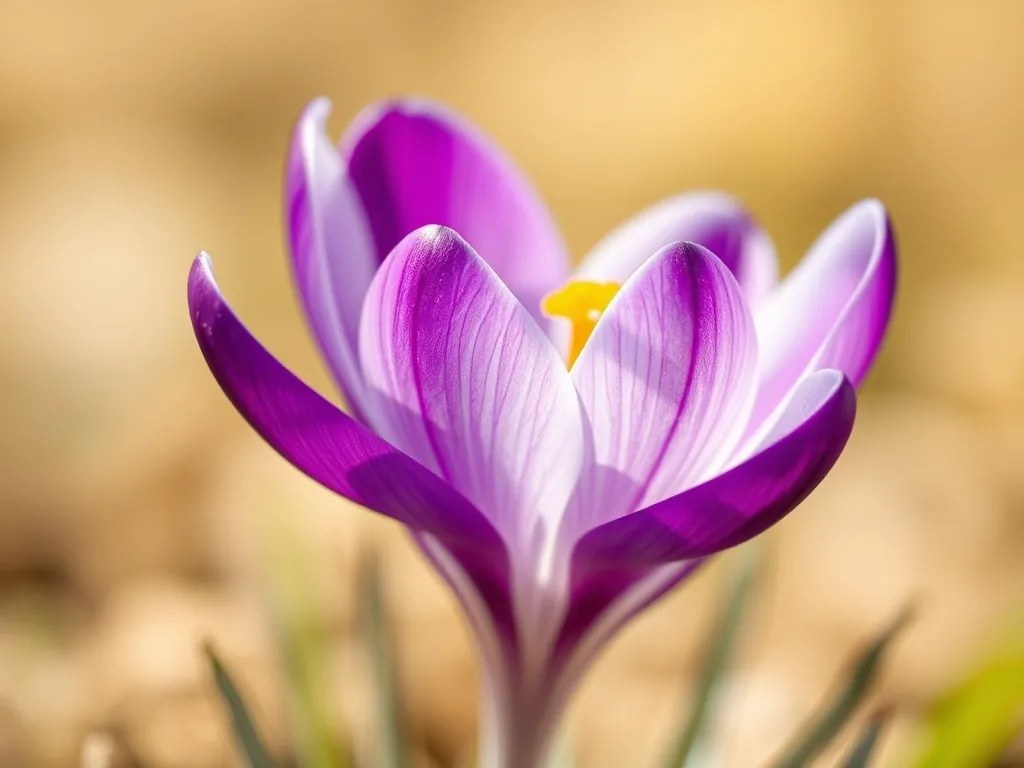
It produces small, underground corms, from which in early spring narrow, grassy leaves with a pale stripe down the middle emerge, along with cup-shaped flowers on short stalks that open wide on sunny days.
Growing and care
Watering
In summer, during the summer dormancy, the bulbs need no watering and in fact require a dry rest. Water only during growth and flowering in prolonged drought.
0Fertilizing
According to the manufacturer's instructions — excess nitrogen encourages fungal diseases of the bulbs.
Planting
Well-drained soil; on heavier sites add sand or gravel beneath the bulbs to prevent rotting.
Pruning
Remove the dried leaves and stalks by hand or pull them out gently.
Companion plants
Good companions
Both bulbous species are planted in autumn at the same depth, and the different flowering times extend the ornamental effect of the spring border.
Crocuses flower earlier than tulips, forming a natural, multi-layered spring composition without mutual competition.
Bad companions
Mowing too early cuts off the crocus leaves before they can replenish the reserves in the bulb, weakening the following year's flowering.
The evidence level indicates whether the relationship is backed by research, observation, or gardening tradition.
Toxicity
| For whom | Level | Notes |
|---|---|---|
| Humans | Mild | The bulbs may cause mild irritation of the digestive tract if eaten. |
| Dogs | Mild | — |
| Cats | Mild | — |
History and origin
The spring crocus has been cultivated in Europe since the 16th century, brought from the mountains of southern Europe to botanical and palace gardens. The modern garden cultivars (so-called Dutch crocuses) were bred mainly in the Netherlands with a view to large, showy flowers.
Uses
For spring borders, naturalised lawns (so-called crocus meadows), edgings and containers. Excellent for planting in large groups under deciduous trees before they come into leaf.
Trivia
- The spring crocus is closely related to the saffron crocus (Crocus sativus), from which saffron is obtained, though it has no culinary use of its own.
- Crocus flowers close on cloudy days and open again in the sun, protecting the pollen from rain.
Frequently asked questions
When should crocuses be planted so they flower in spring?
The bulbs are planted in autumn, in September or October, at a depth of about 8 cm — they need a period of cold to flower in early spring.
Can a lawn with crocuses be mown right after flowering?
It is not advisable — the leaves should yellow and wither on their own, usually a few weeks after flowering, so the bulb builds up reserves for the following year.
Are crocuses toxic to pets?
Crocus vernus is only mildly toxic (unlike the far more dangerous autumn crocus, or meadow saffron) — eating the bulbs may cause mild stomach irritation.
Sources
- Plants of the World Online (POWO) — Crocus vernusDatabase (GBIF, POWO…)
- RHS — Crocus vernus growing guideInstitution / botanical garden
My note
A private note for this plant — saved in your browser.