In short
- Planted purely ornamentally — for its abundant spring flowering.
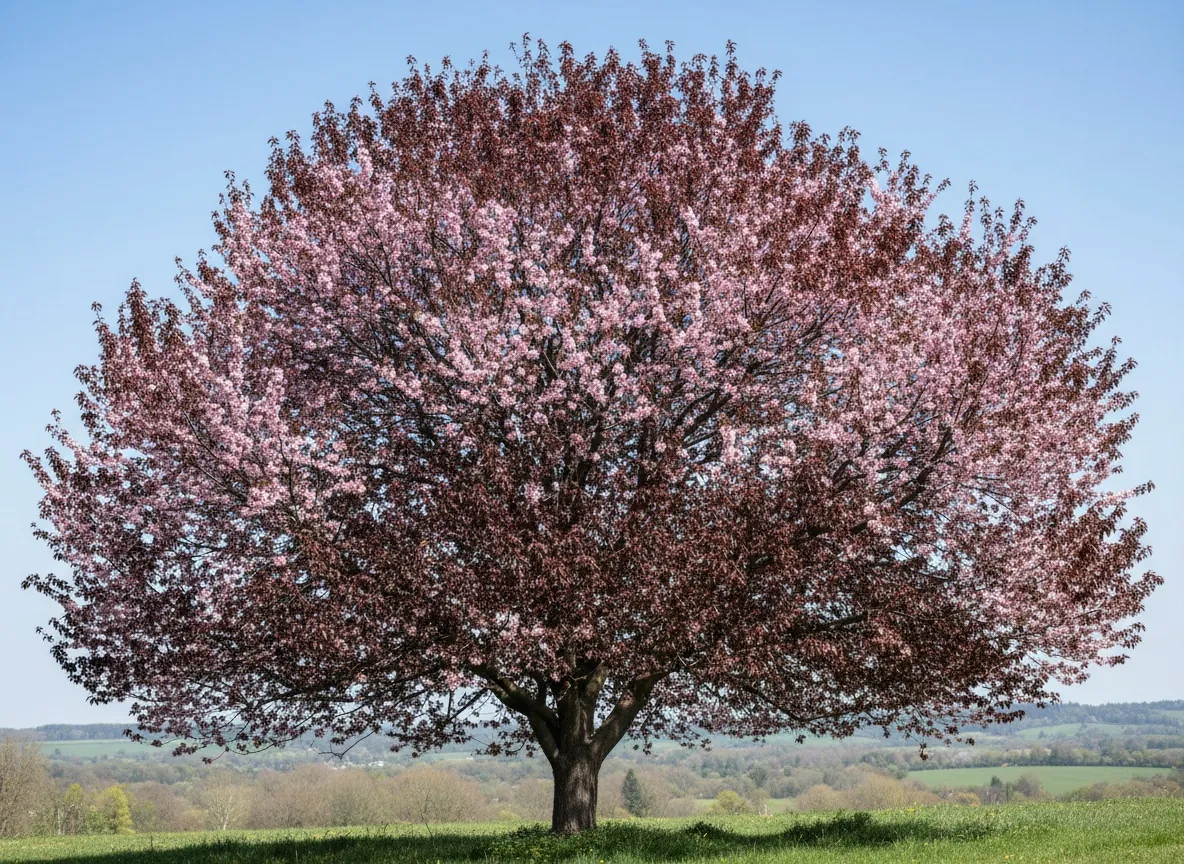
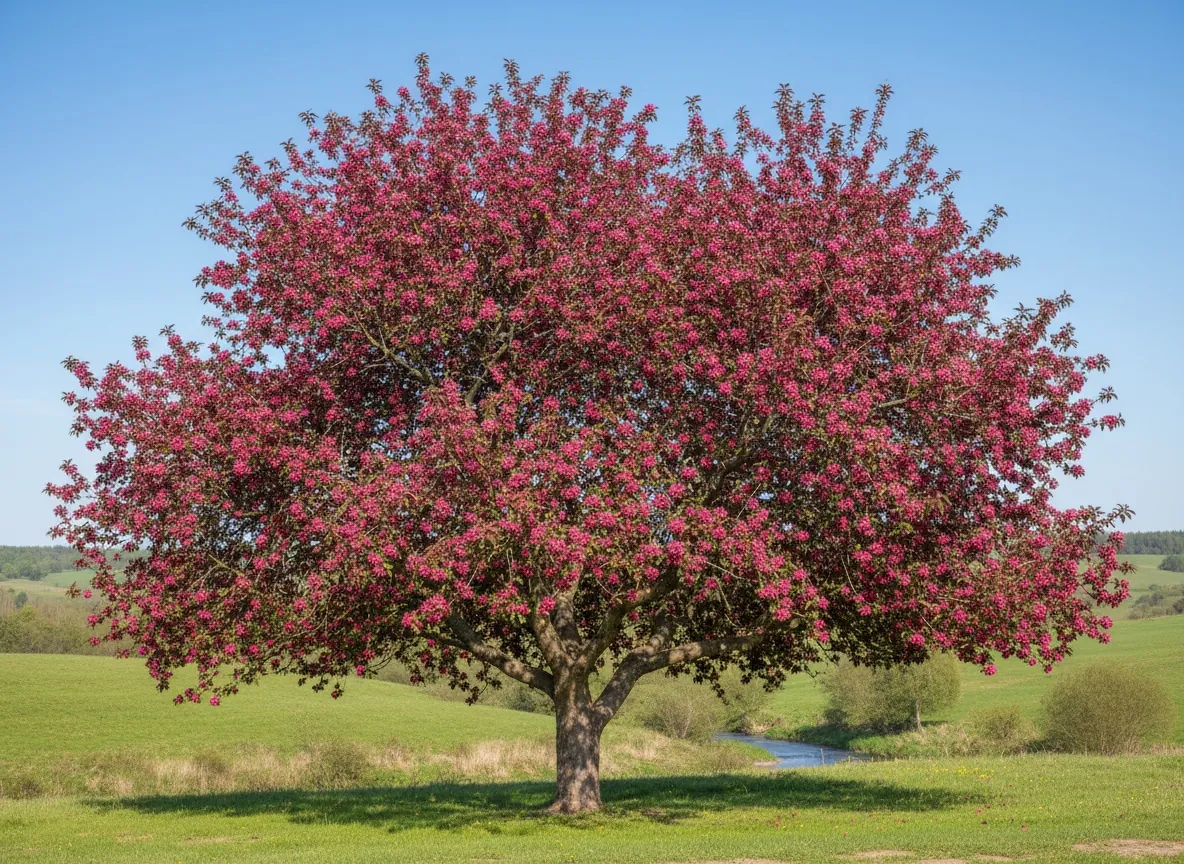
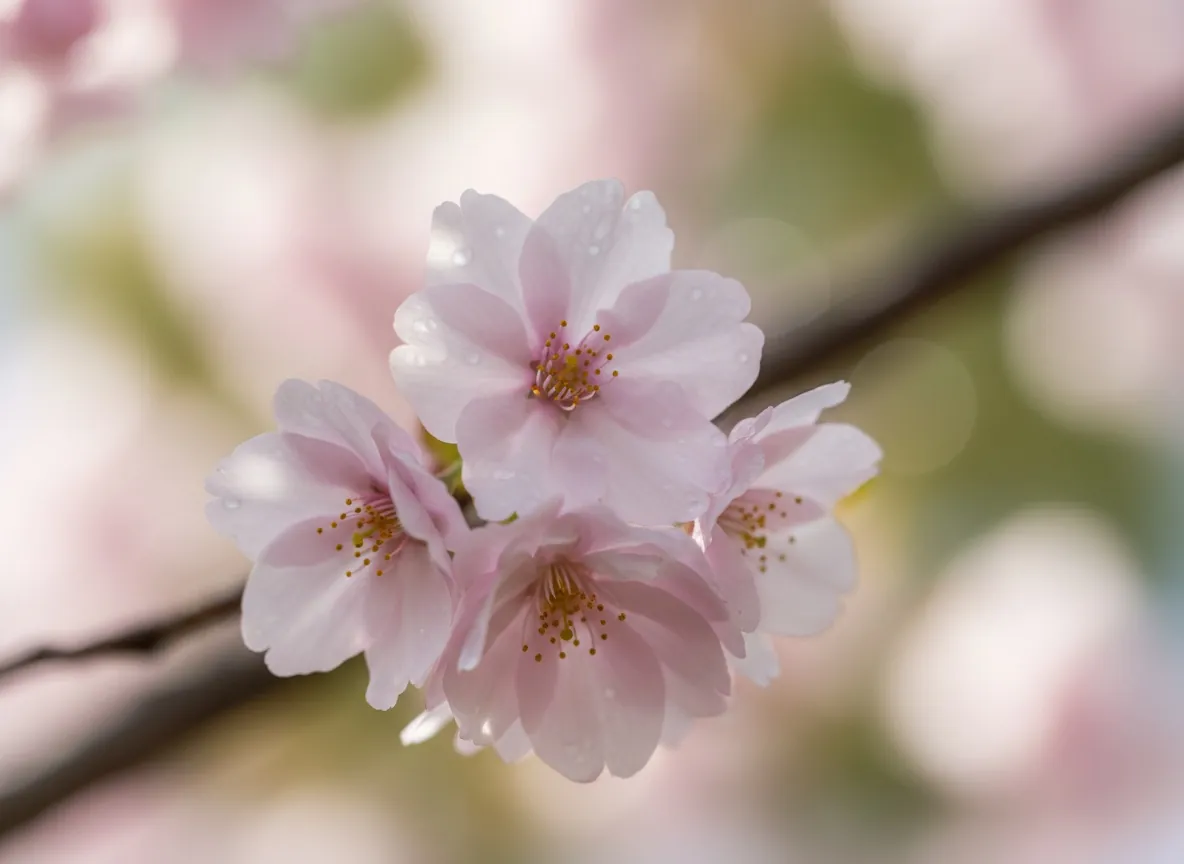
- Flowers at the turn of April and May, in the cultivar 'Kanzan' pink and with double flowers.
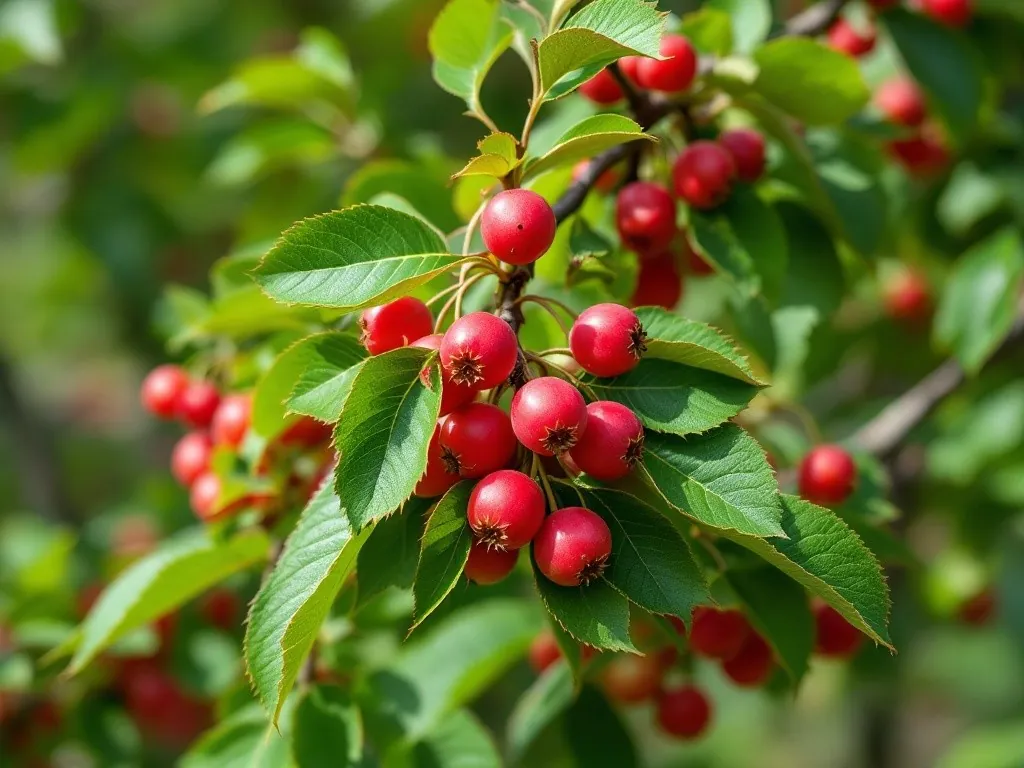
- The fruits are insignificant and, in double-flowered cultivars, often do not set at all.
- Prune only in summer, in dry weather — this protects against diseases of the bark and wood.
- Frost-hardy to USDA zone 5; grows best in sun and a sheltered position.
Botanical data
- Family
- Rosaceae (Rosaceae)
- Height
- 5–10 m
- Width
- 4–8 m
- Habit
- Spreading
- Growth rate
- Moderate
- Position
- Full sun, Partial shade
- Soil
- Loamy, Humus-rich
- pH reaction
- pH 6–7.5
- Moisture
- Moderate
- Bloom
- April–May
- Hardiness
- USDA 5a–8b
- Propagation
- From cuttings
Characteristics
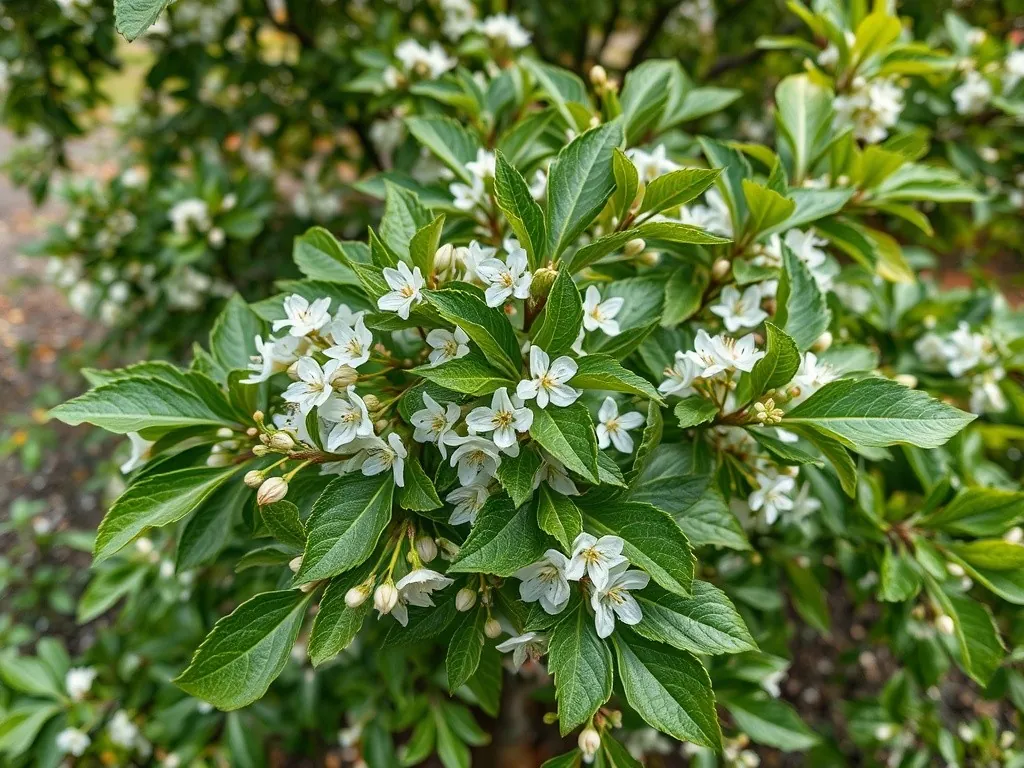
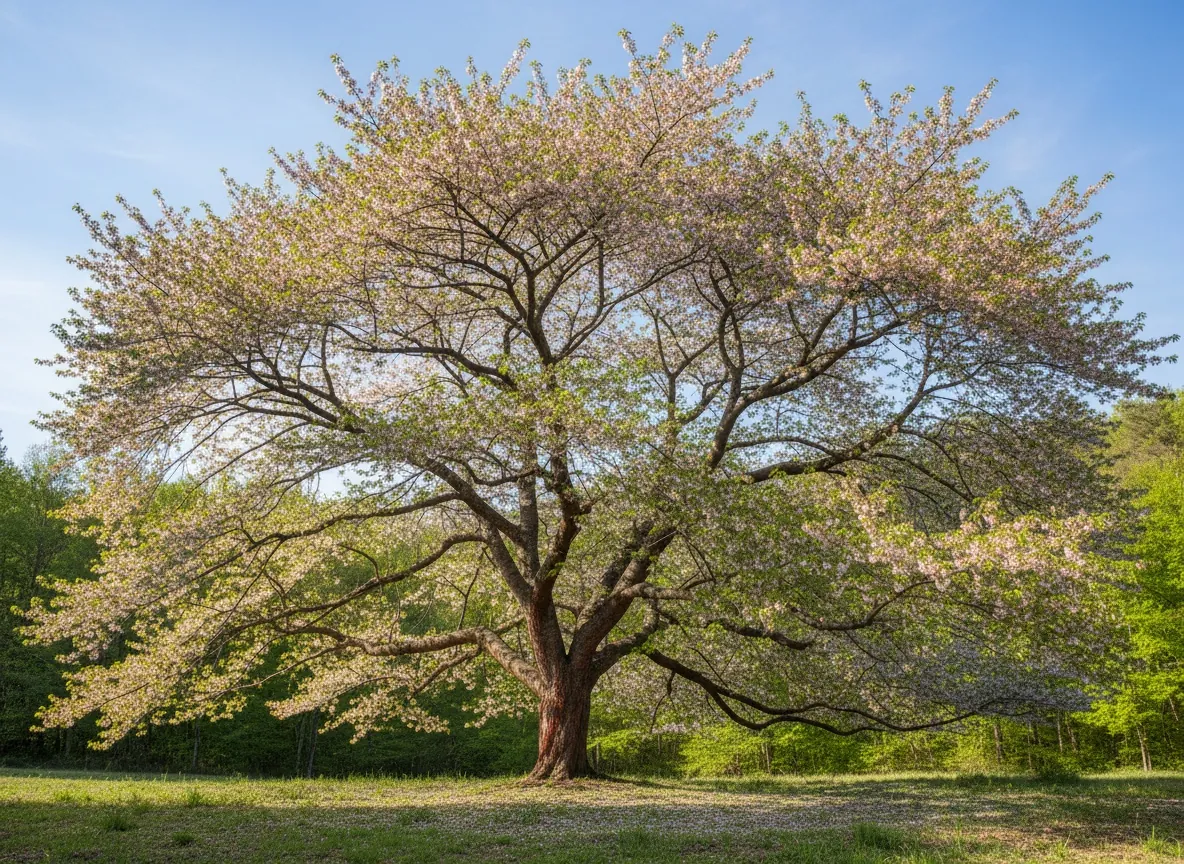
A small to medium-sized tree with a vase-shaped, later spreading habit. In spring, at the turn of April and May, it is covered with flowers, which in the popular cultivar 'Kanzan' are large, double, intensely pink and gathered in dense clusters resembling small pompoms. The young leaves unfold with a brownish-coppery tint, are green in summer, and turn orange and red in autumn. The fruits, if they form at all, are small and insignificant.
Growing and care
Watering
Water young trees regularly in the first years after planting; established specimens are moderately drought-resistant. The species does not tolerate prolonged waterlogged soil.
Fertilizing
Moderately; mulching with compost around the trunk improves the tree's condition and retains moisture.
Planting
Sunny position sheltered from strong winds, fertile, well-drained, fresh soil. Ornamental cultivars are usually grafted, so plant the graft union just above ground level.
Pruning
Prune as little as possible — remove only dead, diseased or crossing shoots. The wounds heal better in the warm, dry season.
Companion plants
Good companions
Spring bulbs planted beneath the canopy flower at a similar time to the cherry and together create a striking, multi-layered spring scene.
A classic companion in Japanese-style gardens, with a similar, acidic soil reaction and spring flowering time.
Bad companions
The walnut releases juglone into the soil, which inhibits the growth of many sensitive plants of the genus Prunus growing near it.
The evidence level indicates whether the relationship is backed by research, observation, or gardening tradition.
Toxicity
| For whom | Level | Notes |
|---|---|---|
| Humans | Mild | The leaves, bark and stones (as in other plants of the genus Prunus) contain cyanogenic compounds; the green parts are not intended for consumption. |
| Horses | Moderate | Wilted leaves are particularly dangerous — they release hydrogen cyanide; trees of the genus Prunus should not be planted near horse pastures. |
| Dogs | Mild | — |
| Cats | Mild | — |
History and origin
Ornamental cherries have for centuries held a special place in Japanese culture, where the springtime admiration of their flowers (hanami) is an important tradition. From the species Prunus serrulata and related species, hundreds of garden cultivars have been selected; one of the most famous and most widely planted in the world is 'Kanzan' (also known as 'Sekiyama'), with double, pink flowers. The cultivars are propagated by grafting.
Uses
A striking specimen tree for gardens and parks, planted as a spring accent on a lawn or along avenues. Popular in Japanese-style gardens. Because of its ultimate size and spreading habit it requires plenty of space; spring bulbs do well beneath its canopy.
Trivia
- The flowering of ornamental cherries is brief, usually 1–2 weeks — this transience is part of their charm and symbolism in Japanese culture.
- The double flowers of the cultivar 'Kanzan' have petals transformed from stamens, so the tree sets almost no fruit and offers pollinators less pollen than the single-flowered forms.
Frequently asked questions
Does the Japanese cherry bear edible fruit?
Not in practice. It is a cherry planted purely ornamentally — the fruits, if they set at all, are small and insignificant, and double-flowered cultivars such as 'Kanzan' usually do not fruit at all. For edible cherries you should turn to cultivars of the sour cherry.
When should an ornamental cherry be pruned?
Best in summer, after flowering, in dry weather and as sparingly as possible. Pruning in autumn or winter in damp conditions risks infection with silver leaf and bacterial canker, to which the species is susceptible.
How big will the 'Kanzan' cherry grow?
It is a tree that usually reaches 5–10 m in height and a similar width, initially with a characteristic, vase-shaped habit, becoming spreading over time. When planting it, you need to give it plenty of space.
Sources
- Plants of the World Online (POWO)Database (GBIF, POWO…)
- RHS — Prunus serrulataInstitution / botanical garden
My note
A private note for this plant — saved in your browser.