In short
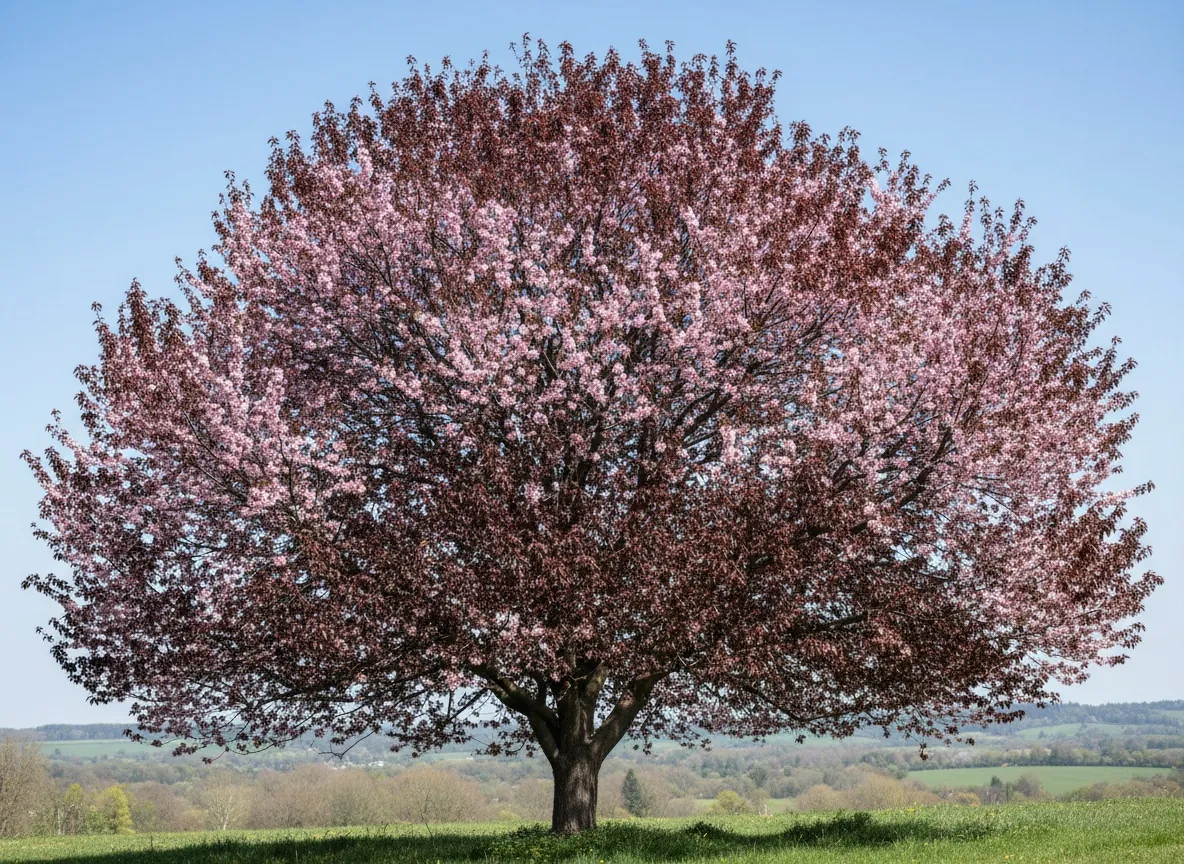
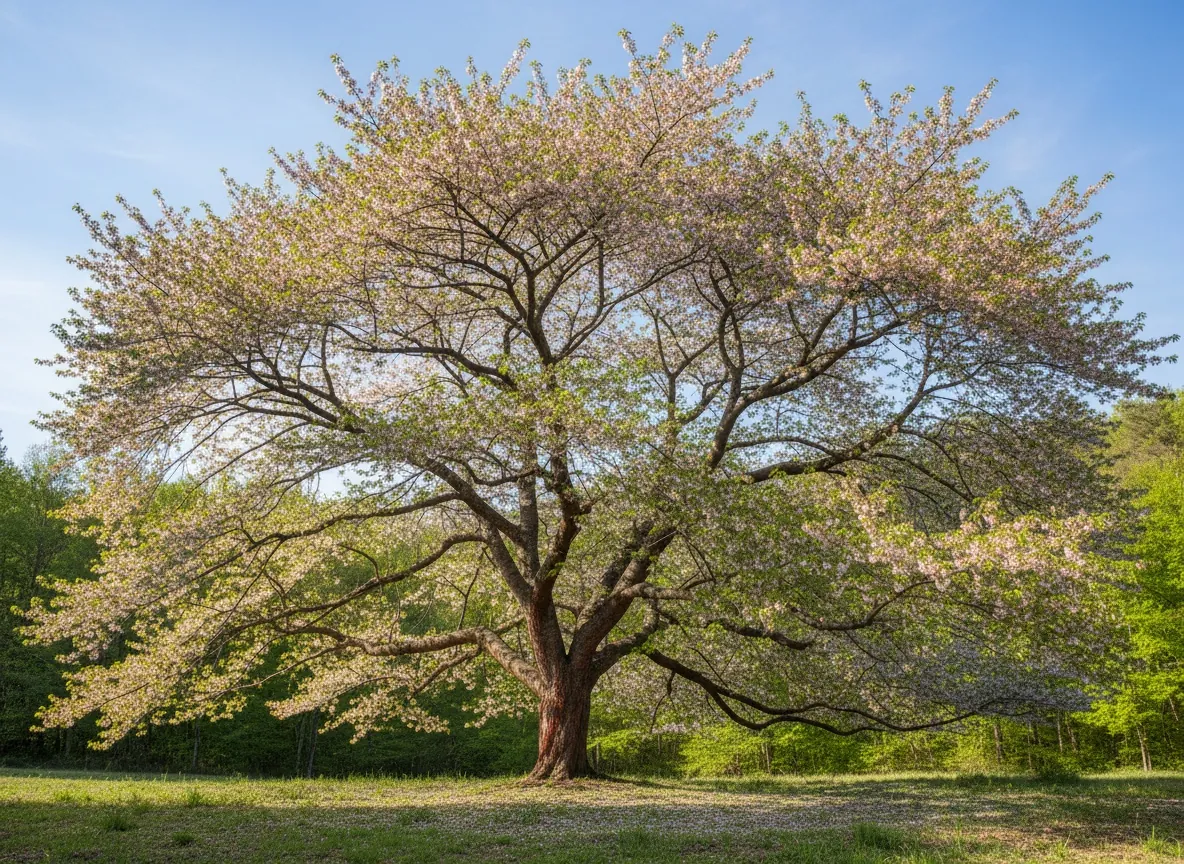
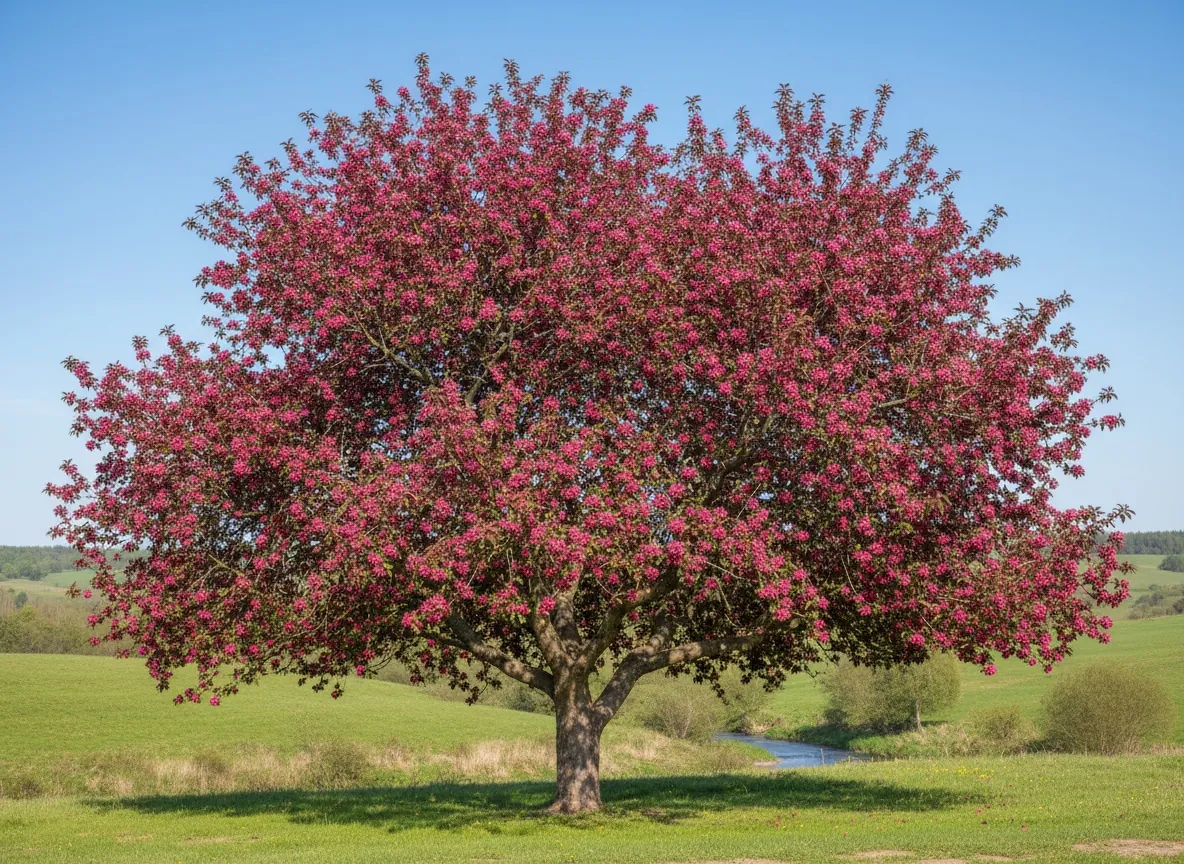
- Abundant, pink-purple flowering in spring — one of the most striking accents in the garden.
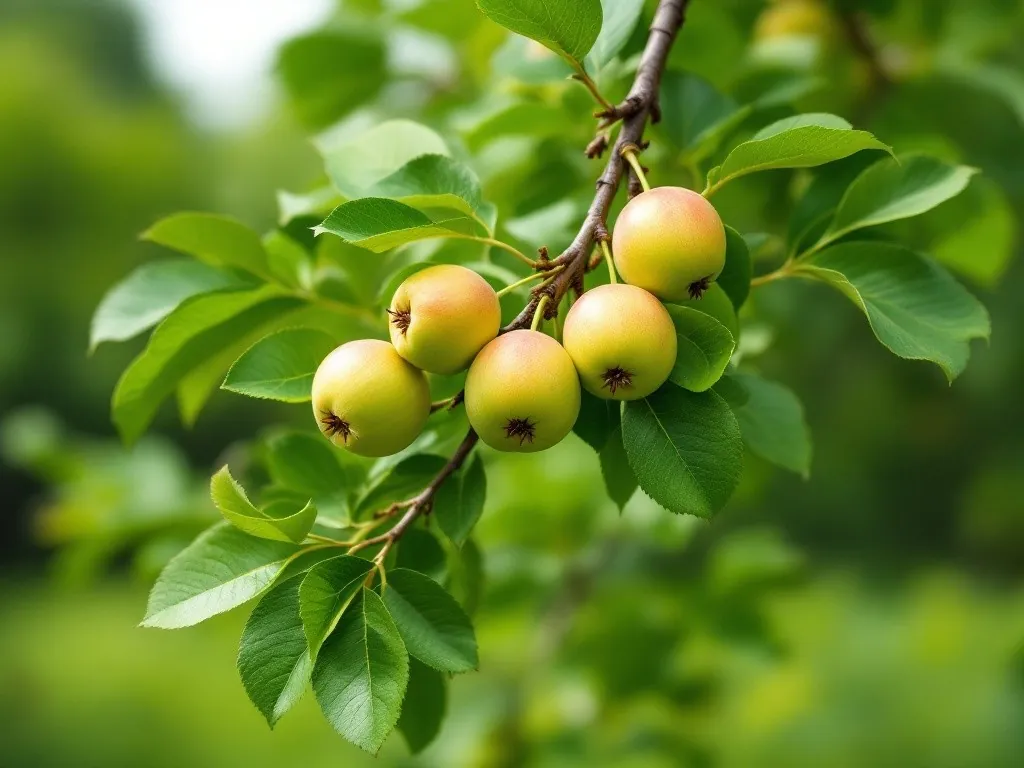
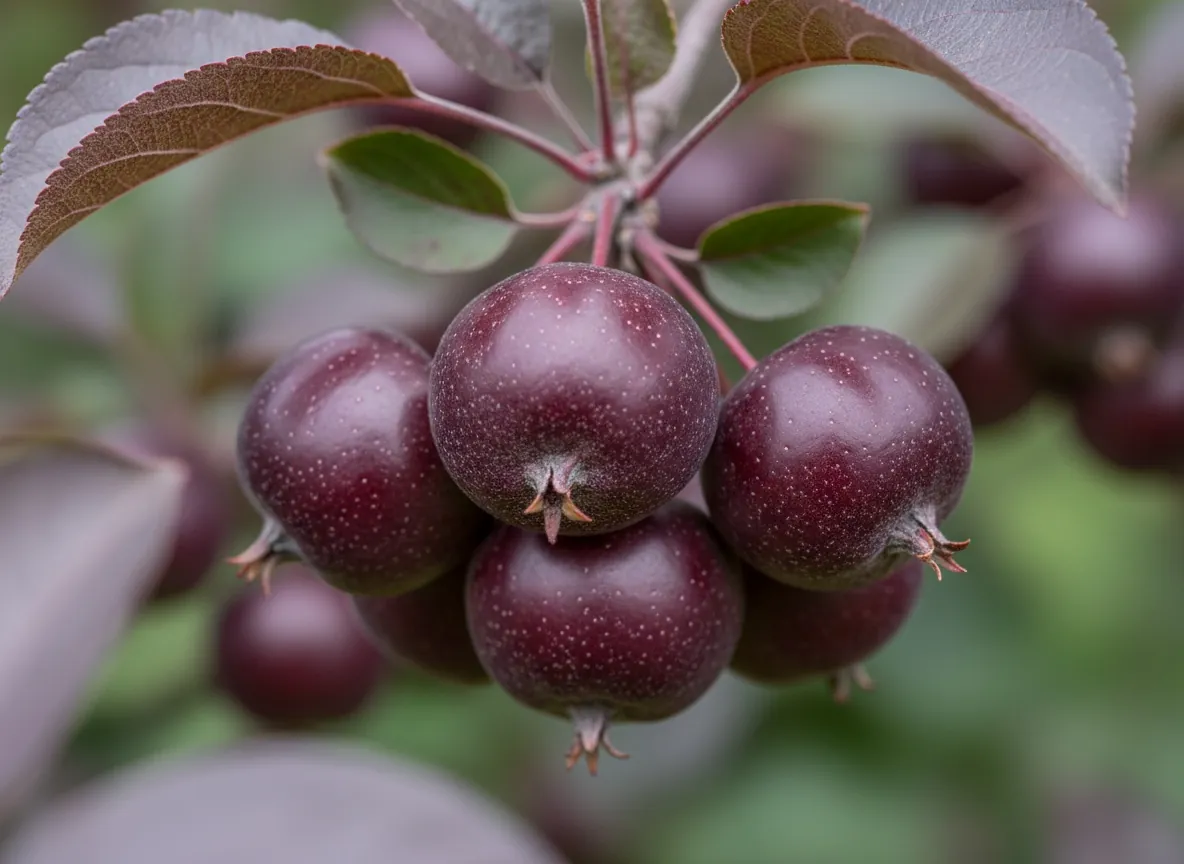
- Small ornamental crabapples persist into winter and are valuable food for birds.
- The dark purple, later brownish-green leaves provide a season-long feature.
- An excellent pollinator for domestic apple trees growing nearby.
- Frost-hardy, but in wet years it can be susceptible to apple scab.
Botanical data
- Family
- Rosaceae (Rosaceae)
- Height
- 4–6 m
- Width
- 3–5 m
- Habit
- Spreading
- Growth rate
- Moderate
- Position
- Full sun, Partial shade
- Soil
- Loamy, Humus-rich
- pH reaction
- pH 6–7
- Moisture
- Moderate
- Bloom
- April–May
- Hardiness
- USDA 4a–8a
- Propagation
- From cuttings
Characteristics
A small tree with a spreading, fairly regular crown. The young leaves are purple-red and darken over time to brownish-green. The flowers are single or semi-double, abundantly covering the shoots, in shades of intense pink and purple-red. The fruits are small, spherical crabapples in dark red to purple, long-lasting and persisting on the tree long after the leaves have fallen.
Growing and care
Watering
Moderately drought-resistant once established. Water young trees regularly, and older ones during long spells of heat, so they do not drop their fruits.
Fertilizing
Moderately — excess nitrogen encourages vigorous shoots at the expense of flowering and increases susceptibility to scab.
Planting
Fertile, humus-rich, well-drained soil. A sunny and airy site reduces the risk of fungal leaf diseases.
Pruning
Thin out the crown, remove diseased, crossing shoots and so-called water sprouts growing vertically into the interior. The aim is a loose, airy, well-lit crown.
Companion plants
Good companions
The abundantly flowering ornamental crabapple is an excellent pollinator for domestic apple cultivars — its pollen significantly improves fruit set in the orchard.
The spring bulbs bloom beneath the still-developing crown, extending the spring flowering display around the tree.
Bad companions
Junipers can be an intermediate host of the rust (Gymnosporangium) that infects apple trees — planting them close together favours the development of the disease.
The walnut releases juglone into the soil — an allelopathic compound that inhibits growth and weakens the apple tree's condition.
The evidence level indicates whether the relationship is backed by research, observation, or gardening tradition.
Toxicity
| For whom | Level | Notes |
|---|---|---|
| Humans | Mild | The flesh of the small crabapples is edible, but the seeds contain amygdalin, which releases hydrogen cyanide — they should not be bitten or eaten in larger amounts. |
| Dogs | Mild | — |
| Horses | Moderate | Larger amounts of leaves and seeds can be harmful to horses. |
History and origin
The hybrid Malus × purpurea was bred in the early 20th century in France, using the red-leaved Niedzwetzky's apple brought from Central Asia — it introduced the purple colouring of leaves, flowers and fruits into modern ornamental crabapples. The cultivar 'Royalty' was selected in Canada in the mid-20th century for its exceptionally dark, long colour-holding leaves.
Uses
Planted as an ornamental specimen on a lawn, in small gardens, parks and along streets. Valued for its spring flowering display, season-long coloured leaves and winter decoration of persistent fruits. It is also deliberately added to orchards as a pollinator for domestic apple trees.
Trivia
- The small crabapples are edible, though very tart and sour — they are excellent for aromatic jellies and preserves.
- The fruits remaining on the branches in winter are an important food for birds, especially fieldfares and waxwings.
- Ornamental crabapples are universal pollinators — a single specimen can pollinate many fruiting apple cultivars in an orchard.
Frequently asked questions
How does an ornamental crabapple differ from a domestic apple tree?
The ornamental crabapple is grown for its decorative effect — abundant flowers, colourful leaves and small, ornamental fruits that persist in winter. The domestic apple is a fruit tree with large, edible apples. The crabapple's fruits are small and tart, suited mainly to preserves.
Will an ornamental crabapple pollinate my fruiting apple tree?
Yes, and very effectively. Abundantly and long-flowering ornamental crabapples are universal pollinators — a single specimen planted nearby can significantly improve fruit set in several domestic apple cultivars growing within bee-flight range.
Why are the leaves of my ornamental crabapple getting spots and falling off?
This is most often a sign of apple scab — a fungal disease that intensifies in wet years. It helps to plant in a sunny, airy spot, to thin out the crown and to rake up and remove infected leaves in autumn. It is also worth choosing cultivars with increased resistance.
Sources
- Plants of the World Online (POWO)Database (GBIF, POWO…)
- RHS — Malus × purpurea 'Royalty'Institution / botanical garden
My note
A private note for this plant — saved in your browser.