In short
- Position: full sun, well-drained, warm soil with a neutral to alkaline reaction.
- Very drought-resistant once established — it does not tolerate standing water.
- Requires a trellis, arbour or wall to train the shoots.
- The annual winter pruning determines the size and quality of the yield.
- The fruits are strongly toxic to dogs — lower-hanging bunches should be secured.
Botanical data
- Family
- Vitaceae (Vitaceae)
- Height
- 3–8 m
- Width
- 2–4 m
- Habit
- Creeping
- Growth rate
- Fast
- Position
- Full sun
- Soil
- Sandy, Loamy, Chalky
- pH reaction
- pH 6–7.5
- Moisture
- Dry, Moderate
- Bloom
- May–June
- Hardiness
- USDA 6b–9b
- Propagation
- From cuttings, By layering
Characteristics
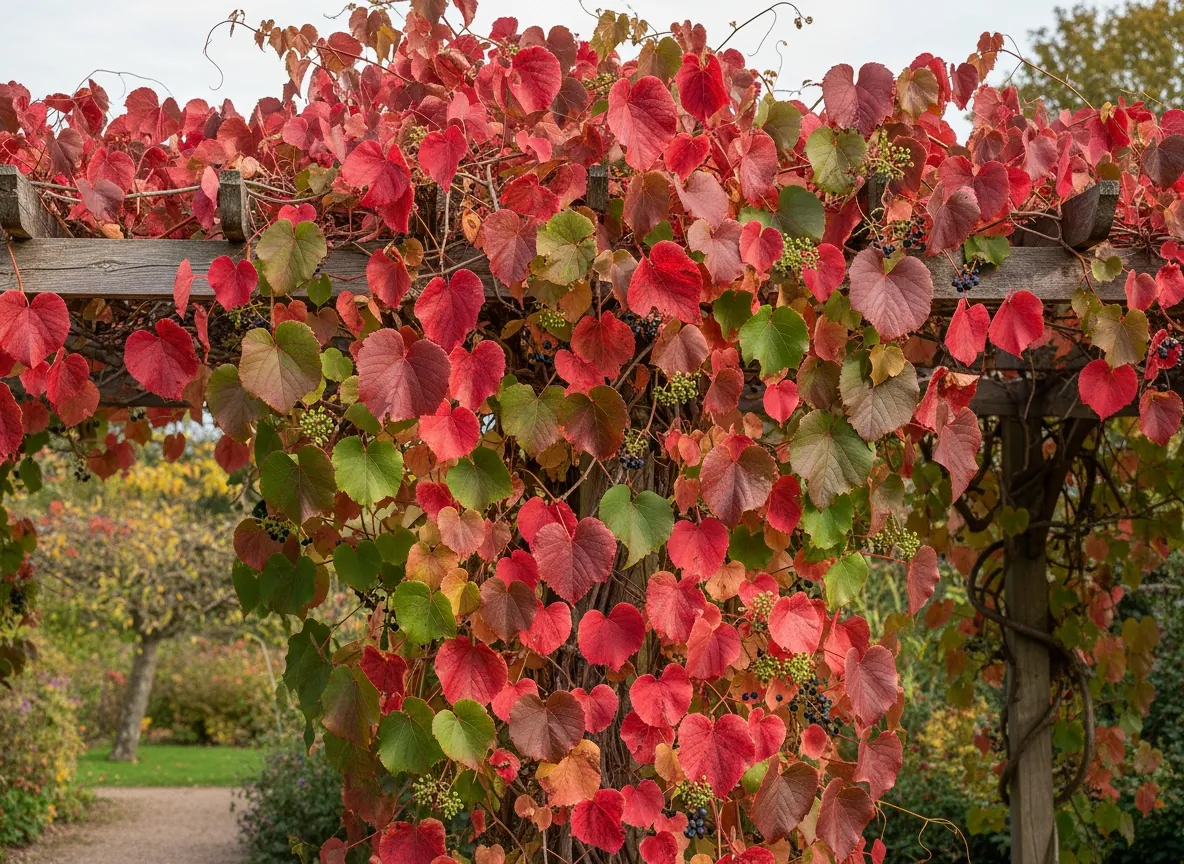
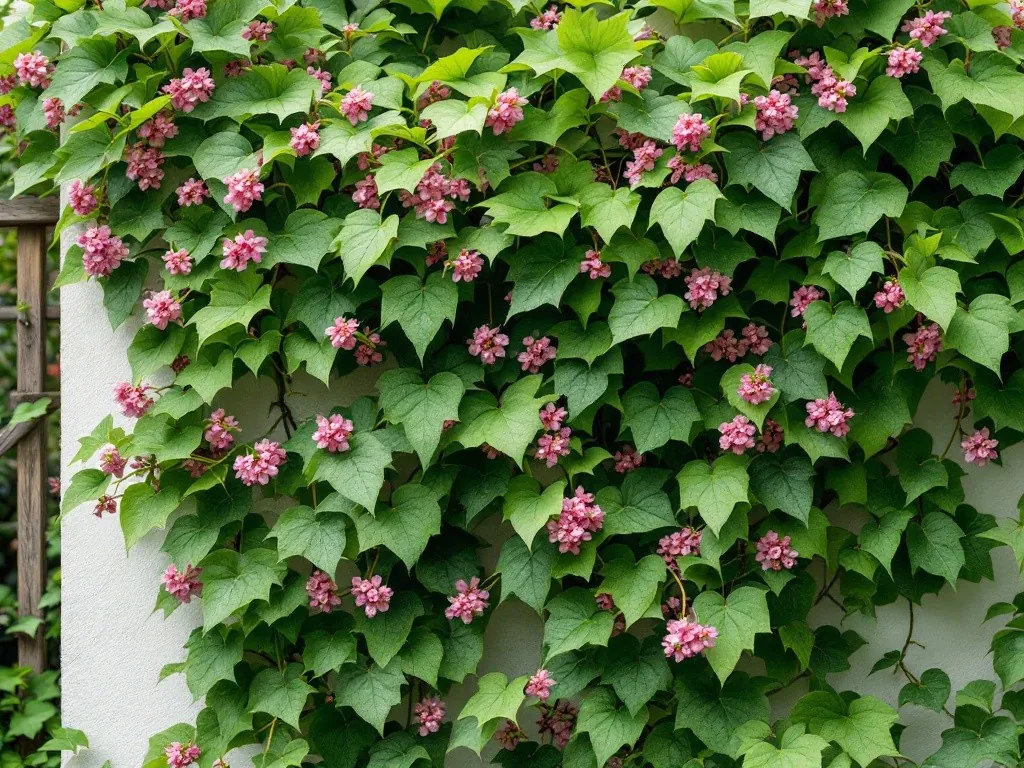
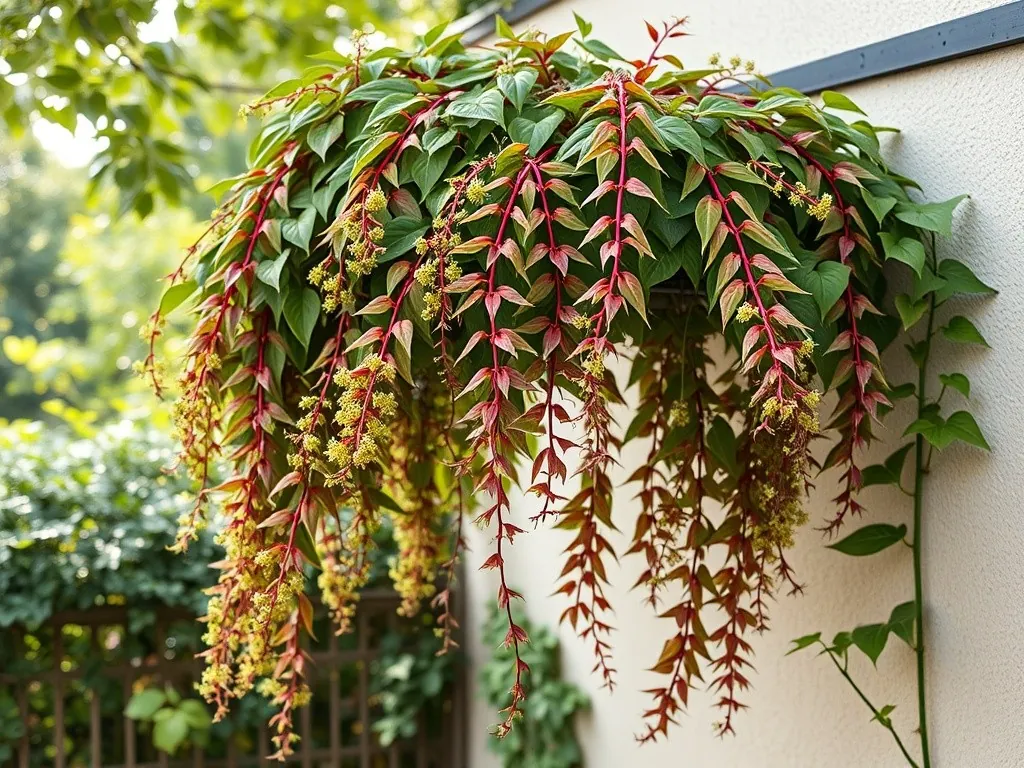
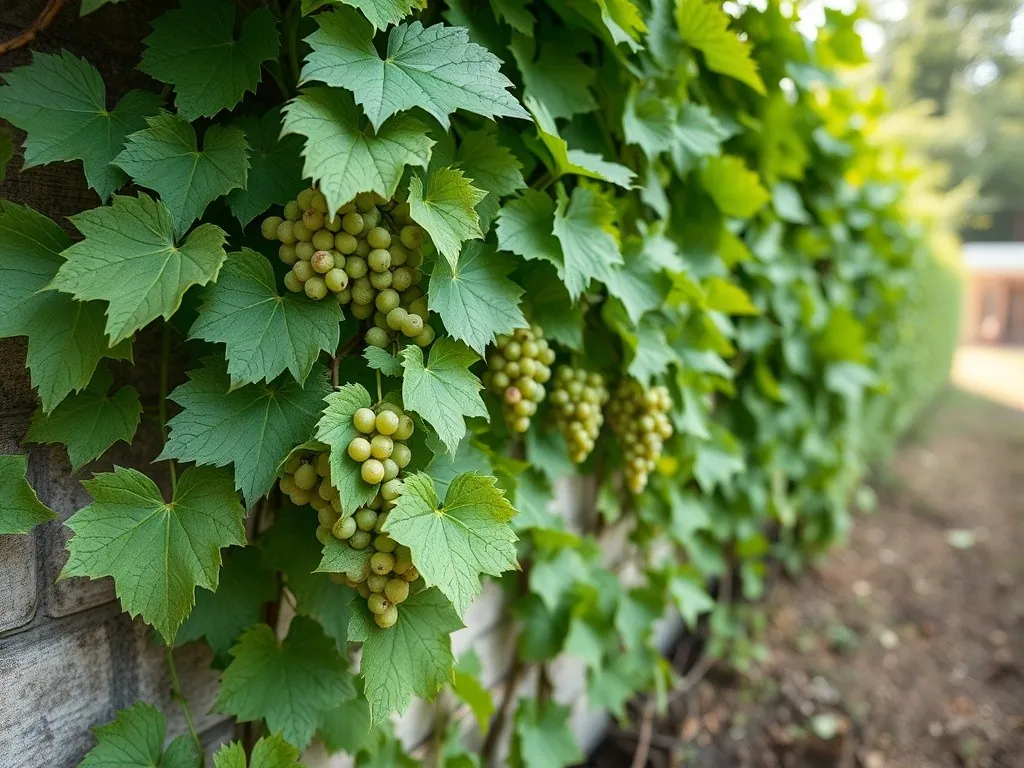
A woody climber that climbs by means of clinging tendrils, able to gain several metres of height in a single season. The leaves are palmately lobed, turning yellow or red in autumn. The small, greenish flowers gathered in panicle-like inflorescences are inconspicuous but pleasantly scented; the fruit is a berry gathered in a bunch, varying in colour depending on the cultivar.
Growing and care
Watering
The deep root system copes well with drought once established. Excess water, especially during the ripening of the bunches, reduces the quality and sweetness of the fruit.
Fertilizing
Avoid excess nitrogen — it causes lush growth of shoots and leaves at the expense of the quality and quantity of the bunches.
Planting
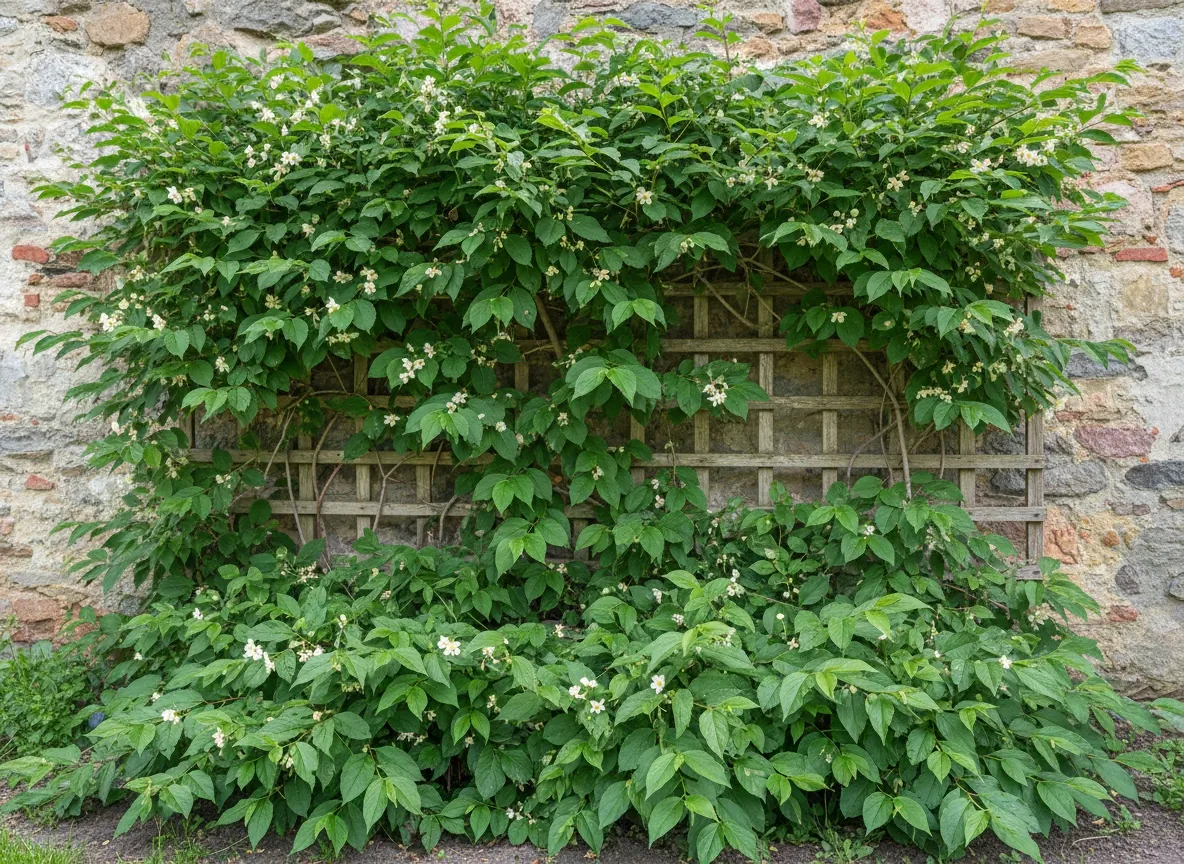
A warm, sheltered site, ideally against the south wall of a building or a heat-accumulating wall; well-drained soil without standing water.
Pruning
Training on cordons or rods — after fruiting, the previous year's fruiting shoots are cut out, leaving 1–2-bud spurs for the new bearing shoots in the next season.
Companion plants
Good companions
Traditionally planted at the ends of vine rows as an 'indicator plant' — it develops mildew earlier than the vine, signalling the need for a protective treatment.
Sown at the base of the climbers, it draws aphids away from the vine, acting as a trap plant.
Bad companions
The walnut releases juglone into the soil, an allelopathic compound toxic to many plants, including the grapevine, limiting its growth.
The evidence level indicates whether the relationship is backed by research, observation, or gardening tradition.
Toxicity
| For whom | Level | Notes |
|---|---|---|
| Humans | None | — |
| Dogs | High | Grapes and raisins are strongly toxic to dogs — they can cause acute kidney failure even with a small amount of fruit eaten. |
| Cats | Mild | The mechanism of toxicity is less well documented than in dogs, but caution is advised. |
History and origin
Cultivated by humans for at least 6,000–8,000 years, first in the region of the Caucasus and the Middle East, later spread by the Phoenicians, Greeks and Romans throughout the Mediterranean basin. The foundation of European winemaking and a symbol of Mediterranean culture.
Uses
Grown for dessert or wine grapes, trained on trellises, pergolas and arbours, also as a plant for covering walls and low walls thanks to its decorative foliage and autumn colours.
Trivia
- All the classic wine cultivars (e.g. Chardonnay, Cabernet Sauvignon, Riesling) belong to the same species, Vitis vinifera.
- After the phylloxera epidemic in the 19th century, European cultivars are grafted onto resistant American rootstocks of other Vitis species.
Frequently asked questions
Will a grapevine survive the Polish winter in the ground?
Wine cultivars of Vitis vinifera are less frost-hardy than crosses (hybrids), so in cooler regions it is worth choosing sheltered, warm sites (e.g. against the south wall of a house) or cultivars of proven frost hardiness for the given zone.
Why does my grapevine have lots of leaves but few fruits?
This is usually the result of excess nitrogen in fertilising or a lack of winter pruning — without regular cutting the plant invests its energy in shoot growth rather than in setting and ripening bunches.
Are grapes dangerous to pets?
Yes, for dogs grapes and raisins are strongly toxic and can cause acute kidney failure even at a small dose — falling fruits from a pergola are worth collecting if a dog is present in the garden.
Sources
- RHS — Vitis vinifera (grape vine)Institution / botanical garden
- Plants of the World Online (POWO)Database (GBIF, POWO…)
My note
A private note for this plant — saved in your browser.