In short
- Position: sun or partial shade, poor and well-drained soil — without nitrogen fertilising.
- It grows and flowers best on lean soil; fertile soil produces mainly leaves.
- Flowers abundantly from June until the first frosts.
- The flowers and leaves are edible, with a characteristic peppery flavour.
- As a trap crop it effectively draws aphids away from vegetables.
Botanical data
- Family
- Tropaeolaceae (Tropaeolaceae)
- Height
- 0.2–0.4 m
- Width
- 1–2.5 m
- Habit
- Creeping
- Growth rate
- Fast
- Position
- Full sun, Partial shade
- Soil
- Sandy, Humus-rich
- pH reaction
- pH 6–7.5
- Moisture
- Dry, Moderate
- Bloom
- June–October
- Hardiness
- —
- Propagation
- From seed
Characteristics
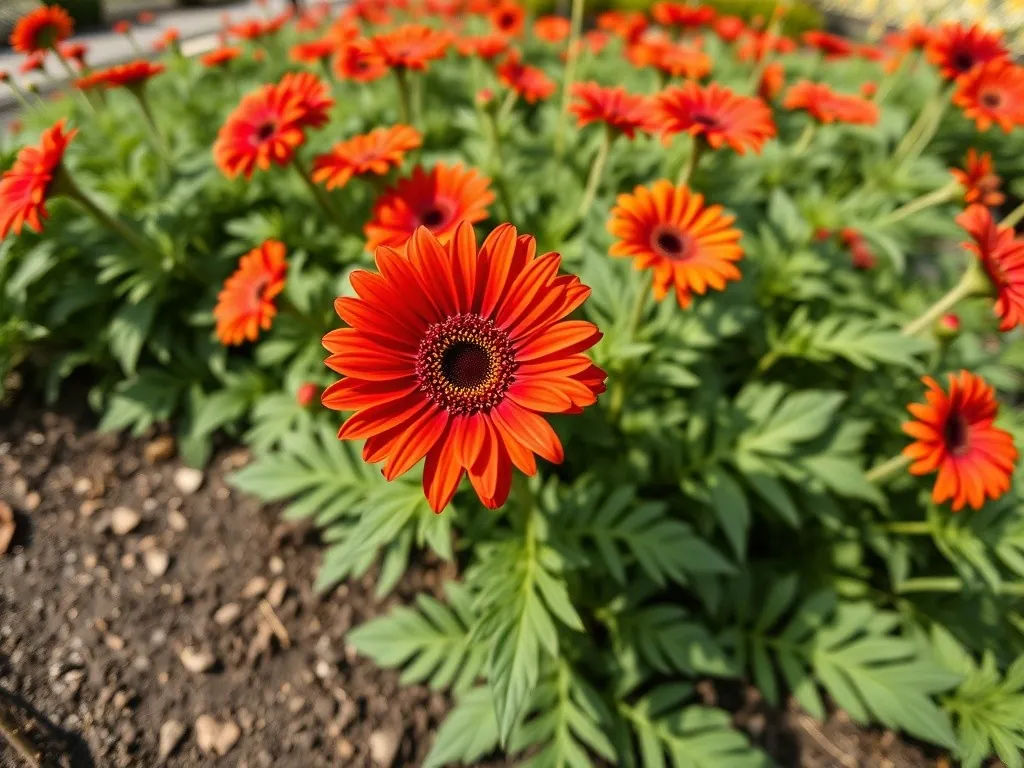
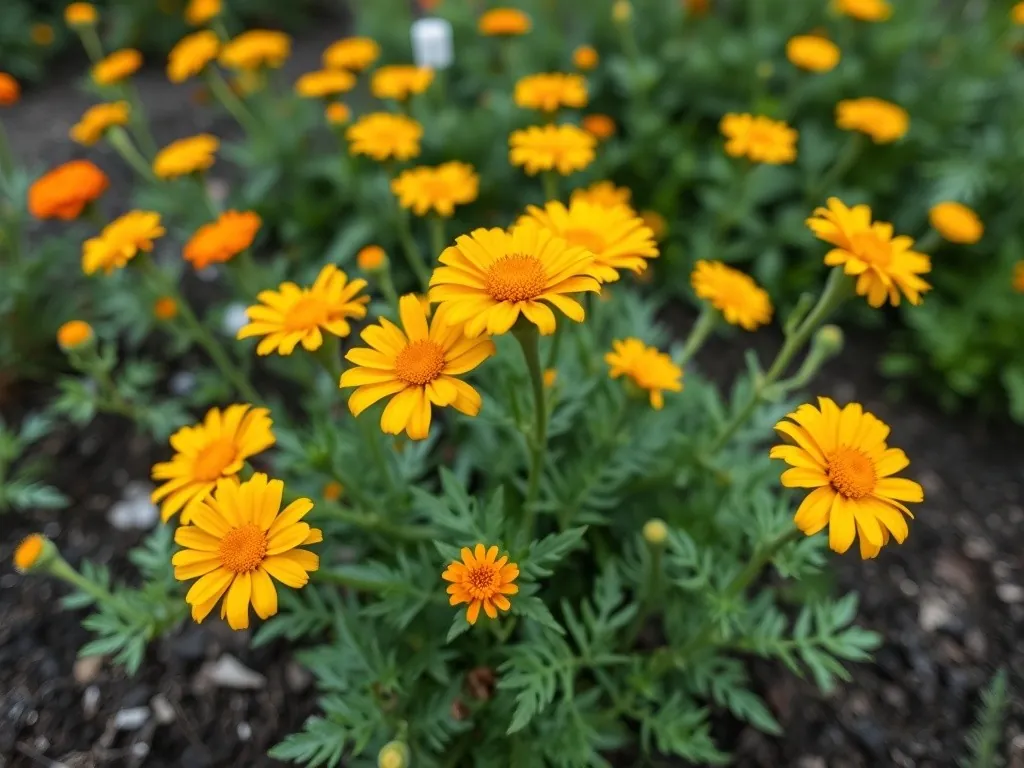
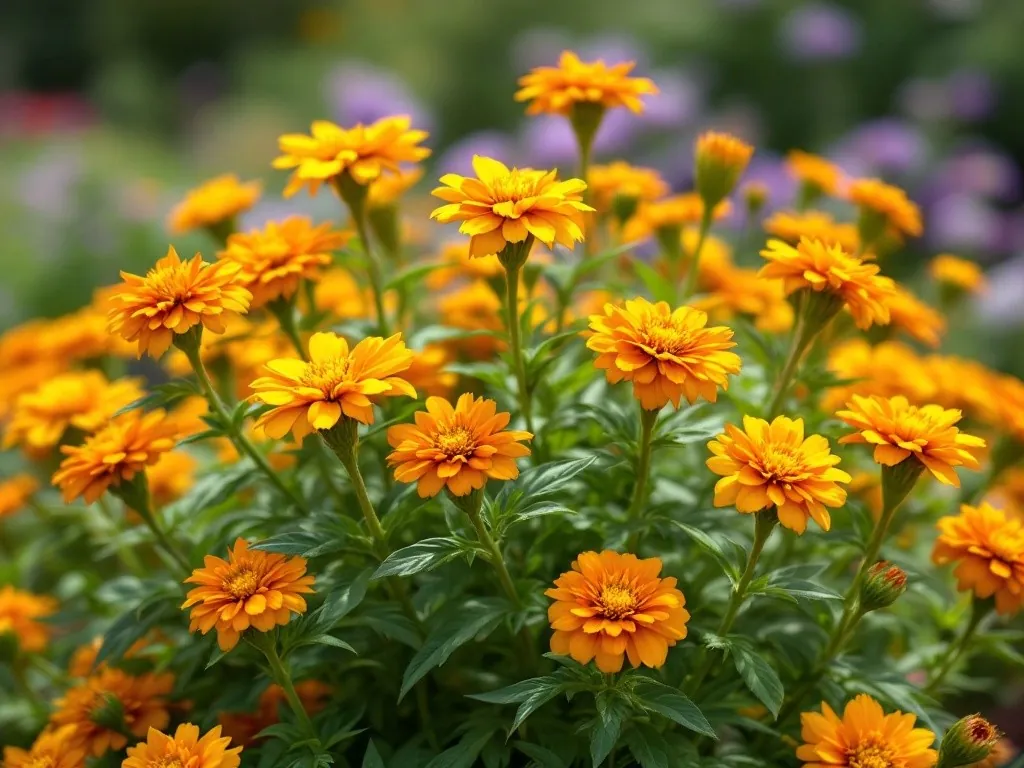
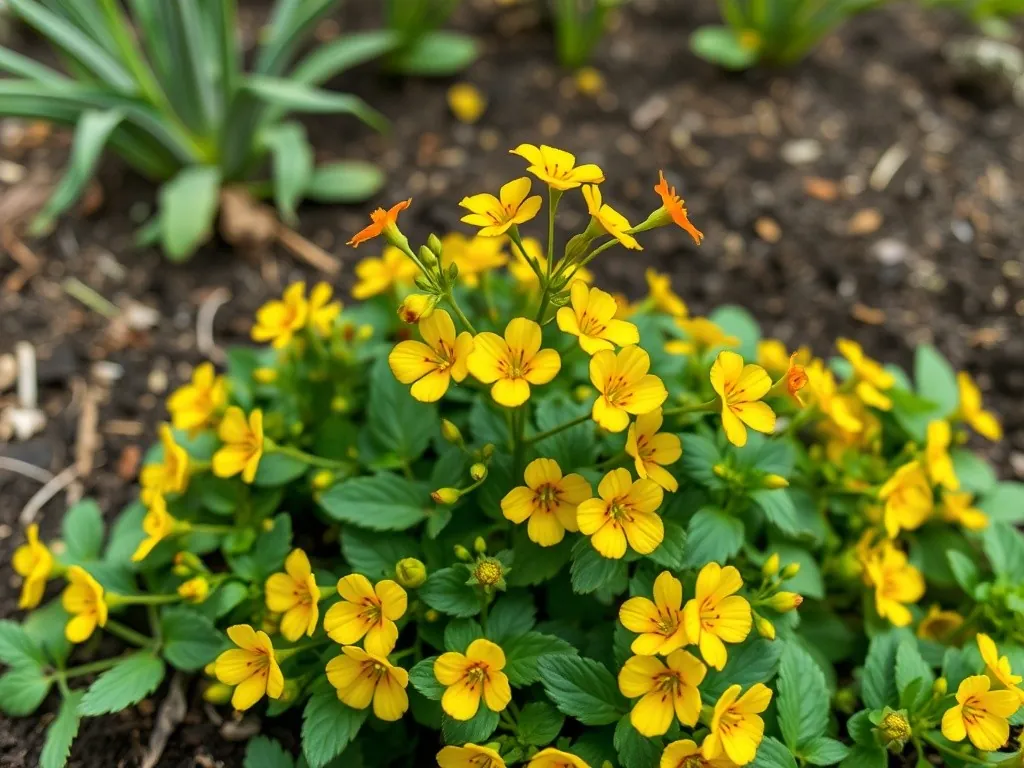
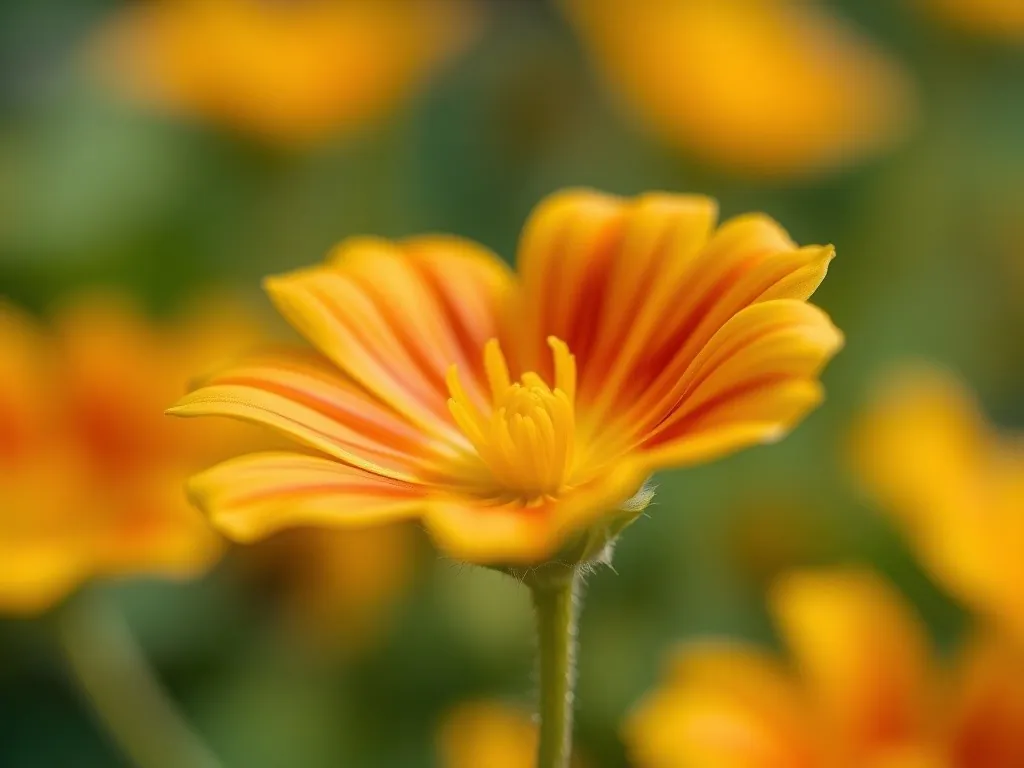
Trailing or slightly climbing shoots with round, shield-shaped leaves reach up to 2–2.5 m in spread. The spurred flowers in shades of yellow, orange and red arise singly from the leaf axils throughout the summer season.
Growing and care
Watering
Tolerates dry spells well. Poor, well-drained soil and moderate watering favour more abundant flowering than a fertile, moist site.
Fertilizing
Over-fertilising with nitrogen produces lush leaves at the expense of flowers — on poor soil the nasturtium flowers most abundantly.
Planting
Poor, well-drained soil without fresh compost or nitrogen fertiliser.
Pruning
Remove spent flowers and cut back excessively spreading, trailing shoots to maintain a compact habit.
Companion plants
Good companions
The nasturtium acts as a trap crop for aphids — the pests settle on it more readily than on the tomatoes, drawing pressure away from the main crop.
As with tomatoes, the nasturtium draws aphids and some beetles away from cucurbits while also attracting pollinators.
Bad companions
The nasturtium attracts the same pests as brassica vegetables (aphids, cabbage-white caterpillars), which in close proximity can increase their numbers instead of protecting the crop.
The evidence level indicates whether the relationship is backed by research, observation, or gardening tradition.
Toxicity
| For whom | Level | Notes |
|---|---|---|
| Humans | None | The flowers and leaves are edible, with a peppery flavour, used in cooking as an addition to salads. |
| Dogs | None | — |
| Cats | Mild | Larger amounts may mildly irritate the digestive tract. |
History and origin
Brought from the Andes of South America to Europe in the 16th century, it quickly gained popularity as an ornamental and edible plant. The Latin name Tropaeolum refers to the shape of the leaves and flowers, reminiscent of ancient war trophies (shields and helmets).
Uses
For annual borders, containers and balcony boxes, and above all for vegetable gardens as a companion plant (trap crop) protecting tomatoes, cucumbers and squashes from aphids.
Trivia
- All parts of the nasturtium — leaves, flowers and unripe seeds — are edible and rich in vitamin C.
- Pickled, unripe nasturtium seeds are sometimes used as a cheaper substitute for capers.
Frequently asked questions
Why does my nasturtium have lots of leaves but few flowers?
This is usually the result of soil that is too fertile or of nitrogen fertilising. Nasturtium flowers most abundantly on a poor, well-drained site — it is worth limiting fertilising.
Does nasturtium really protect vegetables from aphids?
It acts as a trap crop — aphids attack the nasturtium more readily than neighbouring vegetables, which observably reduces their pressure on the main crop, though it does not eliminate the pests completely.
Can nasturtium leaves and flowers be eaten?
Yes, the whole plants are edible and have a characteristic, peppery flavour. The flowers are often added to salads as an edible decoration.
Sources
- Plants of the World Online (POWO) — Tropaeolum majusDatabase (GBIF, POWO…)
- Missouri Botanical Garden Plant Finder — Tropaeolum majusInstitution / botanical garden
My note
A private note for this plant — saved in your browser.