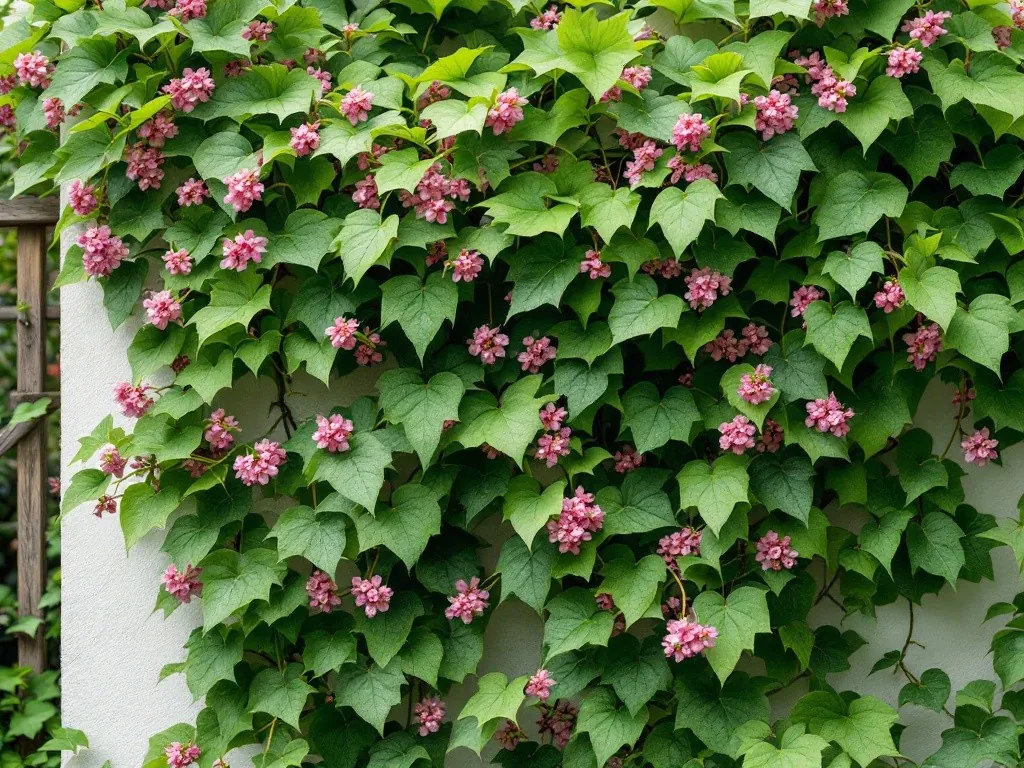
In short
- Grows very fast — up to 2–3 m a year once established.
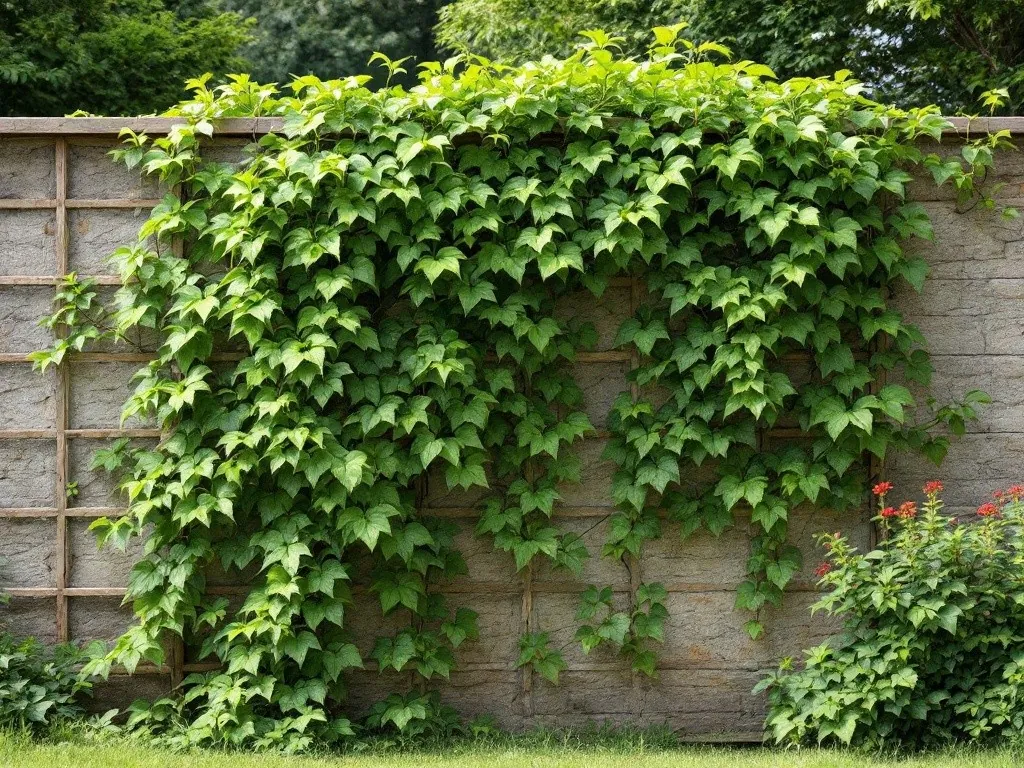
- Clings to walls and supports on its own using adhesive tendril pads.
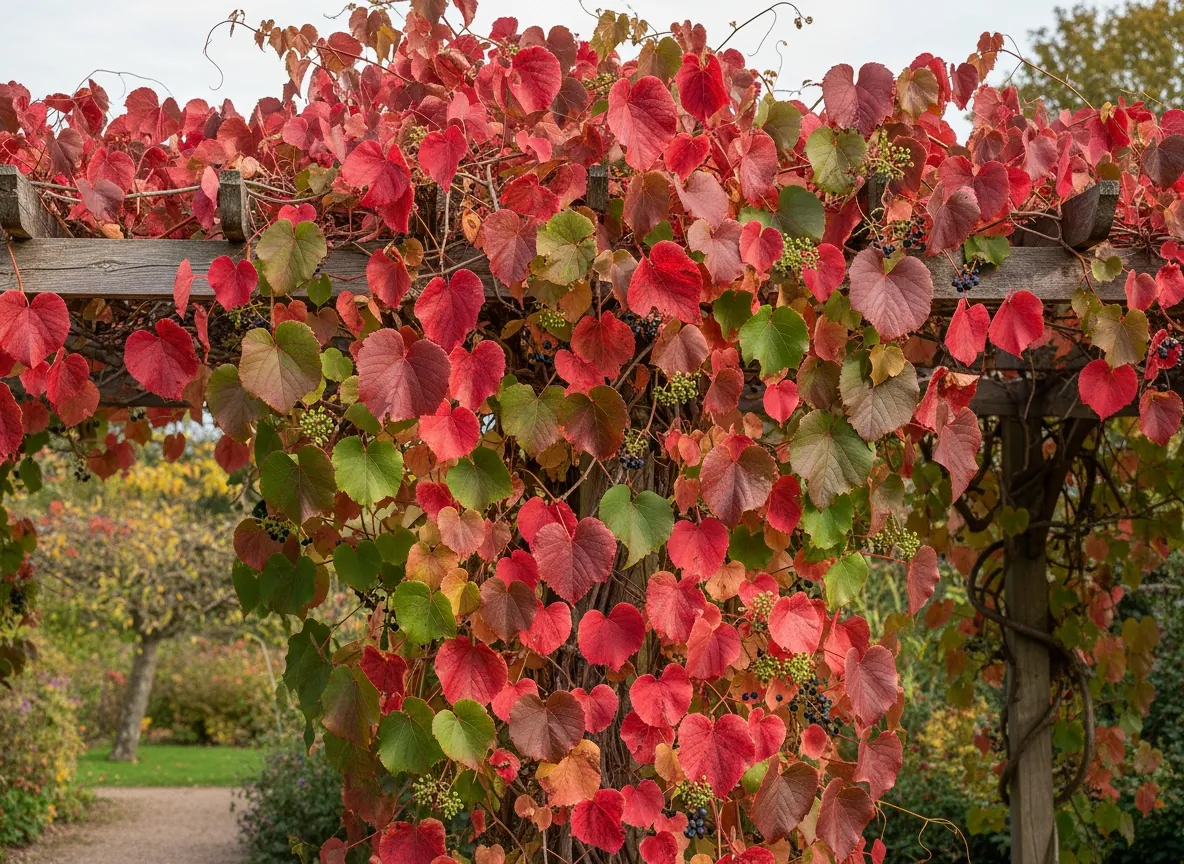
- Leaves turn a vivid red in autumn.
- Fruit is toxic to people and pets.
- Needs regular pruning so it doesn't damage gutters and facades.
Botanical data
- Family
- Vitaceae (Vitaceae)
- Height
- 10–20 m
- Width
- 3–6 m
- Habit
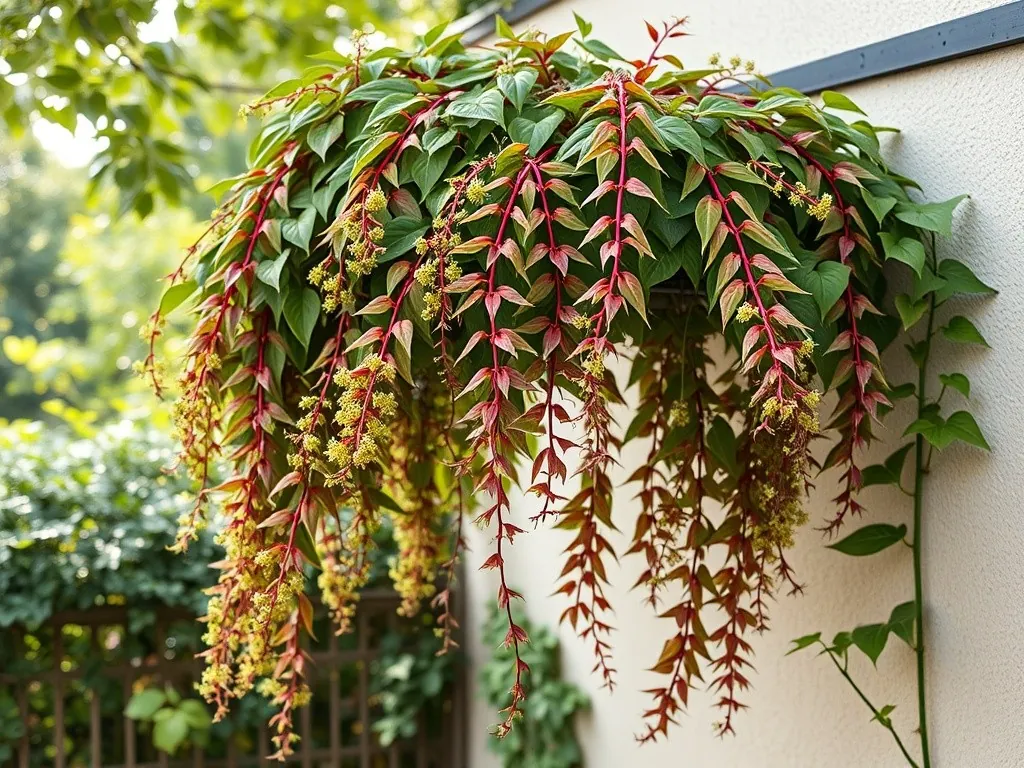
- Cascading
- Growth rate
- Fast
- Position
- Full sun, Partial shade, Shade
- Soil
- Loamy, Humus-rich, Sandy
- pH reaction
- pH 5.5–7.5
- Moisture
- Moderate, Moist
- Bloom
- June–July
- Hardiness
- USDA 3b–9b
- Propagation
- From cuttings, By layering
Characteristics
A woody vine with palmately compound leaves made up of five leaflets, clinging to surfaces via tendrils tipped with adhesive pads. The small, greenish flowers are barely noticeable; the ornamental appeal comes from the dark blue berries in autumn.
Growing and care
Watering
Very drought-tolerant once established; watering is mainly needed during the first year after planting.
Fertilizing
An undemanding plant — too much fertilizer leads to excessive, hard-to-control growth.
Planting
Tolerates almost any soil; needs a sturdy support or wall — it attaches itself using adhesive tendril pads.
Pruning
Rein in vigorous growth and remove shoots heading in unwanted directions (gutters, roof tiles).
Companion plants
Good companions
Virginia creeper attaches itself with adhesive pads and needs no extra fastening on sturdy, vertical surfaces.
Bad companions
Virginia creeper's very fast growth and sprawling shoots can overgrow and smother lower plants nearby.
The evidence level indicates whether the relationship is backed by research, observation, or gardening tradition.
Diseases and pests
Toxicity
| For whom | Level | Notes |
|---|---|---|
| Humans | Moderate | The berries contain calcium oxalates and are toxic if ingested. |
| Dogs | Moderate | — |
| Cats | Moderate | — |
History and origin
Brought to Europe from North America in the 17th century as an ornamental plant, it's widely grown today for covering walls, arbors, and fences.
Uses
For covering walls, fences, arbors, and pergolas. Excellent as natural thermal insulation for facades in summer, and as shelter for nesting birds.
Trivia
- Despite the name "Virginia creeper," the plant isn't related to the cultivated grapevine in any practical sense — its berries are not edible.
- The vivid red autumn color comes from the breakdown of chlorophyll, which reveals the red anthocyanin pigments underneath.
Frequently asked questions
Does Virginia creeper damage building facades?
Its adhesive pads can damage weak, cracked plaster, but they usually cause no harm on solid, intact surfaces. It's worth checking the facade's condition regularly and trimming shoots away from gutters.
How quickly will Virginia creeper cover a wall?
Under good conditions it can grow 2–3 meters a year once established, so fully covering a house wall is possible within 3–5 years.
Are Virginia creeper berries edible for birds?
Yes, birds readily eat the berries in autumn and winter, even though they're toxic to people and most mammals.
Sources
- Plants of the World Online (POWO)Database (GBIF, POWO…)
- RHS — Parthenocissus quinquefoliaInstitution / botanical garden
My note
A private note for this plant — saved in your browser.