In short
- Partially shaded site, acidic, humus-rich, and consistently moist soil.
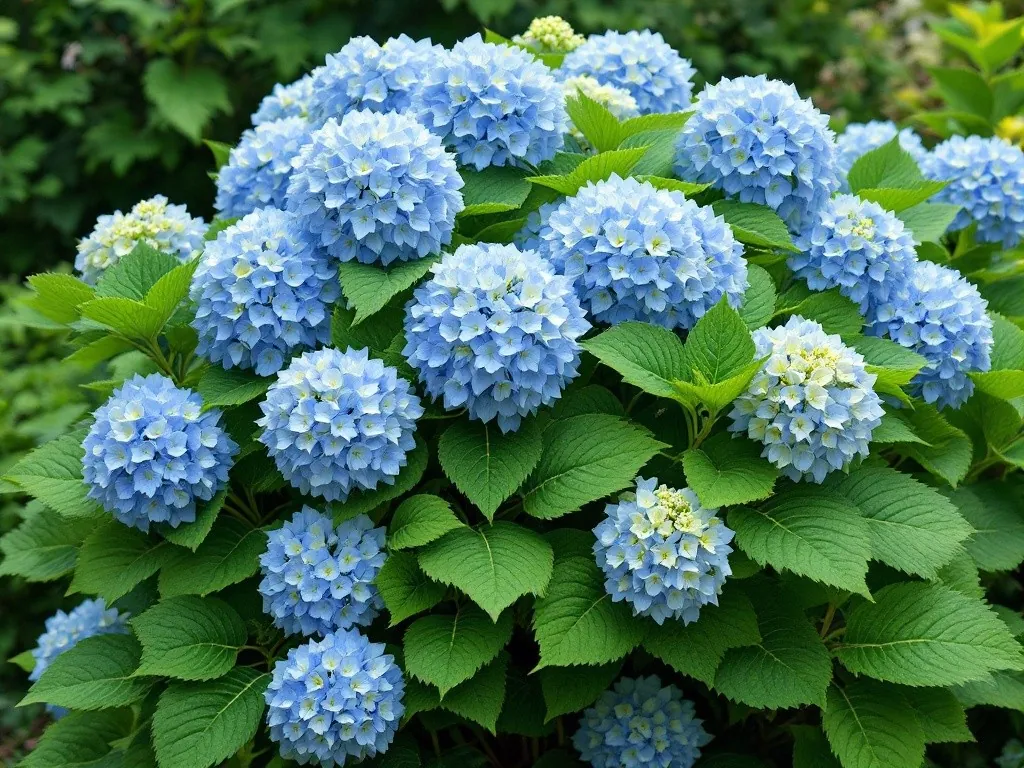
- Flower color is controlled by pH: acidic = blue, alkaline = pink.
- Needs generous watering — tolerates drought poorly.
- Blooms on last year's wood — prune carefully in spring.
- All parts are mildly toxic to people and animals.
Botanical data
- Family
- Hydrangeaceae (Hydrangeaceae)
- Height
- 1–2 m
- Width
- 1–2.5 m
- Habit
- Rounded
- Growth rate
- Moderate
- Position
- Partial shade, Shade
- Soil
- Humus-rich, Loamy
- pH reaction
- pH 4.5–6.5
- Moisture
- Moist
- Bloom
- June–September
- Hardiness
- USDA 6a–9b
- Propagation
- From cuttings, By layering
Characteristics
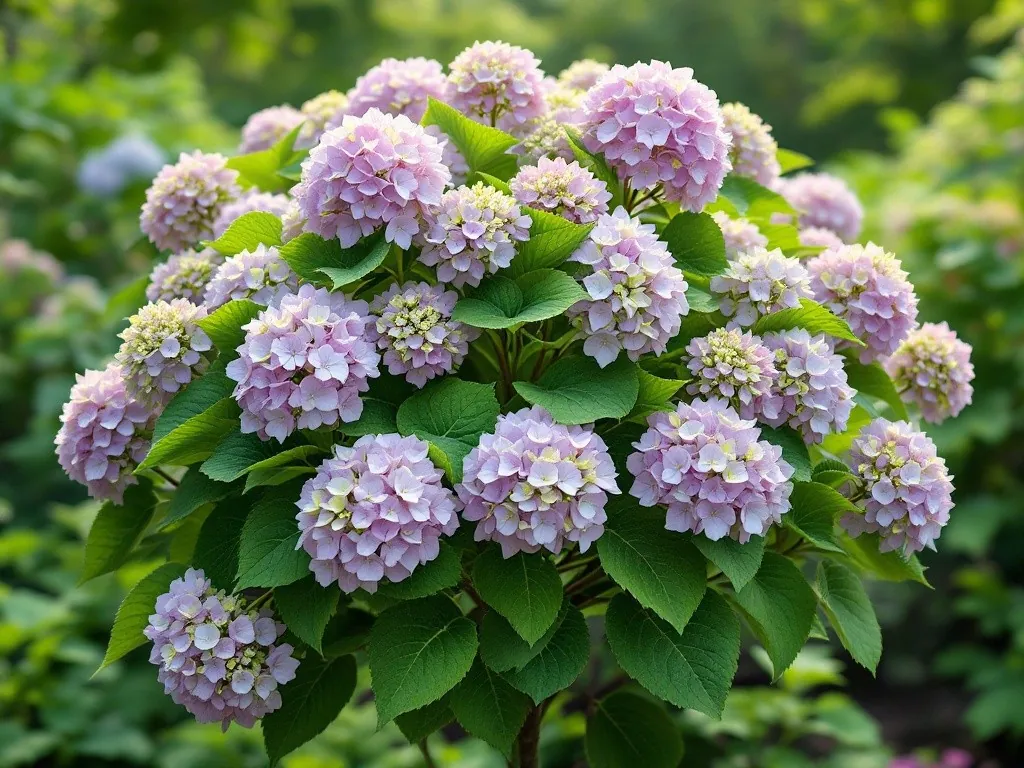
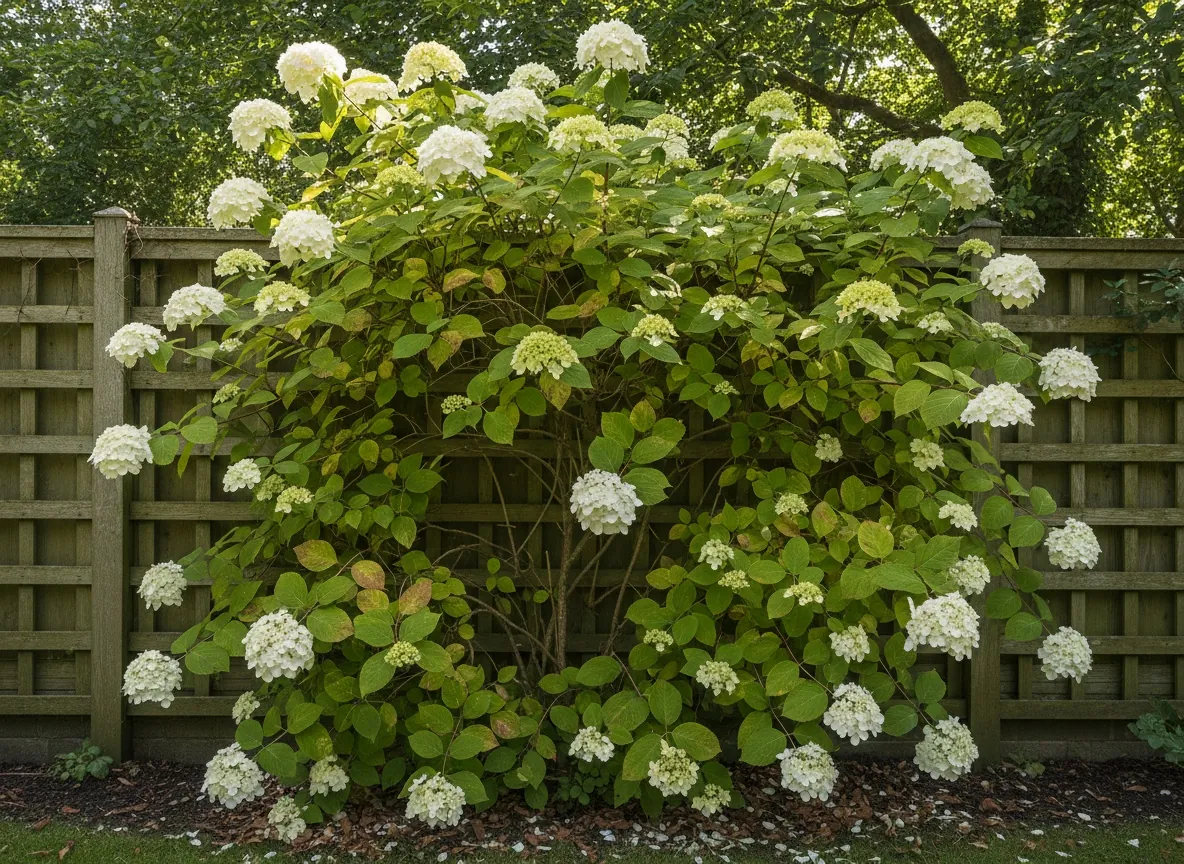
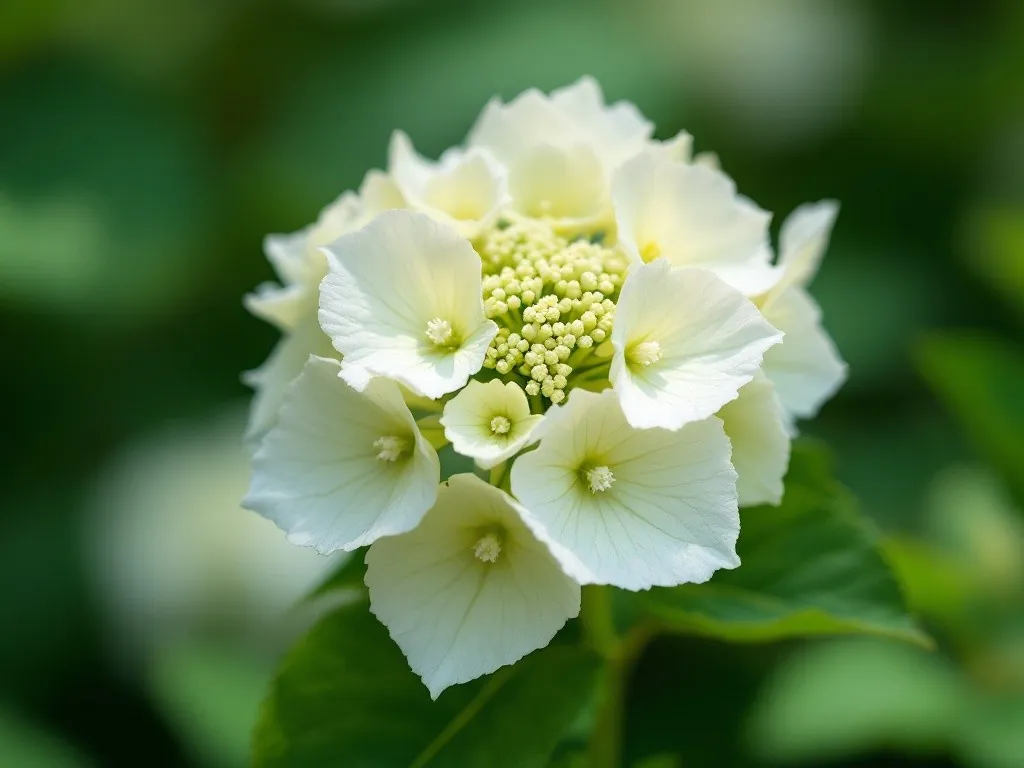
A compact, ball-shaped shrub with large, oval, toothed leaves. The flowers are gathered into showy mophead or lacecap clusters; their color depends strongly on the availability of aluminum, which is regulated by soil pH.
Growing and care
Watering
The large leaves transpire heavily — regular, generous watering is needed in hot weather. The name Hydrangea (Greek for "water vessel") says it all.
Fertilizing
Acidifying fertilizers enhance the blue flower color.
Planting
Fertile, humus-rich, acidic, and consistently moist soil; add peat or bark to acidify and mulch.
Pruning
Remove frost-damaged and spent shoots; it blooms on last year's wood, so prune carefully.
Companion plants
Good companions
Shares a preference for partial shade and moist, humus-rich soil — a good shade-loving combination.
Similar water and light requirements; the contrast in texture highlights the hydrangea's flower clusters.
An acid-loving plant with similar soil requirements — easy to grow and care for together.
Bad companions
Need dry, alkaline soil and full sun — the opposite of the hydrangea's requirements.
The evidence level indicates whether the relationship is backed by research, observation, or gardening tradition.
Diseases and pests
Toxicity
| For whom | Level | Notes |
|---|---|---|
| Humans | Moderate | Contains cyanogenic glycosides — consumption may cause stomach upset. |
| Dogs | Moderate | — |
| Cats | Moderate | — |
| Horses | Moderate | — |
History and origin
Bigleaf hydrangea was brought to Europe from Japan at the turn of the 18th and 19th centuries. It quickly became one of the most popular ornamental shrubs for shaded corners of the garden.
Uses
For shaded borders, near patios and entrances, in large containers, and as cut and dried flowers.
Trivia
- To get blue flowers, gardeners water hydrangeas with an aluminum sulfate solution.
- Cultivars are divided into ball-shaped (mophead) and flat (lacecap) types.
Frequently asked questions
How do you get blue hydrangea flowers?
Blue color comes from acidic soil (pH below 5.5) with available aluminum. It can be maintained by watering the plant with an aluminum sulfate solution and using acidifying fertilizers.
Why isn't my hydrangea flowering?
The most common causes are pruning too hard or in fall (which removes flower buds) and frost damage to the buds. Bigleaf hydrangea blooms on the previous year's wood.
How much should hydrangea be watered?
A lot and regularly, especially in hot weather — the large leaves lose water quickly. The soil should stay consistently slightly moist, but not waterlogged.
Sources
- Plants of the World Online (POWO)Database (GBIF, POWO…)
- RHS — Hydrangea macrophyllaInstitution / botanical garden
My note
A private note for this plant — saved in your browser.