In short
- One of the easiest and most reliable garden perennials.
- Each flower lives only a single day, but the clump produces whole series of them over many weeks.
- Flowers in summer; thousands of cultivars are available in every colour except pure blue.
- Very frost-hardy (down to USDA zone 3) and tolerant of a range of soils.
- CAUTION: considered toxic to cats — plant and display out of their reach.
Botanical data
- Family
- Asphodelaceae (Asphodelaceae)
- Height
- 0.4–1 m
- Width
- 0.4–0.8 m
- Habit
- Clump-forming
- Growth rate
- Fast
- Position
- Full sun, Partial shade
- Soil
- Humus-rich, Loamy, Sandy
- pH reaction
- pH 6–7
- Moisture
- Moderate, Moist
- Bloom
- June–August
- Hardiness
- USDA 3a–9b
- Propagation
- By division, From seed
Characteristics
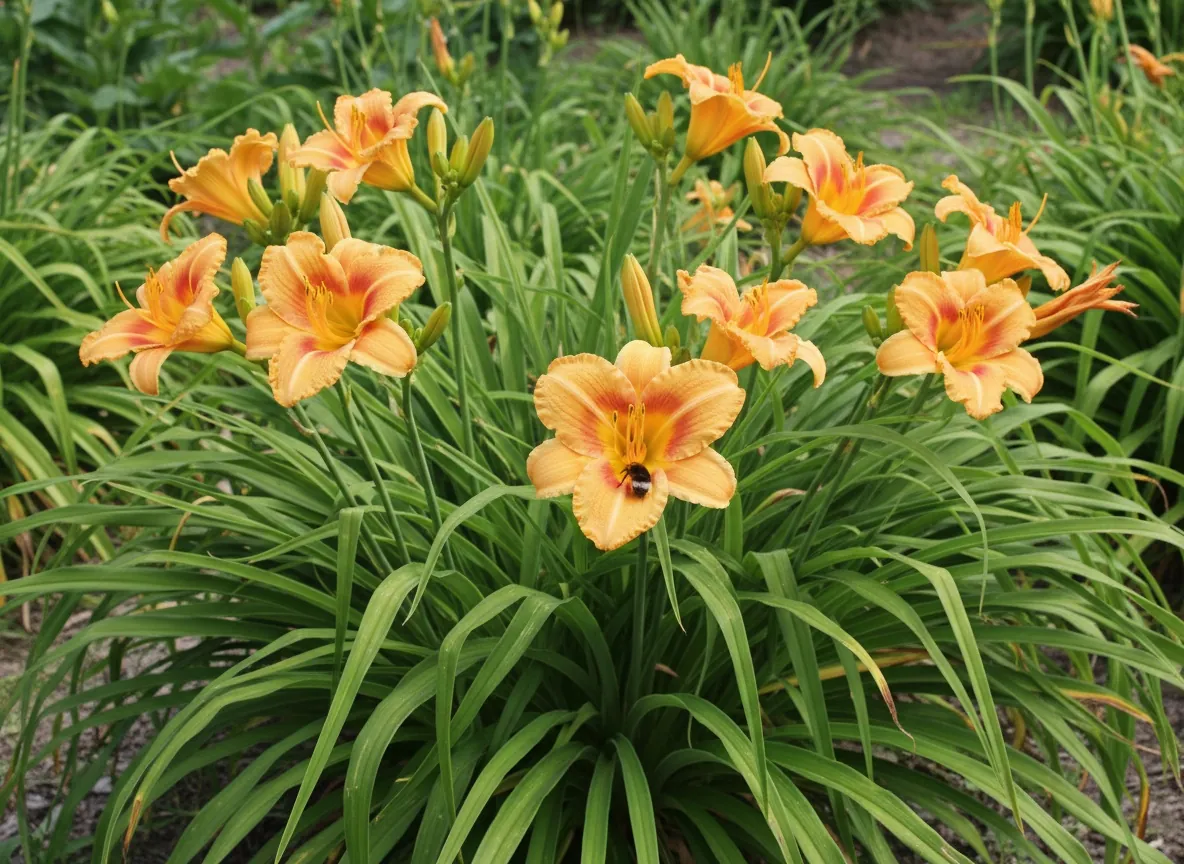
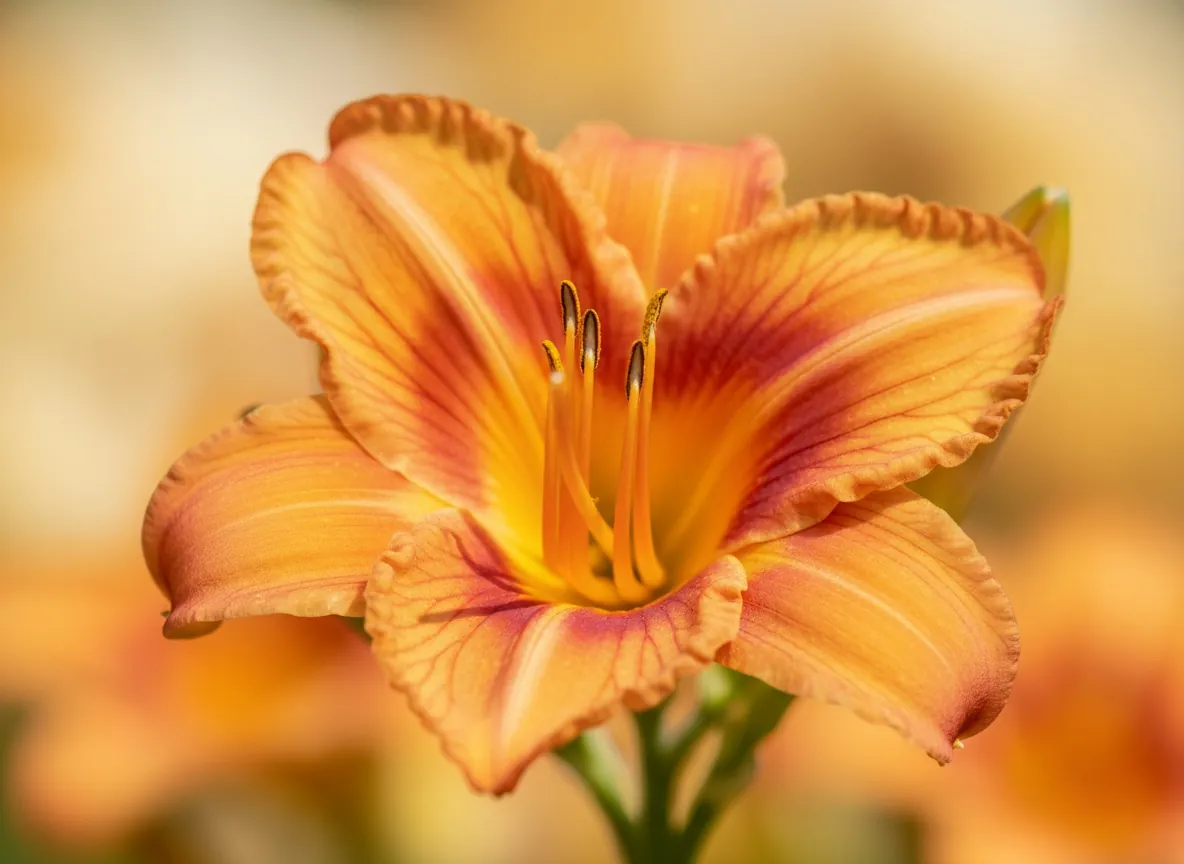
It forms dense, dome-shaped clumps of fans of narrow, arching leaves. Stiff flower stalks rise above the foliage and carry successively opening buds. The individual flower is funnel- to star-shaped, usually six-parted, and fades within a single day — the genus name and the English word “daylily” refer directly to this.
Growing and care
Watering
Very hardy once established. It produces the most flowers with even moisture during bud formation (late spring), but tolerates short droughts without harm.
Fertilizing
Moderate doses; over-fertilising with nitrogen gives lush foliage at the expense of flowers.
Planting
Tolerates a wide range of soils; it is worth working compost into the site and planting the crown shallowly, just below the surface.
Pruning
Remove spent flowers and empty flower stalks; cut back yellowed leaves in autumn or leave them for a spring clean-up.
Companion plants
Good companions
A classic border pairing — the broad leaves of the hosta contrast with the narrow, arching leaves of the daylily, and both perennials are equally undemanding.
Similar light requirements and an overlapping summer flowering period create a warm, yellow-orange border composition.
The iris flowers earlier and passes the baton to the summer-flowering daylily, and their leaves of similar habit complement each other well.
Bad companions
The vigorously spreading clumps of the daylily quickly smother delicate, low plants growing right at its roots.
The evidence level indicates whether the relationship is backed by research, observation, or gardening tradition.
Toxicity
| For whom | Level | Notes |
|---|---|---|
| Humans | None | Flowers and buds are sometimes edible and used in Asian cuisine, but only daylilies (Hemerocallis) may be eaten, not true lilies (Lilium). |
| Cats | High | Considered nephrotoxic to cats — ingestion can lead to kidney damage. Do not plant within reach of cats and do not place cut flowers near them. |
| Dogs | None | — |
History and origin
The parent species have been cultivated for centuries in China and Japan as ornamental and edible plants. In the 19th and 20th centuries, breeders, especially in the USA, created thousands of hybrids from them, making the daylily one of the most intensively selected garden perennials in the world.
Uses
For perennial borders, edgings, plantings on slopes and beside ponds, and as a ground cover masking difficult spots. It also does well in large containers on the terrace.
Trivia
- The English name “daylily” and the Latin Hemerocallis (from the Greek words for “day” and “beauty”) emphasise the one-day life of the flower.
- In Chinese cuisine, dried daylily buds (so-called golden needles) are a traditional ingredient in soups and meat dishes.
Frequently asked questions
Why do daylily flowers wilt the very next day?
It is a natural feature of the species — each individual flower lives only one day, hence the English name “daylily”. The clump does not stop flowering, however, because new buds open every day, and a well-established plant flowers this way for many weeks.
Is the daylily safe for pets?
It poses no threat to dogs and humans, but it is considered toxic to cats and can damage their kidneys. In households with cats it is better to avoid planting it within the animal's reach and not to place cut flowers in vases the cat can access.
How do you rejuvenate an old, poorly flowering clump?
It is best to divide it in early spring or early autumn. The dug-up clump is split into smaller pieces with several leaf fans and roots, then planted in fresh, compost-enriched soil — this treatment restores abundant flowering.
Sources
- Plants of the World Online (POWO)Database (GBIF, POWO…)
- Missouri Botanical Garden — HemerocallisInstitution / botanical garden
My note
A private note for this plant — saved in your browser.