In short
- Grown for its leaves, not its flowers — the flower heads are small and greenish-white.
- Leaf colours: silver marbling, purple, brown and amber (depending on the cultivar).
- A partly shaded position; in full sun the colours fade and the leaves scorch.
- Requires well-drained soil — winter water at the crown does more harm than frost.
- Pushed out of the soil by frost — every 3–4 years it must be divided or mounded with soil.
- Evergreen, so the rosette adorns the bed out of season too.
Botanical data
- Family
- Saxifragaceae (Saxifragaceae)
- Height
- 0.25–0.6 m
- Width
- 0.3–0.45 m
- Habit
- Clump-forming
- Growth rate
- Moderate
- Position
- Partial shade, Shade
- Soil
- Humus-rich, Sandy, Loamy
- pH reaction
- pH 5.5–7
- Moisture
- Moderate
- Bloom
- May–July
- Hardiness
- USDA 4a–9a
- Propagation
- By division, From cuttings, From seed
Characteristics
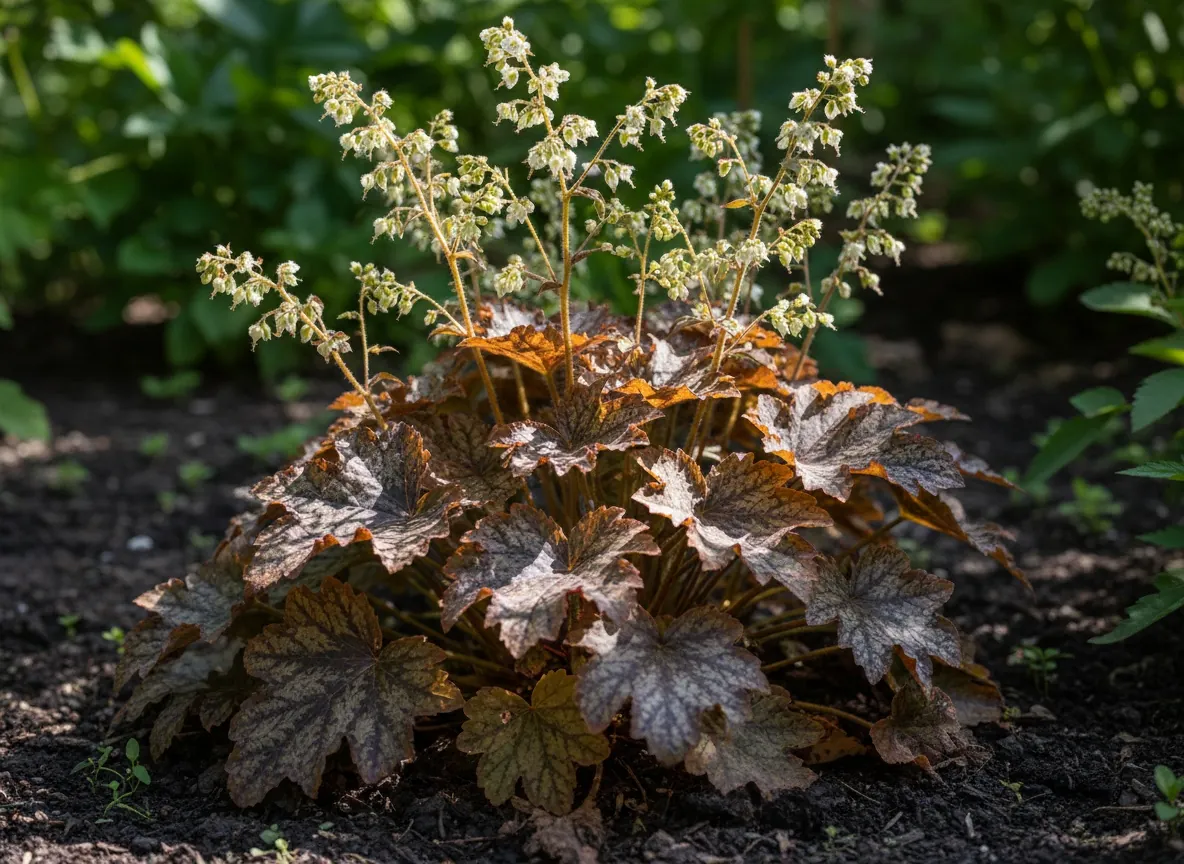
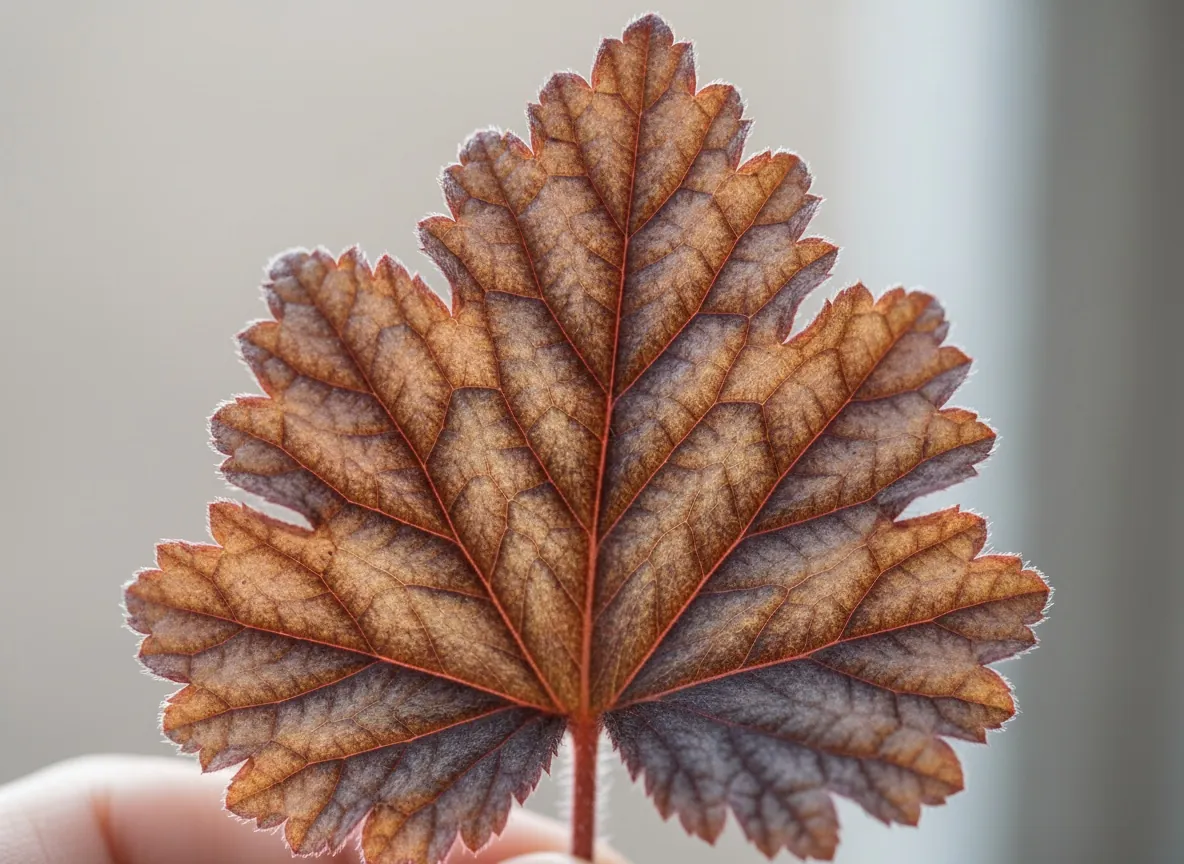
It forms a compact, rounded rosette 25–30 cm high from long-stalked, roundish, lobed and crenate leaves with prominent veins. In the original species the leaves are green, marbled silver and tinged with purple along the veins, especially on cool days in spring and autumn. The garden cultivars and hybrids in whose creation American alumroot took part have leaves ranging from amber and orange, through silvery, to dark purple and almost black. The flowers are small, bell-shaped, greenish-white or cream, gathered in loose, panicle-like inflorescences rising on slender stems up to 60 cm. With age the crown grows above the soil and becomes woody.
Growing and care
Watering
It likes soil that is constantly slightly moist but absolutely well-drained. Standing winter water around the crown kills alumroot more surely than frost — this is the most common cause of losses on heavy soils.
Fertilizing
Sparingly. An excess of nitrogen produces rank, floppy leaves with washed-out colours — and it is precisely the leaf colour that is most valuable in alumroot.
Planting
On heavy soils it is essential to add gravel or coarse sand and to plant on a slight mound. Plant so that the crown is at ground level — do not bury the centre of the rosette.
Pruning
In spring remove frost-damaged and browned leaves — the rest of the rosette will put out fresh ones. Cut spent flower stems out at the base if self-seeding is not wanted; alumroot flowers are small and are not an ornament.
Companion plants
Good companions
A textbook duo for partial shade: the blue-green, huge leaves of the hosta and the small, amber-purple rosettes of the alumroot contrast in shape and colour throughout the season.
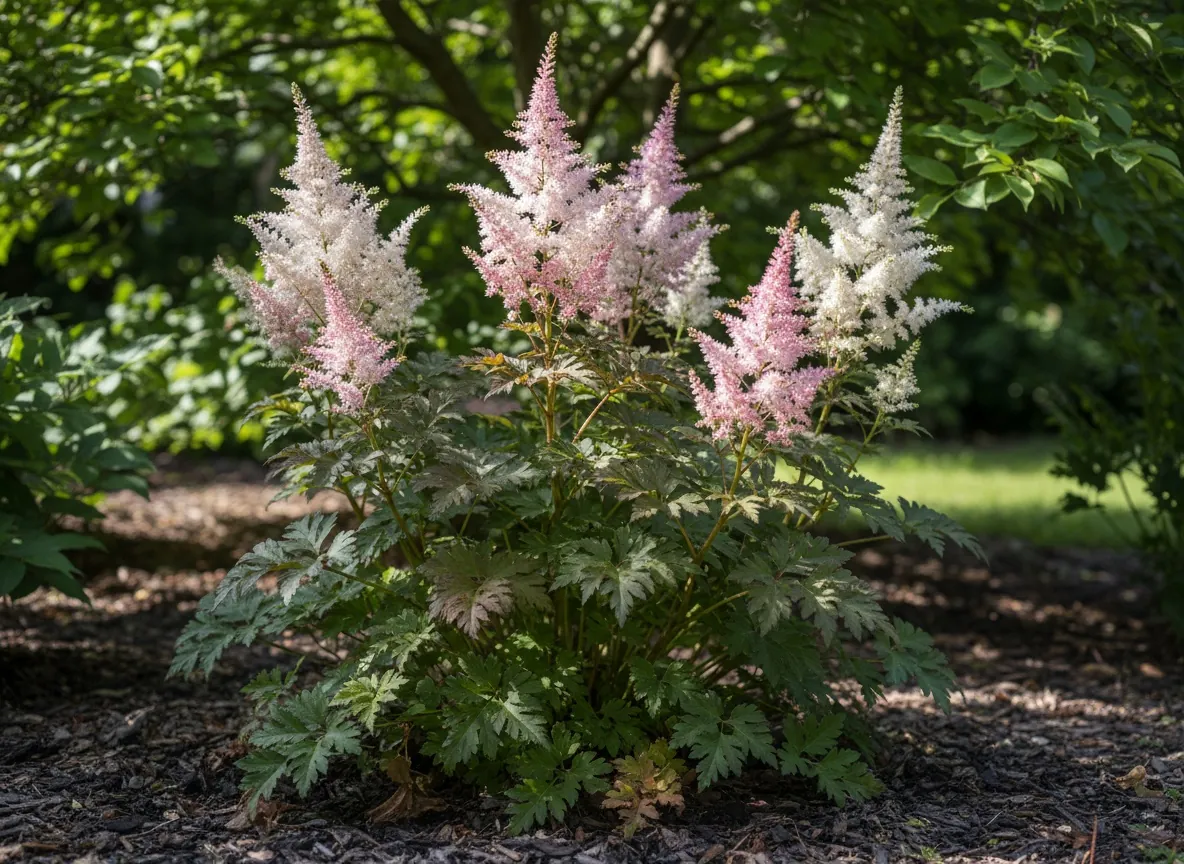
The astilbe provides upright, fluffy flower plumes that the alumroot lacks, and both have the same requirements as to humus-rich soil and partial shade.
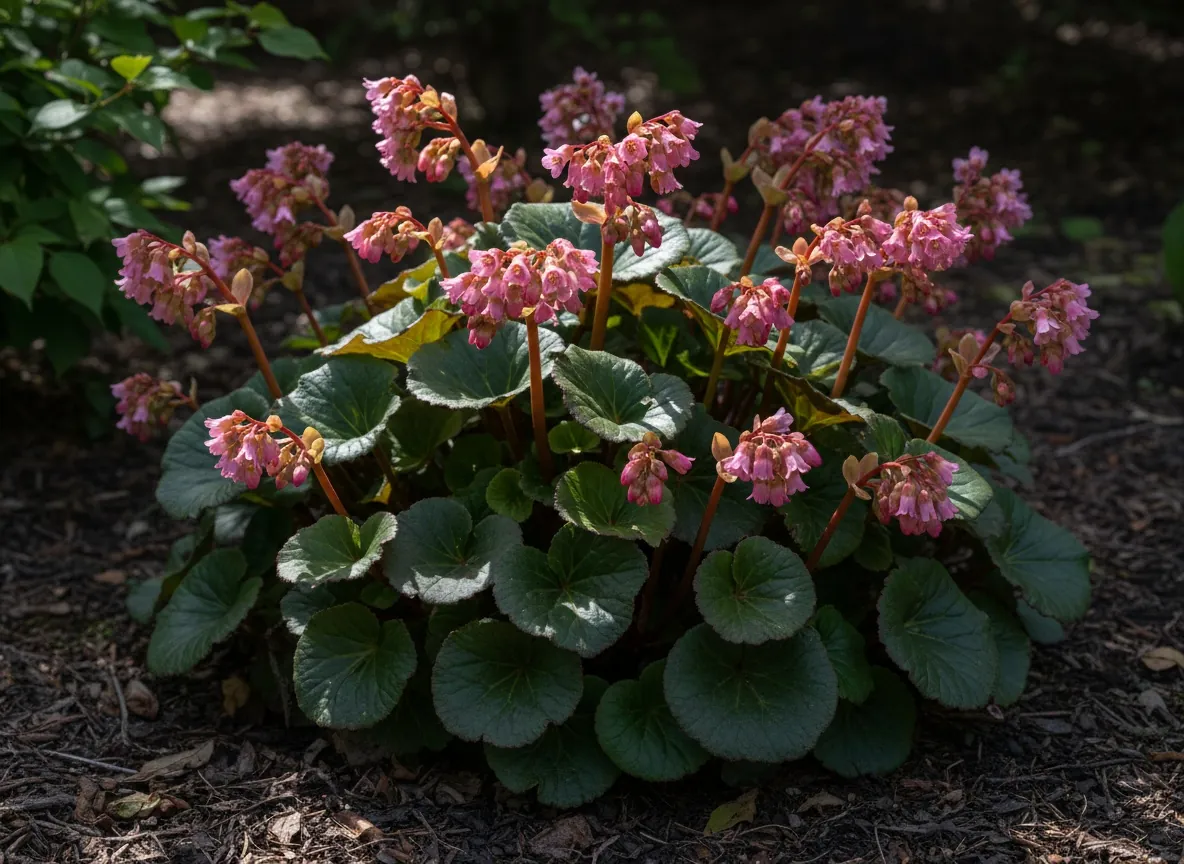
The heavy, leathery leaf of the bergenia and the light, crenate rosette of the alumroot bring each other out; both keep their leaves through the winter, so the bed does not become empty.
Bad companions
Alumroot absolutely requires a well-drained substrate — keeping the soil permanently waterlogged leads to the rotting of its crown.
Alumroot grows slowly and forms a small, shallowly seated clump — a spreading carpet creeps up under its rosette, smothers it and hinders the necessary mounding with soil.
The evidence level indicates whether the relationship is backed by research, observation, or gardening tradition.
Toxicity
| For whom | Level | Notes |
|---|---|---|
| Humans | None | The plant is not regarded as toxic. The root contains a lot of tannins and is strongly astringent — hence the English name alumroot. |
| Dogs | None | — |
| Cats | None | — |
History and origin
The indigenous peoples of North America used the strongly astringent, tannin-rich root of alumroots to wash wounds and rinse the mouth — hence the English name alumroot, alluding to alum. The genus reached European gardens in the 17th and 18th centuries, but for a long time it was mainly the red-flowering coral bells that were cultivated. The real career of heucheras as foliage plants only began towards the end of the 20th century, when breeders started crossing species with marbled leaves, including Heuchera americana — today there are hundreds of cultivars on the market.
Uses
For beds in partial shade, in the foreground and for edgings, where leaf colour throughout the season is valued. Excellent in containers and window boxes on a terrace or balcony facing north — the colourful rosettes look good in winter too. It works well as a contrast to hostas, ferns and astilbes, and in compositions with stone.
Trivia
- The genus was named after Johann Heinrich von Heucher, an 18th-century German physician and botanist from Wittenberg.
- Alumroot is closely related to bergenia and astilbe — all belong to the saxifrage family, which is evident from the same type of small, bell-shaped flower gathered in a panicle.
Frequently asked questions
Why is my alumroot pushing itself out of the ground and what should I do about it?
This is frost heaving: alternating freezing and thawing of the soil pushes the shallowly seated crown upwards, and with age the crown itself additionally elongates and becomes woody. An exposed crown dries out and the plant dies. In spring you should mound fertile soil around the clump up to the base of the leaves, and every 3–4 years dig it up, cut off the woody part and plant the younger fragment deeper. This is a standard operation, not a rescue measure — alumroot simply requires it.
Can alumroot be planted in full sun?
Better not. American alumroot is a woodland floor plant — in full sun its leaves scorch at the edges, and the colours fade and lose contrast. Partial shade is optimal, for example the east side of a building or a spot under an open tree canopy. Cultivars with dark purple leaves tolerate more sun than amber and silvery ones, but all of them then require constantly moist soil.
Should alumroot be cut back for winter?
No. Alumroot is evergreen and its rosette shields the crown in winter, while also adorning the bed. Dried and frost-damaged leaves are removed only in early spring, before the new ones emerge. In winter it is worth covering the plants with conifer branches — more to limit frost heaving and winter desiccation than to protect them from the cold itself.
Sources
- Plants of the World Online (POWO) — Heuchera americanaDatabase (GBIF, POWO…)
- Missouri Botanical Garden — Plant Finder: Heuchera americanaInstitution / botanical garden
My note
A private note for this plant — saved in your browser.