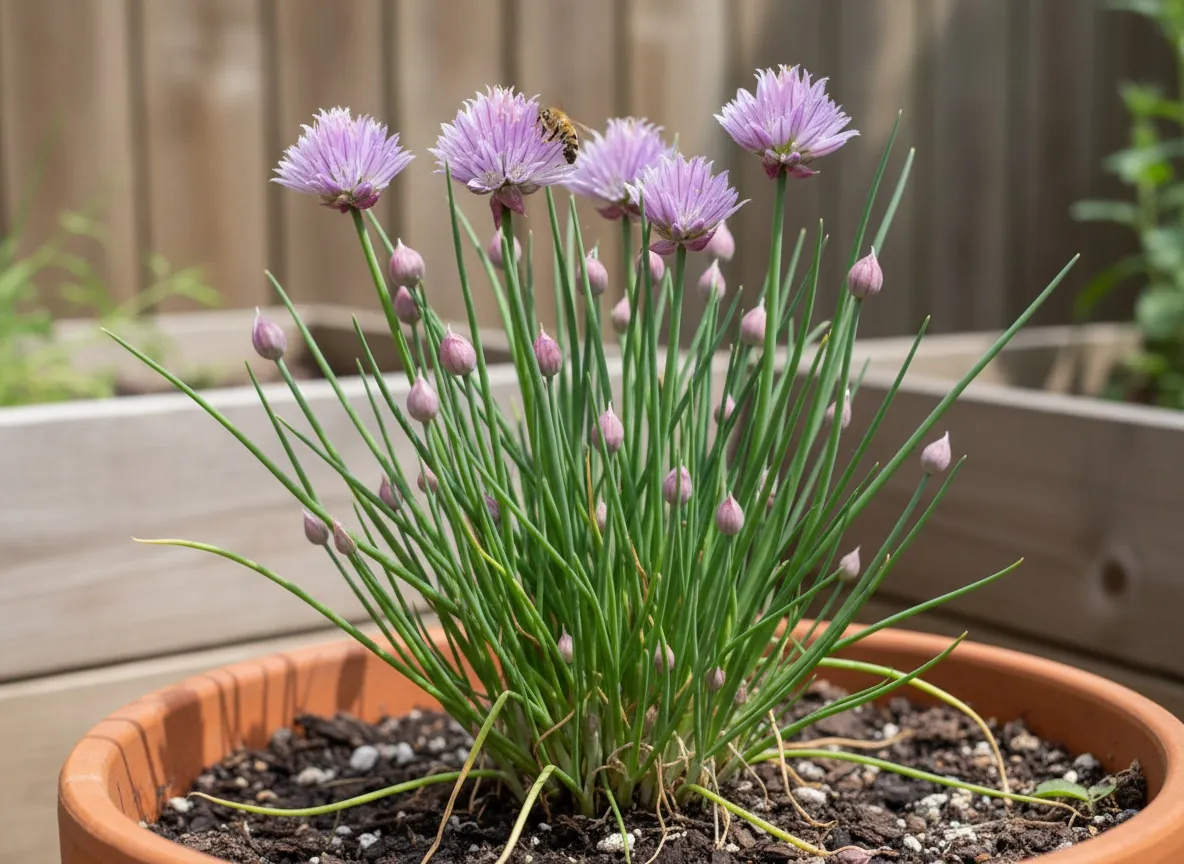
In short
- A sunny or lightly shaded site, fertile soil kept constantly and moderately moist.
- Fully frost-hardy (to USDA zone 3), overwinters in the ground and is one of the first herbs to start into growth in spring.
- Cut the leaves low at the ground, do not pinch off the tips — a cut chive leaf dries out from the top down.
- The pink-purple flowers are edible and very readily visited by bees.
- Beware with pets: like all alliums, chives are toxic to dogs and cats.
- Divide the clumps every 3–4 years, once they start to become congested and produce finer leaves.
Botanical data
- Family
- Amaryllidaceae (Amaryllidaceae)
- Height
- 0.2–0.4 m
- Width
- 0.2–0.3 m
- Habit
- Clump-forming
- Growth rate
- Fast
- Position
- Full sun, Partial shade
- Soil
- Humus-rich, Loamy, Sandy
- pH reaction
- pH 6–7.5
- Moisture
- Moderate, Moist
- Bloom
- May–July
- Hardiness
- USDA 3a–9b
- Propagation
- By division, From seed, From bulbs / tubers
Characteristics
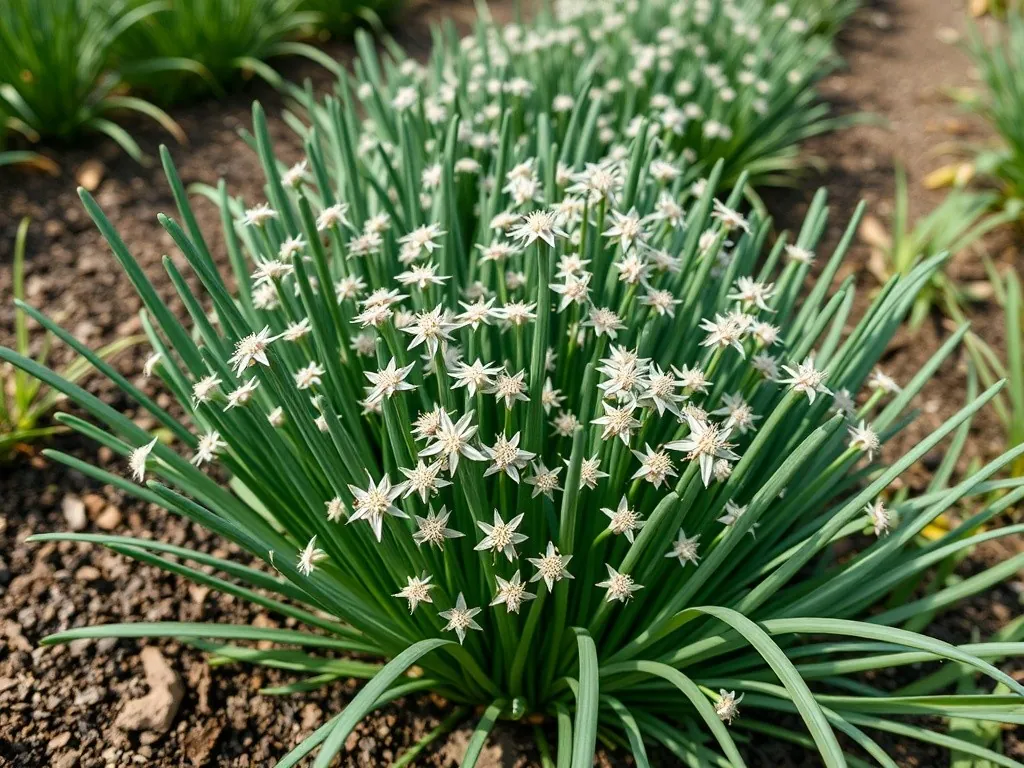
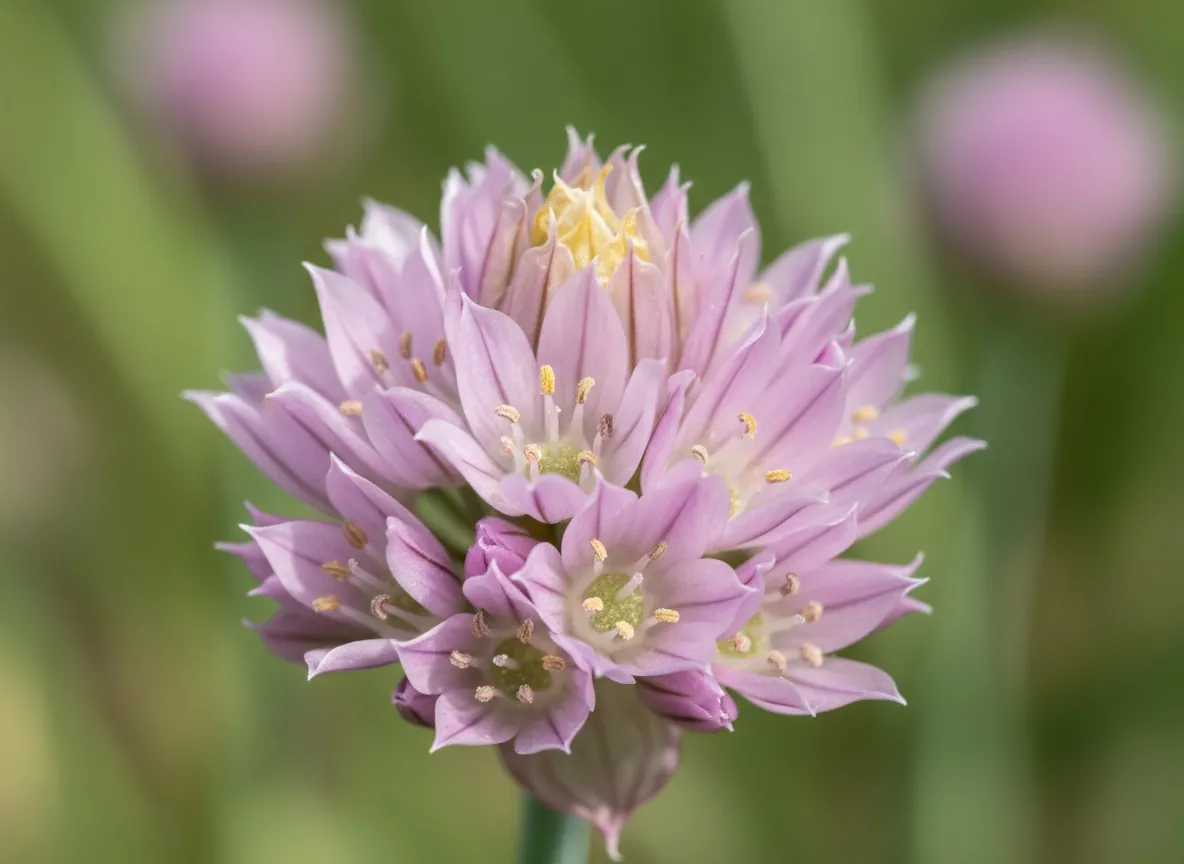
From small, elongated bulbs grows a compact clump of hollow, cylindrical leaves 20–40 cm tall. The lilac flowers are gathered in dense, almost spherical umbels on stiff, leafless stalks that rise above the leaves. The whole plant gives off a mild garlic-and-onion scent when crushed. The clump becomes denser from year to year as the bulbs divide, and after a few seasons it needs renewing.
Growing and care
Watering
Likes constant, moderate moisture — on a dry site the leaves quickly turn yellow and harden. After every cut it is worth watering generously to speed up regrowth.
Fertilizing
Small doses every few weeks. This is one of the few herbs that rewards nitrogen with lush regrowth, without any loss of flavour.
Planting
Humus-rich, fertile soil able to hold moisture; mix in compost before planting. It tolerates lightly shaded sites, although it grows more luxuriantly in the sun.
Pruning
Cut whole leaves with scissors 2–3 cm above the ground, taking no more than a third of the clump at a time — the rest keeps working and regrows faster. Remove the flower heads if it is the leaves you want.
Companion plants
Good companions
The sharp, garlicky smell of chives masks the scent of carrot foliage and makes it harder for the carrot fly to find the bed.
The classic edging beneath roses — the scent limits aphid attacks, and the flowering chive heads nicely conceal the bare bases of the stems.
The shallow root system does not compete with strawberries, and the proximity of alliums is held to limit grey mould on the fruit.
Bad companions
Alliums are held to inhibit the growth of legumes; weaker development of beans is observed in the immediate vicinity of chives and onions.
The same relationship as with beans — legumes tolerate the close company of allium plants poorly.
The evidence level indicates whether the relationship is backed by research, observation, or gardening tradition.
Toxicity
| For whom | Level | Notes |
|---|---|---|
| Humans | None | A common culinary vegetable, eaten raw. |
| Dogs | Moderate | Like all plants of the genus Allium (onion, garlic), it contains sulphur compounds that damage the red blood cells of dogs. Do not feed leftovers containing chives. |
| Cats | High | Cats are noticeably more sensitive to the sulphur compounds of alliums than dogs — even a small amount can cause haemolytic anaemia. |
| Horses | Moderate | — |
History and origin
In Europe, chives were gathered from wild sites long before they began to be cultivated — as a garden plant they only became widespread in the Middle Ages. They were one of the fixtures of monastery herb gardens, and in the folk cooking of Central Europe they became permanently associated with curd cheese and potatoes.
Uses
For the vegetable garden, herb beds, edgings and balcony boxes; flowering clumps also work purely ornamentally as a low edging. In the kitchen only fresh and added at the very end — added to hot dishes it loses its aroma and colour. Classically it is combined with curd cheese, eggs, potatoes, cream-based sauces, soups and bread. It is not suitable for drying (it loses its flavour), but it can be chopped and frozen.
Trivia
- The purple flower heads are edible in their entirety — separated into individual florets they decorate salads and curd cheese spreads, and steeped in vinegar they turn it pink.
- It is the only species of Allium that grows wild both in Eurasia and in North America.
Frequently asked questions
Why are my chives turning yellow and drying out at the tips?
Usually for one of two reasons: the soil has dried out, or only the leaf tips are being cut off. A tubular leaf cut halfway up dries out downwards from the cut, which is why chives are always cut low, 2–3 cm above the ground. Yellowing of the whole clump in summer is also a natural sign that it is time for a renewal cut and a good watering.
Should chive flowers be removed?
It depends on the purpose of growing them. After flowering the leaves harden and lose some of their aroma, so when growing chives as a seasoning it is worth cutting out the buds. If, however, you care about bees or about edible flowers for salads, you can let the clump bloom and cut it low once it has finished — it will reshoot with fresh, soft leaves.
Can chives be grown in a pot through the winter?
Yes, but they need a period of cold beforehand. The clump is dug up in autumn, left in a box out in the frost for a few weeks, and only then brought into a warm home — it then quickly produces fresh chives. A plant brought indoors straight from the season usually languishes, because it is trying to enter dormancy.
Sources
- Plants of the World Online (POWO) — Allium schoenoprasumDatabase (GBIF, POWO…)
- Missouri Botanical Garden — Allium schoenoprasumInstitution / botanical garden
My note
A private note for this plant — saved in your browser.