In short
- A sunny or partly shaded site, moderately fertile and moderately moist soil.
- The aroma is strongest just before flowering — that is the best moment for harvesting the leaves.
- Frost-hardy in the Polish climate; the above-ground part dies back for winter and regrows in spring from the rootstock.
- It spreads by short runners and self-seeds abundantly — it is worth restraining it with an edging and cutting it before the seeds are shed.
- The flowers are inconspicuous but besieged by bees — hence the old name bee balm.
- Cutting back to 10–15 cm after flowering gives a second, fresh harvest in the same season.
Botanical data
- Family
- Lamiaceae (Lamiaceae)
- Height
- 0.4–1 m
- Width
- 0.4–0.6 m
- Habit
- Clump-forming
- Growth rate
- Fast
- Position
- Full sun, Partial shade
- Soil
- Humus-rich, Loamy, Sandy
- pH reaction
- pH 5.5–7.5
- Moisture
- Moderate, Moist
- Bloom
- June–August
- Hardiness
- USDA 4a–9a
- Propagation
- From seed, By division, From cuttings
Characteristics
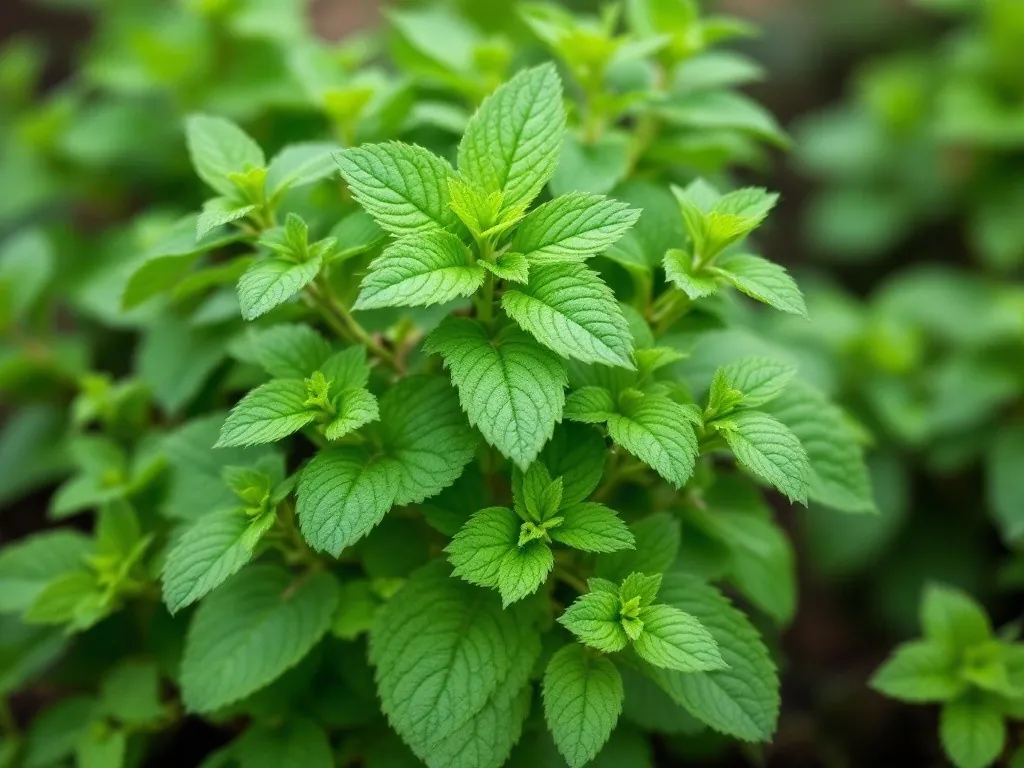
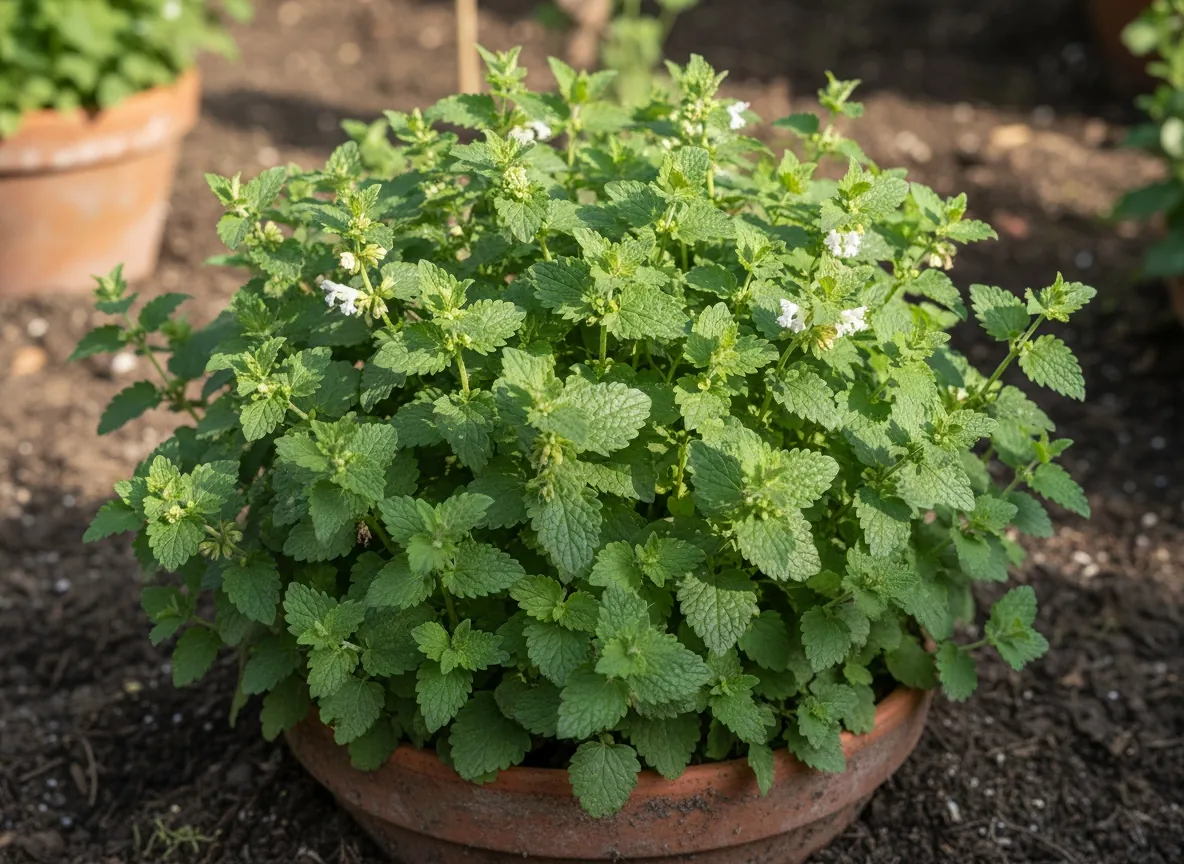
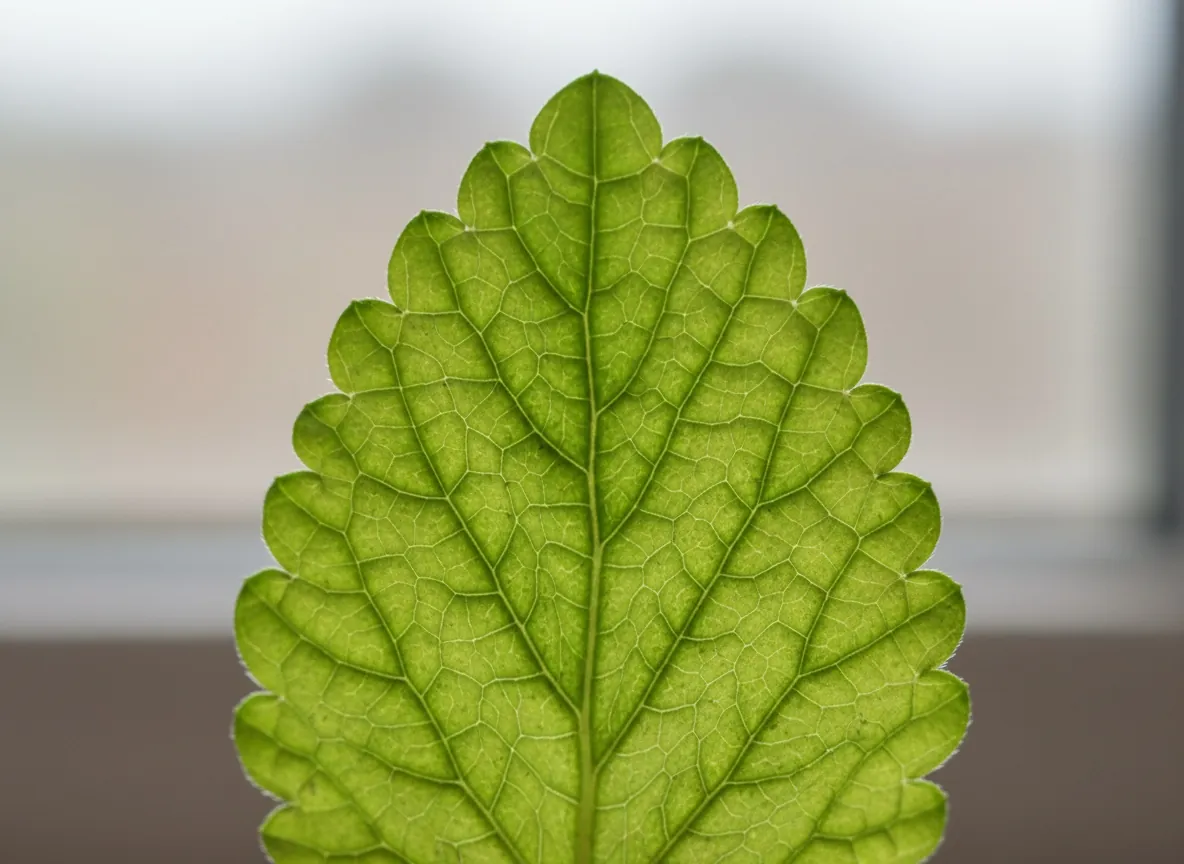
It forms a loose, branched clump of four-angled shoots 40–100 cm tall. The ovate, crenate leaves are light green and slightly wrinkled, and when rubbed between the fingers they give off a distinct lemon scent, coming mainly from citral. The small, white-cream flowers grow in the leaf axils and are not showy, but they are very rich in nectar. The plant spreads moderately by short runners, but it propagates itself most effectively by self-seeding.
Growing and care
Watering
In hot weather it needs regular watering — when dried out it rolls up its leaves and runs to flower sooner. It tolerates short droughts, but not constant moisture around the root collar.
Fertilizing
Moderately. An excess of nitrogen produces lush leaves with a markedly weaker lemon aroma.
Planting
Moderately fertile, well-drained soil that does not crust over. It is worth planning to restrain its spread from the outset — a border edging or a sunken container with no base.
Pruning
Cut whole shoots at a height of 10–15 cm above the ground. The plant quickly regrows with fresh, far more aromatic leaves and gives a second harvest in the same season.
Companion plants
Good companions
An aromatic herb between the rows is held to confuse tomato pests, and flowering lemon balm draws beneficial insects onto the bed.
Abundantly visited by bees — planted near fruit trees it increases pollinator traffic in the orchard.
It tolerates partial shade beneath fruit bushes and serves there as a living mulch attracting pollinators.
Bad companions
Radically different water needs: lavender requires dry, poor soil, while lemon balm requires regular moisture — and on top of that it quickly muscles in at its neighbour's expense.
Two expansive members of the mint family with similar requirements — mint by runners, lemon balm by self-seeding — grow through each other very quickly and are hard to separate afterwards.
The evidence level indicates whether the relationship is backed by research, observation, or gardening tradition.
Toxicity
| For whom | Level | Notes |
|---|---|---|
| Humans | None | A popular infusion herb, regarded as safe in typical consumption. |
| Dogs | None | — |
| Cats | None | — |
History and origin
The genus name comes from the Greek melissa, meaning bee — ancient beekeepers rubbed the insides of hives with the leaves to encourage swarms to stay. Avicenna recommended it for melancholy and heart complaints, and from the 17th century it became famous as an ingredient of Carmelite water, prepared by French monks. In Poland it is a permanent fixture of cottage herb gardens.
Uses
For herb gardens, partly shaded borders, plantings beneath fruit trees and growing in containers; it tolerates balcony conditions well. Fresh leaves are brewed into a calming infusion and added to lemonades, lemon water, fruit desserts and salads. In the kitchen it is used only raw or added at the end — cooking destroys its delicate aroma. Dried, it holds its scent less well than mint, so lemon balm is better frozen than dried.
Trivia
- The lemon scent of balm has nothing to do with citrus — it is due to citral, the same compound as in lemongrass.
- Carmelite water, an old nerve remedy based on lemon balm, was produced continuously from 1611.
Frequently asked questions
Does lemon balm spread as aggressively as mint?
Less so, but it still needs watching. Mint takes ground with underground runners that can cross half a border; lemon balm forms a compact clump and its runners are short — but it self-seeds abundantly. It is enough to cut it before the seeds are shed and to divide the rootstock every few years for it to stay where we planted it.
Why does my lemon balm have such a weak scent?
Usually three things are to blame: soil that is too fertile and an excess of nitrogen, too deep shade, and harvesting after flowering. The leaves contain the most oils on a sunny site, on average soil and just before the flowers open. Harvesting is best done in the morning, once the dew has dried.
Will lemon balm overwinter in the ground?
Yes, it is hardy to USDA zone 4 and in Polish conditions it needs no covering. The above-ground part naturally dies back after the first frosts, and the plant regrows in spring from the rootstock. It is only worth avoiding sites where water stands for a long time in winter.
Sources
- Plants of the World Online (POWO) — Melissa officinalisDatabase (GBIF, POWO…)
- RHS — Melissa officinalisInstitution / botanical garden
My note
A private note for this plant — saved in your browser.