In short
- Site: full sun, fertile, well-drained, neutral soil.
- Planted as cloves — in autumn (winter/hardneck types) or in early spring (spring/softneck types).
- For hardneck cultivars, it is worth breaking off the scapes to strengthen the bulb.
- Highly toxic to dogs and cats, despite being culinarily safe for people.
- A good neighbour for roses and strawberries — repels aphids and limits grey mould.
Botanical data
- Family
- Amaryllidaceae (Amaryllidaceae)
- Height
- 0.3–0.6 m
- Width
- 0.1–0.2 m
- Habit
- Clump-forming
- Growth rate
- Moderate
- Position
- Full sun
- Soil
- Humus-rich, Loamy
- pH reaction
- pH 6–7
- Moisture
- Moderate
- Bloom
- June–July
- Hardiness
- USDA 4a–9b
- Propagation
- From bulbs / tubers
Characteristics
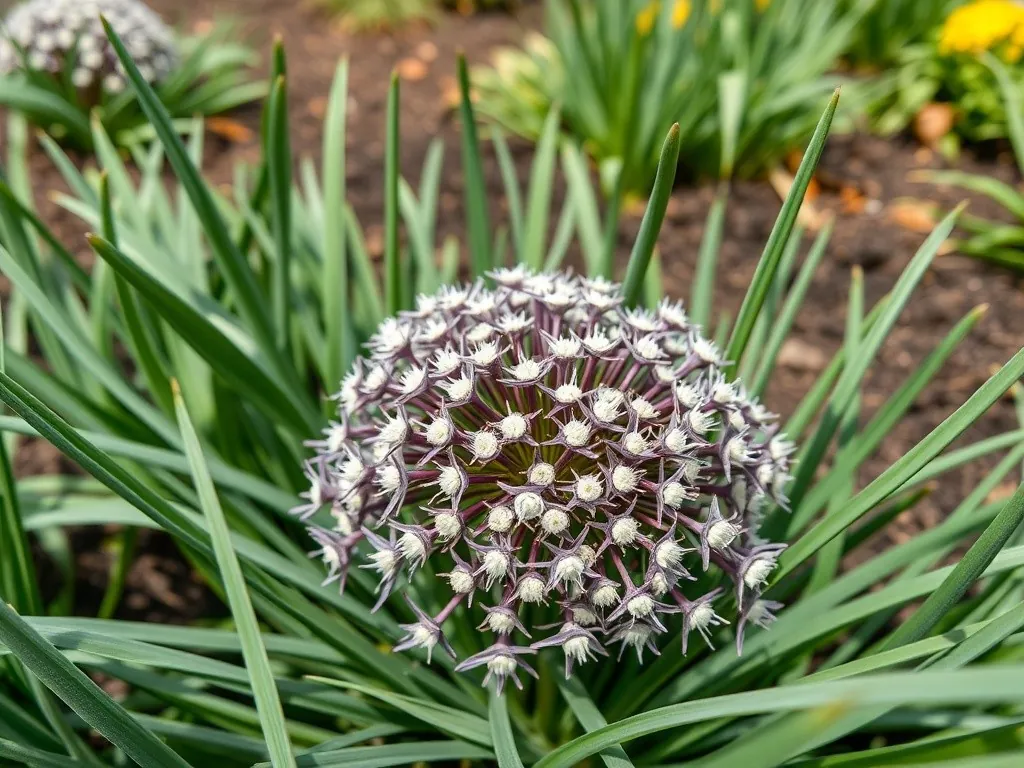
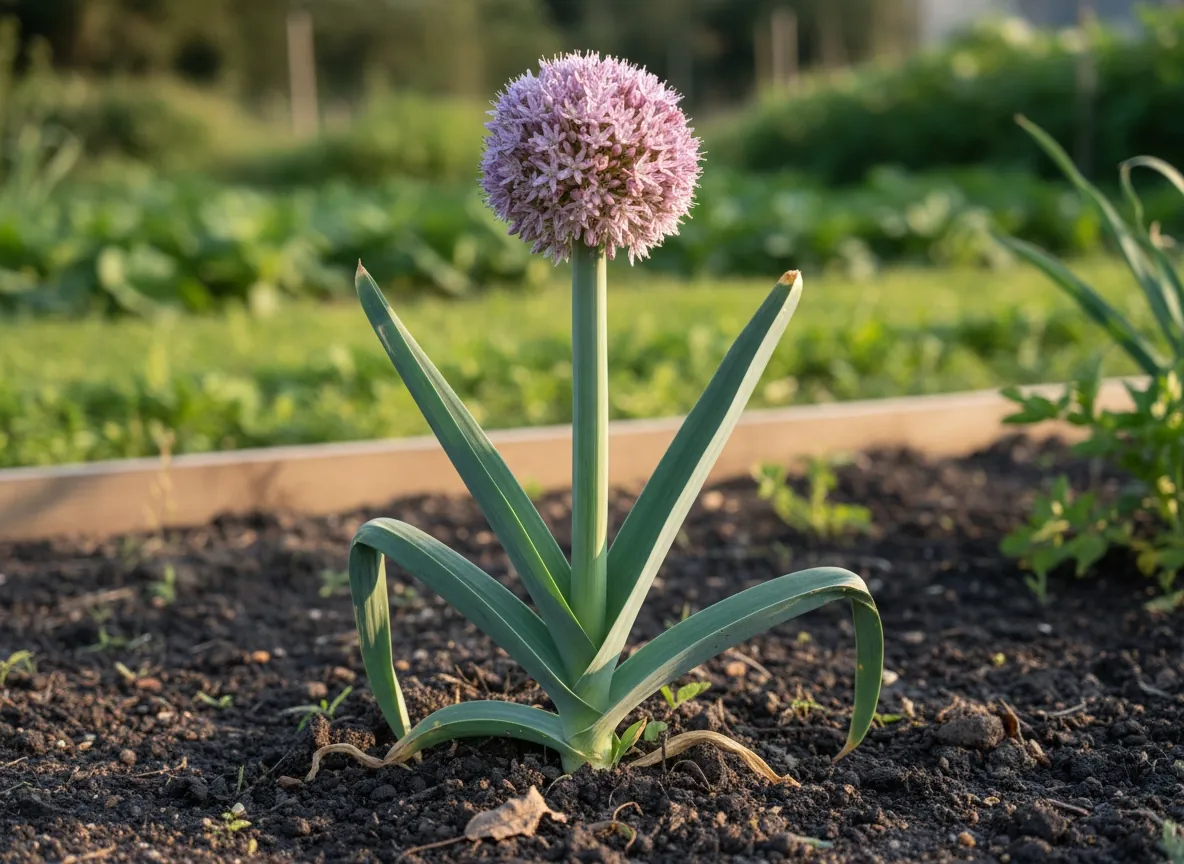
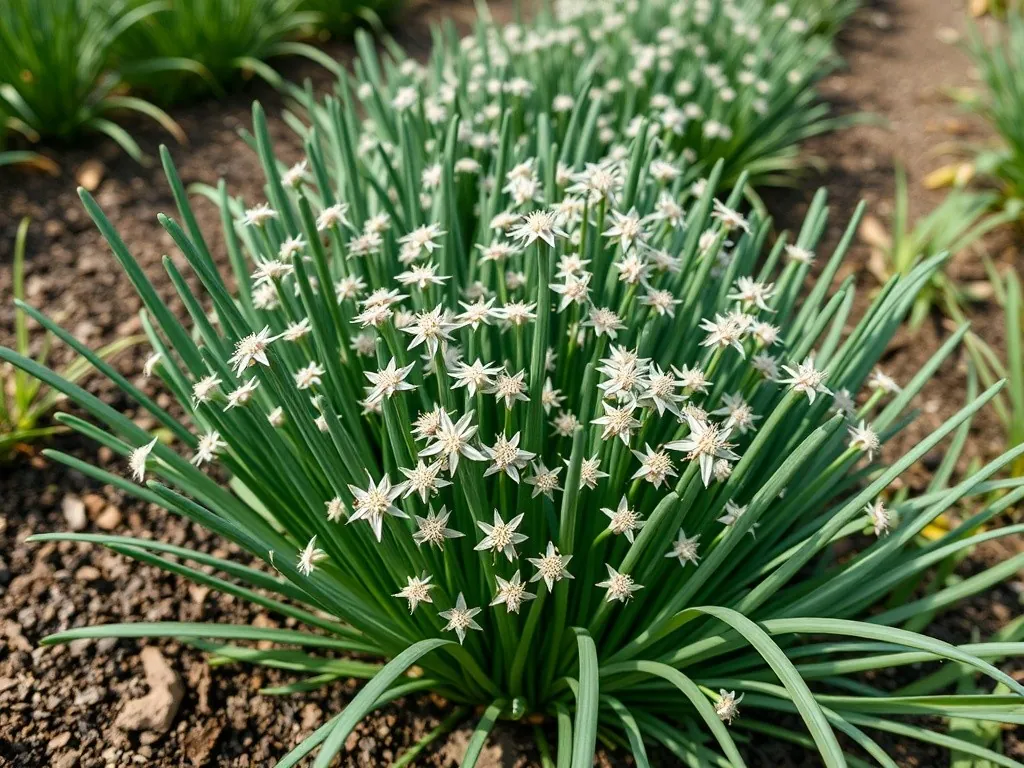
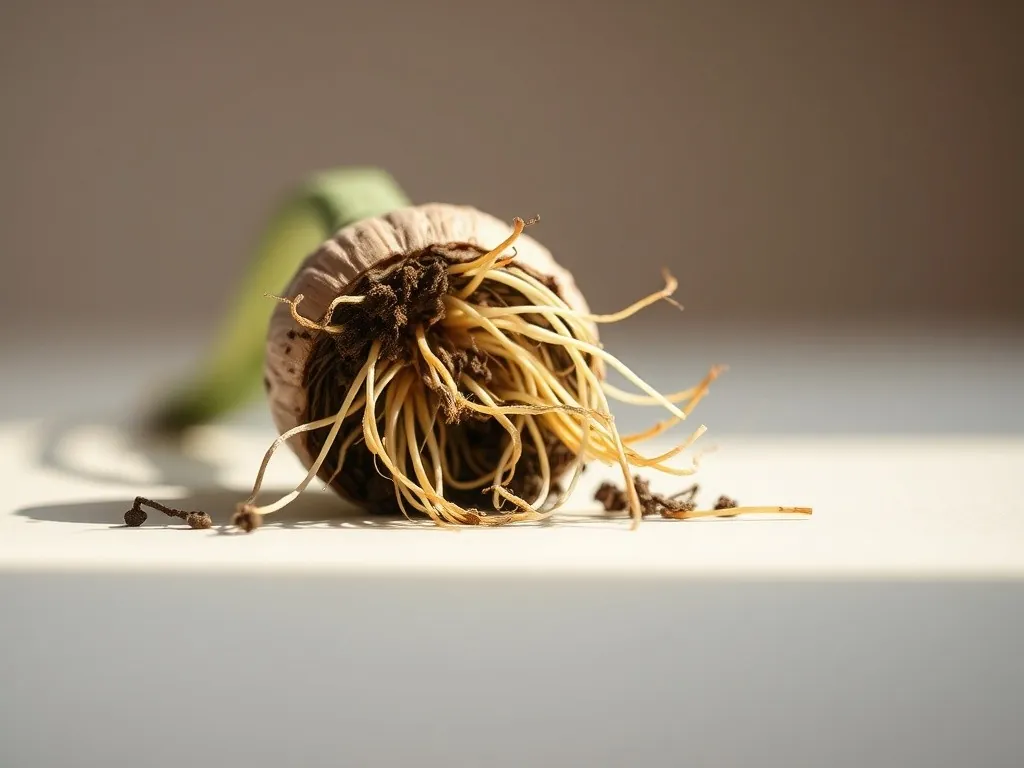
The bulb is made up of a few to over a dozen cloves surrounded by a shared, papery skin. The leaves are flat and narrow, arranged in a channel-like way on a short stem. Hardneck cultivars produce a stiff, central flowering stalk (scape) topped with an umbel of small flowers and bulbils.
Growing and care
Watering
Stop watering 2–3 weeks before harvest to help the bulb dry down and form its covering skin.
Fertilizing
Avoid excess nitrogen in the second half of the season — it prolongs growth at the expense of bulb quality.
Planting
Fertile, well-drained soil without fresh manure; site previously grown with legumes or brassicas, not other Allium species.
Pruning
Break off the scapes before they form a flower bud — this directs the plant's energy into bulb development.
Companion plants
Good companions
Garlic's strong smell repels aphids that feed on roses — a classic, well-established pairing in rose gardens.
Garlic planted among strawberries reduces the occurrence of grey mould and some pests — often used in organic growing.
Bad companions
Like other onion-family plants, garlic releases allelopathic compounds into the soil that inhibit Rhizobium nodule bacteria and weaken the growth of legumes.
The evidence level indicates whether the relationship is backed by research, observation, or gardening tradition.
Toxicity
| For whom | Level | Notes |
|---|---|---|
| Humans | None | Safe when eaten in culinary amounts; in very large raw doses it can irritate the digestive tract. |
| Dogs | High | Contains organosulfur compounds that damage red blood cells — garlic is more toxic to dogs than onion by weight. |
| Cats | High | — |
| Horses | Moderate | — |
History and origin
Cultivated for at least 5,000 years, prized in ancient Egypt, Greece and Rome both culinarily and medicinally. In many folk cultures it was credited with properties warding off disease and evil forces.
Uses
A popular culinary spice and an ingredient in traditional herbal remedies. Grown in home gardens, allotments, and in pots on balconies.
Trivia
- Garlic's characteristic smell only forms once the tissue is damaged — the enzyme alliinase then converts alliin into allicin.
- Hardneck cultivars produce edible bulbils at the top of the flowering stalk, from which new plants can be grown.
Frequently asked questions
When should garlic be planted — in autumn or spring?
Winter (hardneck) cultivars are planted in autumn (September–October), giving larger, earlier-maturing bulbs. Spring (softneck) cultivars are planted in early spring, as soon as the bed can be worked — they produce smaller bulbs but do not need to overwinter in the ground.
What are scapes and do they need to be removed?
Scapes are the flowering stalks produced by hardneck cultivars. It is worth breaking them off as they start to curl, before they form a flower bud — this directs more of the plant's energy into bulb development, and the scapes themselves are edible and suit, for example, pesto.
Is garlic safe for dogs and cats?
No — garlic is highly toxic to dogs and cats, even more so than onion by weight. The sulphur compounds it contains damage red blood cells, so it should not be given to animals in any form.
Sources
- Plants of the World Online (POWO) — Allium sativumDatabase (GBIF, POWO…)
- RHS — Growing garlicInstitution / botanical garden
My note
A private note for this plant — saved in your browser.