In short
- The white part is created by earthing up — the higher it is covered with soil, the longer it gets.
- Very frost-hardy — it overwinters in the ground and can be harvested even on frosty days.
- A long growing season: from sowing to harvest usually takes 5–7 months.
- Plant the transplants in deep holes, without filling them with soil.
- An excellent neighbour for carrots — they deter each other's pests.
Botanical data
- Family
- Amaryllidaceae (Amaryllidaceae)
- Height
- 0.4–0.9 m
- Width
- 0.15–0.3 m
- Habit
- Upright
- Growth rate
- Slow
- Position
- Full sun, Partial shade
- Soil
- Humus-rich, Loamy
- pH reaction
- pH 6.5–7.5
- Moisture
- Moderate, Moist
- Bloom
- June–July
- Hardiness
- USDA 5a–9b
- Propagation
- From seed
Characteristics
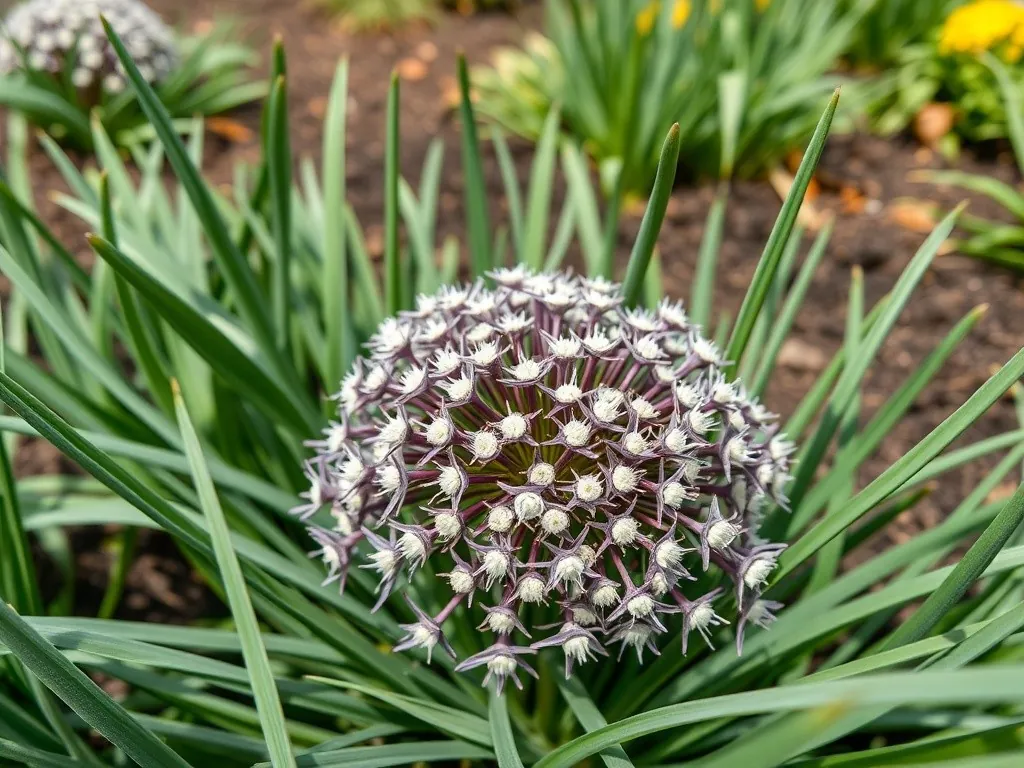
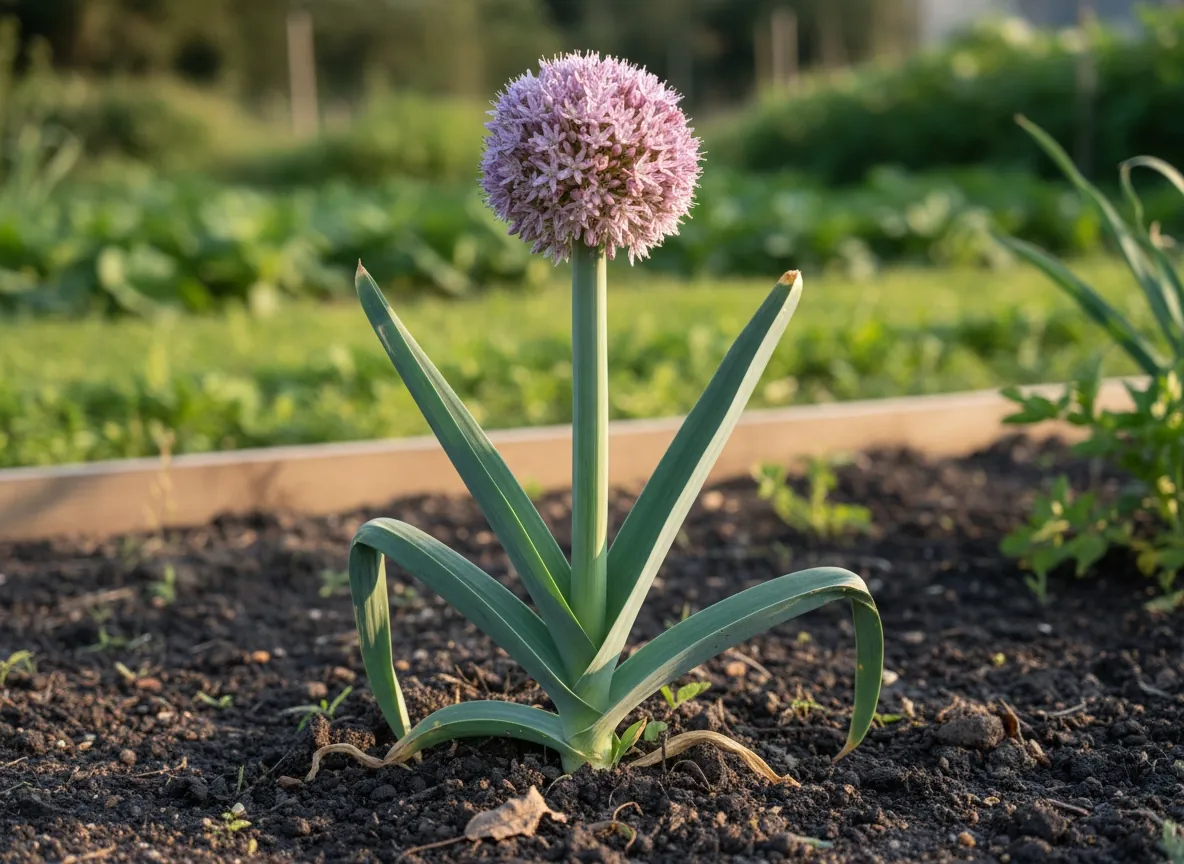
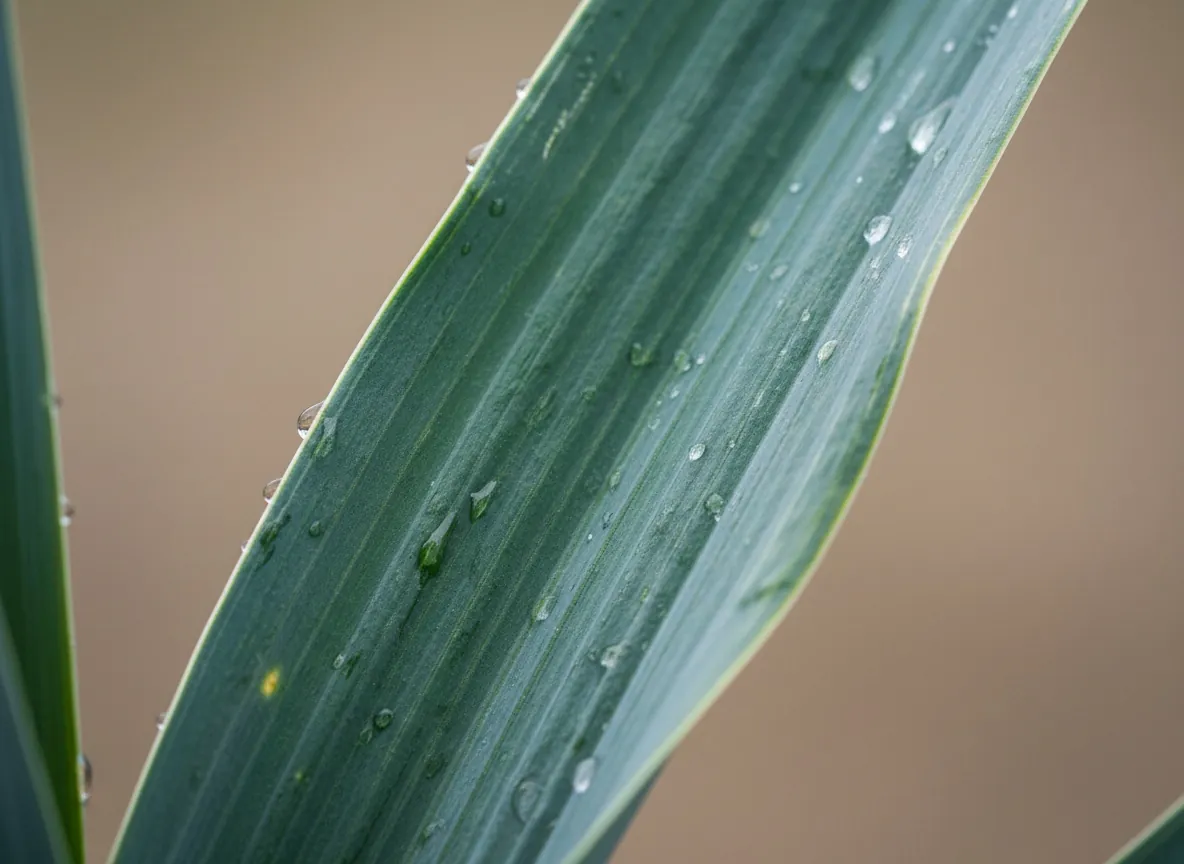
A biennial grown as an annual: in the first year it builds its stem and leaves, and only in the second does it send up an impressive, spherical flower head — in the vegetable garden it is harvested before this stage. Unlike the onion, it does not form a swollen bulb but a so-called false stem: a thick, white cylinder of tightly wound leaf sheaths. The leaves are flat, spreading out like a fan, grey-green, often with a waxy bloom. The culinary value lies above all in the white and pale green part, grown without access to light; the green leaves are tougher and are mainly suited to stocks.
Growing and care
Watering
It has a long growing season and shallow roots, so it needs regular moisture all summer. Drought gives thin, tough stems and induces the plants to bolt prematurely into a flowering stem.
Fertilizing
Moderately, but systematically over the long season. Do not use fresh manure — it favours infection and poorer storage.
Planting
Fertile, humus-rich and deeply worked soil with a neutral reaction. Plant the transplants in deep holes (10–15 cm) made with a dibber, without filling them with soil — it is enough to flood them with water, and the hole will fill in by itself over time. This way of planting alone gives the first section of white stem.
Pruning
Before planting, shorten the transplants' leaves by roughly a third and trim the root tips — the plant then establishes better. In summer, gradually heap soil around the stem.
Companion plants
Good companions
Klasyczna para w ogrodzie: zapach pora odstrasza połyśnicę marchwiankę, a zapach marchwi — śmietkę cebulankę atakującą pory. Ochrona działa w obie strony.
Szybko dojrzewa i wykorzystuje wolne miejsce między wolno rosnącymi porami, zanim te zajmą cały zagon.
Sąsiedztwo roślin cebulowych tradycyjnie uznaje się za korzystne dla truskawek — ma ograniczać choroby grzybowe.
Nie konkuruje z porem o tę samą warstwę gleby i dobrze wypełnia zagon obok jego wąskich rządków.
Bad companions
Związki siarkowe wydzielane przez pora hamują bakterie brodawkowe na korzeniach grochu, czyli mechanizm wiązania azotu, na którym opiera się jego wzrost.
Jak wszystkie bobowate źle znosi sąsiedztwo roślin cebulowych — obie uprawy rosną wtedy słabiej.
Ten sam rodzaj Allium — wspólne szkodniki i choroby, przede wszystkim śmietka cebulanka i mączniak rzekomy cebuli, których presja rośnie przy uprawie obok siebie.
Kolejna roślina cebulowa dzieląca z porem szkodniki i patogeny glebowe; wymaga też tej samej przerwy w płodozmianie.
The evidence level indicates whether the relationship is backed by research, observation, or gardening tradition.
Toxicity
| For whom | Level | Notes |
|---|---|---|
| Humans | None | A fully edible vegetable — both the white stem and the green leaves, which are suitable for stocks. |
| Dogs | Moderate | Like all plants of the genus Allium (onion, garlic) it is toxic to dogs — it damages red blood cells and can cause anaemia. |
| Cats | High | Cats are even more sensitive to the sulphur compounds of alliums than dogs — even small amounts can be dangerous. |
History and origin
The leek derives from the wild broadleaf wild leek growing in the Mediterranean basin. The ancient Egyptians and Romans already cultivated it — Nero reportedly ate it regularly in the belief that it strengthened the voice, which earned him the mocking nickname of leek-eater. To this day the leek is a national symbol of Wales, worn on clothing on St David's Day, and its popularity in northern European cuisine was built on the cold-hardiness thanks to which it supplied fresh vegetables in the middle of winter.
Uses
A bed vegetable with a long season, valuable especially in autumn and winter, when few other crops give a fresh harvest straight from the garden. In the kitchen it is the basis of soups and stocks, an ingredient of braised vegetables, salads and bakes. It can be harvested gradually throughout the winter, digging up as many plants as are needed at the time.
Trivia
- The white stem of the leek is not a varietal trait but the result of the gardener's work: it is created by progressively heaping soil around the plant, which cuts off the light and prevents the formation of the green pigment. The higher you earth it up, the longer the white part will be.
- The leek is one of the most frost-hardy vegetables — it overwinters in the ground without trouble and can be dug up in the middle of winter, provided the soil is not frozen rock-hard.
- It is the national symbol of Wales — the Welsh pin it to their clothing on St David's Day, and legend traces the custom to a battle in which leeks on helmets made it possible to tell friend from foe.
Frequently asked questions
How do you get a long, white leek stem?
The white part comes from the absence of light, so it has to be worked for with two operations. First, plant the transplants in deep holes made with a dibber (10–15 cm), which you do not fill with soil but simply flood with water. Second, earth the plants up several times over the summer, heaping soil around the stem ever higher — but never above the point where the leaves spread apart, because the soil will get inside the stem and the leek can no longer be cleaned properly.
Will the leek survive winter in the ground?
Yes — it is one of the most frost-hardy vegetables and in Polish conditions it overwinters in the bed without trouble. It can be harvested gradually throughout the winter, digging up as many plants as needed; the only problem is soil frozen rock-hard. It is worth mulching the bed with leaves or straw so the soil stays soft for longer.
Why is my leek as thin as a pencil?
Most often it is a matter of time and water: the leek has a very long growing season (5–7 months from sowing), so sowing too late simply gives it no chance to thicken. Add to that soil drying out in summer, a lack of feeding in July and August, and planting too densely — leeks set closer than every 15 cm compete with each other and stay narrow.
Sources
- Plants of the World Online (POWO)Database (GBIF, POWO…)
- RHS — LeeksInstitution / botanical garden
My note
A private note for this plant — saved in your browser.