In short
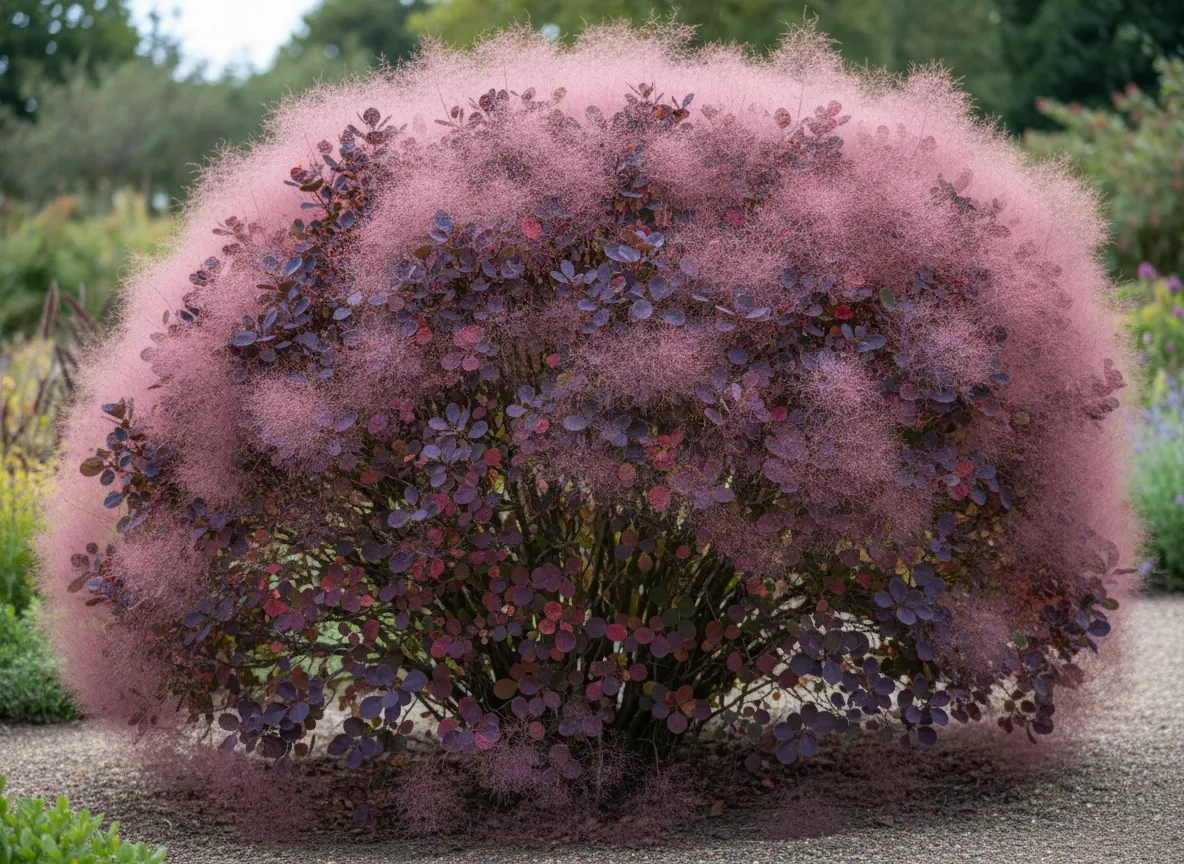
- Airy, fluffy flower heads create the effect of “smoke” hovering over the shrub in summer.
- Purple-leaved cultivars have dark leaves that turn red and orange in autumn.
- Needs full sun and dry, well-drained soil — it tolerates moisture poorly.
- The sap can irritate the skin — it is worth wearing gloves when pruning.
- It can be grown for large leaves (hard pruning) or for abundant flowering (light pruning).
Botanical data
- Family
- Anacardiaceae (Anacardiaceae)
- Height
- 2–4 m
- Width
- 2–4 m
- Habit
- Spreading
- Growth rate
- Moderate
- Position
- Full sun, Partial shade
- Soil
- Sandy, Chalky, Loamy, Humus-rich
- pH reaction
- pH 5.5–7.8
- Moisture
- Dry, Moderate
- Bloom
- June–August
- Hardiness
- USDA 5a–8b
- Propagation
- From cuttings, By layering
Characteristics
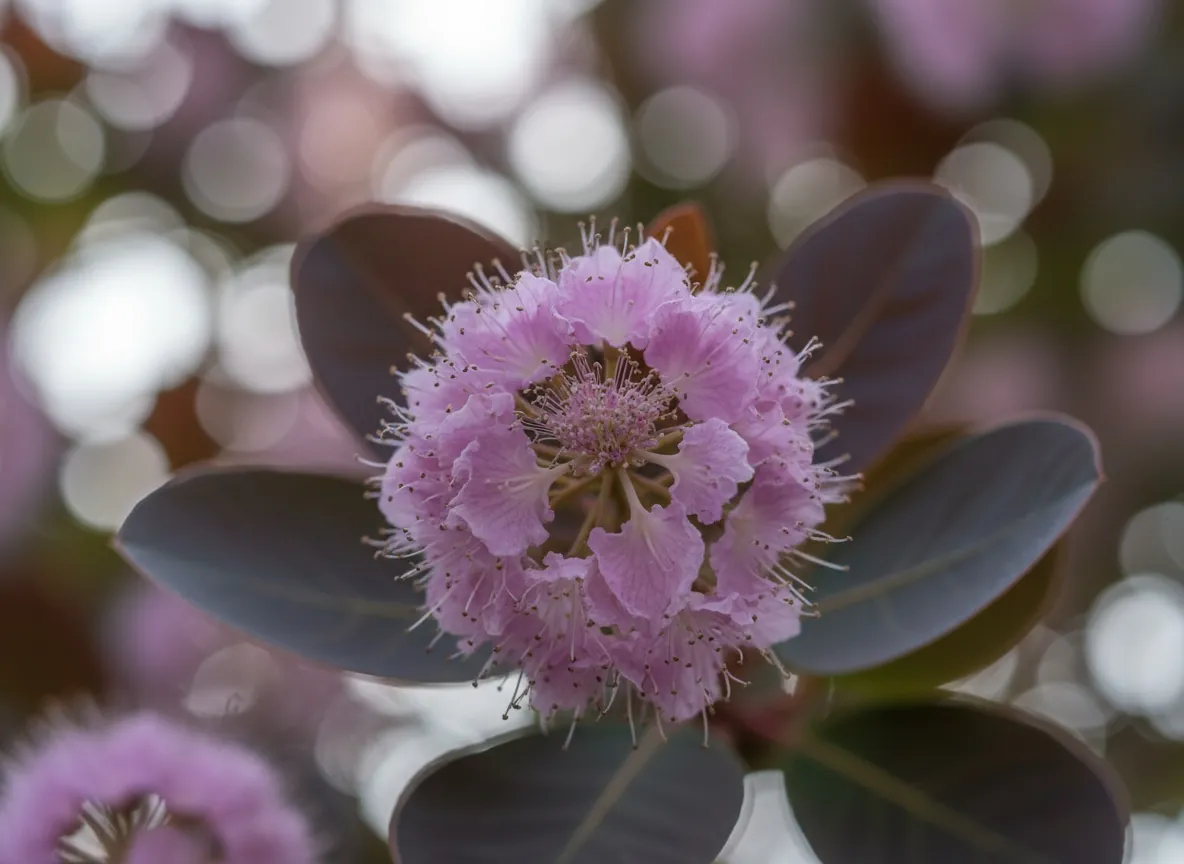
A spreading, dense shrub or small tree with roundish, elliptic leaves — in the dark purple ornamental cultivars they turn to fiery red, orange and scarlet in autumn. In summer it forms loose, much-branched flower heads; the small flowers finish quickly, but their elongated, hairy flower stalks persist for weeks, forming the characteristic smoky cloud in a pink-violet shade.
Growing and care
Watering
Very drought-resistant once established. It does not tolerate standing water or heavy, permanently moist soils. Water only young specimens regularly.
Fertilizing
Sparingly — on fertile, over-fertilised soil the shrub grows vigorously but colours more poorly in autumn and sets fewer flower heads.
Planting
It grows best on well-drained, moderately fertile or even poor soil in full sun — such conditions give the most intense leaf colour and the most abundant “smoke”.
Pruning
For striking, large and intensely coloured leaves the shrub can be cut back hard almost to the ground (rejuvenation pruning). For abundant “smoky” flower heads prune only lightly, shaping the habit.
Companion plants
Good companions
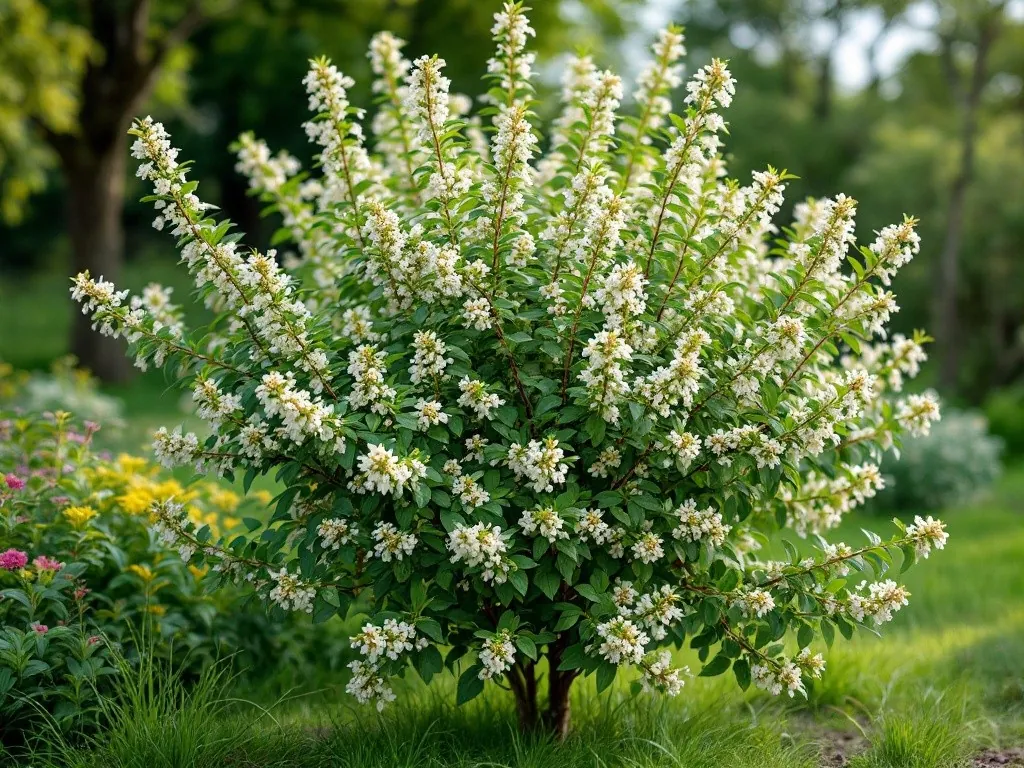
Both species like full sun and dry, well-drained soil — the smoke bush's purple leaves contrast beautifully with the violet of the lavender in a Mediterranean-style planting.
The silvery-blue grass tufts with similar dry requirements combine strikingly with the dark purple of the smoke bush's leaves.
Bad companions
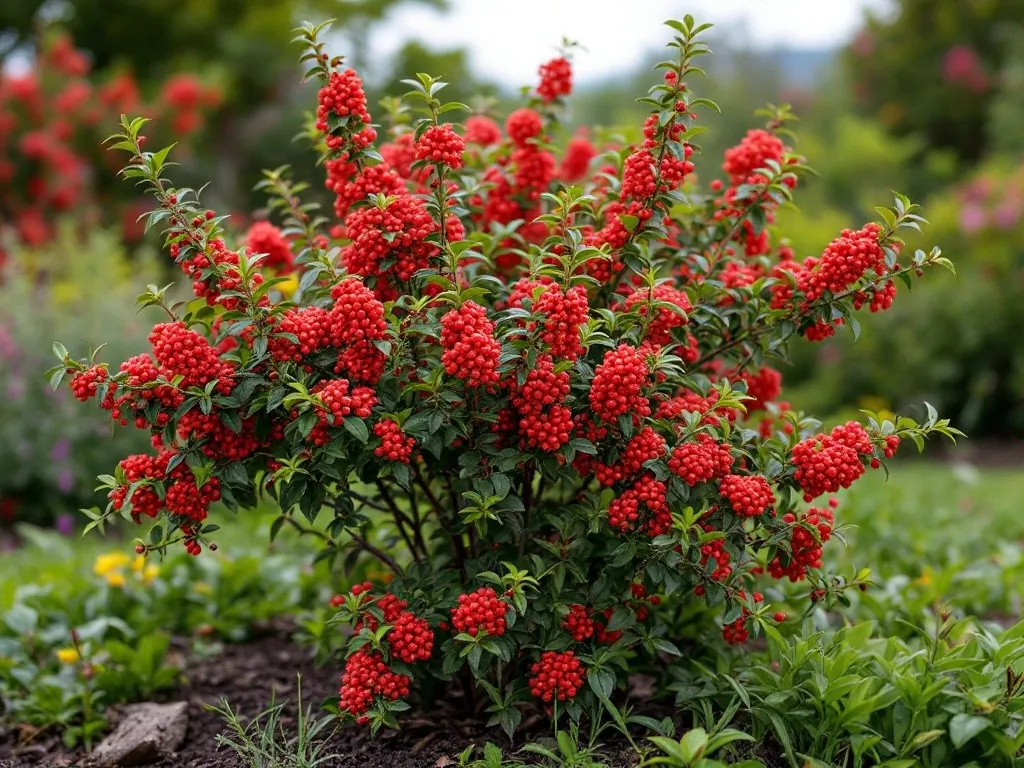
The hydrangea needs constantly moist, fertile soil, while the smoke bush colours best on poor, well-drained ground and tolerates moisture poorly — they have conflicting site requirements.
The evidence level indicates whether the relationship is backed by research, observation, or gardening tradition.
Toxicity
| For whom | Level | Notes |
|---|---|---|
| Humans | Mild | The sap from shoots and leaves can irritate the skin in sensitive people — the smoke bush belongs to the cashew family, related to the sumac. It is worth wearing gloves when pruning. |
| Dogs | Mild | — |
| Cats | Mild | — |
History and origin
Cultivated in gardens for centuries, in the past also valued for practical use — a yellow dye (“young fustic”) was obtained from the wood, and the tannin-rich leaves were used for tanning hides. The purple-leaved ornamental cultivars, led by the popular 'Royal Purple', were selected in the 20th century and it is they that made the English name “smoke bush” famous.
Uses
Planted as a striking specimen, in groups and in naturalistic and Mediterranean-style plantings, where it is combined with grasses and drought-tolerant perennials. Valued for two seasonal displays — the summer “smoke” and the fiery autumn colours. Also used for bouquets.
Trivia
- The “smoke” effect is created not by the flowers but by the elongated, downy-haired stalks of the spent flower heads.
- The smoke bush belongs to the cashew family — among its more distant relatives are the mango, the cashew and the sumac.
- The English name “smoke bush” refers directly to the airy flower heads that resemble billows of smoke.
Frequently asked questions
Why doesn't my smoke bush produce the characteristic “smoke”?
The most common cause is too hard a spring pruning. The fluffy flower heads develop on the previous year's shoots, so cutting the shrub back hard, though it improves the foliage, removes them. To obtain the “smoke”, prune only lightly and for shape.
How do you achieve the most intense autumn colouring?
The smoke bush colours best in full sun and on poor, well-drained soil. In shade and on fertile, over-fertilised ground the leaves stay greener in summer and redden more weakly in autumn. Limit nitrogen fertilising.
Is the smoke bush toxic?
The sap from shoots and leaves can irritate the skin in sensitive people, because the smoke bush belongs to the cashew family, related to the sumac. It is not strongly toxic, but when pruning it is worth wearing gloves and avoiding contact of the sap with skin and eyes.
Sources
- Plants of the World Online (POWO)Database (GBIF, POWO…)
- RHS — Cotinus coggygriaInstitution / botanical garden
My note
A private note for this plant — saved in your browser.