In short
- Native to Poland and common — a natural, valuable component of reed beds, damp meadows and water margins.
- An excellent nectar plant: it flowers for a long time, from June to September, and draws in bees and butterflies.
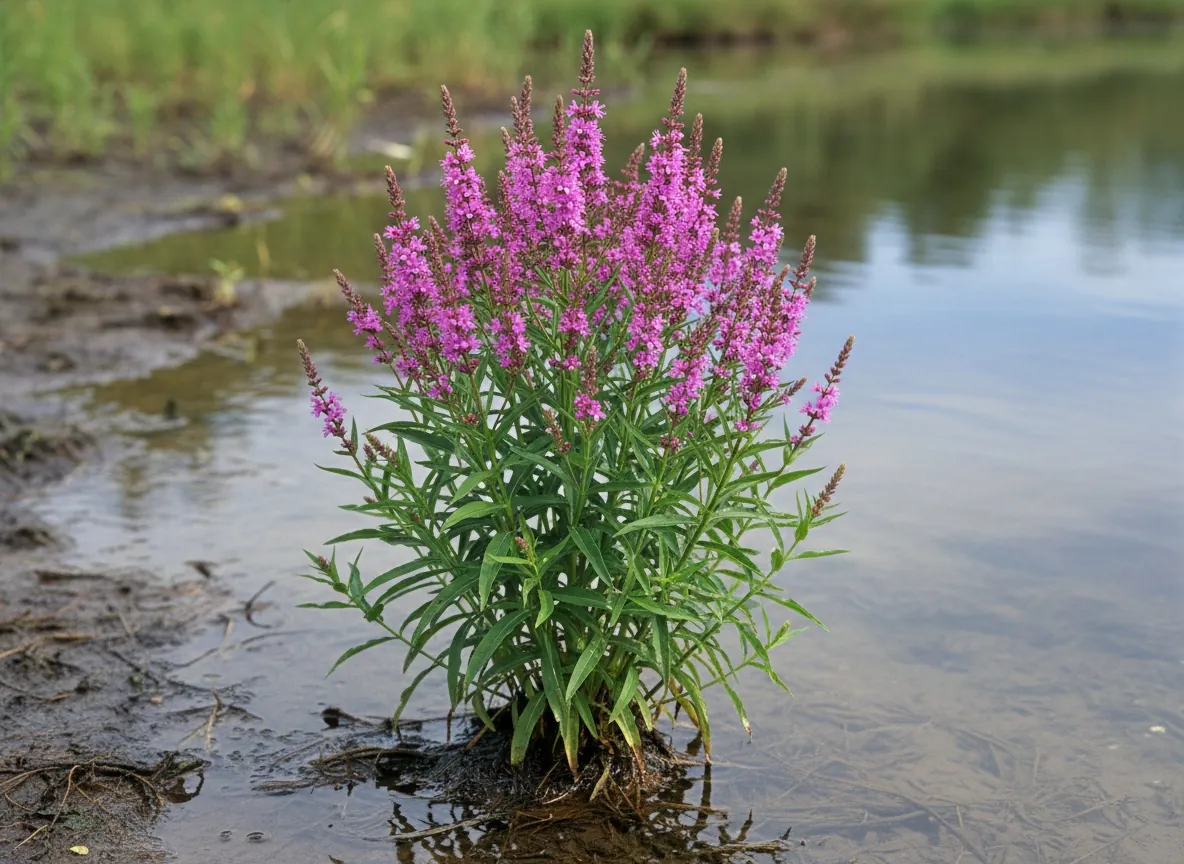
- Position: a permanently damp bank or shallows with up to 20 cm of water; it tolerates periodic flooding but not drought.
- It flowers abundantly only in sun or light partial shade; in shade it grows but hardly comes into flower.
- In North America it is a dangerous invasive species subject to bans — in Poland this problem does not arise.
- Very frost-hardy (USDA 3) and practically maintenance-free; it is not toxic.
Botanical data
- Family
- Lythraceae (Lythraceae)
- Height
- 0.8–1.5 m
- Width
- 0.4–0.8 m
- Habit
- Upright
- Growth rate
- Fast
- Position
- Full sun, Partial shade
- Soil
- Loamy, Clay, Peaty, Humus-rich
- pH reaction
- pH 5.5–7.5
- Moisture
- Wet, Moist
- Bloom
- June–September
- Hardiness
- USDA 3a–9b
- Propagation
- By division, From seed, From cuttings
Characteristics
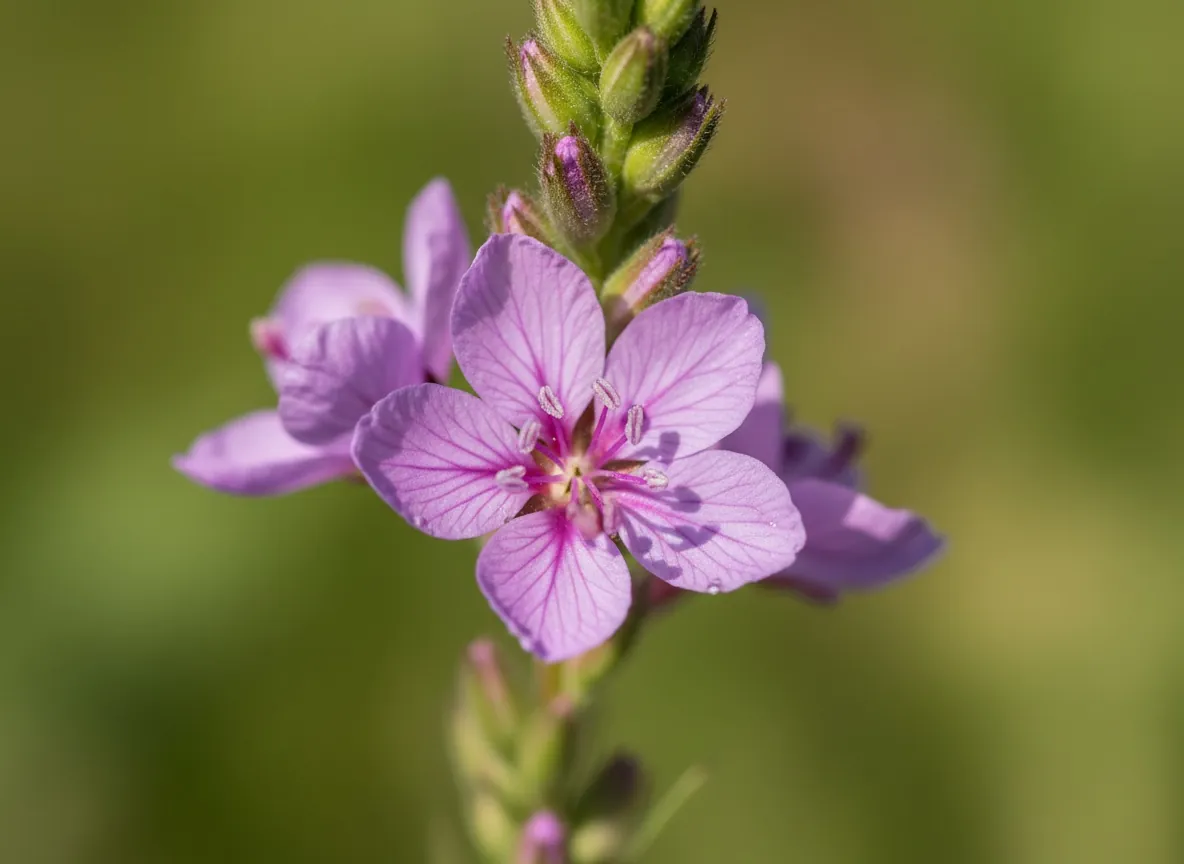
A perennial growing from a thick rootstock that becomes woody with age and every year sends up a bunch of stiff, erect shoots 80–150 cm tall; older, well-grown clumps can produce several dozen of them. The stems are four-angled, often flushed reddish, and the leaves — lanceolate, stalkless, set in opposite pairs or in whorls of three — closely resemble willow leaves, which the specific name salicaria commemorates. The ornament is the inflorescences: dense, spike-like, erect “candles” 10–40 cm long, built up from hundreds of small, six-petalled flowers in colours from pale pink to intense purple. Flowering progresses from the bottom upwards and continues from June to September, thanks to which the plant is a source of nectar for almost the whole summer. After flowering it sets small capsules filled with microscopic seeds — a single adult plant can produce several hundred thousand of them in a season. In autumn the shoots dry out but remain erect and retain their ornamental structure all winter.
Growing and care
Watering
It naturally grows in the marginal zone and tolerates periodic flooding without harm — in the wild it can stand in shallow water for weeks. In an ordinary bed it requires permanently moist soil; in a longer drought it ends flowering prematurely and sheds its lower leaves, though the clump usually survives this and comes back in the following season.
Fertilizing
On a fertile, damp bank, fertilising is unnecessary — purple loosestrife grows vigorously anyway, and an excess of nitrogen gives rank, flopping shoots and poorer flowering. Near a water body it is better not to use fertilisers at all, because they wash into the water and favour algae.
Planting
A permanently damp bank or shallows with a water depth of roughly 20 cm above the substrate. The soil fertile and humus-rich, it may be heavy and clayey — the more water, the better. In an ordinary bed it is worth mixing the substrate with compost so that it holds moisture better. A sunny position: in shade the plant grows but flowers considerably more poorly.
Pruning
Cut off spent inflorescences before the capsules ripen if we do not want self-seeding — one plant produces hundreds of thousands of small seeds. Leave the dried shoots over winter as an overwintering site for insects and as an ornament, and cut them only in early spring, before growth starts.
Companion plants
Good companions
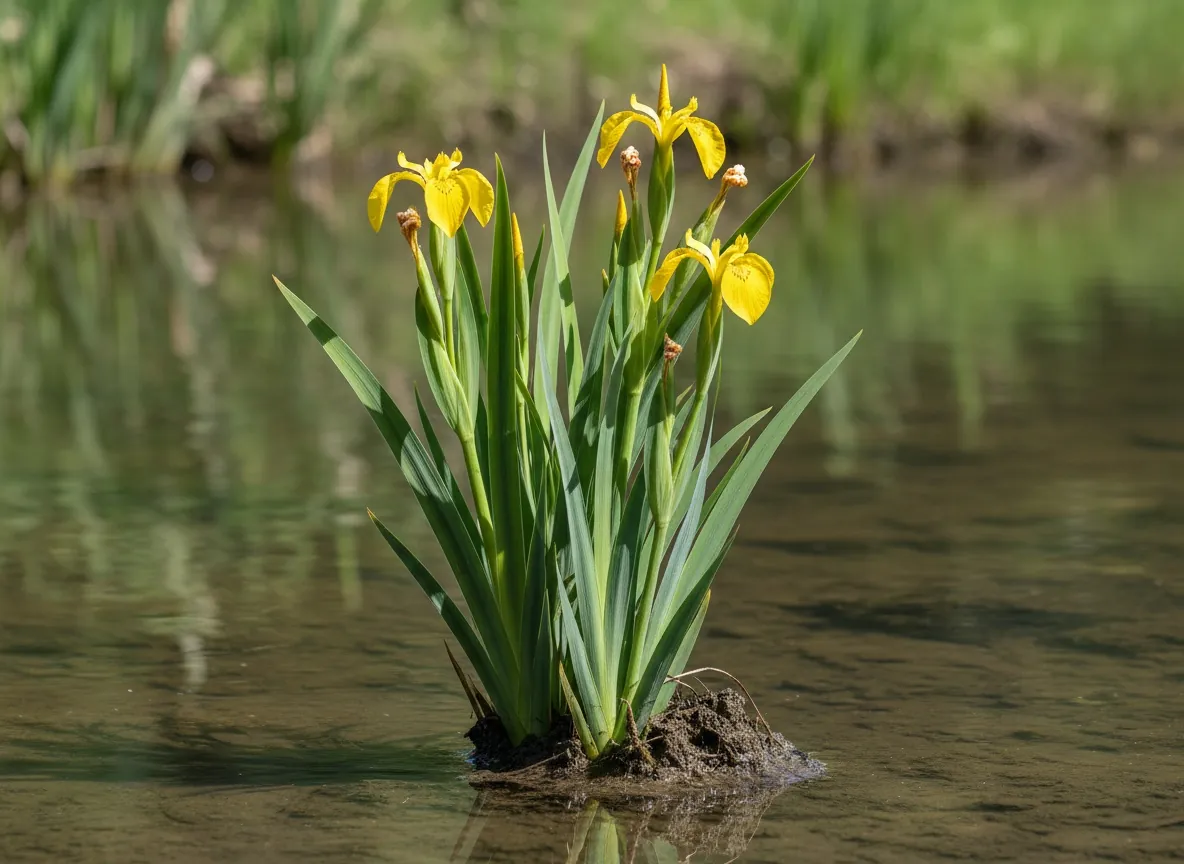
The same marginal zone and the same water requirements, but completely different times and colours: yellow flag flowers yellow from May to July, and as it goes over, the pink-violet purple loosestrife takes up the baton and keeps the bank in colour right through to September.
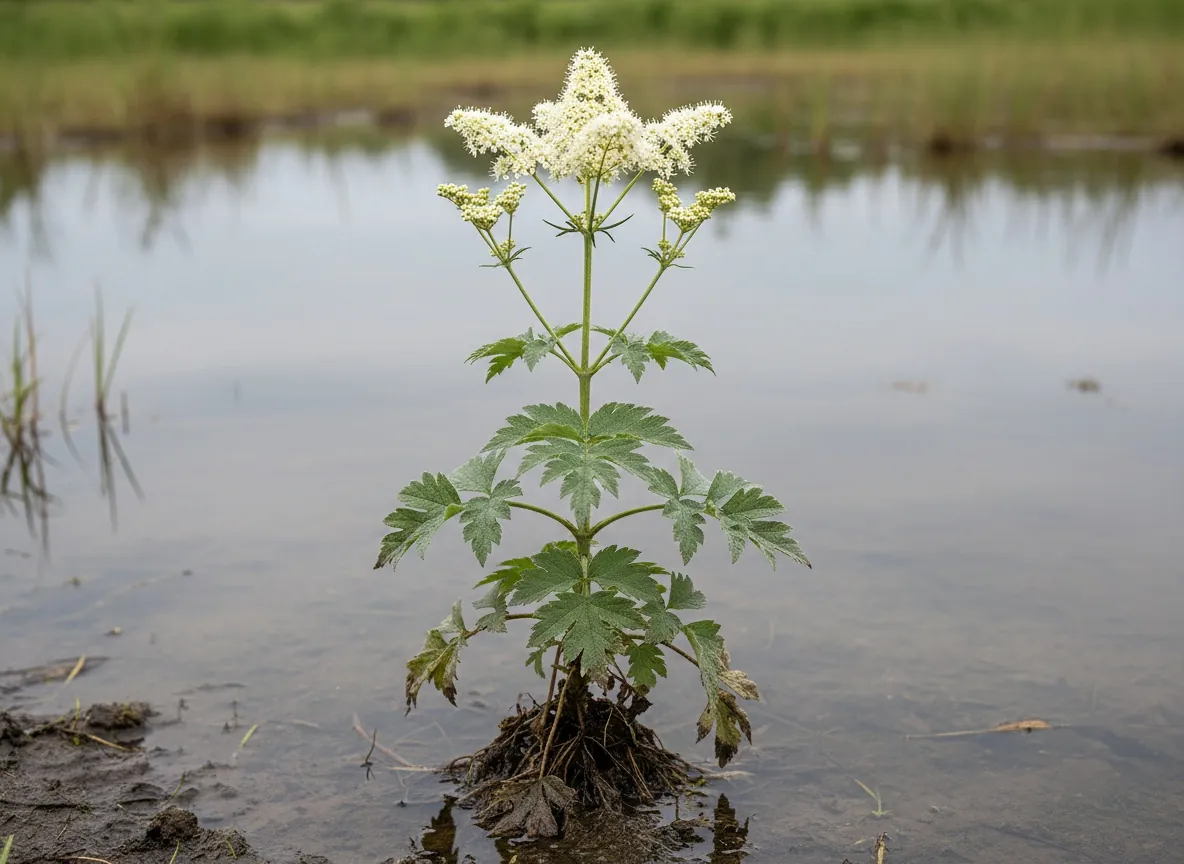
A classic duet of the damp meadow, growing side by side in the wild — the cream umbels of meadowsweet and the vertical, pink spires of purple loosestrife flower at the same time and contrast beautifully, and both plants draw in pollinating insects.
Similar height and flowering time and the same role in the garden — both are a magnet for butterflies and bees. Coneflower, however, requires averagely moist soil, so they should be combined on the boundary between the bed and the damp bank, not in the water itself.
Bad companions
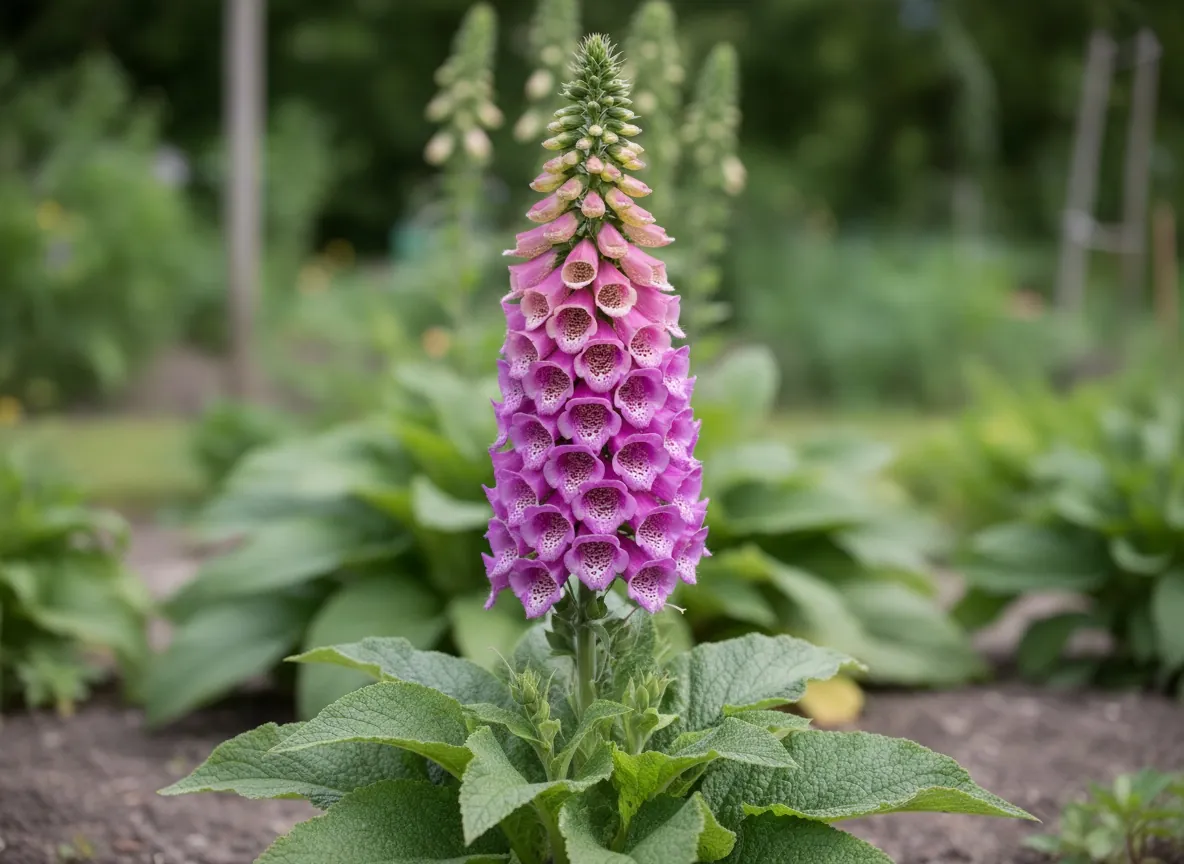
Extremely contradictory requirements: lavender needs dry, well-drained and calcareous soil, and in the permanently wet position of purple loosestrife its roots simply rot.
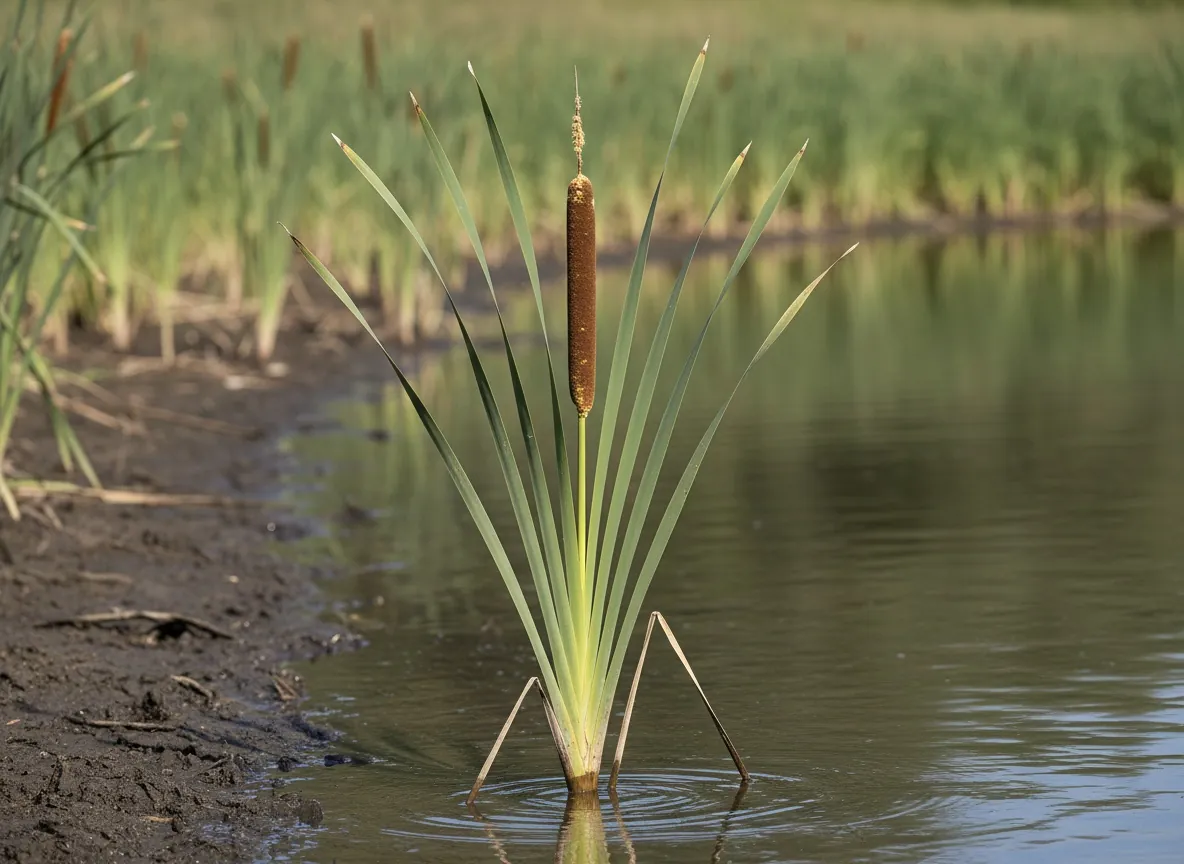
Reedmace occupies the same marginal belt, but is taller and spreads by rhizomes far faster — in time it shades out and displaces the clumps of purple loosestrife.
The evidence level indicates whether the relationship is backed by research, observation, or gardening tradition.
Toxicity
| For whom | Level | Notes |
|---|---|---|
| Humans | None | The plant is not toxic — the herb of purple loosestrife (herba Lythri) was and still is used in herbal medicine as an astringent, on account of its high tannin content. |
| Dogs | None | — |
| Cats | None | — |
| Horses | None | — |
History and origin
In Europe purple loosestrife has always been an ordinary element of the wetland landscape and found its way into herbalism: the tannin-rich herb (herba Lythri) was used as an astringent and antidiarrhoeal, and in times of plague as a remedy for dysentery. Beekeepers valued it for the abundant and long forage from habitats where little else flowers in August. The plant also inscribed itself in the history of science. It was on this species that Charles Darwin carried out his famous research on tristyly, described in the book “The Different Forms of Flowers on Plants of the Same Species” of 1877 — he considered it one of the most satisfying discoveries of his life. Purple loosestrife has an entirely different history across the ocean. It reached North America in the 19th century with ships' ballast and as an ornamental and nectar plant, and there — without the specialised insects that constrain it in Europe — it took over the wetlands of the whole continent, forming single-species swathes that displace native sedges and reedmaces. It was deemed one of the most dangerous invasive wetland weeds; in many states and provinces a ban on its sale is in force, and European beetles of the genus Galerucella, which feed exclusively on this species, were brought in to control it. It is worth understanding this difference: the same species is a desirable element of native nature in Poland and a plague in America — what decides this is not the plant, but the presence of its natural constraints.
Uses
A basic plant of the marginal zone of garden ponds and pools, and also of damp, waterlogged parts of the garden that cannot be used in any other way. The vertical, pink spires of the inflorescences give a water bed structure and long summer colour — from June to September — and contrast beautifully with the cream umbels of meadowsweet or the yellow flowers of yellow flag. It performs well in naturalistic plantings, in rain gardens and in stabilising banks. Its greatest value, however, is its ecological function: it is one of the best August forage plants for bees and a magnet for butterflies, so in a garden managed with insects in mind it has an almost obligatory place. In cultivation it is trouble-free and long-lived, requiring only moisture and sun. Cultivars with darker flowers and a more compact habit are available in the trade, e.g. 'Robert' or 'Blush'.
Trivia
- Purple loosestrife is tristylous — it occurs in three flower forms, differing in the length of the style and the stamens, and effective pollination takes place only between different forms. Charles Darwin devoted years of research to this and described it in 1877, considering it one of the most interesting discoveries of his career. Tristyly is a rarity in the plant world — purple loosestrife belongs to the handful of species in which it occurs at all.
- A single adult plant can produce several hundred thousand microscopic seeds in a season. In Poland this is of no great significance, because the competition of native reed beds keeps it in check — but it is precisely this fecundity that lies behind its invasive career in North America.
- Honey from purple loosestrife is dark, with a pronounced, slightly tart flavour, and the plant is among the best August forage on damp habitats, when most meadow flowers have already finished flowering. For beekeepers along rivers and oxbow lakes it is sometimes a key species of late summer.
Frequently asked questions
Is purple loosestrife invasive? I have read that it is being eradicated.
That depends on the continent, and the distinction is crucial. In Poland and throughout Europe purple loosestrife is a NATIVE species — a natural, desirable component of reed beds and damp meadows, kept in check by native insects and by competition from other plants. Planting it by water raises no objections whatsoever. It is, on the other hand, regarded as a dangerous invasive species in North America, where it arrived in the 19th century and where, without natural constraints, it took over the wetlands of the whole continent; in many states its sale is banned. The information about eradicating purple loosestrife that you will come across on the internet comes almost always from American sources and does not apply to Polish gardens.
Does purple loosestrife have to grow by water?
It does not have to, but moisture is its fundamental condition. It grows best on a permanently damp bank or in shallows with up to about 20 cm of water above the substrate, and tolerates periodic flooding without harm. It will also manage in an ordinary bed, provided the soil does not dry out for long — mixing the substrate with compost helps. In a dry spot the plant will survive, but it will be short, will shed its lower leaves prematurely and will flower poorly. The second condition is sun: in shade purple loosestrife grows but hardly flowers.
Does purple loosestrife seed itself around the garden?
It can, because one plant produces hundreds of thousands of small seeds, which germinate on damp, open substrate. In practice this is not a problem in a typical garden — seedlings appear mainly on wet, bare banks, and on a turfed bed they stand little chance. If you want to limit this, it is enough to cut off the spent inflorescences in September, before the capsules ripen. The clump itself spreads slowly and does not run about by rhizomes, so once planted the plant keeps to its place for years.
Sources
- Plants of the World Online (POWO) — Lythrum salicariaDatabase (GBIF, POWO…)
- RHS — Lythrum salicariaInstitution / botanical garden
My note
A private note for this plant — saved in your browser.