In short
- Position: full sun, fertile and well-drained soil.
- The corms must be lifted every year for winter — they will not survive frost in the ground in Poland.
- Blooms from July to September; tall cultivars need staking.
- Plant successively every 2 weeks to extend the flowering period.
- A popular cut flower — the flower spikes last a long time in a vase.
Botanical data
- Family
- Iridaceae (Iridaceae)
- Height
- 0.6–1.5 m
- Width
- 0.15–0.3 m
- Habit
- Upright
- Growth rate
- Fast
- Position
- Full sun
- Soil
- Humus-rich, Sandy
- pH reaction
- pH 6–7
- Moisture
- Moderate
- Bloom
- July–September
- Hardiness
- USDA 8a–10b
- Propagation
- From bulbs / tubers, From seed
Characteristics
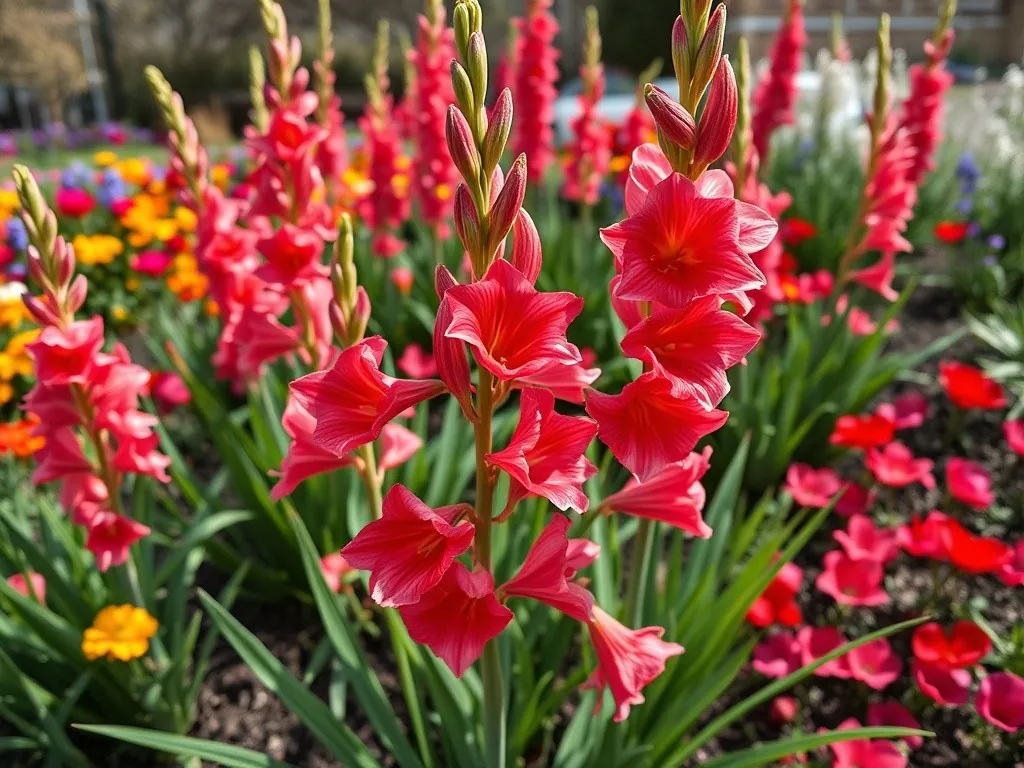
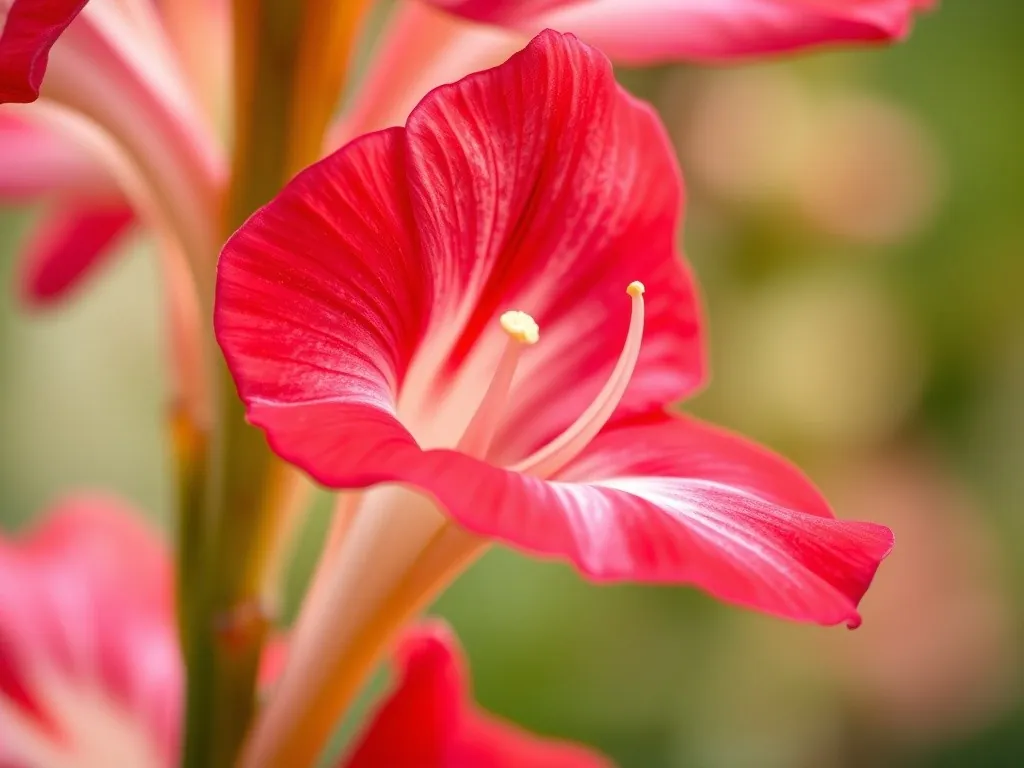
From the underground corm rises a fan of stiff, sword-shaped leaves and one or several tall, one-sided spikes made up of a dozen or so large, funnel-shaped flowers that open in succession from bottom to top.
Growing and care
Watering
Water regularly during the growing season, especially at budding time. The corms lifted for winter are stored dry, without watering.
Fertilizing
Reduce nitrogen towards the end of summer to strengthen the corms before the autumn lifting.
Planting
A wind-sheltered position; tall cultivars are best fitted with stakes right away.
Pruning
Remove spent flower spikes as they fade; in autumn lift the corms, dry them and store in a cool, dry place until spring.
Companion plants
Good companions
Similar requirements (sun, fertile soil) and a shared flowering season in the cutting garden.
Nasturtium screens the bare base of the gladiolus shoots and helps to draw off some pests.
Compounds released by the roots of the marigold reduce the population of soil nematodes harmful to the corms.
Bad companions
It spreads vigorously by runners and hinders the annual lifting of the gladiolus corms.
The evidence level indicates whether the relationship is backed by research, observation, or gardening tradition.
Toxicity
| For whom | Level | Notes |
|---|---|---|
| Humans | Moderate | The corms contain substances that irritate the digestive tract if eaten. |
| Dogs | Moderate | — |
| Cats | Moderate | — |
History and origin
Today's garden hybrids arose in the 19th century in Europe from the crossing of several South African Gladiolus species brought in by plant collectors. The genus name comes from the Latin gladius (sword) and refers to the shape of the leaves.
Uses
For flower borders, the cutting garden, and as a striking element in bouquets. Tall cultivars work well as a border backdrop or an accent in patio containers.
Trivia
- One corm flowers only once — after the season the plant forms a new corm on top of the old one.
- The gladiolus is symbolically associated with strength of character and sincerity of feeling, and often appears in anniversary bouquets.
Frequently asked questions
Will the gladiolus survive winter in the ground?
In the Polish climate, no — the corms must be lifted in autumn, dried and stored in a cool, dry place until spring. In the ground they freeze even in light frosts.
When should gladiolus corms be lifted?
After the first frosts, when the leaves turn brown, usually in October. The corms are dried, cleaned of soil and stored at 5–10 °C.
Why does the gladiolus fall over?
Tall cultivars with heavy flower spikes are easily snapped by the wind. It is worth planting them in a wind-sheltered spot and staking them already during growth.
Sources
- Plants of the World Online (POWO) — GladiolusDatabase (GBIF, POWO…)
- RHS — Gladiolus cultivationInstitution / botanical garden
My note
A private note for this plant — saved in your browser.