In short
- Blooms continuously from June until the first frosts.
- Requires full sun, tolerates short droughts, dislikes overwatering.
- One of the easiest annuals to raise from seed.
- When crushed, the leaves give off a characteristic pungent scent.
- Traditionally planted alongside vegetables as a pest-repelling plant.
- Regular removal of spent flowers extends the flowering period.
Botanical data
- Family
- Asteraceae (Asteraceae)
- Height
- 0.3–0.9 m
- Width
- 0.2–0.4 m
- Habit
- Upright
- Growth rate
- Fast
- Position
- Full sun
- Soil
- Humus-rich, Loamy, Sandy
- pH reaction
- pH 6–7.5
- Moisture
- Moderate
- Bloom
- June–October
- Hardiness
- USDA 9a–11b
- Propagation
- From seed
Characteristics
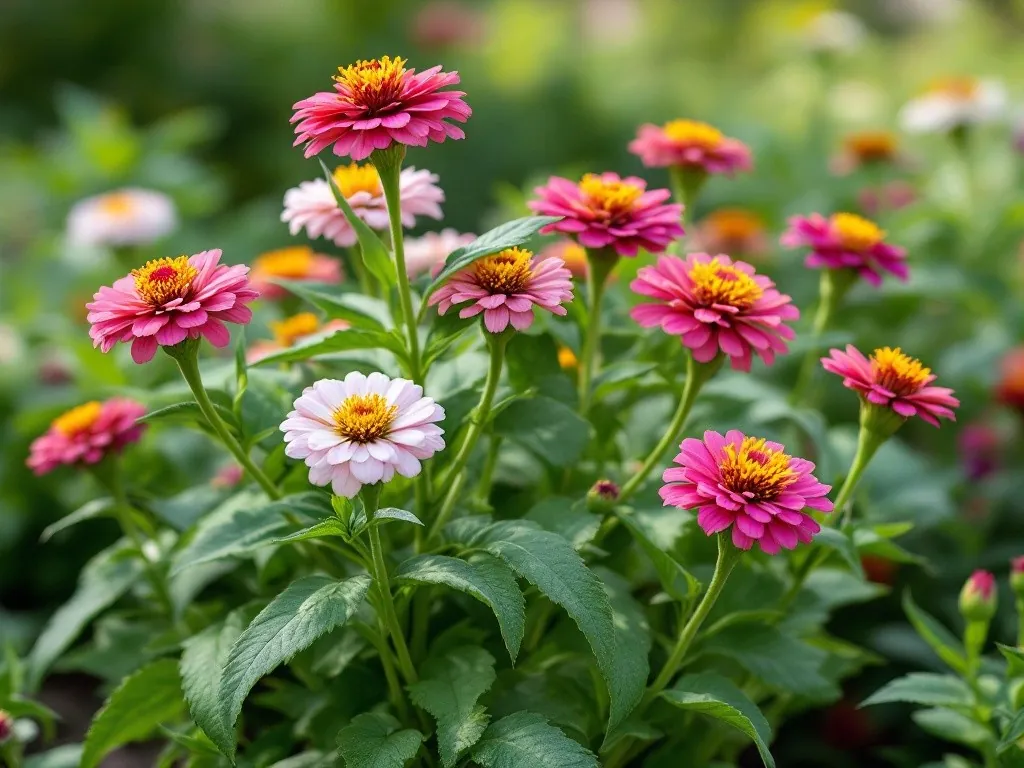
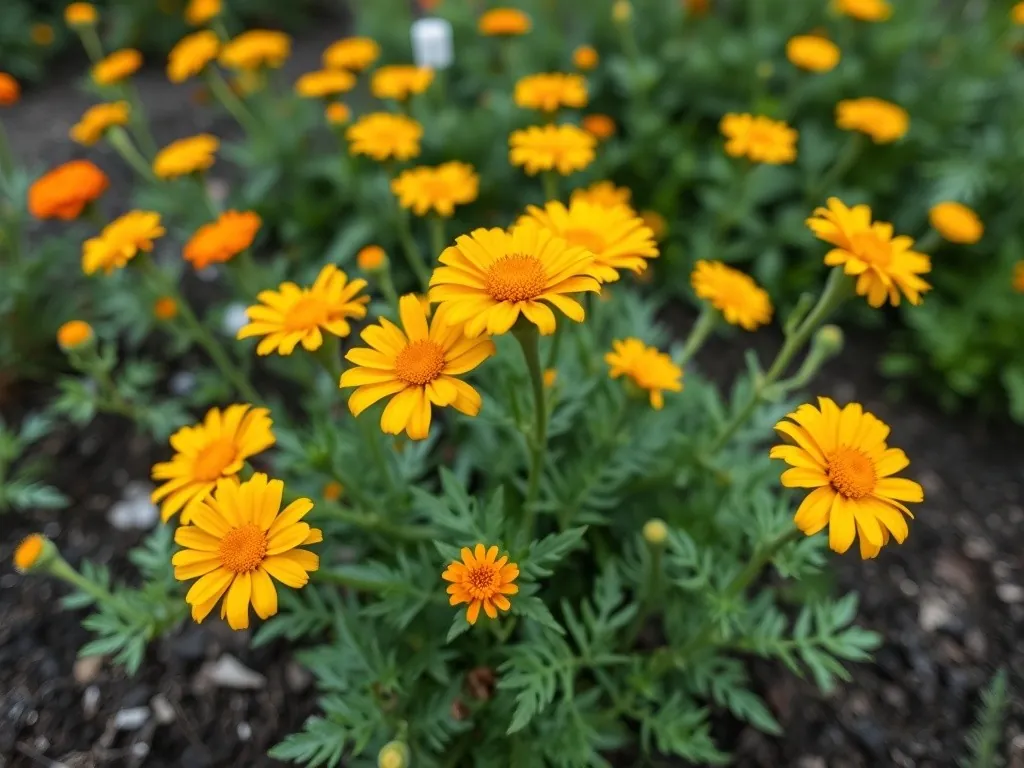
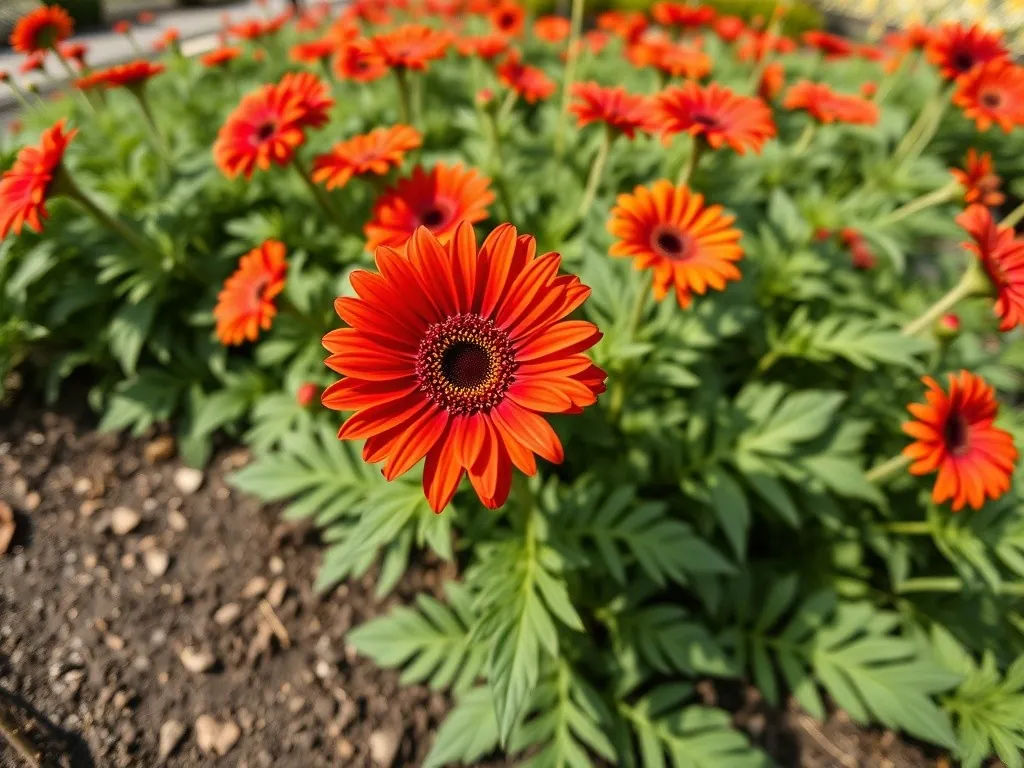
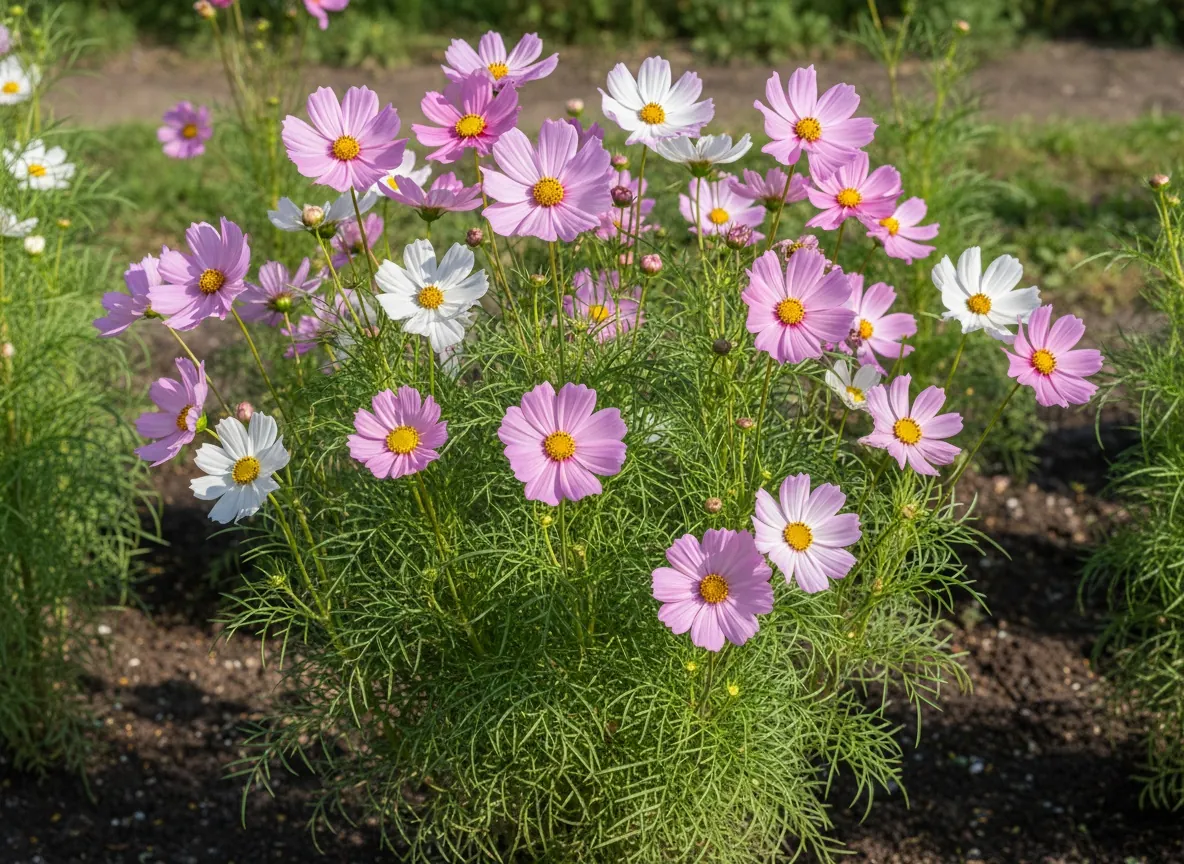
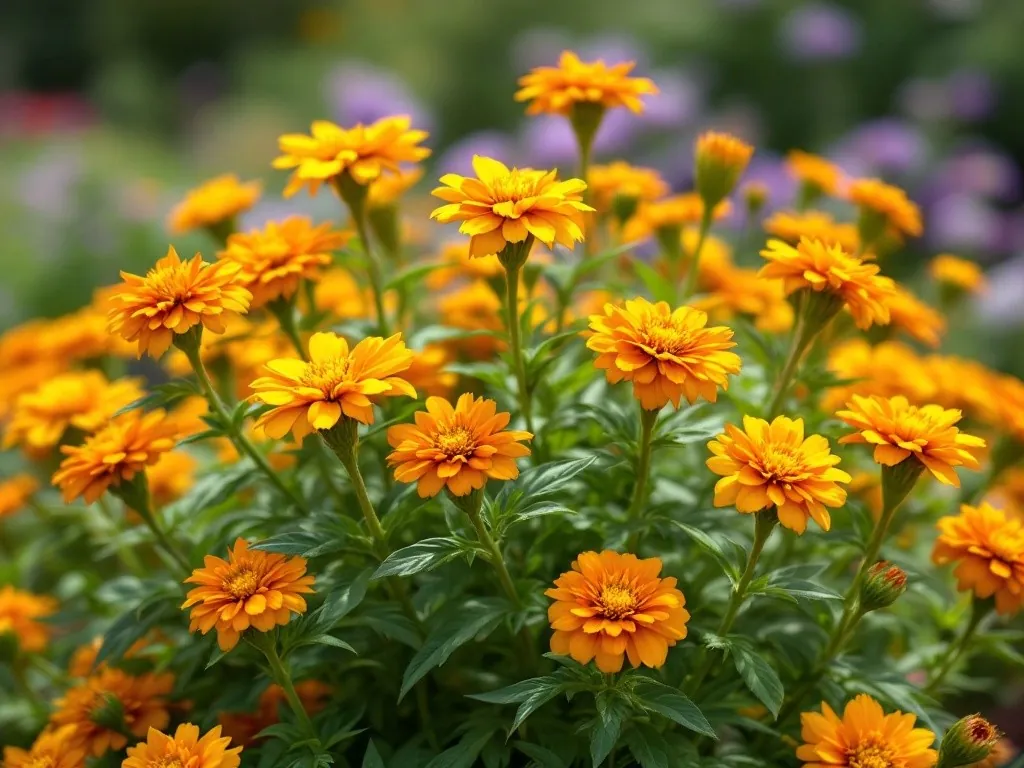
A plant with upright, sturdy, branching stems and pinnately divided, dark green leaves with serrated edges that release an intense, resinous scent when rubbed. The flower heads are impressive, densely double capitula of pompon or carnation form, depending on the cultivar, ranging from a few to over ten centimetres in diameter, in shades of yellow, orange, red and burgundy.
Growing and care
Watering
Tolerates short periods of drought better than an excess of water — water when the top layer of soil dries out, and avoid waterlogging around the roots.
Fertilizing
Moderate fertilising — an excess of nitrogen limits flowering in favour of lush foliage.
Planting
A position in full sun, permeable, moderately fertile soil; the plant is very easy and tolerant of average garden soil.
Pruning
Regularly remove spent flower heads (deadheading), which stimulates the development of new buds.
Companion plants
Good companions
The intense scent of marigold leaves is traditionally used to repel whiteflies and some soil nematodes in the vicinity of tomatoes, although the scientific evidence for the effectiveness of this is inconclusive and comes mainly from gardening observations rather than conclusive field studies.
Bad companions
Some gardeners report weaker growth of beans in the immediate vicinity of marigolds, which is attributed to substances secreted by the roots of Tagetes — an anecdotal observation not conclusively confirmed by studies.
The evidence level indicates whether the relationship is backed by research, observation, or gardening tradition.
Diseases and pests
A grey-brown, fluffy coating of mycelium on flowers, fruit, leaves and shoots, preceded by watery, rotting spots. It attacks weakened and damaged tissue and develops rapidly in humidity and cool conditions and where air circulation is poor. Common on strawberries, begonias, peonies and roses.
AphidsSmall (1–3 mm) soft-bodied insects, green, black or pink, feeding in clusters on young shoots and the underside of leaves. They excrete sticky honeydew.
Slugs and snailsSlugs and shelled snails that feed at night and after rain. Symptoms: irregular holes in the leaves and young seedlings eaten off completely, silvery slime trails on leaves and soil. The greatest damage occurs in damp, shaded spots — particularly on lettuce, strawberries and hostas.
Toxicity
| For whom | Level | Notes |
|---|---|---|
| Humans | None | — |
| Dogs | Mild | Eating larger amounts may cause mild irritation of the digestive tract; contact with the sap sometimes causes skin irritation. |
| Cats | Mild | Similar to dogs — mild stomach irritation is possible after eating parts of the plant. |
History and origin
The Mexican marigold originates from Mexico and Central America, where it has held ritual significance since pre-Columbian times — to this day it is the traditional flower used to decorate altars during the Mexican Day of the Dead (Día de los Muertos), symbolising remembrance of the deceased and guiding their souls with its intense scent and colour. It reached Europe in the 16th century through Spanish colonisers and quickly gained popularity as an easy-to-grow garden plant, despite the misleading name "African", which stems from a confusion about its origin in early botanical literature.
Uses
A classic bedding and balcony plant, planted en masse in uniform arrangements or as a colourful edging for vegetable and herb beds. It tolerates cultivation in pots and balcony boxes well.
Trivia
- The misleading term "African marigold" has taken root in many languages, even though the species has nothing to do with Africa — it originates exclusively from Central America.
- Marigold petals are edible and are sometimes used as a natural colourant for dishes or for chicken feed, giving egg yolks a more intense yellow colour.
Frequently asked questions
Does the Mexican marigold really repel pests from tomatoes?
Gardeners have long planted marigolds alongside tomatoes, believing that their intense scent repels whiteflies and some soil nematodes. The scientific evidence on this is inconclusive — the strongest evidence concerns the effect of marigold roots on certain soil nematodes, while the repellent effect on above-ground insects is based mainly on gardening observations rather than conclusive field studies.
Should marigolds be sown directly into the ground, or is it better to buy seedlings?
Both approaches work well. Direct sowing into the ground in May results in slightly later flowering, whereas earlier sowing under cover in March–April, or buying ready seedlings, allows you to enjoy flowers as early as June.
Why did my marigolds stop blooming abundantly in August?
The most common cause is failing to remove spent flower heads — a plant allowed to set seed reduces the production of new buds. Regular deadheading of spent heads stimulates further flowering right up to the frosts.
Sources
- Plants of the World Online (POWO)Database (GBIF, POWO…)
- RHS — Tagetes erectaInstitution / botanical garden
My note
A private note for this plant — saved in your browser.