In short
- Site: full sun, fertile, well-drained soil, watered regularly.
- Blooms profusely from July until the first frosts in a very wide range of colours and flower forms.
- Tubers do NOT overwinter in the ground in Poland — they must be dug up in autumn and stored in a cool place until spring.
- Taller cultivars need staking so the tall stems don't break under the weight of the flowers.
- Regularly deadheading spent flowers extends the flowering season.
Botanical data
- Family
- Asteraceae (Asteraceae)
- Height
- 0.3–1.5 m
- Width
- 0.3–0.6 m
- Habit
- Upright
- Growth rate
- Fast
- Position
- Full sun
- Soil
- Humus-rich, Loamy
- pH reaction
- pH 6–7
- Moisture
- Moderate
- Bloom
- July–October
- Hardiness
- USDA 8a–11a
- Propagation
- By division, From seed
Characteristics
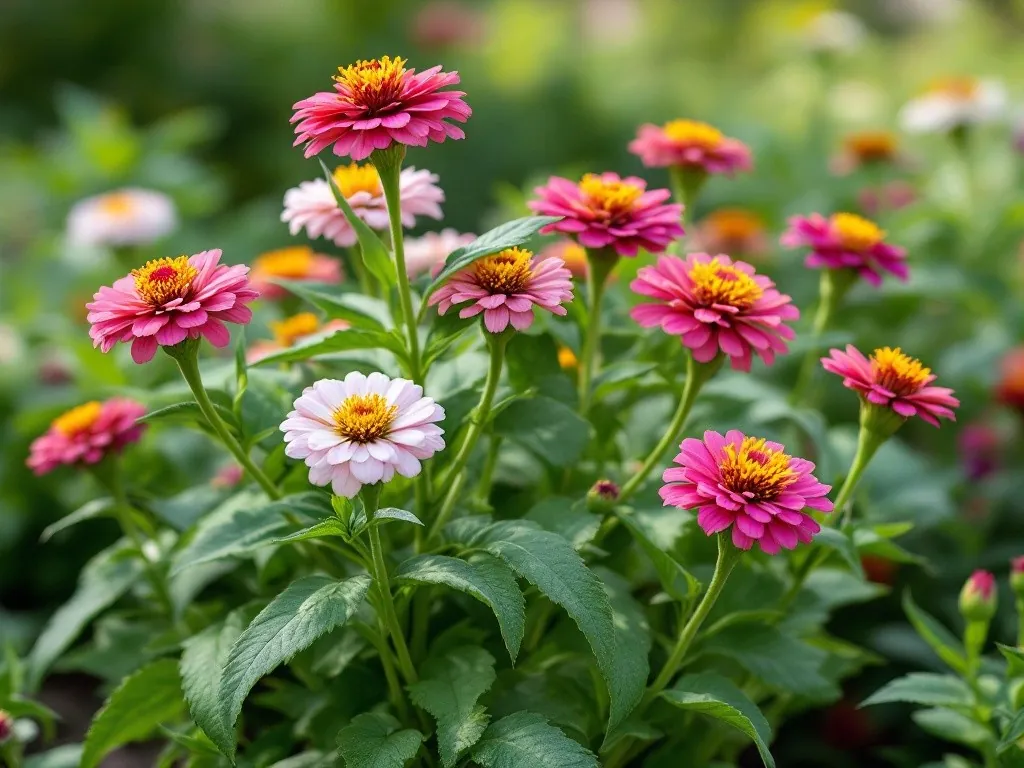
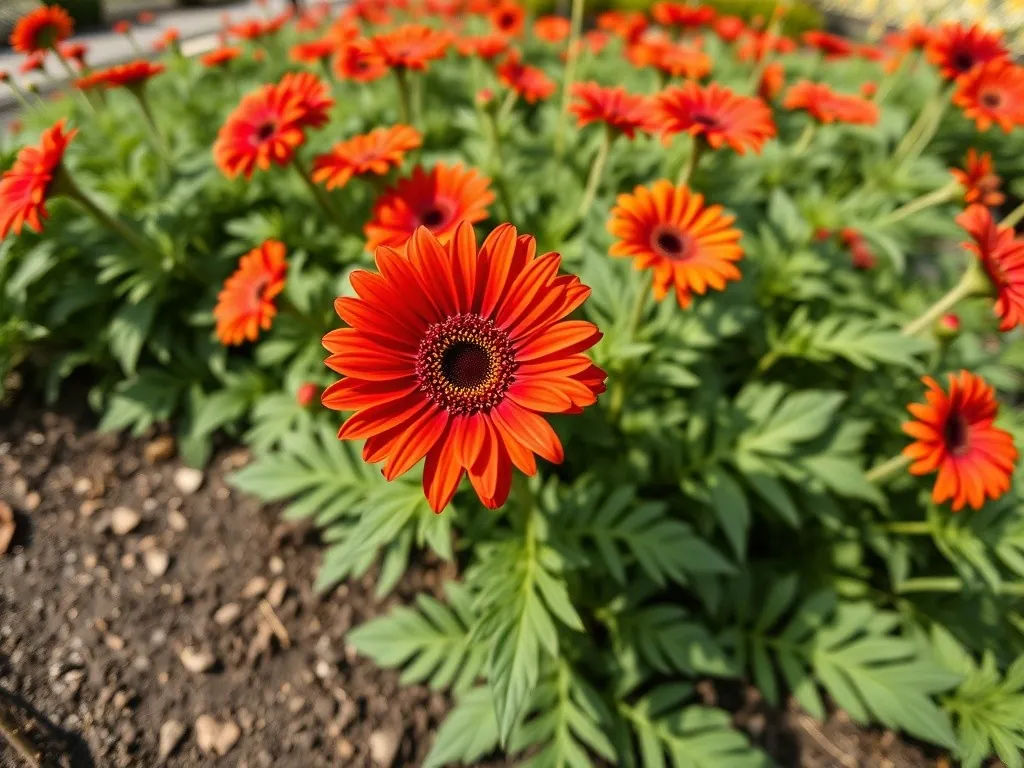
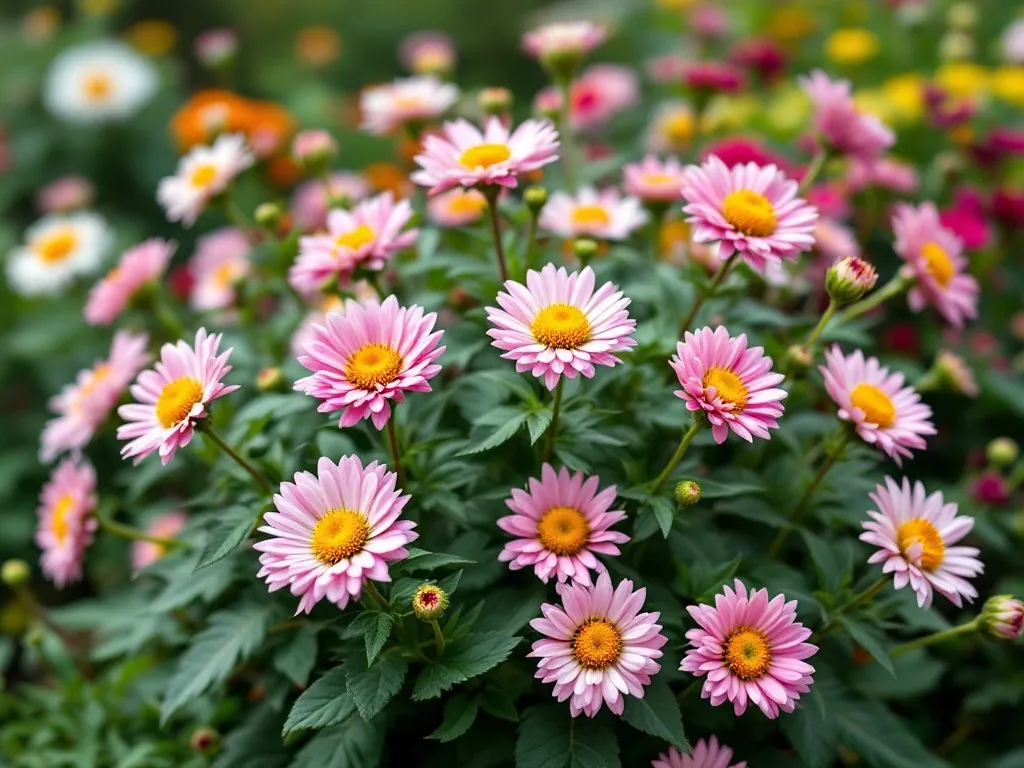
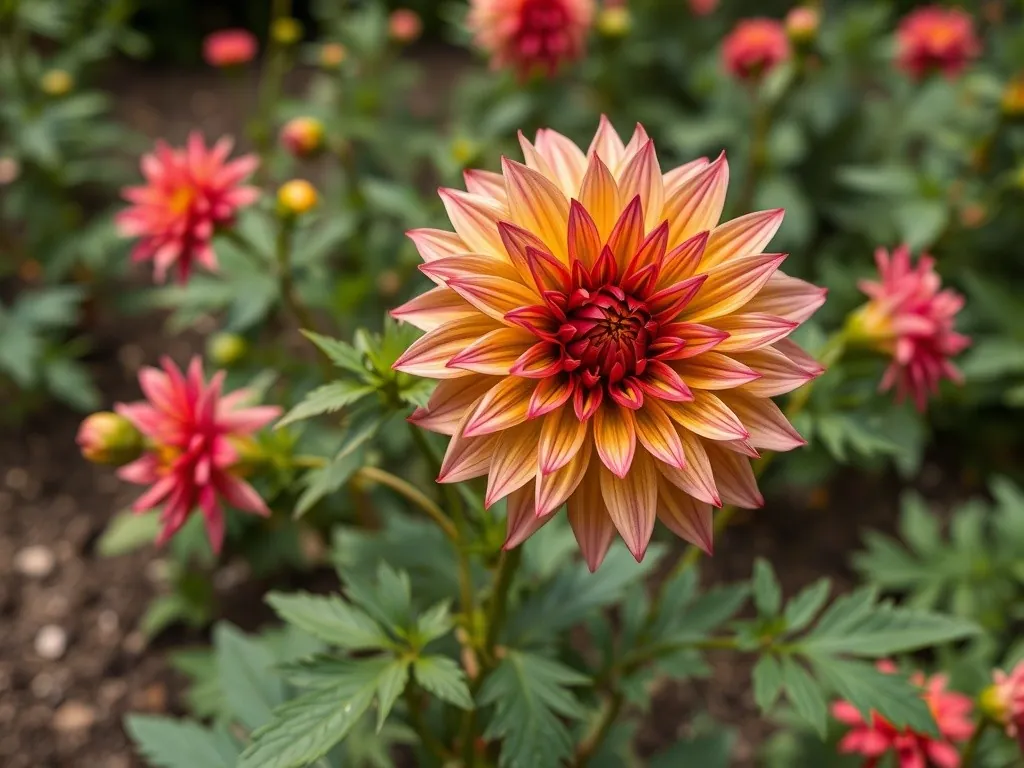
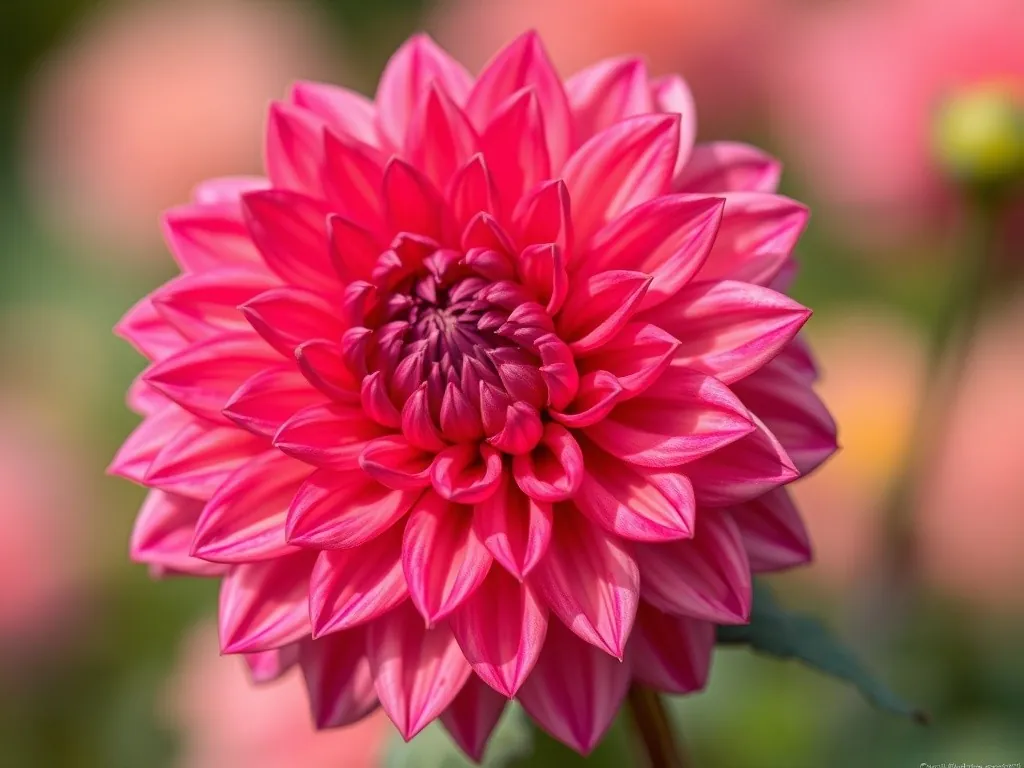
Upright, green stems grow from underground tuberous roots and reach from 30 cm to over a metre in height, depending on the cultivar. Depending on the cultivar group, the flower heads may be single, double, cactus-type or pompon-type, ranging from a few centimetres to as much as 25 cm across.
Growing and care
Watering
Regular watering during the growth and flowering season is key for large blooms. Once the tubers are dug up for winter, the plant needs no watering — it is stored in dry dormancy.
Fertilizing
Reduce nitrogen from the end of August to strengthen the tubers for overwintering rather than encouraging further leaf growth.
Planting
Fertile, humus-rich, well-drained soil. In Poland's climate the tubers MUST be dug up in autumn after the first frosts — they do not reliably overwinter in the ground and will freeze.
Pruning
Cut the stems to about 10 cm above ground, carefully dig up the tubers, let them dry, and store them in crates with dry peat or sand in a cool room (5–10°C).
Companion plants
Good companions
A similar flowering period (late summer–autumn) and comparable light requirements — together they create a striking, long-flowering border.
The light, airy texture of ornamental grasses contrasts well with the dahlia's large, double flowers and does not compete for light.
Bad companions
They restrict air circulation around the dahlia's stems, favouring fungal diseases and powdery mildew.
The evidence level indicates whether the relationship is backed by research, observation, or gardening tradition.
Toxicity
| For whom | Level | Notes |
|---|---|---|
| Humans | Mild | — |
| Dogs | Mild | Eating the tubers or leaves can cause vomiting and mild digestive irritation. |
| Cats | Mild | — |
History and origin
The dahlia was brought from the mountainous regions of Mexico to Europe at the end of the 18th century, initially for its edible tubers. Interest soon shifted to its ornamental qualities, and 19th-century breeding in Europe gave rise to thousands of today's garden cultivars.
Uses
For flower borders, cutting gardens and patio containers. Tall cultivars work excellently as a striking accent at the back of a border, while low ones serve as edging and container plants.
Trivia
- The dahlia is the national flower of Mexico, where it grows wild in mountain forests.
- There are over 20,000 registered dahlia cultivars, differing in flower shape, size and colour.
Frequently asked questions
Do dahlia tubers survive winter in the ground in Poland?
Usually not — Polish winters are too cold and wet for them. The tubers must be dug up in autumn after the first frosts and stored somewhere dry and cool until spring.
How do you store dahlia tubers over winter?
After digging up and drying, the tubers are stored in crates with dry peat or sand, in a room at 5–10°C, protected from frost and mould.
Why is my dahlia falling over?
Tall cultivars with large flowers have heavy stems that break under the force of wind or rain. It's worth driving in a stake at planting time and tying in the growing plant as it develops.
Sources
- Plants of the World Online (POWO) — Dahlia pinnataDatabase (GBIF, POWO…)
- RHS — Dahlia growing guideInstitution / botanical garden
My note
A private note for this plant — saved in your browser.