In short
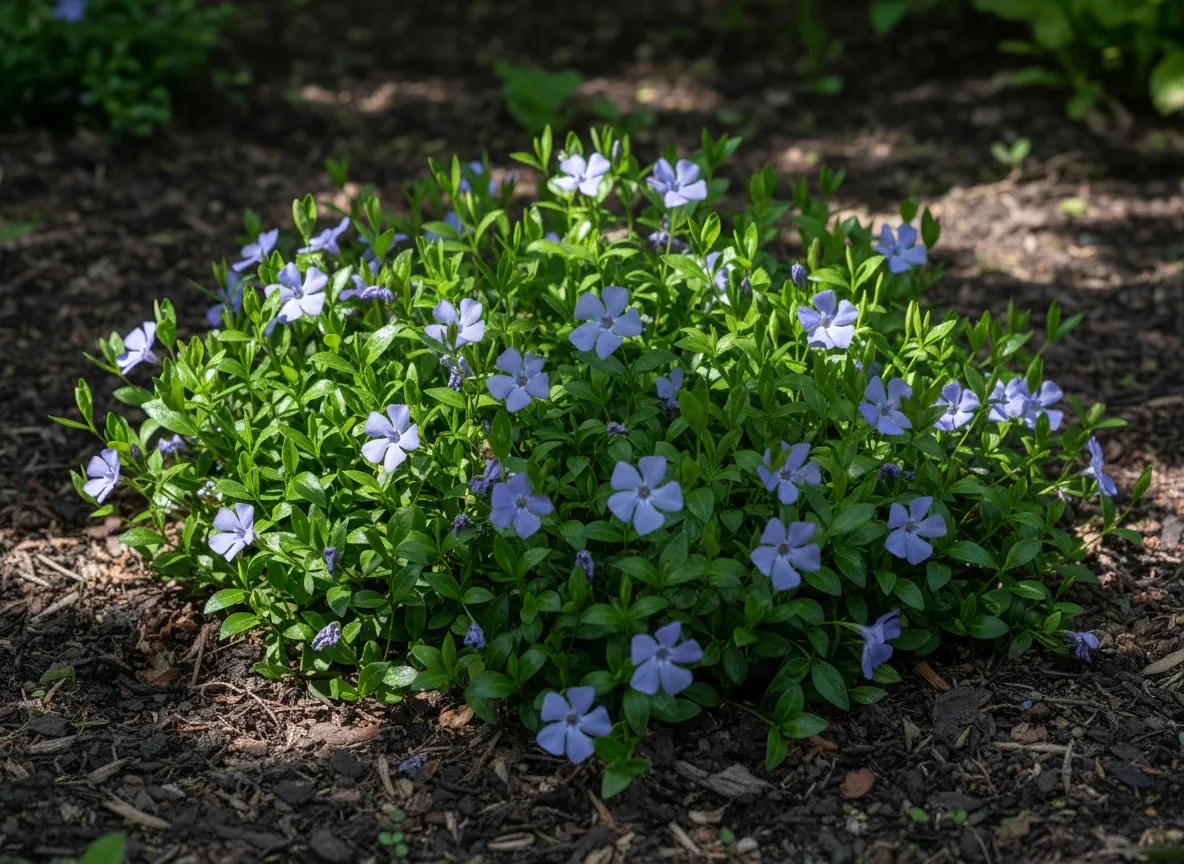
- A classic ground cover for shade and partial shade — it copes where a lawn fails.
- Evergreen: the carpet of leaves adorns the bed in winter too.
- Flowers from April to June, with single flowers appearing right through to autumn.
- Spreading — the shoots root at the nodes, so it expands sideways without restraint.
- In North America it is regarded as an invasive species that displaces the native woodland flora; in Europe it is native.
- Contains alkaloids — mildly toxic to people and pets.
Botanical data
- Family
- Apocynaceae (Apocynaceae)
- Height
- 0.1–0.2 m
- Width
- 0.5–1.5 m
- Habit
- Creeping
- Growth rate
- Fast
- Position
- Partial shade, Shade
- Soil
- Humus-rich, Loamy, Sandy
- pH reaction
- pH 5.5–7.5
- Moisture
- Moderate, Moist
- Bloom
- April–June
- Hardiness
- USDA 4a–9a
- Propagation
- From cuttings, By layering, By division
Characteristics
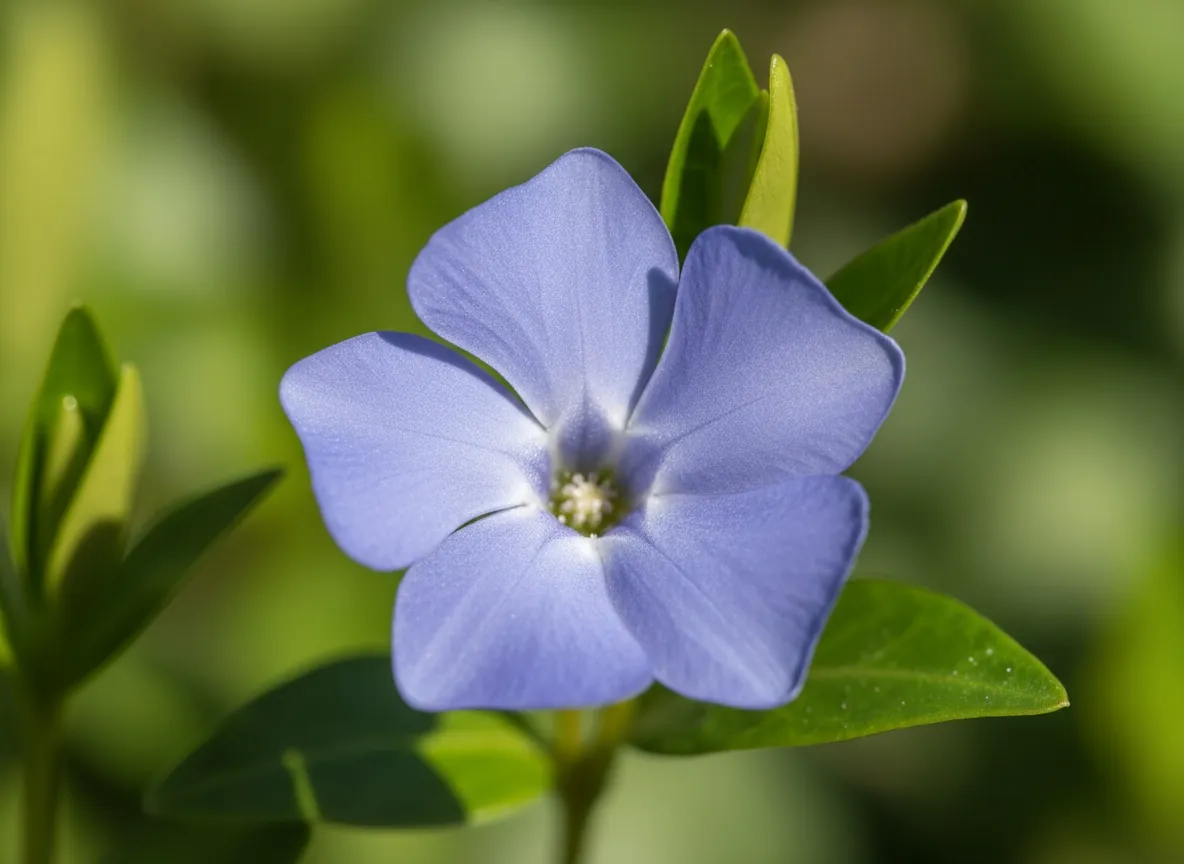
It forms a low, dense carpet 10–20 cm high from long, creeping shoots that root at the nodes and can exceed a metre in length. The leaves are opposite, elliptical, leathery and glossy, dark green, and persist right through the winter. The solitary flowers, 2–3 cm across, have five asymmetrically twisted, truncated petals — this characteristic “pinwheel” distinguishes periwinkle from similar ground covers. It grows on upright flowering shoots that rise above the carpet.
Growing and care
Watering
Once the carpet has closed it needs practically no watering — the litter of its own leaves and the shade limit evaporation. Watering is mainly needed in the first year after planting and during long droughts under shallow-rooting trees.
Fertilizing
A thin layer of compost scattered over the carpet. Nitrogen fertilising speeds up growth, but periwinkle is expansive anyway — it is usually not necessary.
Planting
Clear the site of perennial weeds (couch grass, ground elder) — once the periwinkle has closed, weeding them out will be very difficult. Mix the top layer with compost and mulch until the carpet closes.
Pruning
A neglected, flattened carpet can be mown with a mower on its highest setting — periwinkle rebuilds quickly and thickens up. Cut off shoots growing beyond the bed at the edge, together with their rooted nodes.
Companion plants
Good companions
Periwinkle is one of the few plants that form a closed carpet in the dry shade beneath tree canopies, where a lawn refuses to grow.
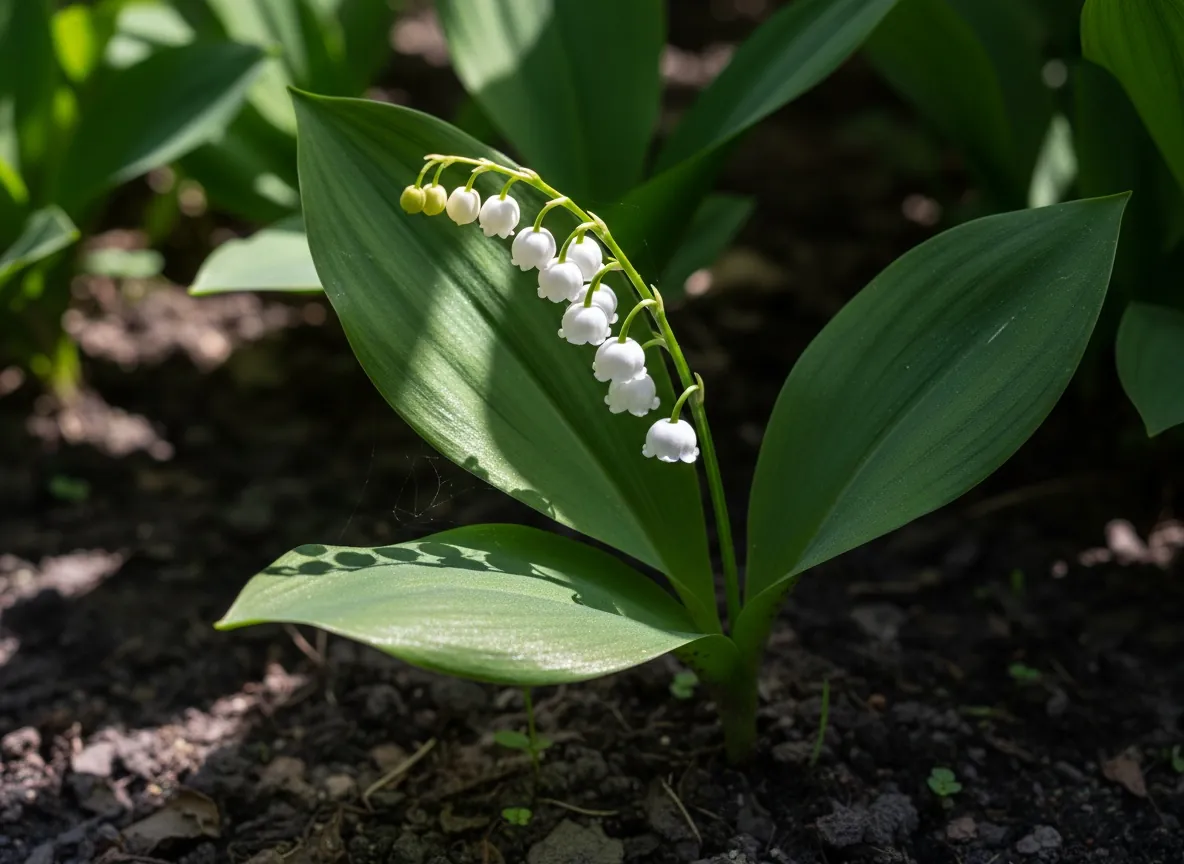
The bulbs push through the evergreen periwinkle carpet in spring, and it later masks their yellowing leaves — a proven combination for park plantings.
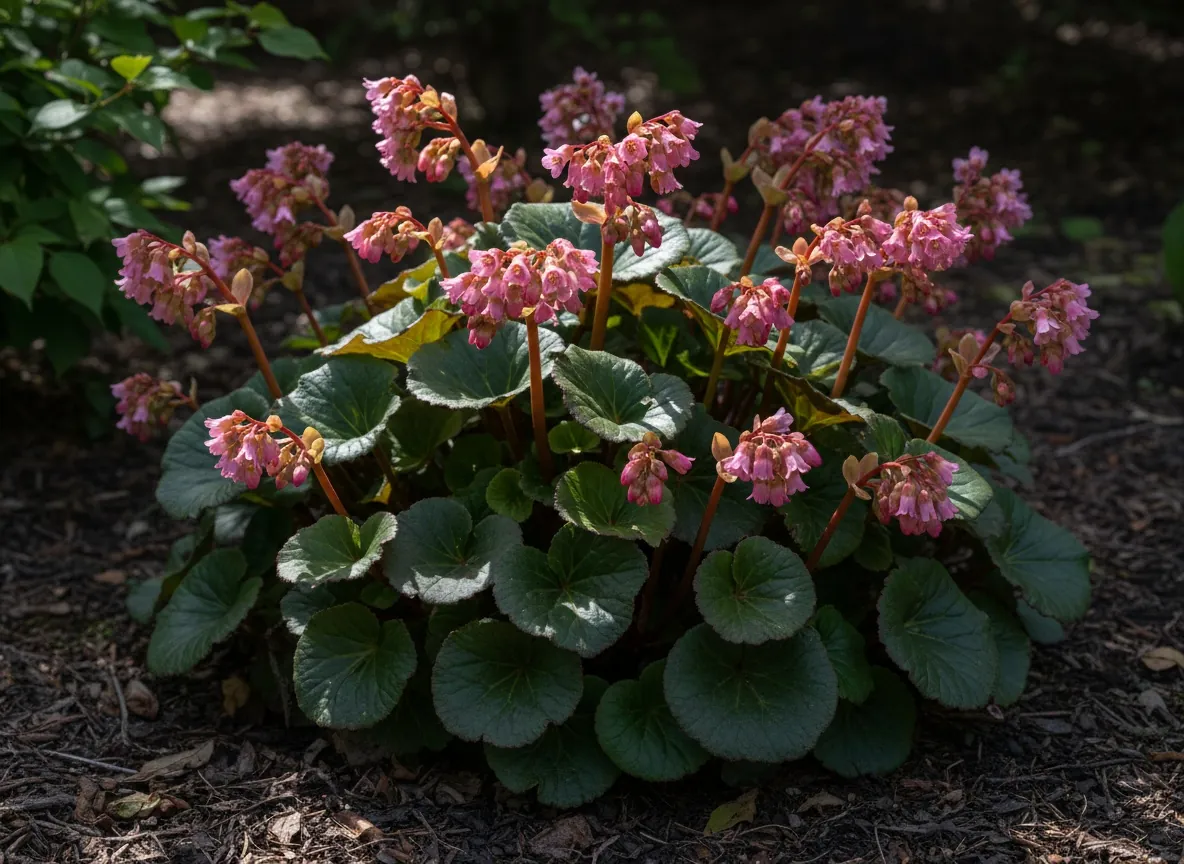
The large, leathery leaves of bergenia provide a strong contrast to the small-leaved carpet and are robust enough that the periwinkle does not smother them.
Bad companions
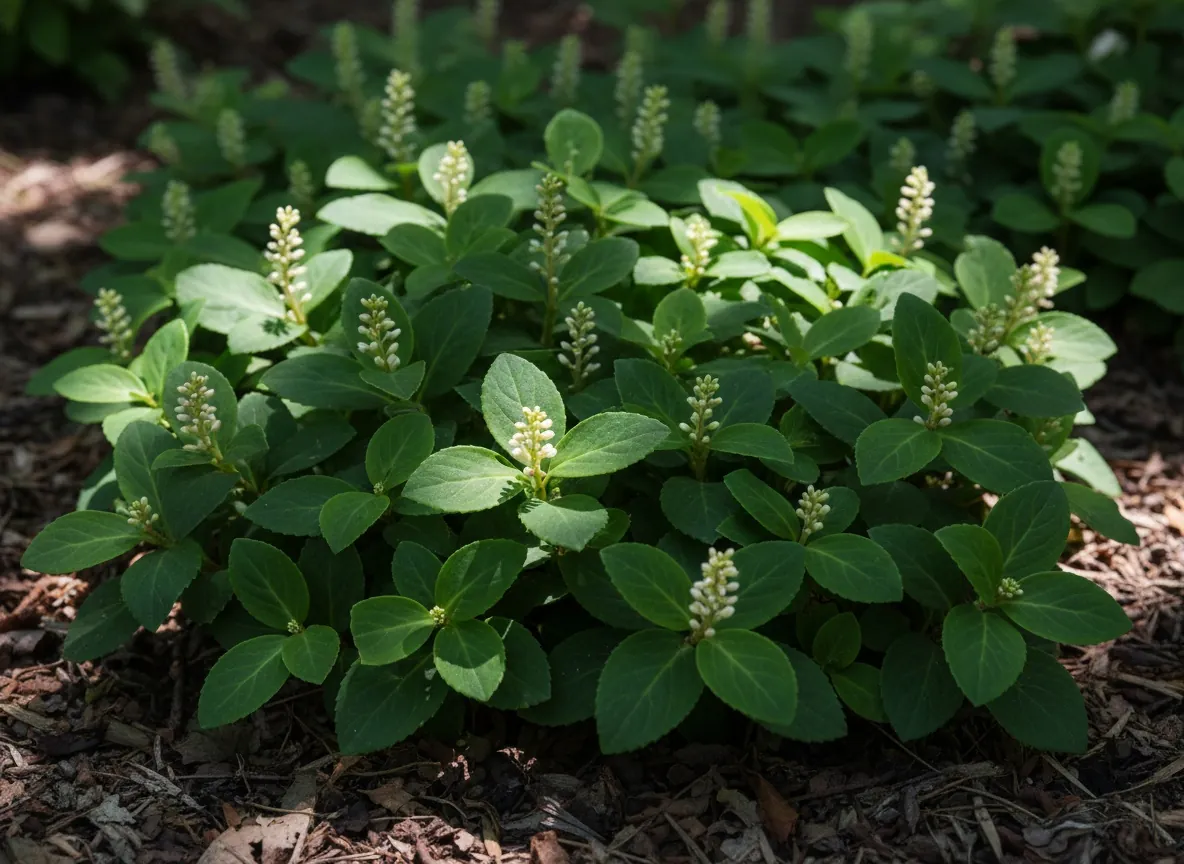
Two ground covers with the same requirements but drastically different rates — fast periwinkle will overgrow the slow-growing pachysandra before it can close up.
The expansive periwinkle shoots, rooting at the nodes, smother delicate ground-layer plants and displace them within 2–3 seasons.
The evidence level indicates whether the relationship is backed by research, observation, or gardening tradition.
Toxicity
| For whom | Level | Notes |
|---|---|---|
| Humans | Mild | The whole plant contains indole alkaloids (including vincamine). Eating a larger quantity of leaves can cause nausea, vomiting and a drop in blood pressure. Poisonings are rare — the plant is very bitter and does not invite eating. |
| Dogs | Mild | Eating the shoots can cause vomiting, diarrhoea and weakness. With large quantities it is worth contacting a vet. |
| Cats | Mild | Symptoms as in dogs; cats rarely reach for this plant because of its bitter taste. |
History and origin
In Europe it has been a ritual and symbolic plant since the Middle Ages — planted on graves and woven into wreaths as a sign of eternal remembrance, precisely because of its evergreen leaves. It reached North America with settlers in the 18th century as a garden and cemetery plant; today it has escaped from cultivation and appears on invasive species lists in many US states, because it forms dense carpets in forests that block the regeneration of the native ground layer. It is a good example of a plant that is an ordinary part of the ecosystem in its homeland and becomes a problem outside it.
Uses
For greening areas in shade and partial shade: under trees, on slopes, in parks, along walls and at the edges of beds. It works well as underplanting beneath deciduous shrubs and between large shade-loving perennials. Because of its spreading habit, it is best to give it a dedicated area or to confine it with edging.
Trivia
- The alkaloid vincamine, isolated from periwinkle leaves, became the starting point for producing a drug that improves cerebral circulation (vinpocetine). It is a raw material for the pharmaceutical industry, not a herb for home infusions — using it on your own is dangerous.
- Under Polish conditions periwinkle hardly sets any seed and spreads almost exclusively via its rooting shoots. Old, solitary carpets in a forest often betray the site of a long-destroyed manor or cemetery.
Frequently asked questions
How quickly will periwinkle cover the ground?
Planted 25–35 cm apart, a closed carpet usually forms in the second, at the latest the third season — considerably faster than Japanese pachysandra, which needs up to 3 years for this. Mulching and watering in the first year noticeably speed up closure.
Is periwinkle invasive and can it be safely planted in Poland?
In Poland periwinkle is a native species and does not appear on the list of invasive plants — planting it in the garden is fine. It is worth remembering, however, that in the garden it behaves in a spreading manner and can move into neighbouring beds, while in North America, where it is alien, it has been recognised as an invasive species that displaces the woodland ground layer. Its shoots should not be discarded at the edge of a forest — every node roots on its own.
Is periwinkle toxic to a dog or cat?
Yes, but mildly. It contains indole alkaloids, and eating them can cause vomiting, diarrhoea and weakness. The plant is very bitter, so serious poisonings are rare — even so, if a larger quantity is eaten it is worth consulting a vet.
Sources
- Plants of the World Online (POWO) — Vinca minorDatabase (GBIF, POWO…)
- Missouri Botanical Garden — Plant Finder: Vinca minorInstitution / botanical garden
My note
A private note for this plant — saved in your browser.