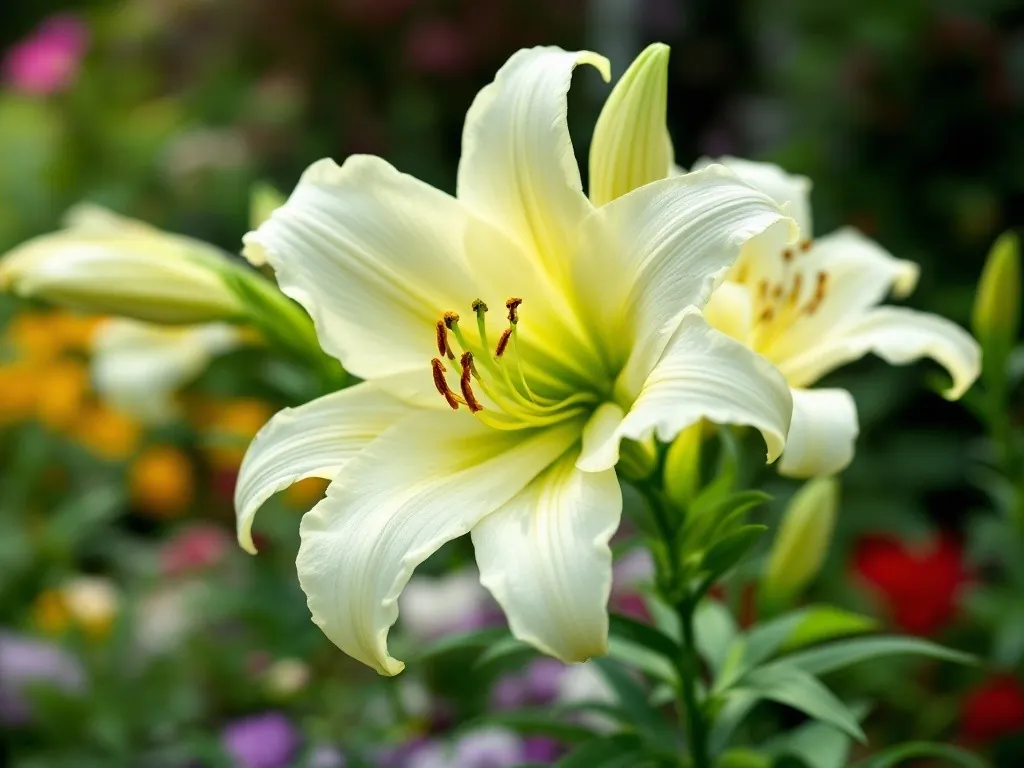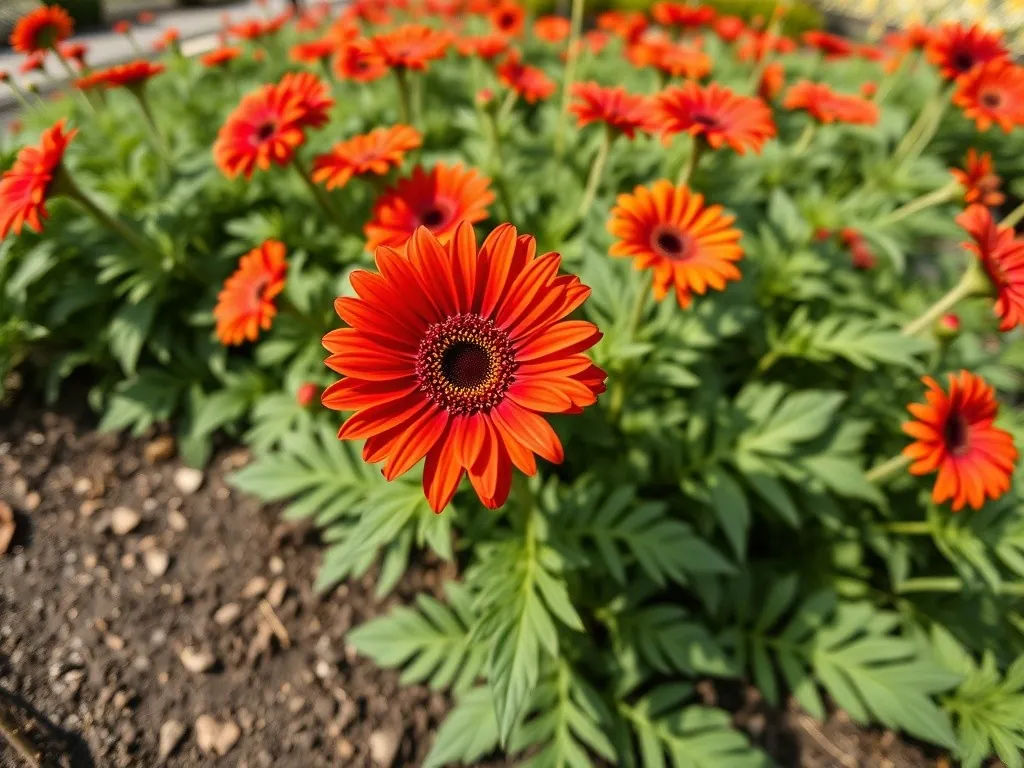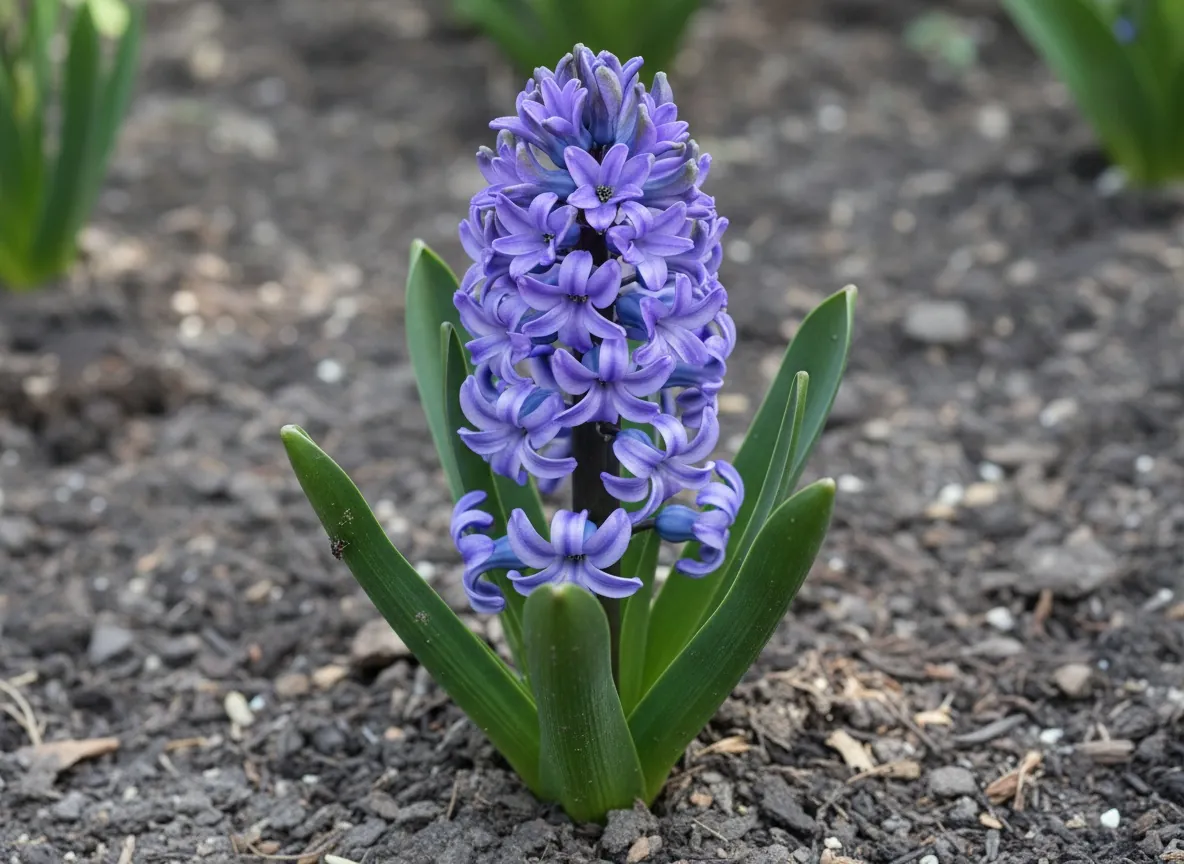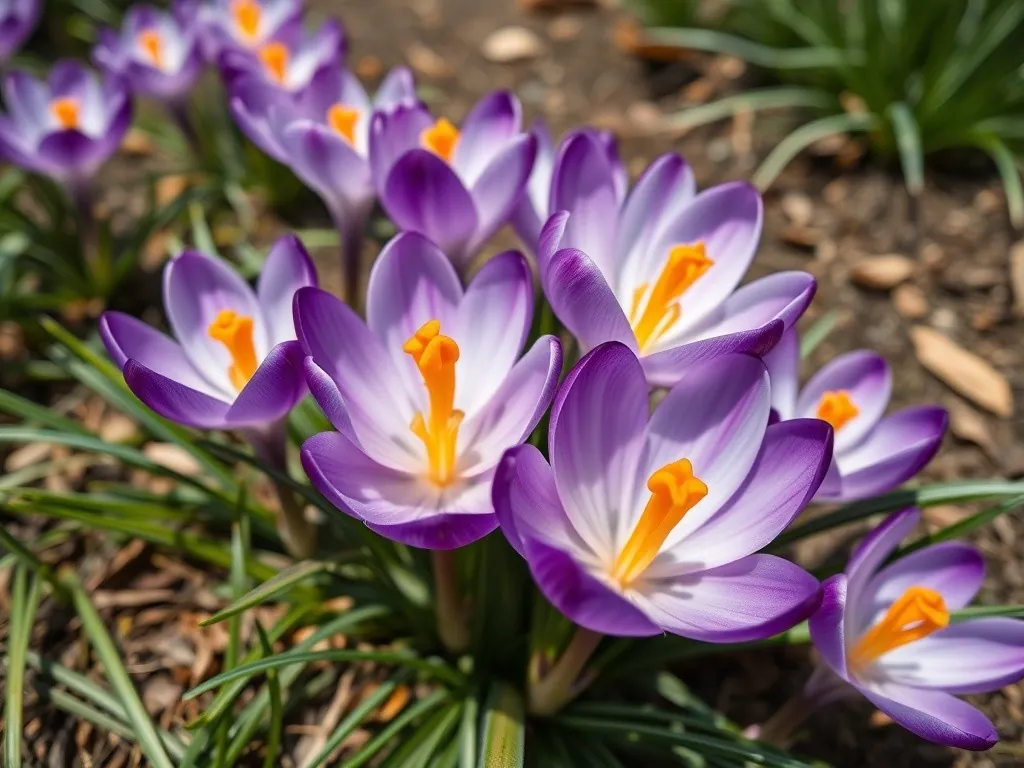

In short
- Plant in autumn (September–November) at about 12 cm deep.
- Needs well-drained soil — bulbs rot in standing water.
- Blooms only briefly, usually 2–3 weeks in April–May.
- The bulb is toxic to dogs and cats.
- Leave the leaves to yellow naturally — they feed the bulb for next year.
Botanical data
- Family
- Liliaceae (Liliaceae)
- Height
- 0.25–0.6 m
- Width
- 0.1–0.15 m
- Habit
- Upright
- Growth rate
- Fast
- Position
- Full sun, Partial shade
- Soil
- Sandy, Humus-rich
- pH reaction
- pH 6–7.5
- Moisture
- Moderate
- Bloom
- April–May
- Hardiness
- USDA 3a–8b
- Propagation
- From bulbs / tubers
Characteristics
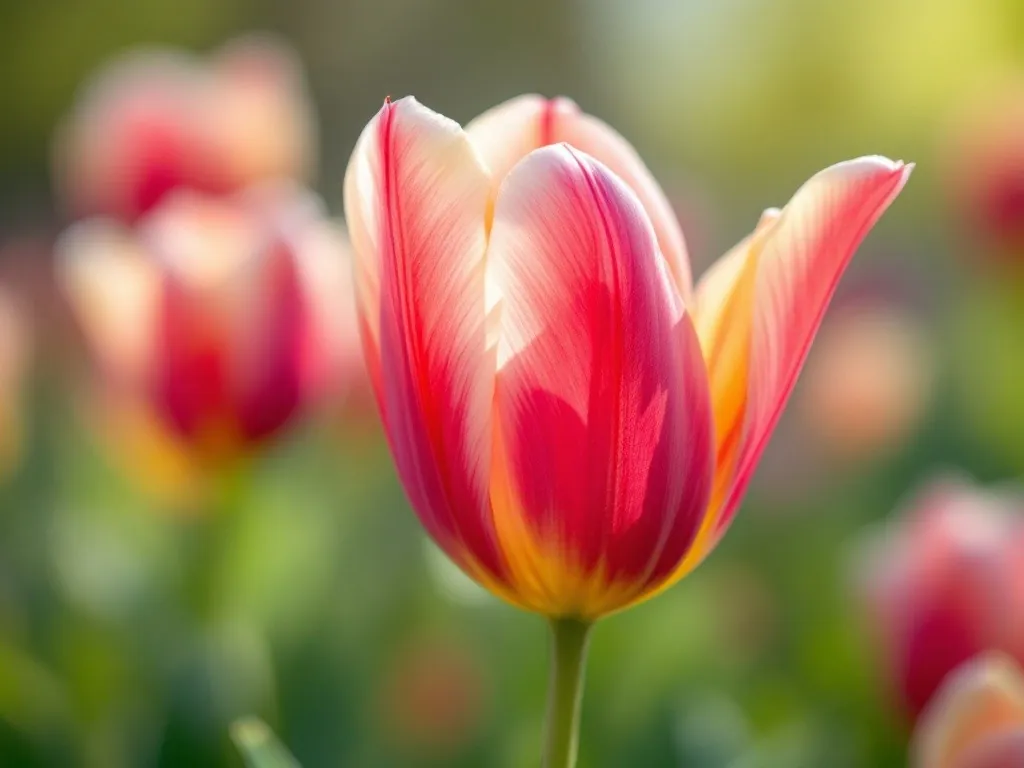
A bulbous plant with narrow, lance-shaped leaves and a single, cup-shaped flower on a stiff stem. Flowers come in nearly every color except true blue.
Growing and care
Watering
Bulbs rot in waterlogged soil. Water moderately during the growing period, then cut back to a minimum after flowering.
Fertilizing
Avoid excess nitrogen — it weakens bulb longevity in following seasons.
Planting
Well-drained soil; amend heavy clay soils with sand to prevent bulb rot.
Pruning
Remove spent flower heads, but leave the leaves until they yellow naturally — they feed the bulb for next year.
Companion plants
Good companions
Tulips fade and lose their ornamental value as early as June — neighboring perennials help hide the yellowing leaves.
Similar planting and flowering time, and non-toxic to rodents unlike tulip bulbs, which limits digging up by animals.
Bad companions
Competition for space when replanting bulbs each year can damage neighboring shallow-rooted plants.
The evidence level indicates whether the relationship is backed by research, observation, or gardening tradition.
Diseases and pests
Toxicity
| For whom | Level | Notes |
|---|---|---|
| Humans | Mild | The bulbs contain glycosides that can irritate the skin and digestive tract if ingested. |
| Dogs | Moderate | The tulip bulb is the most toxic part of the plant for dogs and cats. |
| Cats | Moderate | — |
History and origin
The tulip originates from the mountains of Central Asia and reached Europe in the 16th century via the Ottoman Empire. In 17th-century Holland it sparked the famous "tulip mania" — a speculative price frenzy over the bulbs of rare cultivars.
Uses
For spring borders, bulb displays, pots, and balcony boxes, as well as for cut flowers.
Trivia
- At the height of tulip mania (1637), a single bulb of a rare cultivar cost as much as a house in Amsterdam.
- The Netherlands exports more than 2 billion tulip bulbs a year.
Frequently asked questions
Do tulip bulbs need to be dug up for winter?
In most of Poland's climate this usually isn't necessary — tulips are cold-hardy. Digging up is mainly recommended for valuable cultivars or on very wet soils, where bulbs could rot.
Why didn't my tulip bloom in its second year?
The most common cause is cutting the leaves back too early after the first bloom — the leaves need to yellow naturally so the bulb can build up reserves for the next season.
Are tulips safe for dogs?
No — the tulip bulb is moderately toxic to dogs and cats. It's worth planting them where pets can't reach them.
Sources
- Plants of the World Online (POWO)Database (GBIF, POWO…)
- RHS — Growing tulipsInstitution / botanical garden
My note
A private note for this plant — saved in your browser.