In short
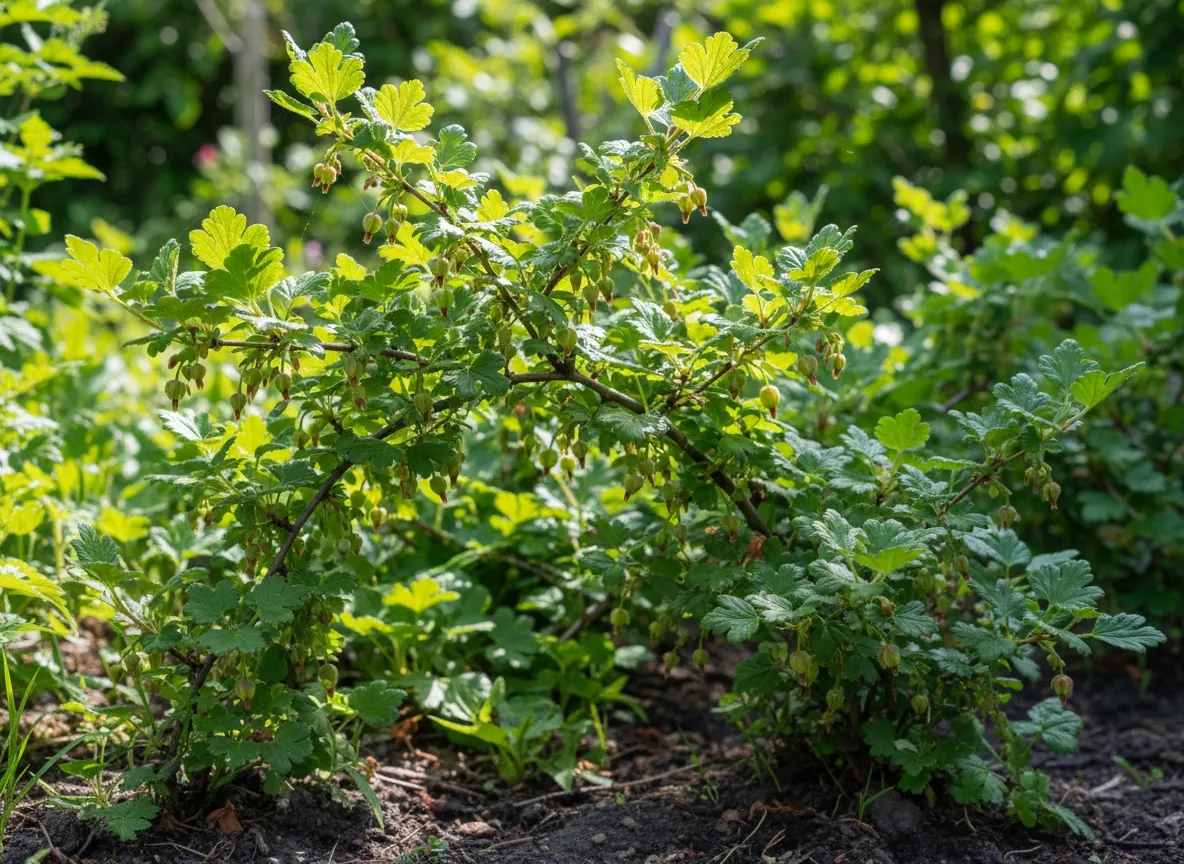
- A thorny shrub 0.9–1.5 m tall; the shoots are densely armed with sharp spines.
- Fruits on spurs borne on 2–3-year-old wood — it must not be pruned like blackcurrant, or it will lose its crop.
- Extremely frost-hardy (to zone 3), tolerates partial shade, but in sun the fruits are sweeter.
- The flagship problem of its cultivation: American gooseberry mildew — resistant cultivars and an airy, well-thinned site are crucial.
- Two harvest times: the June one for preserves (hard, sour fruits) and the July one for dessert (soft, sweet fruits).
- Sensitive to chlorides — fertilise with potassium sulphate, not muriate of potash.
Botanical data
- Family
- Grossulariaceae (Grossulariaceae)
- Height
- 0.9–1.5 m
- Width
- 1–1.5 m
- Habit
- Spreading
- Growth rate
- Moderate
- Position
- Full sun, Partial shade
- Soil
- Humus-rich, Loamy, Sandy
- pH reaction
- pH 6–7
- Moisture
- Moderate
- Bloom
- April–May
- Hardiness
- USDA 3a–8a
- Propagation
- By layering, From cuttings
Characteristics
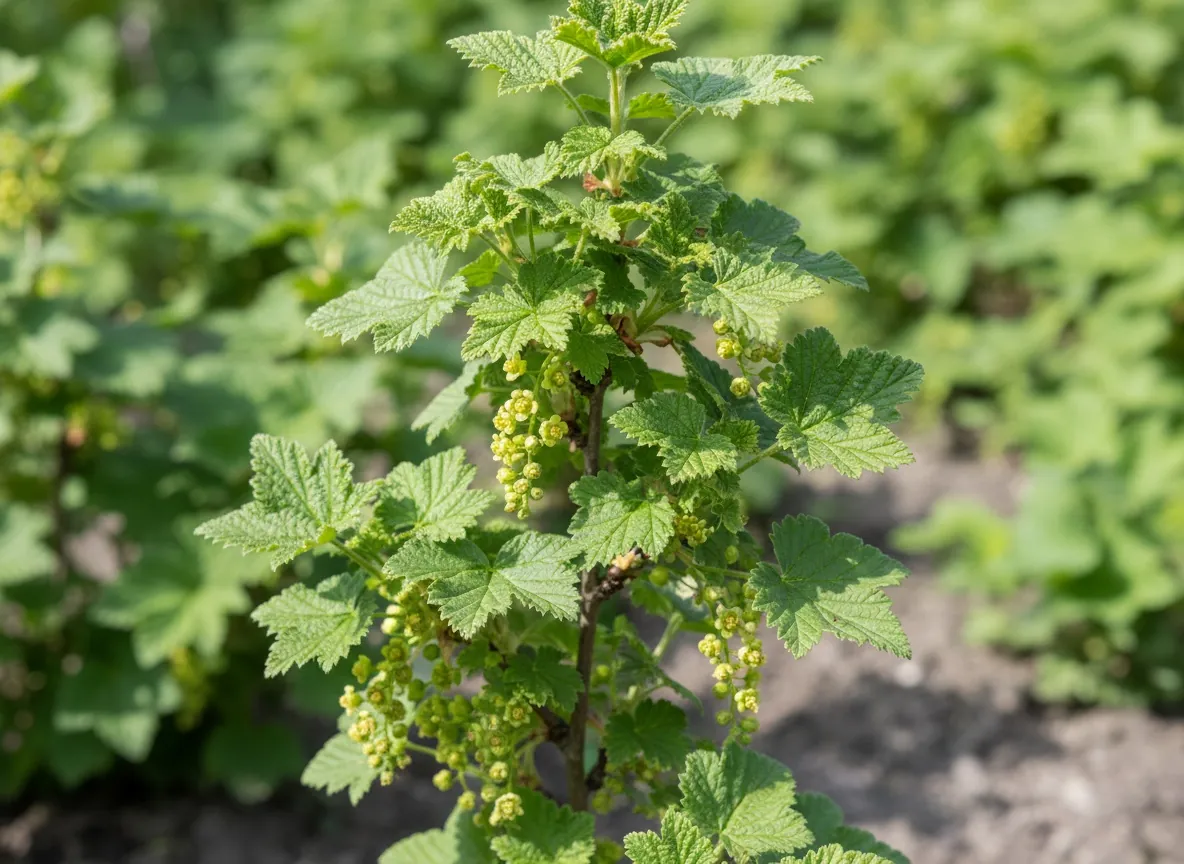
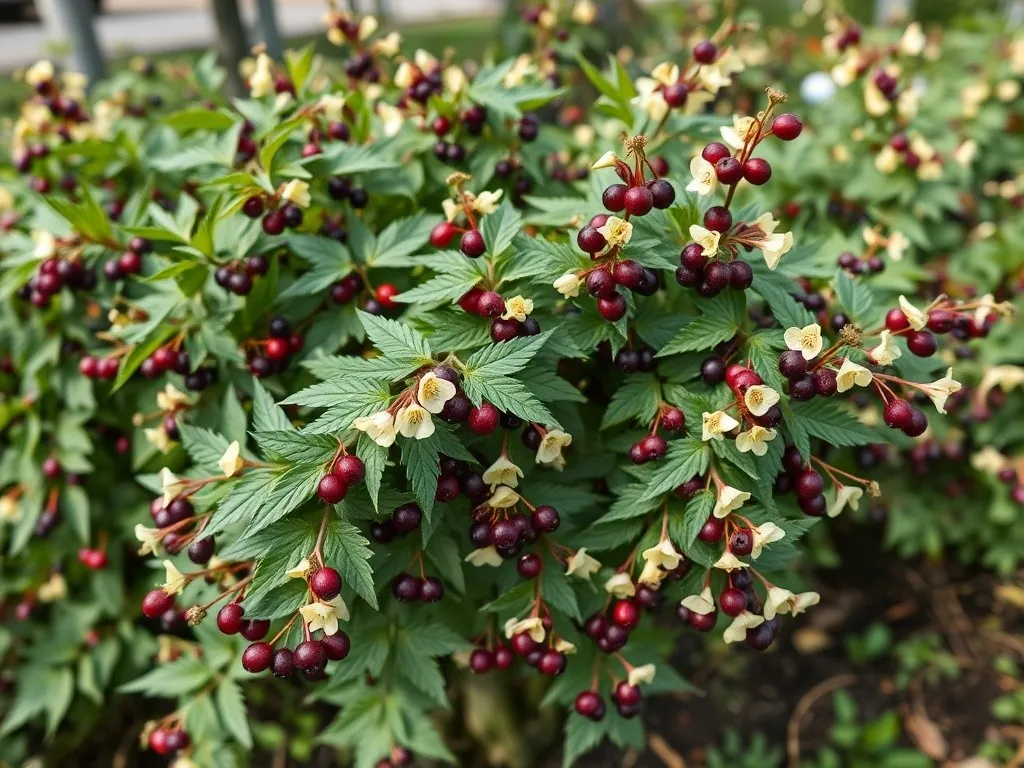
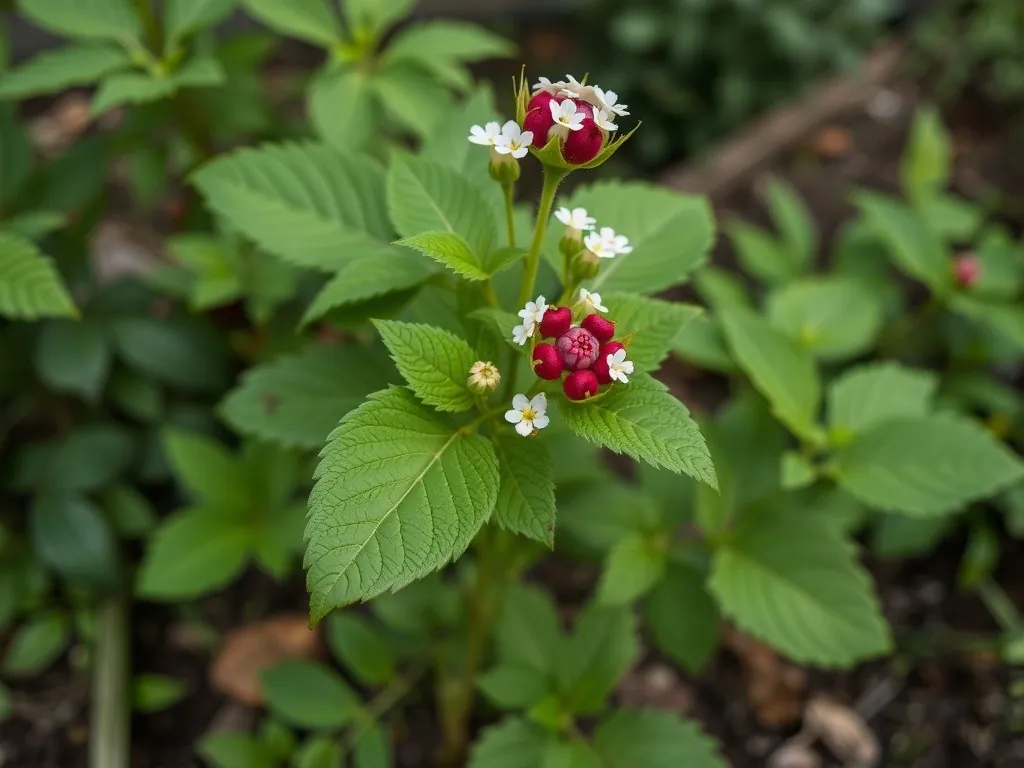
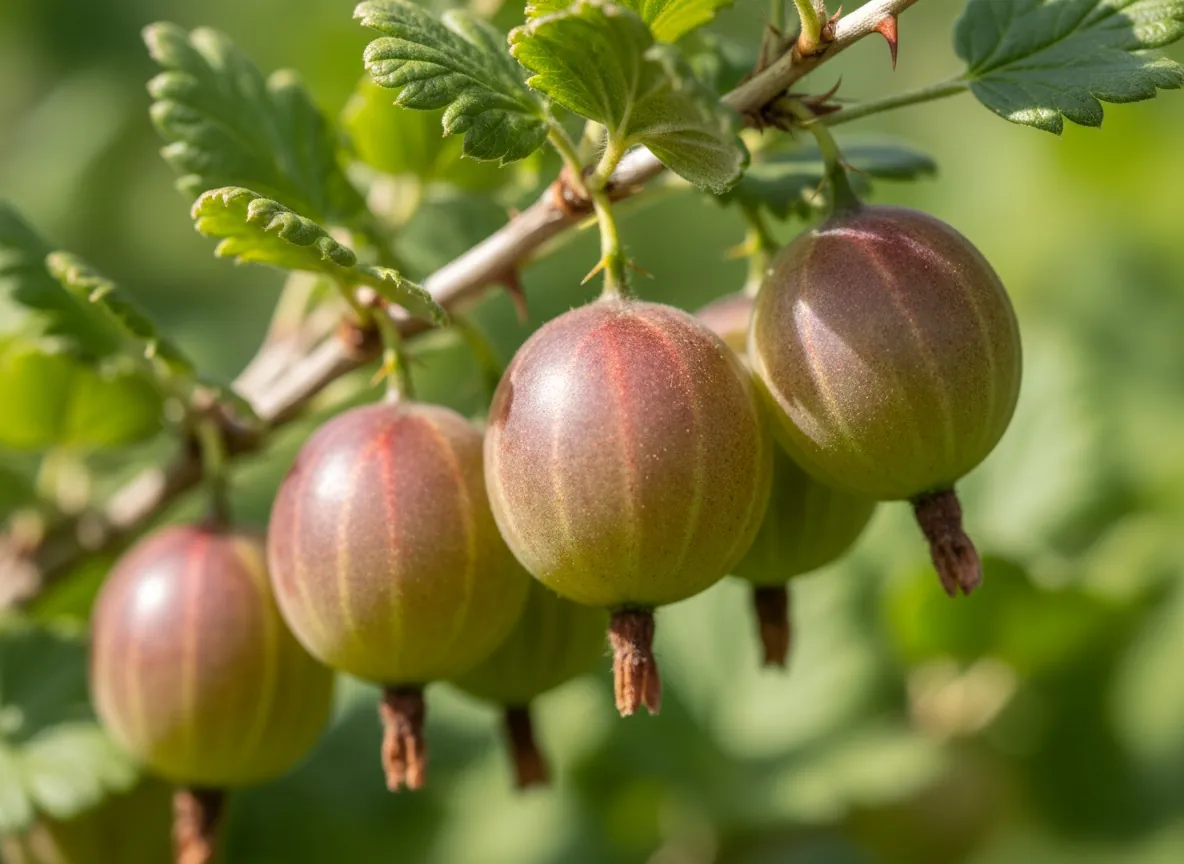
A shrub with dense, arching shoots, armed at the leaf bases with single or 2–3-parted sharp thorns — this is the simplest feature distinguishing the gooseberry from the unarmed currants of the same genus. The leaves are small, 3–5-lobed, toothed, without the aroma of blackcurrant. The flowers are inconspicuous, greenish with a reddish tinge, bell-shaped, hanging singly or in twos and threes in the leaf axils — not in long racemes as in the currants. The fruits are spherical or ovoid berries 1–3 cm in diameter, depending on the cultivar green, yellow, amber or red, smooth or hairy, with the characteristic translucent veining of the skin.
Growing and care
Watering
The most sensitive period is when the fruits are gaining size (May–June) — drying out gives small, hard gooseberries and favours the shedding of fruit set. Water under the bush, not onto the leaves: wetting the foliage favours mildew.
Fertilizing
Moderately — excess nitrogen gives lush, soft shoots that are particularly susceptible to American gooseberry mildew. Note: the whole genus Ribes is sensitive to chlorides, which is why muriate of potash (potassium chloride) should not be used, only potassium sulphate.
Planting
A fertile, humus-rich, well-drained soil enriched with compost. An airy site — too dense, sheltered a spot favours mildew. Gooseberry, unlike blackcurrant, is not planted deeper than it grew in the nursery: the bush is maintained on several permanent framework shoots and is not renewed from the base every year.
Pruning
Agrest owocuje na krótkopędach osadzonych na drewnie 2–3-letnim oraz u nasady przyrostów jednorocznych. Prowadzić 8–10 pędów szkieletowych w różnym wieku, co roku wycinając te najstarsze (powyżej 4 lat) i nadmiar nowych. Kluczowe jest prześwietlenie środka krzewu — otwarte wnętrze szybciej obsycha i znacznie mniej choruje na mączniaka. Ze względu na ciernie ciąć w grubych rękawicach.
Companion plants
Good companions
Planted between the bushes, its strong scent traditionally deters gooseberry aphids and other sucking pests.
Acts as a trap plant — aphids gather on it more readily than on the fruit bushes, and its flowers attract beneficial insects.
Root exudates limit some soil nematodes, and the flowers attract hoverflies and ladybirds — the natural enemies of aphids.
Bad companions
The same botanical genus Ribes means shared pests and diseases (including currant clearwing moth, currant shoot borer and fungal diseases), which pass easily between bushes growing right next to each other.
Close kinship within the genus Ribes means a shared pool of pests and diseases; planting them in one compact block makes it easier for these to move from bush to bush.
The gooseberry is the alternate host of white pine blister rust — a fungus that needs both a Ribes bush and a five-needle pine to complete its life cycle. For the gooseberry it poses little danger, but for the eastern white pine it can be fatal.
The evidence level indicates whether the relationship is backed by research, observation, or gardening tradition.
Toxicity
| For whom | Level | Notes |
|---|---|---|
| Humans | None | The fruits are fully edible. The only real hazard is the sharp, hard thorns on the shoots — it is worth using gloves when picking and pruning. |
| Dogs | None | — |
| Cats | None | — |
History and origin
The gooseberry was cultivated in Europe from the Middle Ages, but its true heyday came in 19th-century England, especially in industrial Lancashire. Gooseberry clubs arose there — associations of amateur growers, mainly weavers and workers, competing at annual shows to raise the largest fruit. It is precisely to this fashion that we owe hundreds of cultivars, many of which have survived to this day. In Poland the gooseberry was for generations a fixture of home orchards and gardens.
Uses
Grown for fruit in home gardens — raw (dessert cultivars), and for jams, jellies, compotes and wines. Besides the bush form, the gooseberry is also grown as a standard (grafted on golden currant), which makes picking among the thorns easier and allows it to be squeezed into a smaller garden, as well as on espaliers against walls.
Trivia
- In 19th-century England there were gooseberry clubs in which growers competed to raise the largest fruit — the oldest such contests have been held without interruption to this day.
- Gooseberry and currants are the same botanical genus Ribes: the gooseberry has thorns and single fruits, the currants are unarmed and fruit in racemes.
- Because Ribes shrubs are the alternate host of white pine blister rust, dangerous to the eastern white pine, a federal ban on growing gooseberries and currants was in force in the USA for decades of the 20th century — it was lifted only in the 1960s.
Frequently asked questions
Where does the brown, felty coating on gooseberry fruits and shoots come from?
That is American gooseberry mildew — a fungal disease and the most common problem of this species. It starts as a white, mealy coating on young leaves and shoot tips, then turns brown and felty, covering the fruits and making them unfit to eat. What to do: cut out and destroy infected shoot tips (also in autumn), thin the inside of the bush radically so that it dries faster, do not over-fertilise with nitrogen, and water under the bush, not onto the leaves. The most effective measure, however, is prevention at the purchase stage — choosing resistant cultivars.
How should gooseberry be pruned correctly?
Quite differently from blackcurrant. The gooseberry fruits on spurs borne on 2–3-year-old wood, so cutting out everything older each year deprives it of its crop. Instead, 8–10 framework shoots of various ages are maintained, and each year only the oldest are removed (over 4 years, dark and growing weakly) along with surplus new ones. The most important thing is opening up the centre of the bush: an interior free of tangled shoots dries faster, and this markedly limits mildew. Prune in February or March, wearing thick gloves.
Can gooseberry be planted next to currants?
It can, because they have similar requirements, but it is not optimal. Gooseberry and currants belong to the same genus Ribes, so they share a pool of pests and diseases (including currant clearwing moth, currant shoot borer, fungal diseases) — planted tightly next to each other they make it easier for these to move from bush to bush. It is worth keeping spacing and airiness. A separate matter: all Ribes shrubs are the alternate host of white pine blister rust, which is why they should not be planted near the eastern white pine and other five-needle pines.
Sources
- Plants of the World Online (POWO)Database (GBIF, POWO…)
- RHS — Ribes uva-crispa (gooseberry)Institution / botanical garden
My note
A private note for this plant — saved in your browser.