In short
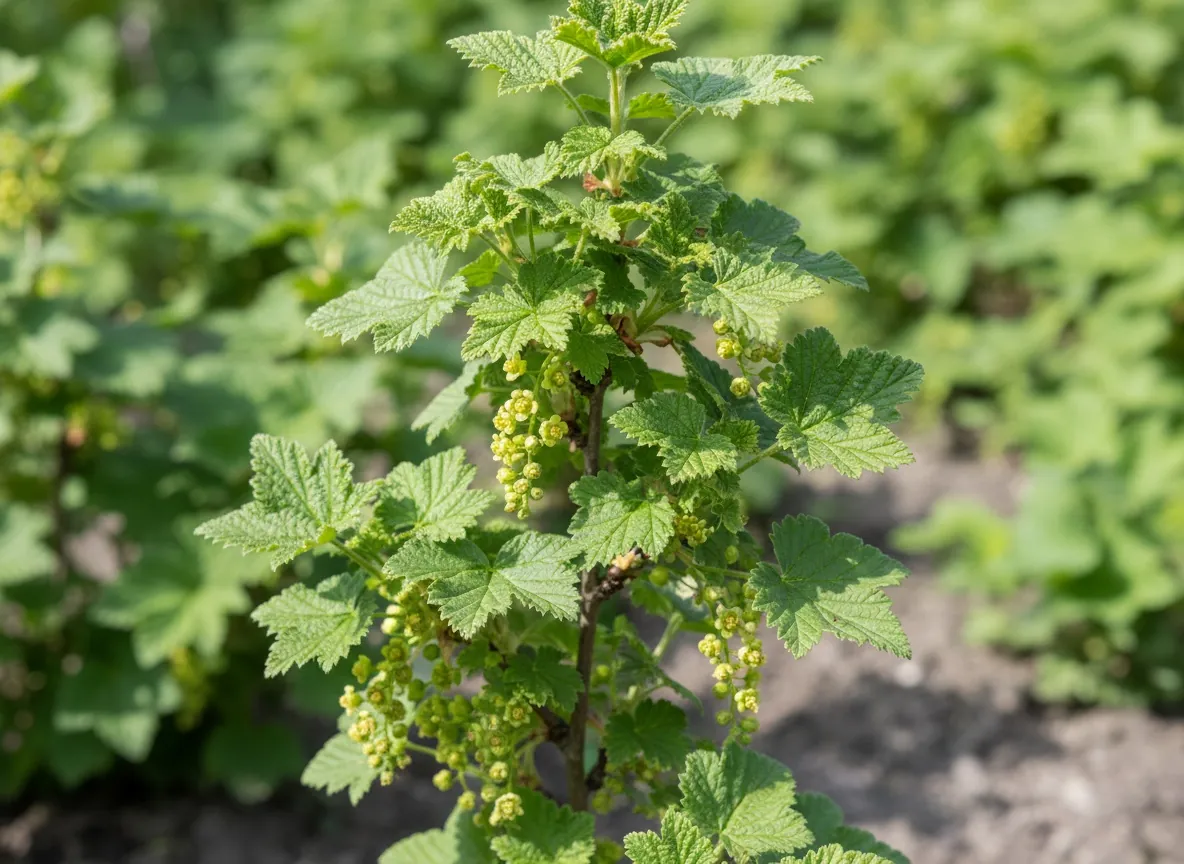
- A shrub without thorns — unlike the gooseberry of the same genus Ribes — fruiting in long, hanging racemes.
- The leaves lack the aroma of blackcurrant; the scent of a crushed leaf is the easiest way to tell the two species apart.
- Fruits on spurs of older wood — maintain 8–10 framework shoots, do not cut out everything older each year.
- Very frost-hardy (to zone 3) and tolerant of partial shade — it works well by a cooler, north-facing wall.
- Harvest from the end of June into July; the fruits colour red earlier than they reach full flavour.
- The fruits are rich in pectin — the juice sets into jelly without added gelatine.
Botanical data
- Family
- Grossulariaceae (Grossulariaceae)
- Height
- 1–1.8 m
- Width
- 1–1.5 m
- Habit
- Upright
- Growth rate
- Moderate
- Position
- Full sun, Partial shade
- Soil
- Humus-rich, Loamy, Sandy
- pH reaction
- pH 6–7
- Moisture
- Moderate
- Bloom
- April–May
- Hardiness
- USDA 3a–8a
- Propagation
- From cuttings, By layering
Characteristics
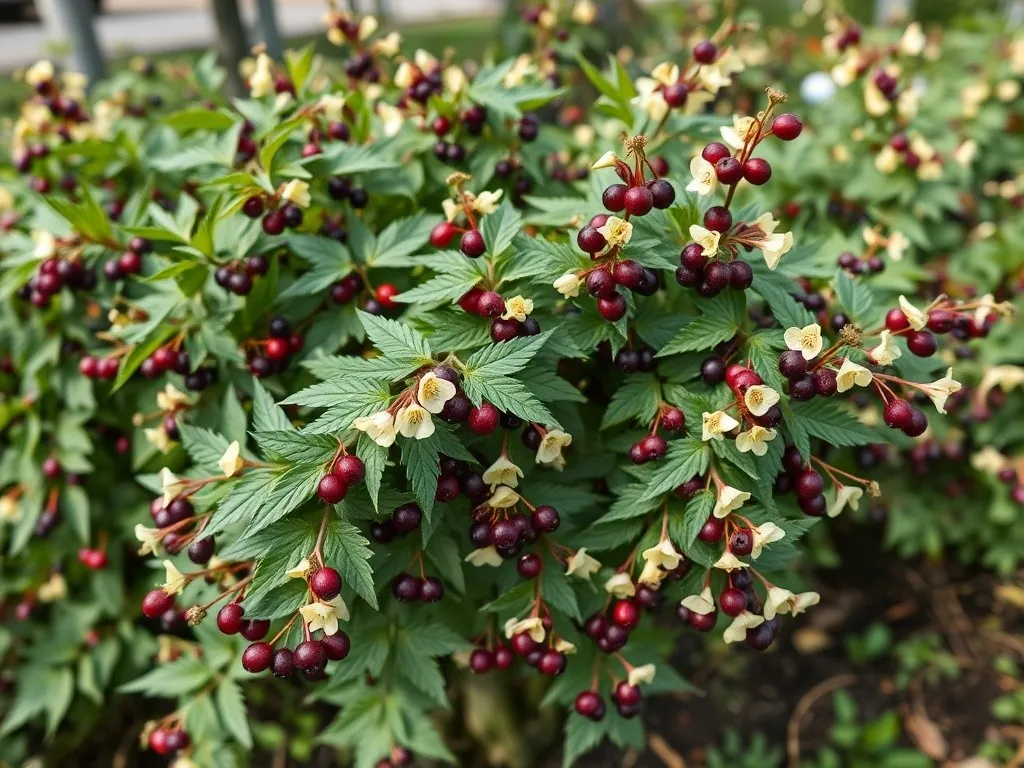
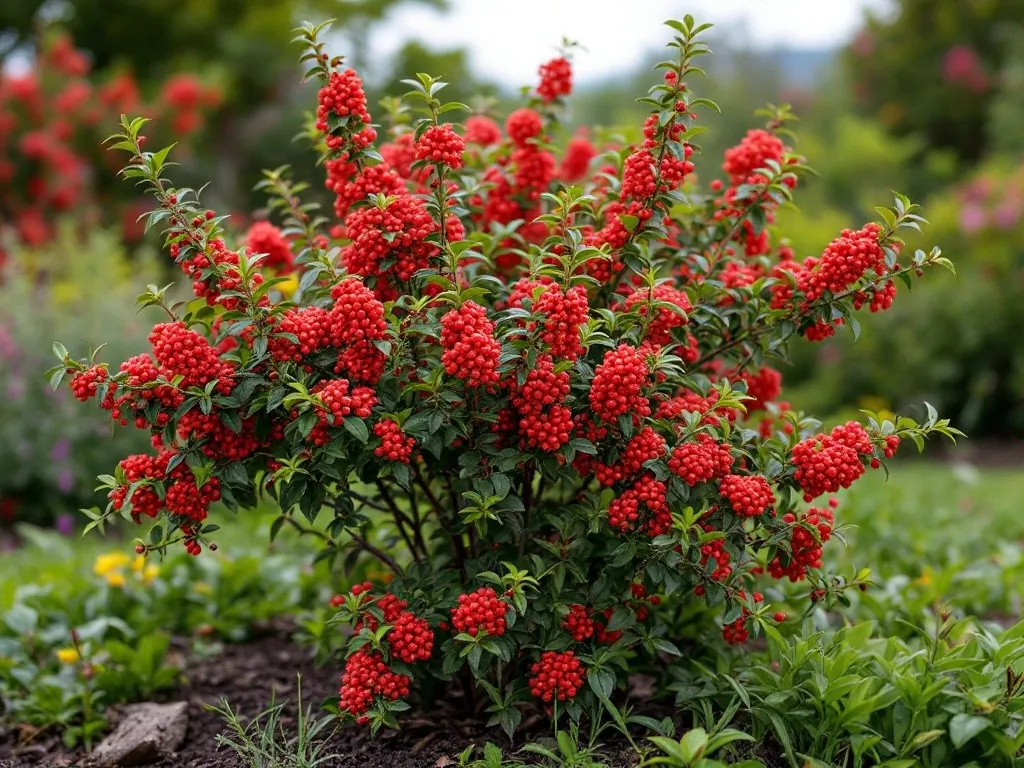
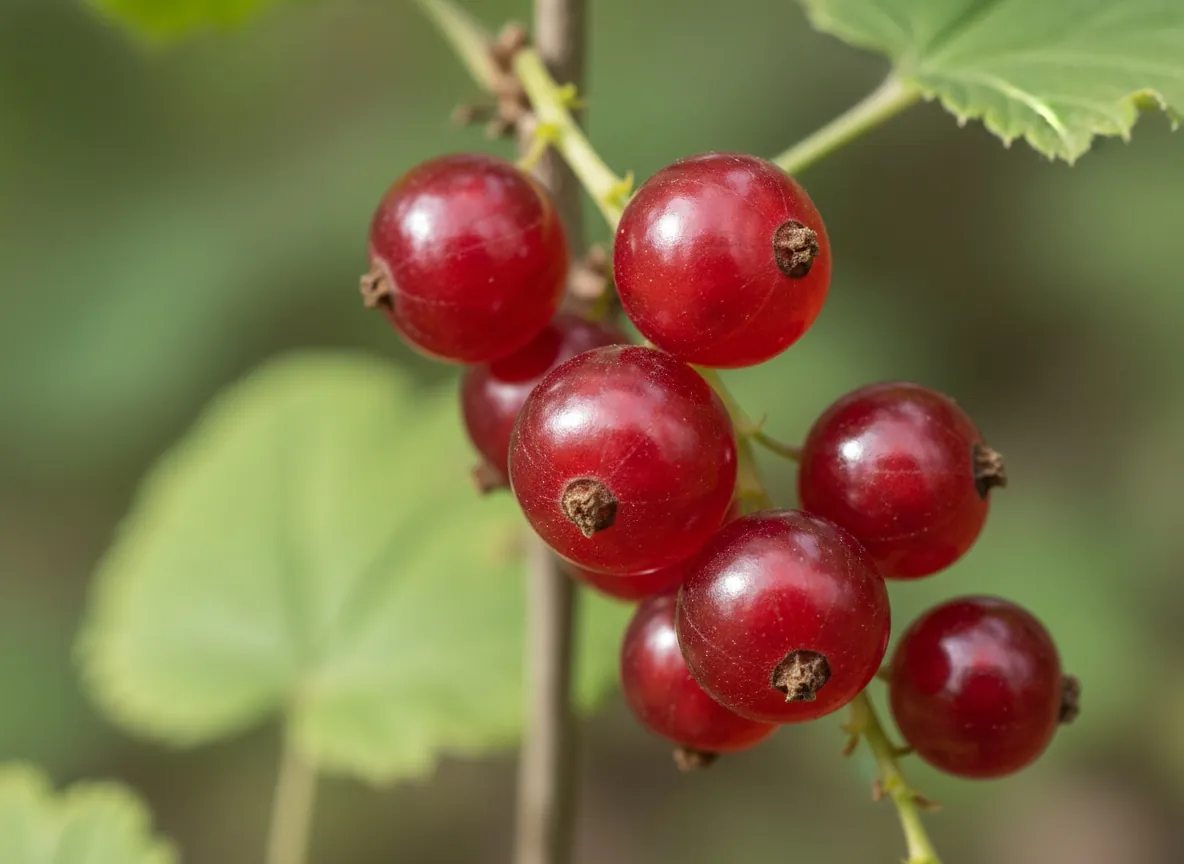
A shrub of more upright habit than blackcurrant, with thornless shoots. The leaves are 3–5-lobed, toothed, and odourless when crushed — a simple and reliable feature distinguishing it from the intensely fragrant blackcurrant. The flowers are small, greenish-yellow, flat and saucer-shaped, gathered a dozen or more together in hanging racemes. The fruits are spherical, almost translucent berries with intensely red (in white cultivars — colourless) skin, through which the seeds show; the flavour is distinctly sour and refreshing.
Growing and care
Watering
Withstands drought better than blackcurrant, but drying out during fruit ripening gives small berries and causes the racemes to drop. Water under the bush, avoiding wetting the leaves.
Fertilizing
Nutrient requirements are lower than in blackcurrant — an annual mulch of compost is enough. Note: the genus Ribes is sensitive to chlorides, so fertilise with potassium sulphate, not muriate of potash.
Planting
A fertile, humus-rich, well-drained soil. Unlike blackcurrant, plant at the same depth at which the bush grew in the nursery — redcurrant is not renewed each year with shoots from the base but maintained on permanent framework shoots, so deep planting makes no sense. It tolerates partial shade well, which allows cooler corners of the garden to be used.
Pruning
Redcurrant fruits on spurs borne at the base of one-year-old growth and on 2–3-year-old wood. Maintain 8–10 framework shoots of various ages, removing each year only the oldest (over 4–5 years) and surplus new suckers; side growth can be shortened to thicken up the fruiting spurs.
Companion plants
Good companions
Planted between the bushes, its strong scent traditionally deters currant aphids, whose feeding causes red blisters on the leaves.
The flowers attract hoverflies and ladybirds — the natural enemies of the redcurrant blister aphid, the main pest of this species.
Similar soil requirements and tolerance of partial shade allow both species to be grown in one productive part of the garden; they are not closely related, so they do not share key diseases.
Bad companions
The same genus Ribes means a shared pool of pests and diseases (including currant clearwing moth and currant shoot borer), which pass easily between closely planted bushes.
Redcurrant is the alternate host of white pine blister rust — a fungus that completes its life cycle only with the participation of a Ribes bush and a five-needle pine. For the currant it poses little danger, for the eastern white pine it can be fatal.
The evidence level indicates whether the relationship is backed by research, observation, or gardening tradition.
Toxicity
| For whom | Level | Notes |
|---|---|---|
| Humans | None | The fruits are fully edible, valued for their high content of pectin and vitamin C. |
| Dogs | None | — |
| Cats | None | — |
History and origin
The redcurrant comes from Western and Central Europe and reached gardens relatively late — the first mentions of its cultivation date from the 15th–16th centuries, mainly from the Netherlands, Denmark and northern Germany. As a species of cool zones it quickly settled in Northern and Central Europe, where it became a mainstay of home preserves. The German name Johannisbeere (“St John's berry”) refers to St John's Day (24 June) — the traditional date of the first ripe fruits.
Uses
Grown for fruit in home gardens — mainly for preserves: jellies, juices, jams, wines and liqueurs, and also as a striking decoration for cakes and desserts. Thanks to its tolerance of partial shade it makes good use of cooler spots that other fruit plants will not take up; it can also be trained on an espalier against a wall or fence, and as a standard.
Trivia
- The German name Johannisbeere, that is “St John's berry”, comes from St John's Day (24 June) — the traditional date of the first harvest.
- The white currant is not a separate species but a colour variant of the redcurrant, lacking the red pigment of the fruits.
- The fruits contain exceptionally large amounts of pectin, which is why redcurrant juice sets into jelly by itself, without added gelatine or gelling agents.
Frequently asked questions
How does redcurrant differ from blackcurrant?
Beyond the colour of the fruit there are quite a few differences. Blackcurrant leaves give off an intense, resinous scent when crushed — in redcurrant they are odourless. Blackcurrant is greedier for water and nutrients, redcurrant copes better with drought and partial shade. The most important difference is practical: blackcurrant fruits on 1–2-year-old shoots and requires older shoots to be cut out at ground level each year, whereas redcurrant fruits on spurs of older wood and is maintained on permanent framework shoots. Confusing these two pruning methods is the most common cause of no crop. Blackcurrant fruits also have far more vitamin C, and redcurrant — more pectin.
Why does a large, well-grown redcurrant bush fruit poorly?
Most often it is the result of pruning it like blackcurrant. Cutting out at ground level every year all shoots older than 2–3 years removes the fruiting spurs on which redcurrant sets its racemes — the bush then rebuilds only leafy growth. Other causes are a too dense, unthinned interior of the bush, deep shade, and drying out during fruit ripening.
Will redcurrant grow in shade?
It is one of the few fruit bushes that really do tolerate partial shade well — it will manage even by the north wall of a building, though it then fruits somewhat less and the fruits are more sour. In full sun the crop is largest and the berries sweetest. Deep shade (e.g. under the dense crown of a large tree) should nevertheless be avoided: the shoots become drawn, and fruit set practically ceases.
Sources
- Plants of the World Online (POWO)Database (GBIF, POWO…)
- RHS — Ribes rubrum (redcurrant)Institution / botanical garden
My note
A private note for this plant — saved in your browser.