In short
- Site: sun or light partial shade, humus-rich, well-drained, slightly acidic soil.
- Fruits on biennial canes (summer cultivars) or one-year-old canes (autumn cultivars, so-called everbearing).
- Requires regular watering — the shallow root system tolerates drought poorly.
- Frost-hardy to USDA zone 3, but sensitive to waterlogging.
- Annual pruning and thinning of the canes is crucial for health and yield.
Botanical data
- Family
- Rosaceae (Rosaceae)
- Height
- 1.2–2 m
- Width
- 0.5–1 m
- Habit
- Upright
- Growth rate
- Fast
- Position
- Full sun, Partial shade
- Soil
- Humus-rich, Loamy
- pH reaction
- pH 5.5–6.5
- Moisture
- Moderate, Moist
- Bloom
- May–June
- Hardiness
- USDA 3a–8b
- Propagation
- By layering, From cuttings, By division
Characteristics
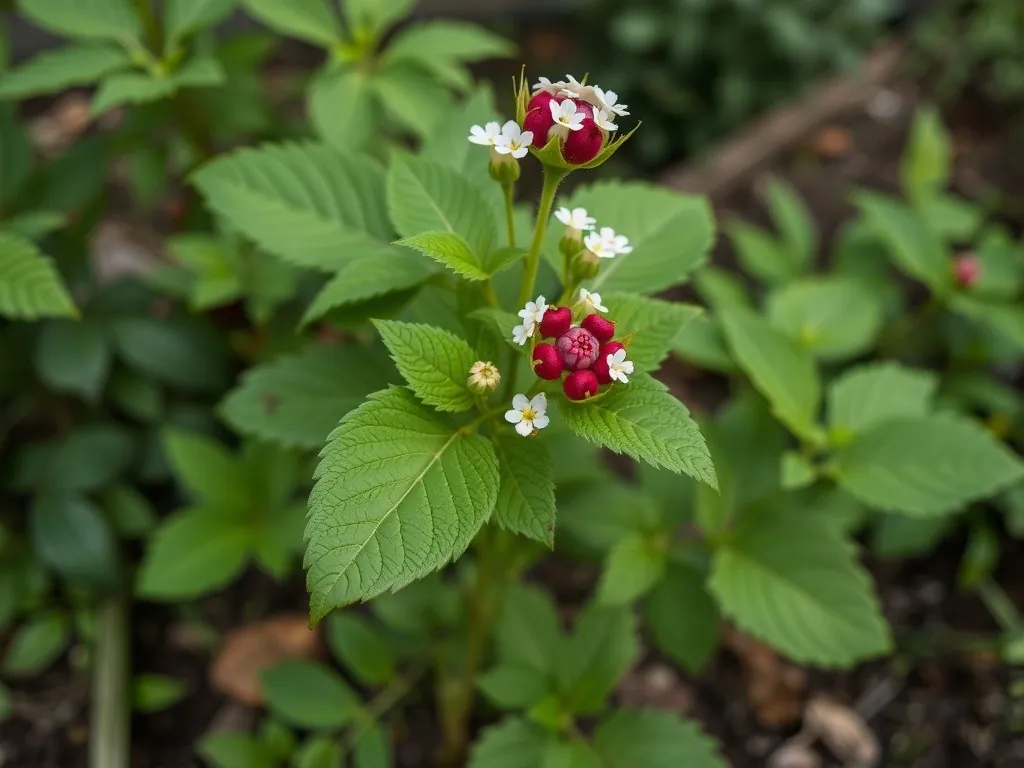
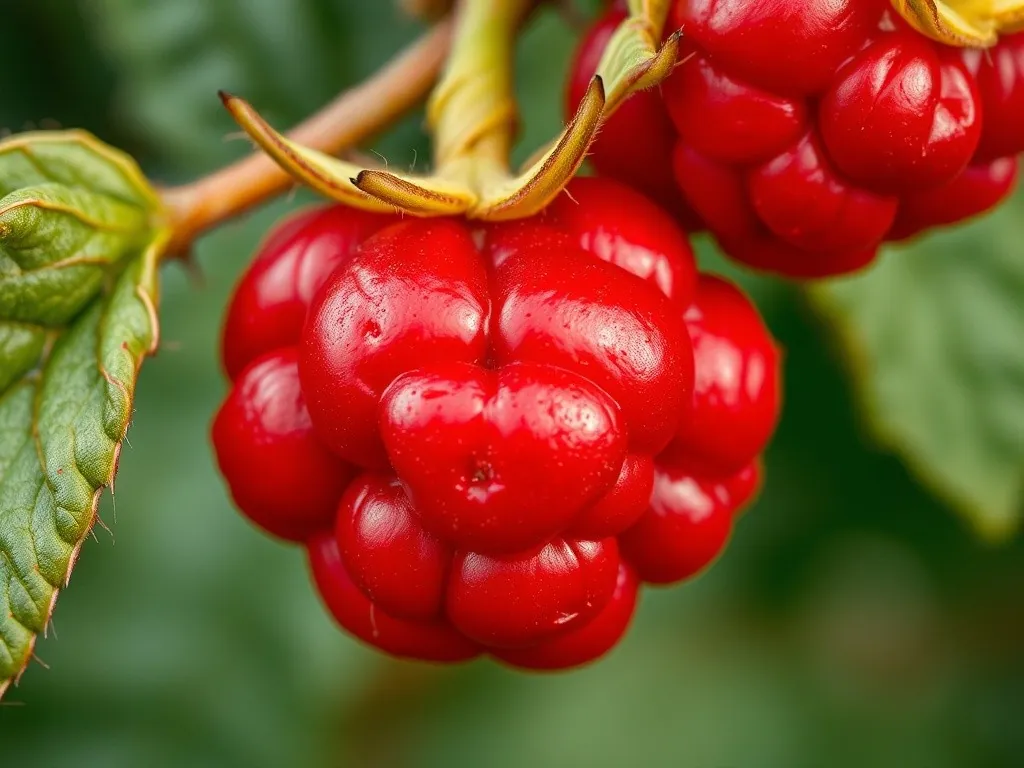
It forms runners that send up new canes from the root system, so over time it occupies a strip of ground if not contained. The canes are covered with fine prickles, the leaves composed of 3–5 leaflets with a pale green underside. The fruit is an aggregate drupe (aggregate berry) that separates easily from the calyx once ripe.
Growing and care
Watering
The shallow root system feels drought quickly — in hot weeks water regularly and mulch to reduce evaporation.
Fertilizing
Moderate nitrogen doses — an excess favours lush canes at the expense of fruiting and reduces winter hardiness.
Planting
A wind-sheltered site; soil enriched with compost, without waterlogging. It is worth setting up a frame or trellis for training the canes right away.
Pruning
Cut out at ground level the canes that have already fruited, leaving the 6–8 strongest one-year-old ones for the next season; thin out overly dense runners.
Companion plants
Good companions
The strong smell of garlic deters aphids and other sucking pests common on young raspberry canes.
Attracts pollinators and small beneficial insects, and its roots have a suppressing effect on some soil nematodes.
Bad companions
Both species are susceptible to Verticillium wilt — a soil-borne fungal disease that they readily pass to each other when grown side by side.
The same botanical genus means shared pests and diseases as well as strong competition for space through root runners.
The evidence level indicates whether the relationship is backed by research, observation, or gardening tradition.
Toxicity
| For whom | Level | Notes |
|---|---|---|
| Humans | None | — |
| Dogs | None | — |
| Cats | None | — |
History and origin
Cultivated in Europe since the Middle Ages, though gathered from wild shrubs even earlier. The selection of cultivated varieties developed intensively in the 19th and 20th centuries, among others in Scotland and Poland, producing summer and autumn cultivars with different fruiting times.
Uses
Commercial and home-garden cultivation for fresh and frozen fruit and processed products (jams, juices, liqueurs). In the garden planted in rows along frames or trellises, less often as part of a fruiting hedge.
Trivia
- Autumn cultivars (e.g. 'Polka') can be cut back completely to the ground each winter — they will still fruit on the new canes of the same year.
- Raspberry leaves are dried for teas, traditionally used in the last weeks of pregnancy.
Frequently asked questions
Why does my raspberry not fruit despite vigorous growth?
Most often this is the result of incorrect pruning — removing the canes that were meant to fruit — or of excess nitrogen in fertilising, which drives leaf growth at the expense of flowers and fruit.
Are summer and autumn raspberries pruned the same way?
No. Summer cultivars fruit on last year's canes, so only those that have already fruited are cut out. Autumn cultivars fruit on the current year's canes, so the whole plant can be cut down low in early spring.
How can you limit the raspberry from spreading all over the garden?
It is worth burying a root barrier along the row (e.g. a plastic strip to a depth of 30–40 cm) and regularly removing the suckers appearing outside the designated strip.
Sources
- RHS — Rubus idaeus (raspberry)Institution / botanical garden
- Plants of the World Online (POWO)Database (GBIF, POWO…)
My note
A private note for this plant — saved in your browser.