In short
- A bright position — in shade the stripes fade and the shoots become leggy.
- Grows very fast; requires regular shortening of the shoots.
- Roots from any fragment of a shoot, even in a glass of water.
- The sap can irritate the skin of people and animals.
- Ideal for hanging baskets and for a summer balcony in partial shade.
Botanical data
- Family
- Commelinaceae (Commelinaceae)
- Height
- 0.1–0.2 m
- Width
- 0.4–1.2 m
- Habit
- Cascading
- Growth rate
- Fast
- Position
- Full sun, Partial shade
- Soil
- Humus-rich, Peaty
- pH reaction
- pH 5.5–7
- Moisture
- Moderate
- Bloom
- June–September
- Hardiness
- —
- Propagation
- From cuttings, By division
Characteristics
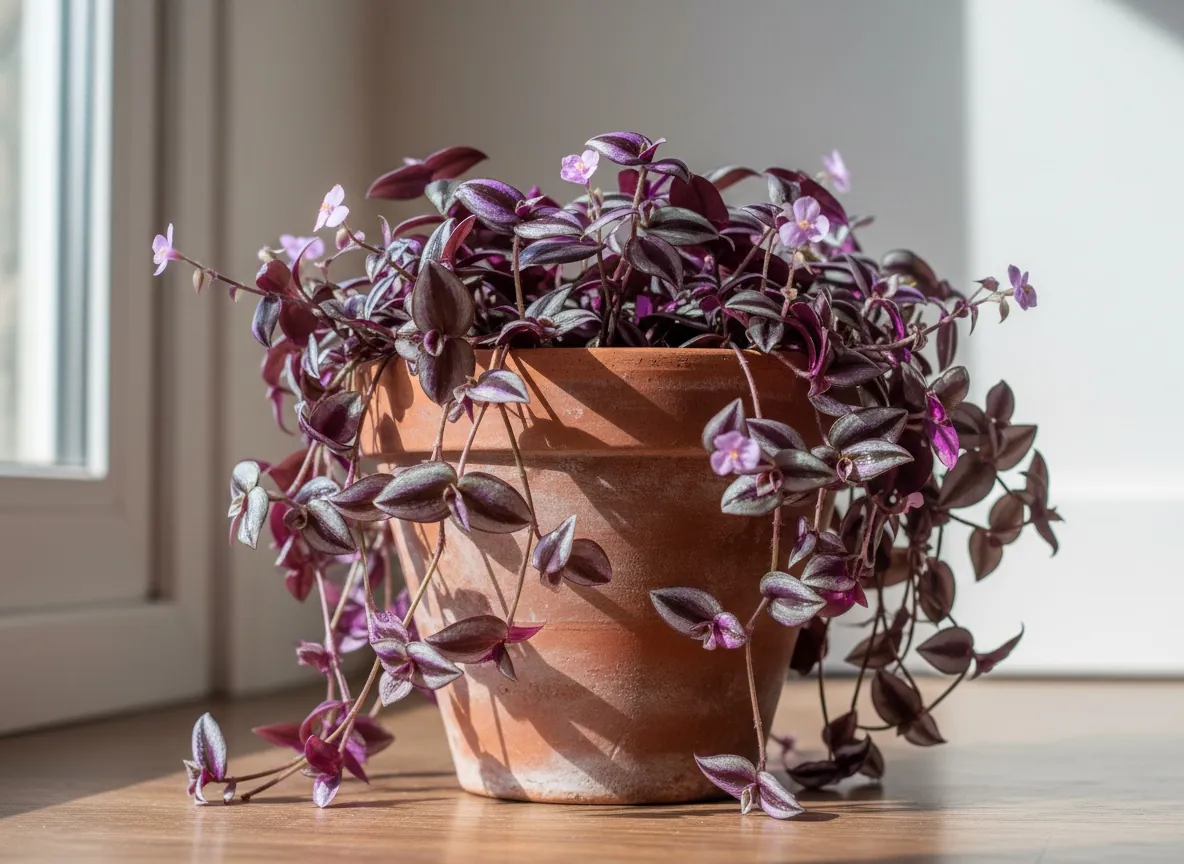
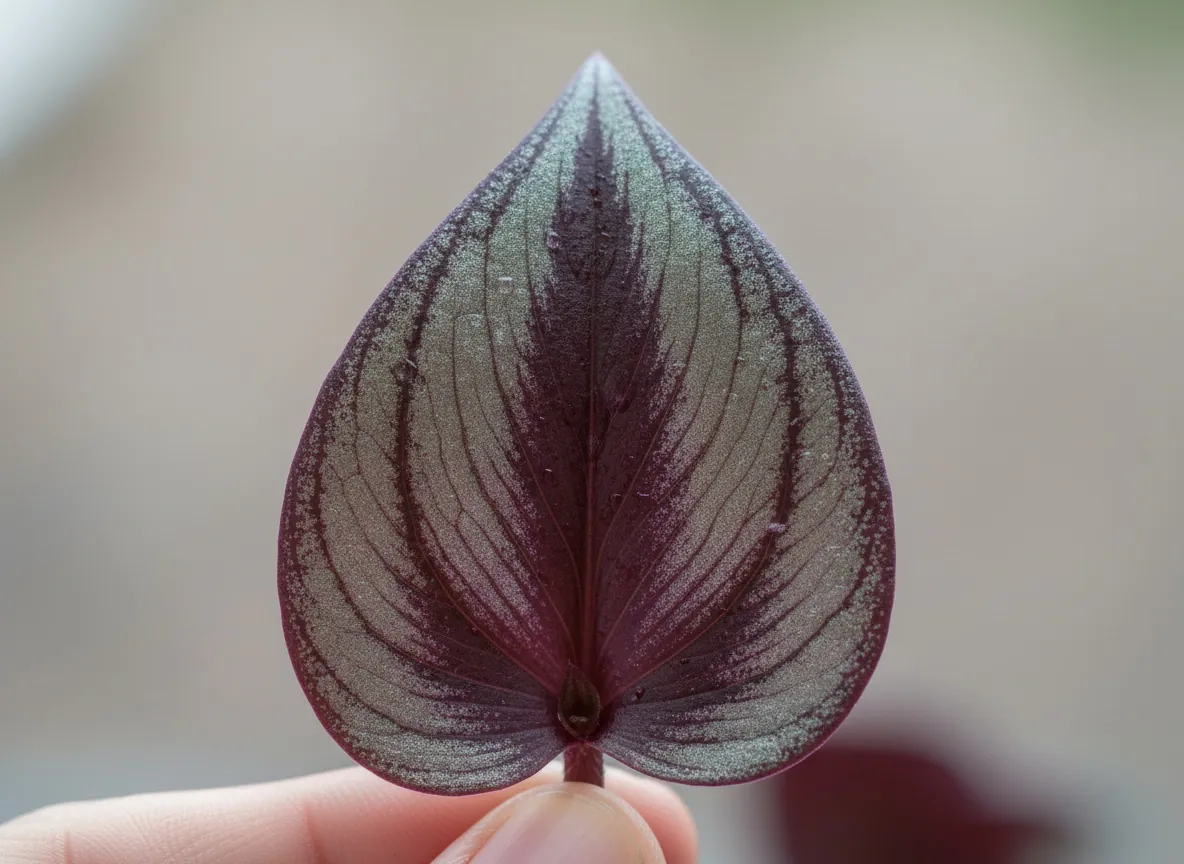
A perennial with creeping or trailing, fleshy and brittle shoots up to a metre long, rooting at the nodes. The leaves are stalkless, ovate-lanceolate, with two silvery stripes on a green-purple background above and uniformly purple beneath. The flowers are small, three-petalled, pink-purple, open singly and last only one day.
Growing and care
Watering
Water when the top layer of substrate has dried out to a depth of 2 cm. The fleshy shoots forgive brief drying out, but in constantly wet substrate they quickly rot at the base.
Fertilizing
Moderately — excess nitrogen lengthens the internodes and washes out the contrast of the stripes.
Planting
Ordinary universal substrate with added perlite. It looks best in a hanging container, with several cuttings planted into one pot for density.
Pruning
Shorten the shoots by half just behind a node — the plant breaks below the cut and thickens up. The trimmings are immediately suitable as cuttings.
Companion plants
Good companions
Both are fast-growing trailing plants with the same watering regime — they look good side by side on a high shelf.
Similar light and water requirements, and the contrast of the purple stripes with the light green leaves of the spider plant complements them well.
Bad companions
In a shared bowl the wandering dude grows several times faster and shades the slow-growing succulent, while the watering it needs causes the haworthia to rot.
The evidence level indicates whether the relationship is backed by research, observation, or gardening tradition.
Toxicity
| For whom | Level | Notes |
|---|---|---|
| Humans | Mild | The sap from the shoots can cause skin irritation and contact dermatitis in sensitive people — it is worth wearing gloves when pruning for any length of time. |
| Dogs | Mild | Contact with the sap sometimes causes itching and reddening of the skin; eating larger amounts irritates the digestive tract. |
| Cats | Mild | — |
History and origin
The genus commemorates John Tradescant, the 17th-century gardener to the kings of England. The species was brought from Mexico to European glasshouses in the 19th century; thanks to the ease with which it roots, it became one of the most frequently passed-on houseplants, handed “from cutting to cutting”.
Uses
For hanging baskets, high shelves and windowsills where the shoots can trail freely. In summer it works well in balcony boxes in bright partial shade. A good choice for beginners and for greening an interior quickly.
Trivia
- A single broken-off fragment of shoot with one node is enough — placed in water it puts out roots within a week, which is why the plant spreads between homes without any involvement of garden centres.
- In warm climates, including the Pacific islands and Australia, escapees from gardens form dense mats that smother native vegetation — there the species is controlled as invasive.
Frequently asked questions
Why is my wandering dude losing its purple stripes and turning green?
This is a symptom of insufficient light. The colouring depends on how bright the position is — move the plant closer to a window (without harsh midday sun) and the new leaves will regain their contrast. Old, greened shoots cannot be re-coloured, so it is worth shortening them.
What should I do when the shoots are long and bare at the base?
This is natural for the species and the result of not pruning. Shorten all the shoots by half — the plant will break below the cut and thicken up. Turn the cut tips into cuttings and plant them into the same pot to fill in the bare base.
How do I propagate the wandering dude?
Most simply from stem cuttings: cut off an 8-10 cm tip, remove the lower leaves and place it in water or straight into moist substrate. Roots appear after 5-10 days, at any time of year.
Sources
- Plants of the World Online (POWO)Database (GBIF, POWO…)
- Missouri Botanical Garden — Tradescantia zebrinaInstitution / botanical garden
My note
A private note for this plant — saved in your browser.