In short
- A bright position without harsh midday sun — an east-facing window is best.
- Flowers almost all year round given good light.
- Water beneath the leaves, onto the substrate — wet leaves rot.
- The tall shoots need a support and shortening in spring.
- Toxic to dogs and cats (calcium oxalates).
Botanical data
- Family
- Begoniaceae (Begoniaceae)
- Height
- 0.6–2 m
- Width
- 0.4–0.8 m
- Habit
- Upright
- Growth rate
- Fast
- Position
- Full sun, Partial shade
- Soil
- Humus-rich, Peaty
- pH reaction
- pH 5.5–6.5
- Moisture
- Moderate
- Bloom
- April–October
- Hardiness
- —
- Propagation
- From cuttings, By division
Characteristics
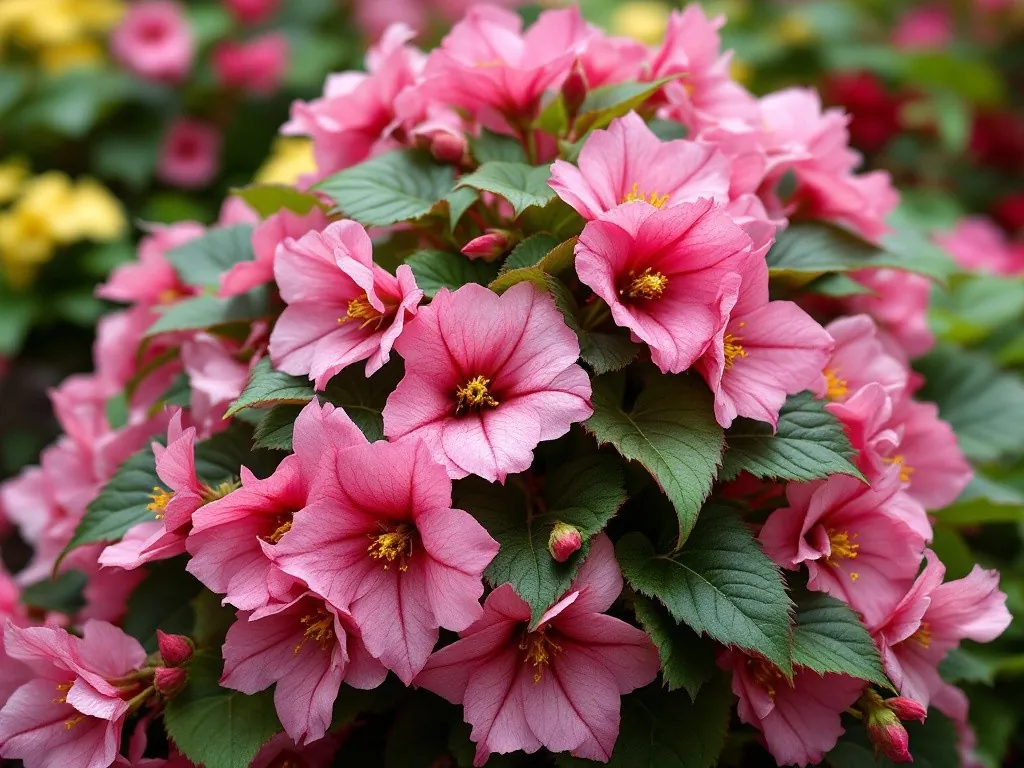
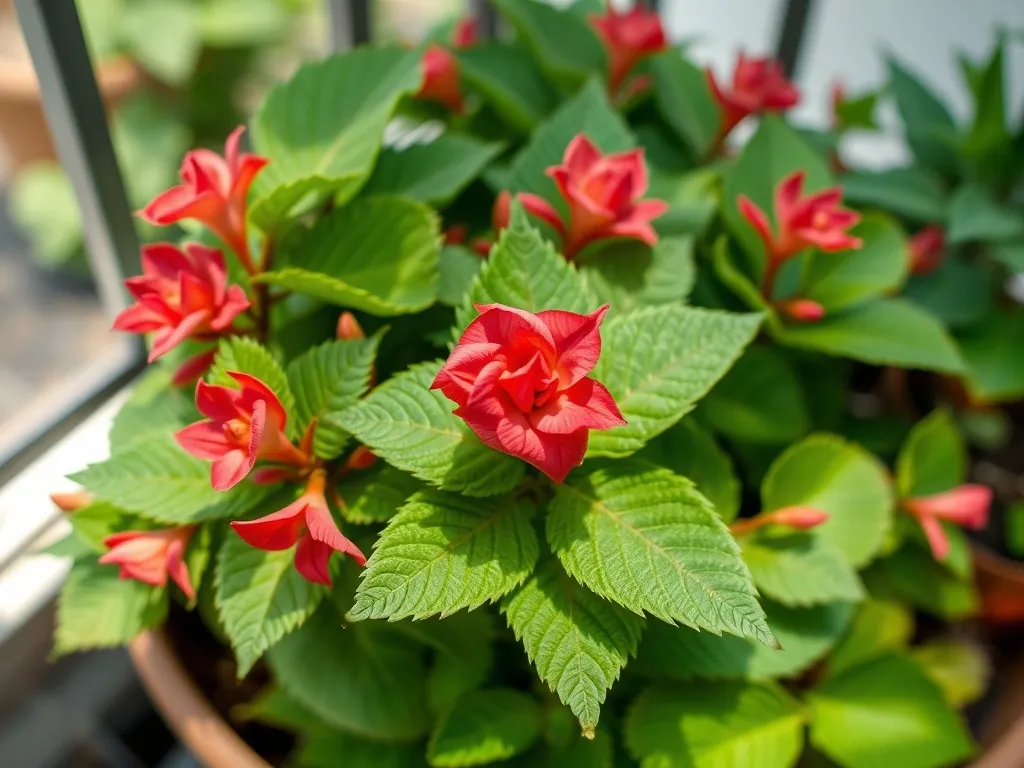
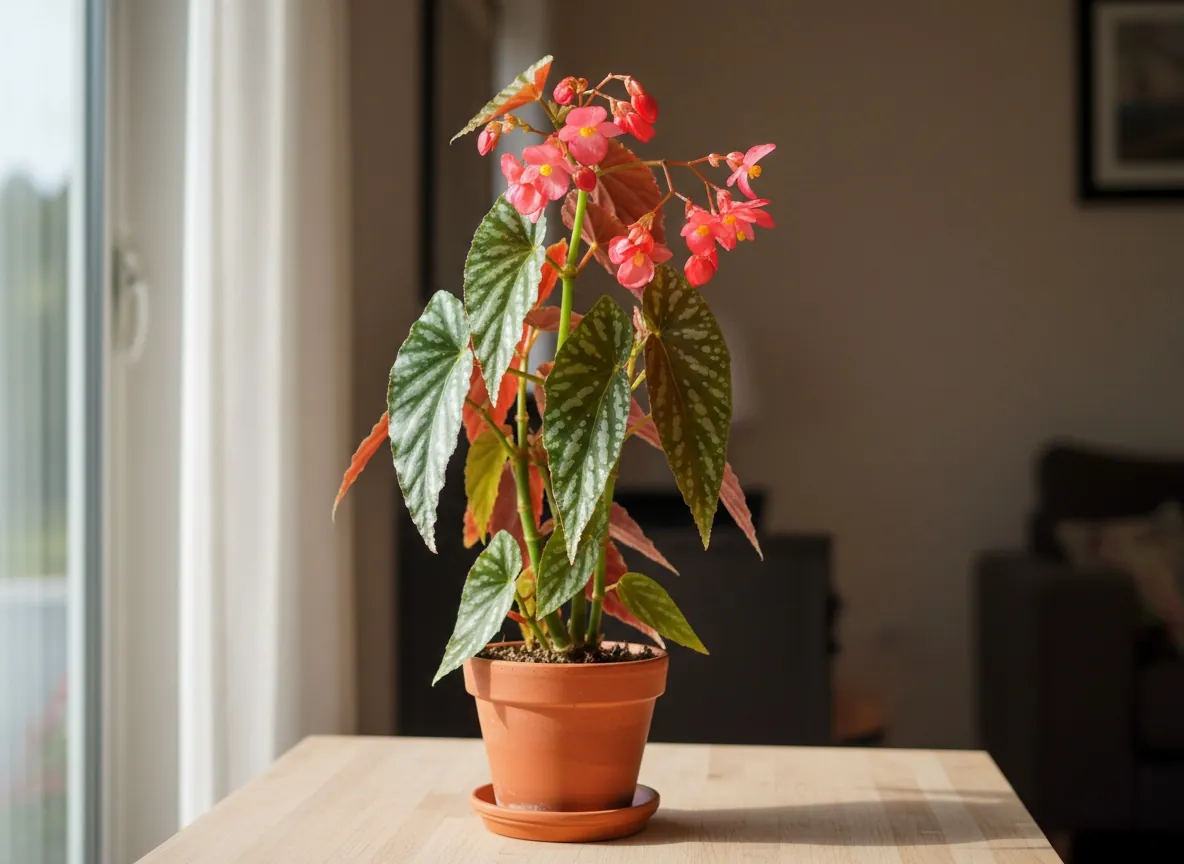
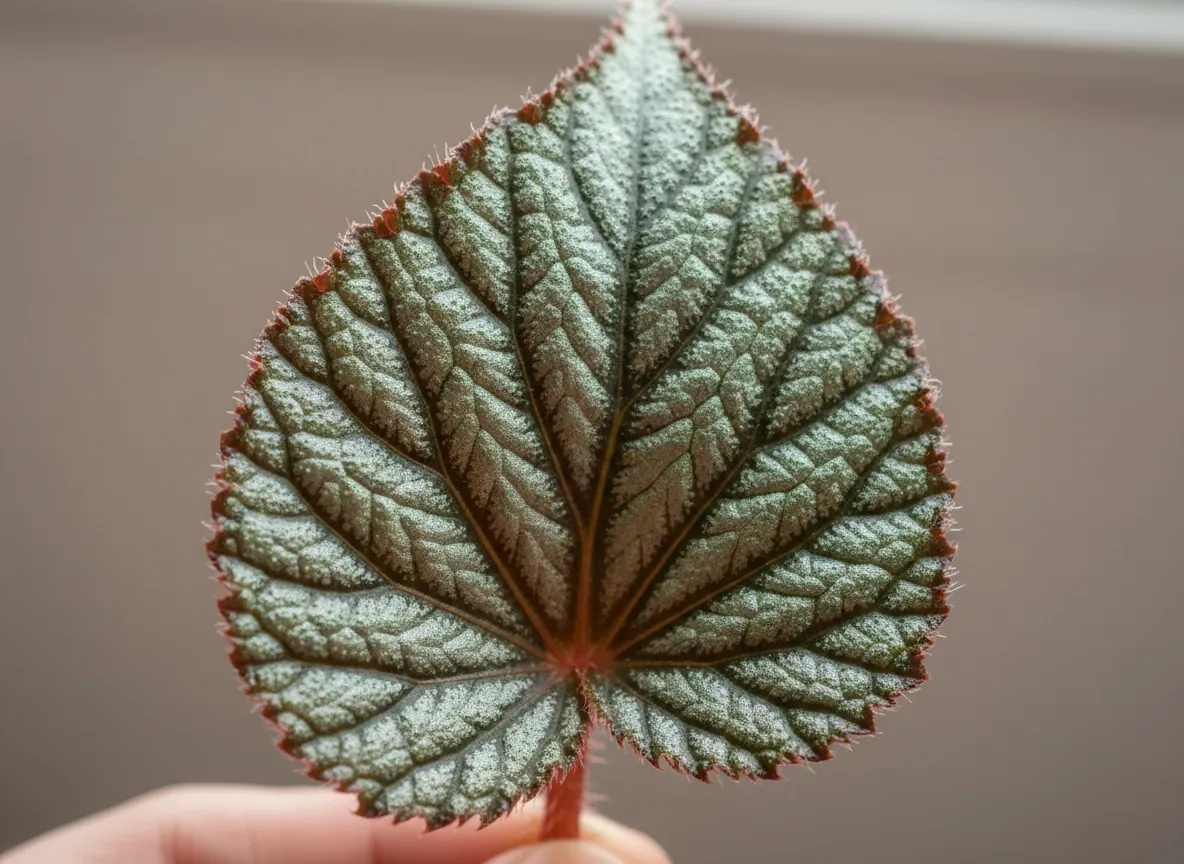
A perennial with stiff, upright shoots bearing distinct joints, reaching 1-2 m in good conditions. The leaves are asymmetric, elongated, notched at the base — hence the name “angel wing” — dark green, silver-spotted, reddish beneath. The flowers are small, gathered into large, hanging clusters in shades of red, pink and white; the plant is monoecious, with separate male and female flowers.
Growing and care
Watering
Water when the top layer of substrate has dried out to a depth of 2-3 cm, preferably beneath the leaves, straight onto the substrate. Water remaining on the leaves encourages grey mould and mildew.
Fertilizing
Half the dose recommended on the packaging, but more often — the begonia flowers for a long time and quickly exhausts the substrate. Do not fertilise in winter.
Planting
An airy peat substrate with perlite; a fairly tight pot. The tall shoots need a support, otherwise they splay out under the weight of the flower clusters.
Pruning
Shorten the tallest shoots by a third above a node to force breaking from the base; remove spent flower clusters and dried leaves.
Companion plants
Good companions
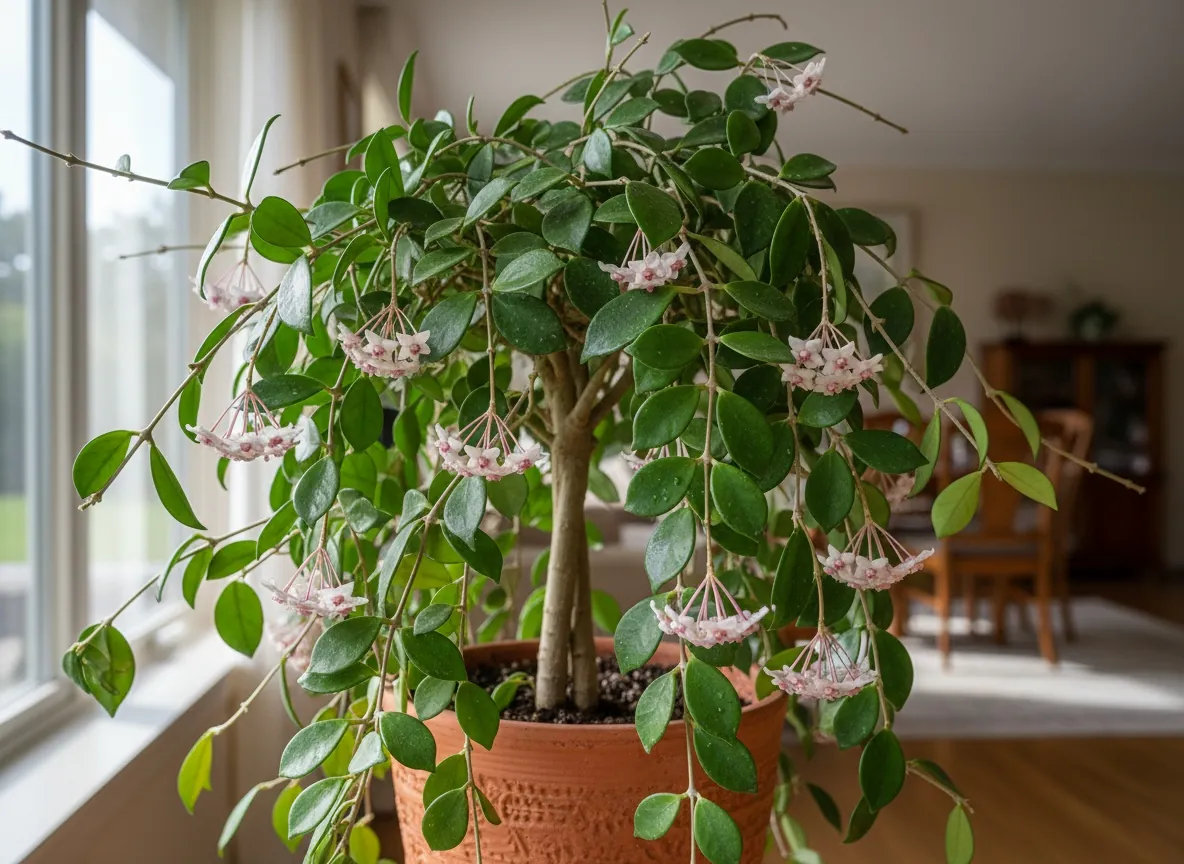
The same need for bright diffused light and humid air, and both species flower indoors for most of the year.
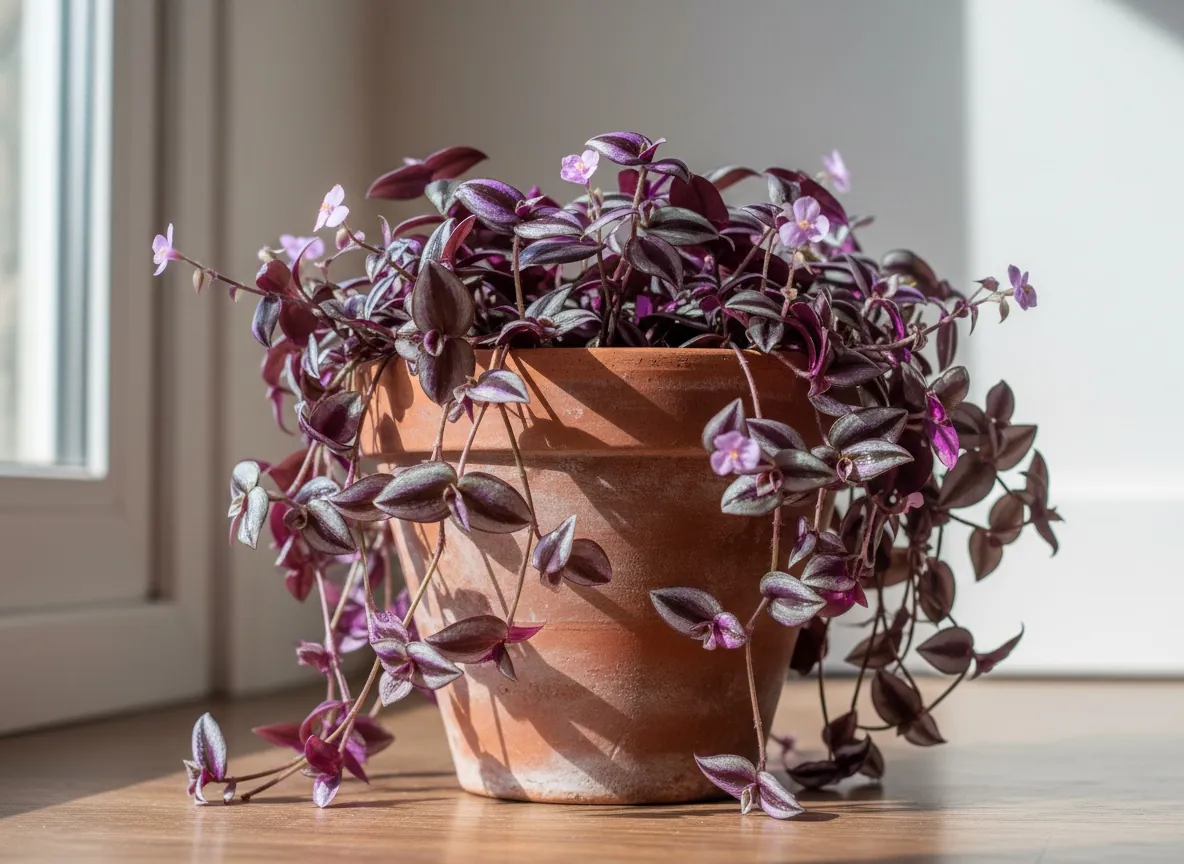
Similar light and water requirements; the spider plant screens the bare base of the begonia's tall shoots.
Bad companions
The succulent requires the substrate to dry out completely and needs dry air — under such a regime the begonia drops its buds and leaves.
The evidence level indicates whether the relationship is backed by research, observation, or gardening tradition.
Toxicity
| For whom | Level | Notes |
|---|---|---|
| Humans | Mild | The sap contains calcium oxalates — it can irritate the skin and mucous membranes, but serious poisonings in people are rare. |
| Dogs | Moderate | Eating it causes drooling, irritation of the mouth and vomiting; the underground parts of the plant contain the most oxalates. |
| Cats | Moderate | — |
History and origin
The species was described from Brazil in the 19th century, and the genus commemorates Michel Bégon, the French governor and plant collector. Cane begonias became popular in 20th-century breeding — most of today's silver-spotted cultivars, grown as undemanding houseplants, arose from crosses involving B. corallina.
Uses
For bright interiors as a specimen plant of great effect — in a tall pot, in the corner of a room by an east-facing window. In summer it does well on a sheltered balcony or terrace in partial shade. Because of its long flowering it is a good alternative to the classic seasonally flowering plants.
Trivia
- The characteristic silvery spots are a layer of air beneath the leaf cuticle — it scatters light deep into the blade, which in the shady forest understorey improves the use of the few glimpses of sun.
- The thickened joints of the shoots, which make the begonia resemble bamboo, store water and allow the plant to survive brief drying out despite having no tuber.
Frequently asked questions
Why is my angel wing begonia not flowering?
Usually it lacks light — it needs a bright position without harsh sun, for example an east-facing window. Flowering is also encouraged by a fairly tight pot and regular feeding with a fertiliser for flowering plants. In too dark a spot the shoots elongate and the plant merely grows upwards.
Why are the shoots long and the plant bare at the bottom?
Cane begonias naturally grow upwards and go bald at the base. In spring shorten the tallest shoots by a third, cutting above a node — this will force young shoots to break from the base. Do not remove all the old shoots at once, as the plant rebuilds itself slowly.
Is begonia poisonous to cats?
Yes, begonias contain calcium oxalates and are considered toxic to dogs and cats. Eating them causes drooling, irritation of the mouth and vomiting; the underground parts are the most dangerous. It is worth keeping the plant out of reach of animals.
Sources
- Plants of the World Online (POWO)Database (GBIF, POWO…)
- Missouri Botanical Garden — Begonia (cane begonias)Institution / botanical garden
My note
A private note for this plant — saved in your browser.