In short
- Site: sun or partial shade, fertile, constantly slightly moist substrate.
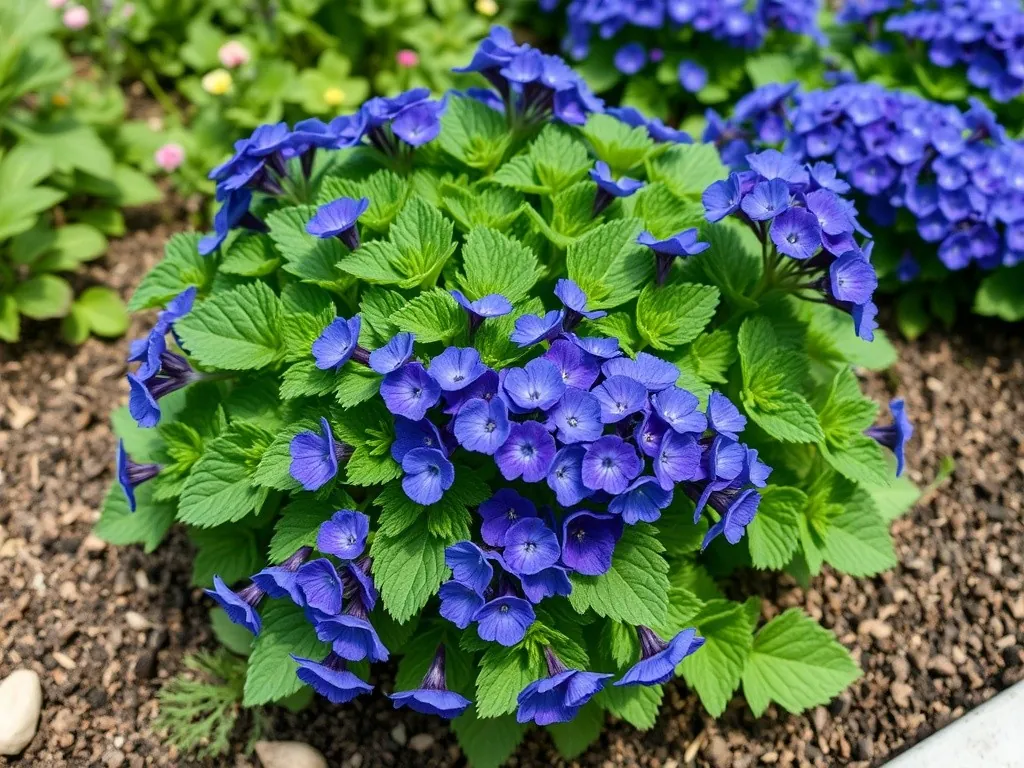
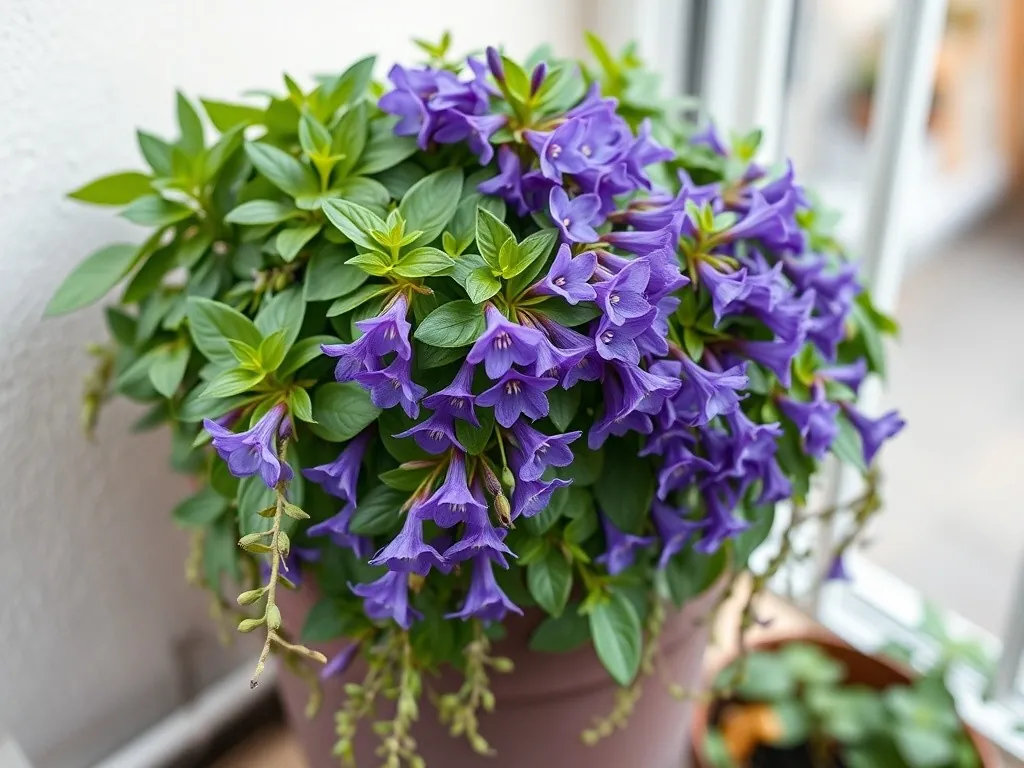
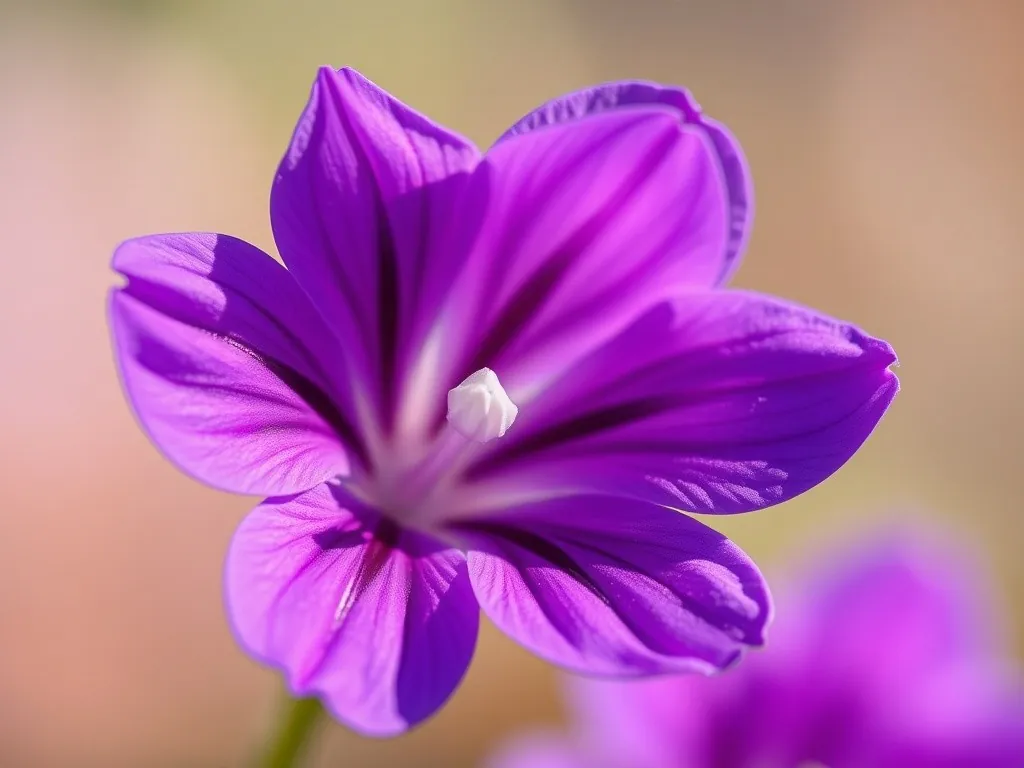
- Small flowers in shades of blue and violet cover the whole plant.
- In Poland grown as an annual — it does not survive winter in the ground.
- Cut back the shoots in midsummer to stimulate a second flush of flowering.
- Ideal for hanging baskets and the edges of balcony boxes.
Botanical data
- Family
- Campanulaceae (Campanulaceae)
- Height
- 0.1–0.15 m
- Width
- 0.15–0.3 m
- Habit
- Cascading
- Growth rate
- Fast
- Position
- Full sun, Partial shade
- Soil
- Humus-rich
- pH reaction
- pH 6–7
- Moisture
- Moderate, Moist
- Bloom
- June–September
- Hardiness
- USDA 9a–11b
- Propagation
- From seed, From cuttings
Characteristics
It forms low, dense cushions or trailing shoots up to 30 cm long, covered with small, ovate leaves. The numerous, small, two-lipped flowers appear en masse throughout the summer, almost completely hiding the leaves with good care.
Growing and care
Watering
In containers and balcony boxes the substrate dries out quickly — in summer it may need watering even daily.
Fertilizing
Diluted liquid fertiliser added to the water when watering.
Planting
Plant densely to achieve the effect of a compact, abundant cascade of flowers.
Pruning
Cut the shoots back by half to stimulate the plant to a second flush of flowering.
Companion plants
Good companions
A classic pairing in balcony boxes — the pelargonium fills the top, the lobelia cascades down at the edges.
Similar light requirements and a shared, long flowering season in containers.
Complementary habits (trailing and clumping) give a full, layered composition in the box.
Bad companions
They shade the delicate lobelia and take away its water and nutrients in the shared container.
The evidence level indicates whether the relationship is backed by research, observation, or gardening tradition.
Toxicity
| For whom | Level | Notes |
|---|---|---|
| Humans | Mild | Contains the alkaloid lobeline — consuming larger amounts can cause nausea and irritation of the digestive tract. |
| Dogs | Mild | — |
| Cats | Mild | — |
History and origin
The species was described by Carl Linnaeus in the 18th century and brought to Europe from southern Africa as a garden plant. The genus name commemorates the Flemish botanist Matthias de l'Obel.
Uses
For balcony boxes, hanging baskets, border edgings and terrace containers — best in the company of upright-growing plants, which the lobelia strikingly frames.
Trivia
- Despite the 'seaside' in its name, the species does well far from the coast — the name refers to its natural sites in Africa.
- The cascading cultivars of lobelia are among the most popular elements of flowering hanging baskets in Europe.
Frequently asked questions
Why does lobelia stop flowering in midsummer?
This is a natural pause after the first flush of flowering. Cut the shoots back by half and feed the plant — after 2-3 weeks the lobelia usually flowers again.
How often should lobelia in a balcony box be watered?
The substrate in containers dries out quickly, so in summer lobelia may need watering even daily. Avoid standing water in the saucer, however.
Will lobelia survive winter on the balcony?
No — in the Polish climate it is an annual, frost-sensitive plant. After the season it is removed, and new plants are sown or bought in spring.
Sources
- Plants of the World Online (POWO) — Lobelia erinusDatabase (GBIF, POWO…)
- RHS — Lobelia erinusInstitution / botanical garden
My note
A private note for this plant — saved in your browser.