In short
- A bright position without harsh midday sun; variegated cultivars need more light.
- Water once the top layer has dried out — do not leave water in the cachepot.
- Tolerates pruning well: shortening the shoots in spring thickens the crown.
- Toxic to people and animals (calcium oxalates).
- Does not tolerate draughts or cold windowsills — responds by dropping leaves.
Botanical data
- Family
- Araliaceae (Araliaceae)
- Height
- 1–3 m
- Width
- 0.5–1.2 m
- Habit
- Upright
- Growth rate
- Fast
- Position
- Full sun, Partial shade
- Soil
- Humus-rich
- pH reaction
- pH 6–7
- Moisture
- Moderate
- Bloom
- —
- Hardiness
- —
- Propagation
- From cuttings, By layering, From seed
Characteristics
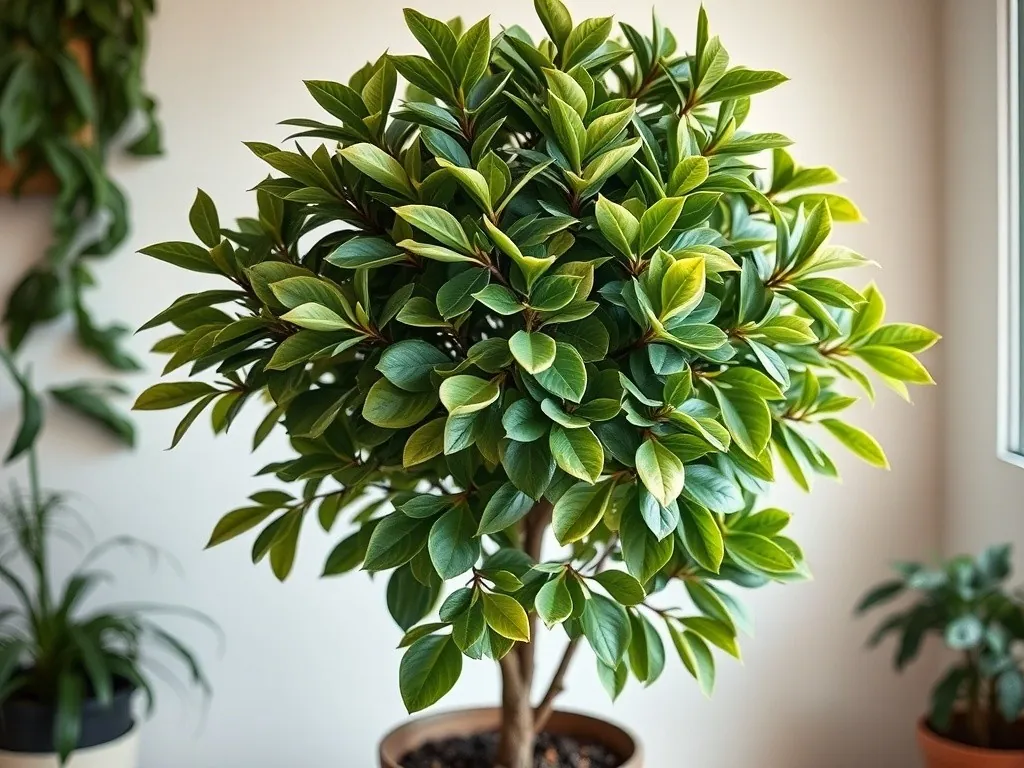
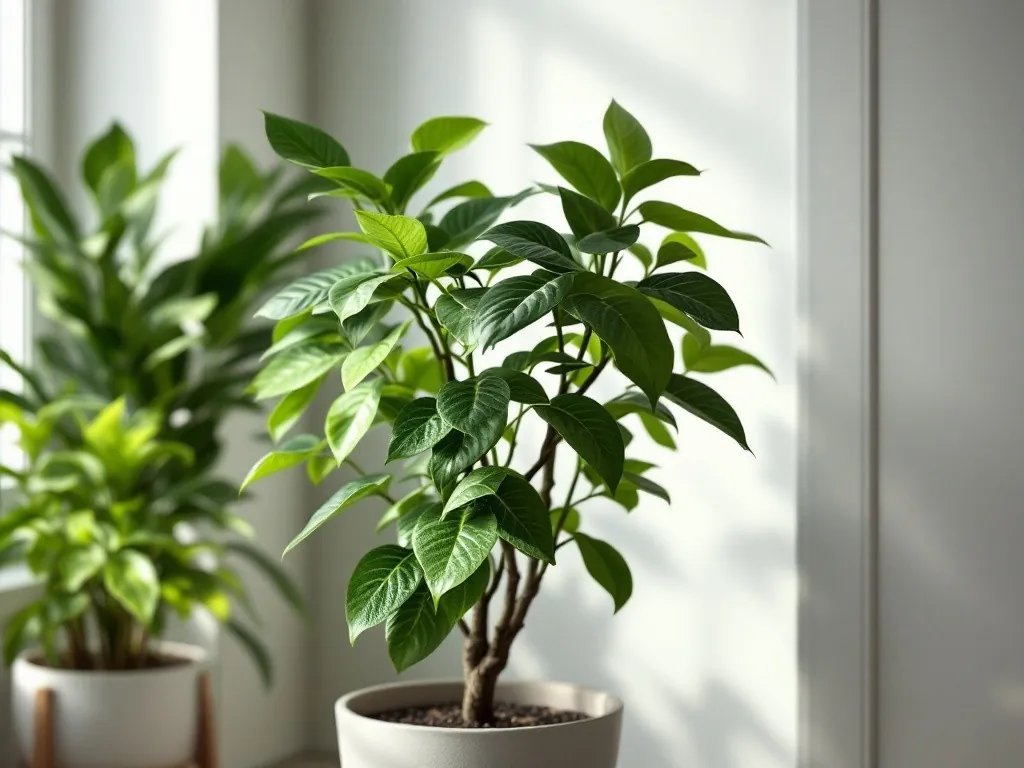
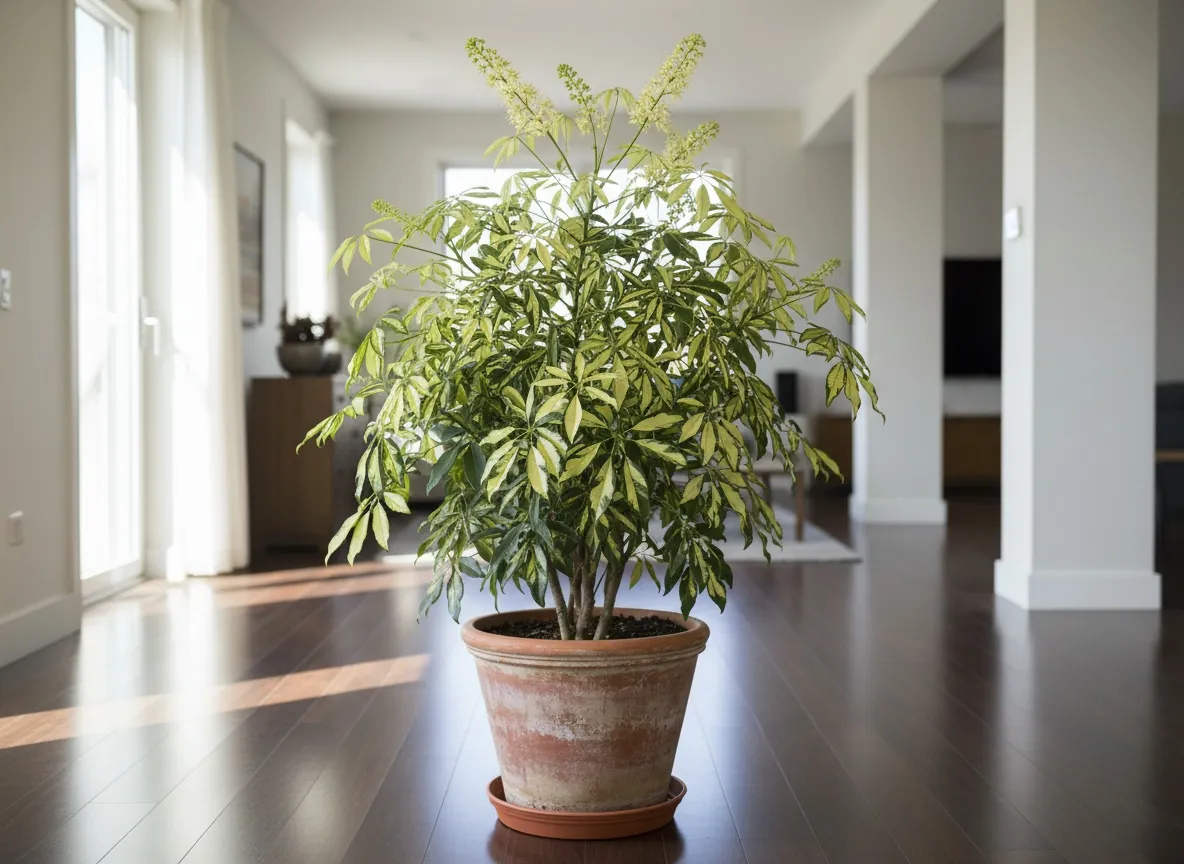
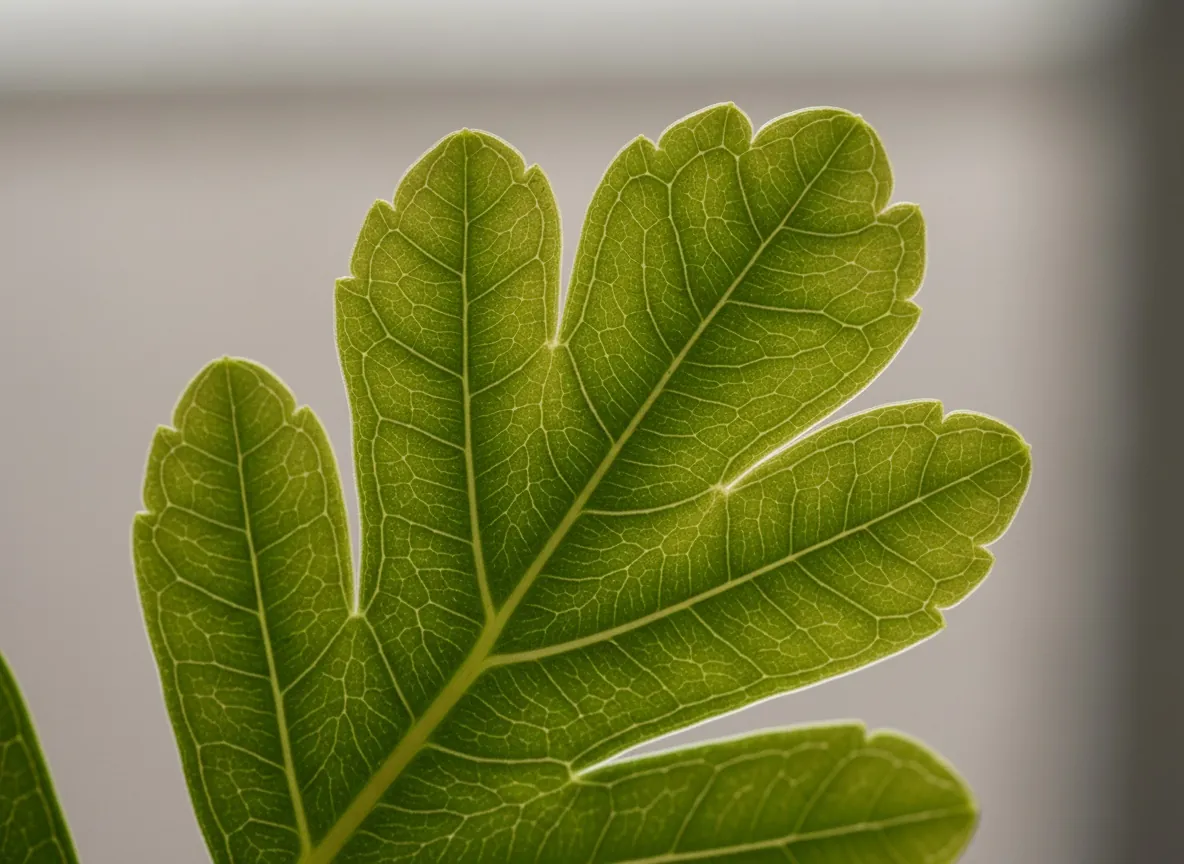
A shrub with upright shoots that gradually become woody, reaching 1-3 m indoors. The leaves are long-stalked, palmately compound with 7-11 glossy, obovate leaflets radiating from a single point. Variegated cultivars, such as the popular “Gold Capella”, have yellow blotches and marbling. In room cultivation it practically never flowers; in the wild it produces panicles of small, greenish flowers.
Growing and care
Watering
Water once the top 3 cm of substrate has dried out and always pour away the water from the saucer. Water standing in the cachepot is the most common cause of black spots and massive leaf drop.
Fertilizing
Do not fertilise in winter. Variegated cultivars lose their yellow leaf markings when given excess nitrogen.
Planting
Universal substrate with added perlite and bark for drainage; a heavy, stable pot balances the tall, upright crown.
Pruning
Shorten the shoots by up to half just above a node — the umbrella tree tolerates pruning well and breaks with several side shoots, which thickens the crown. It is suitable for shaping as a bonsai.
Companion plants
Good companions
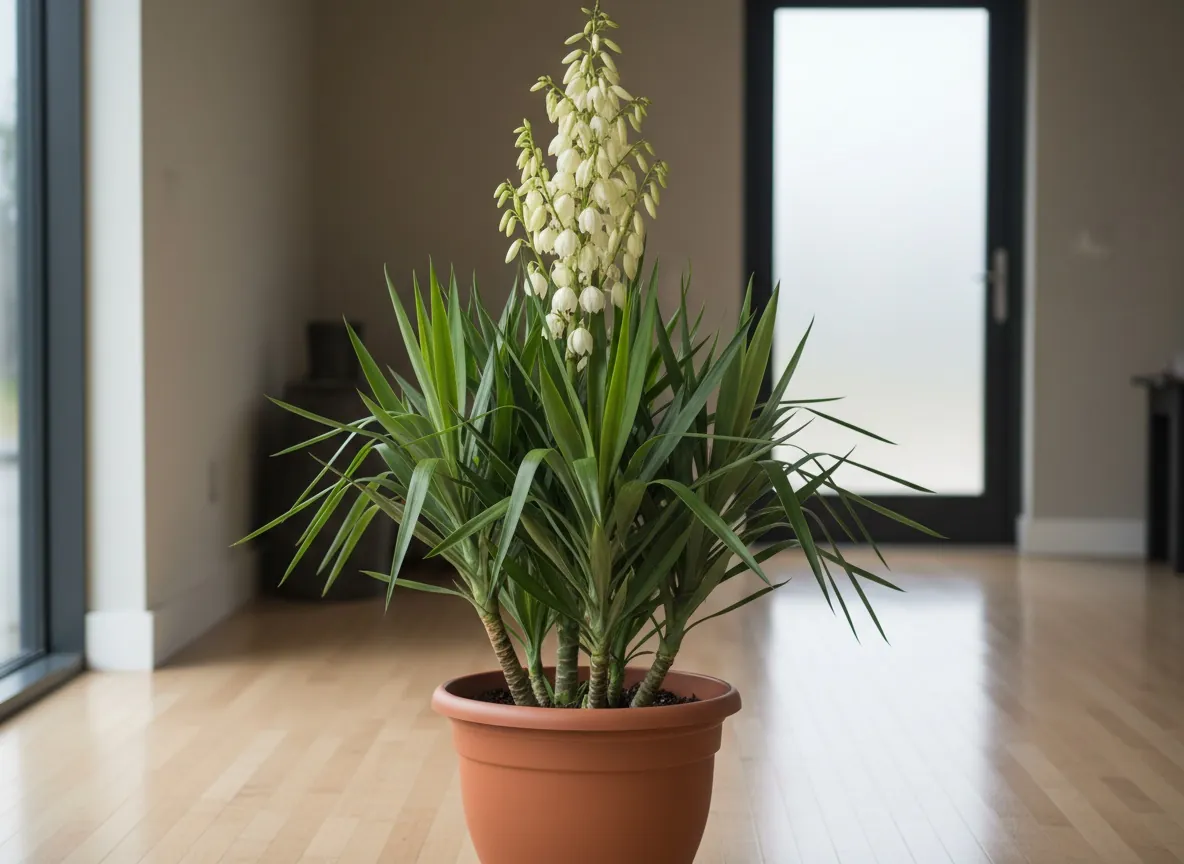
Both plants form tree-like silhouettes and have the same requirements — a bright position, moderate watering and a steady temperature without draughts.
A similar watering regime and tolerance of dry indoor air; plus the contrast of the narrow dracaena leaves with the umbrella-like leaves of the schefflera.
Bad companions
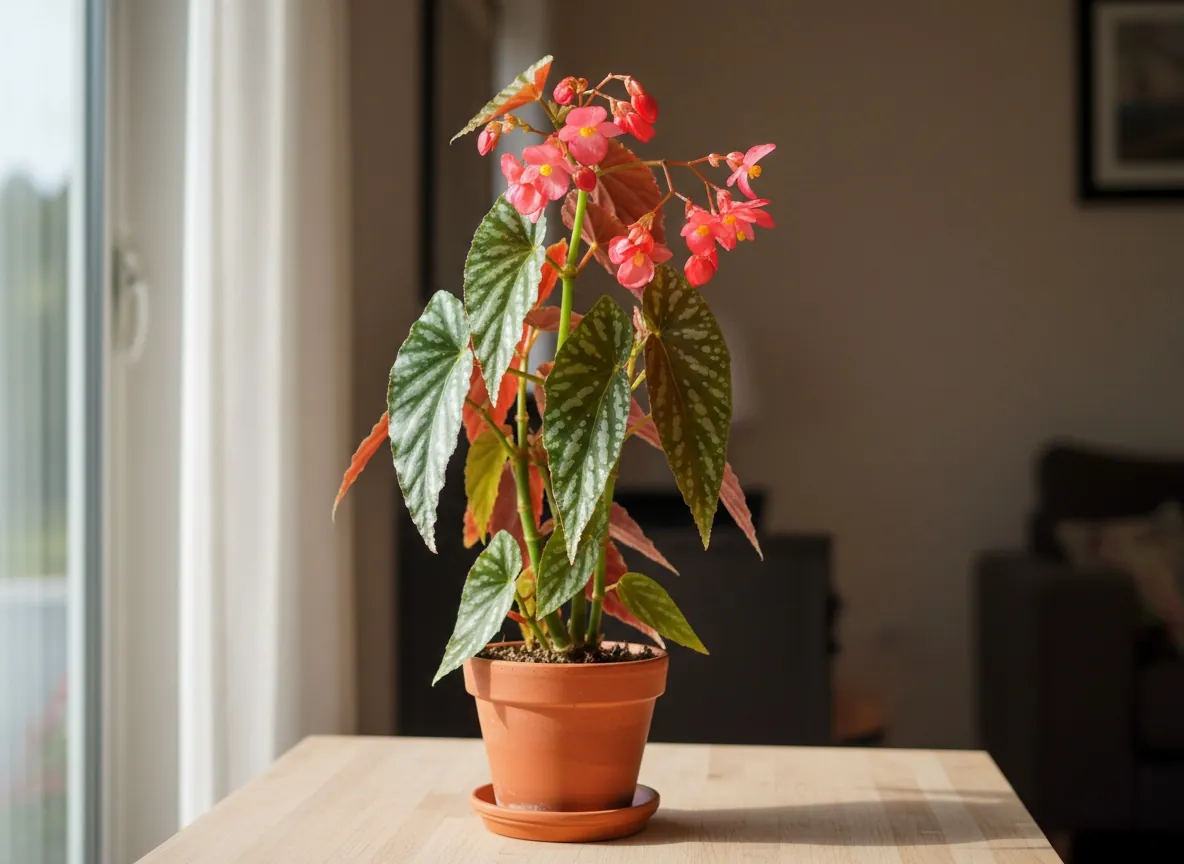
The prayer plant requires partial shade and constantly moist substrate — in conditions that suit the umbrella tree it dries out, while the umbrella tree rots if watered to suit the prayer plant.
The evidence level indicates whether the relationship is backed by research, observation, or gardening tradition.
Toxicity
| For whom | Level | Notes |
|---|---|---|
| Humans | Moderate | Contains calcium oxalates — the sap irritates the skin, and chewing a leaf causes burning pain and swelling of the mouth. |
| Dogs | Moderate | — |
| Cats | Moderate | Chewing the leaves causes drooling, irritation of the mouth and vomiting — keep out of reach of animals. |
History and origin
The genus commemorates Jacob Christian Scheffler, an 18th-century physician and botanist from Gdańsk. The Taiwanese species became widespread in cultivation in the second half of the 20th century as an easier and smaller alternative to the full-sized umbrella tree, quickly finding its way into offices and shopping centres.
Uses
For bright flats, offices and waiting rooms as a structural plant filling a corner of the room. Variegated cultivars brighten interiors. Excellent material for indoor bonsai. Because of its toxicity it is not recommended for homes with small children and animals.
Trivia
- Because of its small leaflets, fast growth and willingness to break again after pruning, the dwarf umbrella tree is one of the most commonly chosen species for beginners' bonsai — in that role it is shaped as a “Hawaiian tree” with aerial roots.
- Sudden leaf drop in the dwarf umbrella tree is almost always a reaction to changed conditions — a draught, a cold journey home from the shop, or a move to a darker spot — and not to a lack of water; watering “just in case” usually makes matters worse.
Frequently asked questions
Why is my dwarf umbrella tree dropping leaves?
Most often it is a reaction to a draught, cold or a change of position, and secondly to overwatering and water standing in the cachepot. Place the plant in a stable, bright spot away from a window opened in winter and water only once the top layer of substrate has dried out.
How do I thicken up a leggy dwarf umbrella tree?
In spring shorten the shoots by up to half, cutting just above a node. The plant will break with several side shoots below the cut. If the umbrella tree grows leggy despite pruning, the cause is too little light — move it closer to a window.
Is the dwarf umbrella tree poisonous?
Yes. It contains calcium oxalates, so the sap irritates the skin, and chewing a leaf causes burning pain and swelling of the mouth in people, as well as drooling and vomiting in dogs and cats. Poisonings are rarely dangerous, but it is worth keeping the plant out of reach of children and animals.
Sources
- Plants of the World Online (POWO)Database (GBIF, POWO…)
- Missouri Botanical Garden — Schefflera arboricolaInstitution / botanical garden
My note
A private note for this plant — saved in your browser.