In short
- Position: partial shade, diffused light — harsh sun scorches the leaves.
- Substrate constantly slightly moist; water exclusively with soft, stood water.
- It requires high air humidity — it copes badly with dry air near a radiator.
- Safe for dogs and cats.
- Propagation by division of the crown when repotting in spring.
Botanical data
- Family
- Marantaceae (Marantaceae)
- Height
- 0.2–0.3 m
- Width
- 0.3–0.5 m
- Habit
- Creeping
- Growth rate
- Moderate
- Position
- Partial shade
- Soil
- Humus-rich, Peaty
- pH reaction
- pH 5.5–6.5
- Moisture
- Moist, Moderate
- Bloom
- May–August
- Hardiness
- —
- Propagation
- By division, From cuttings
Characteristics
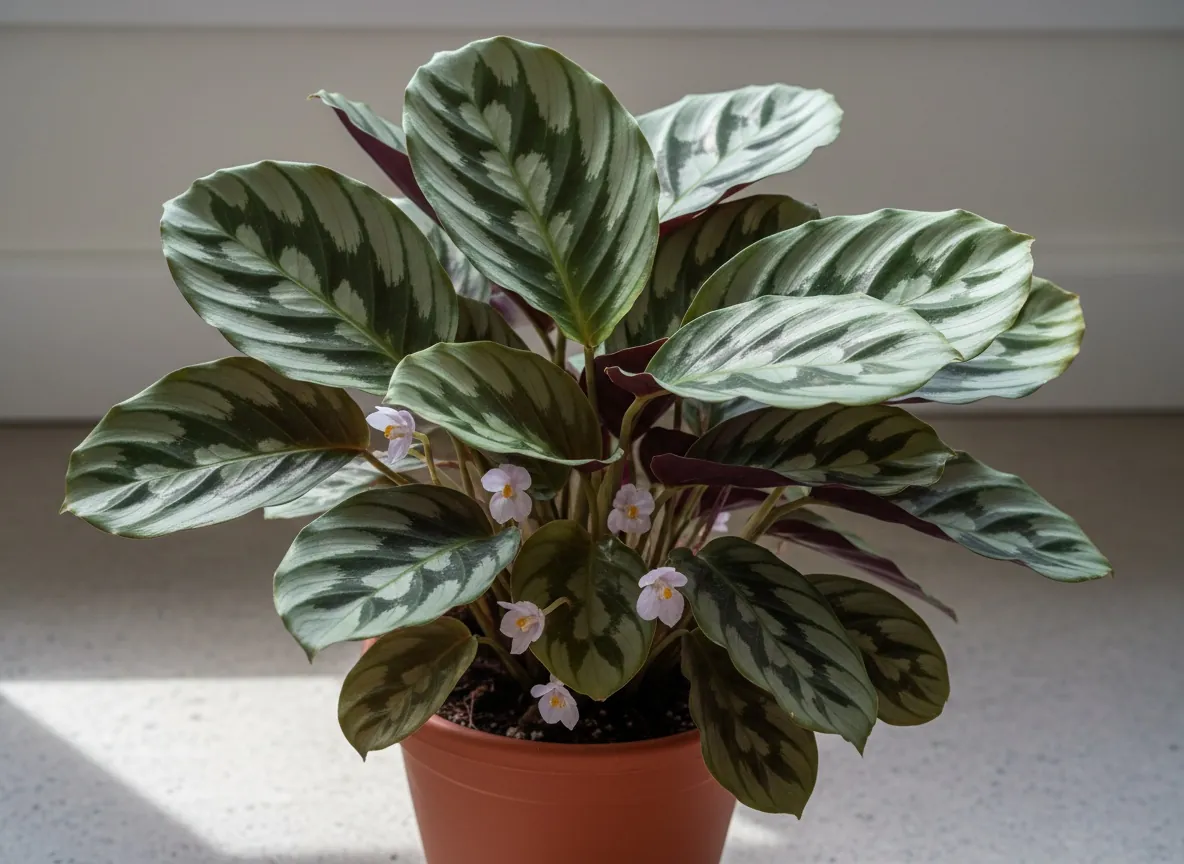
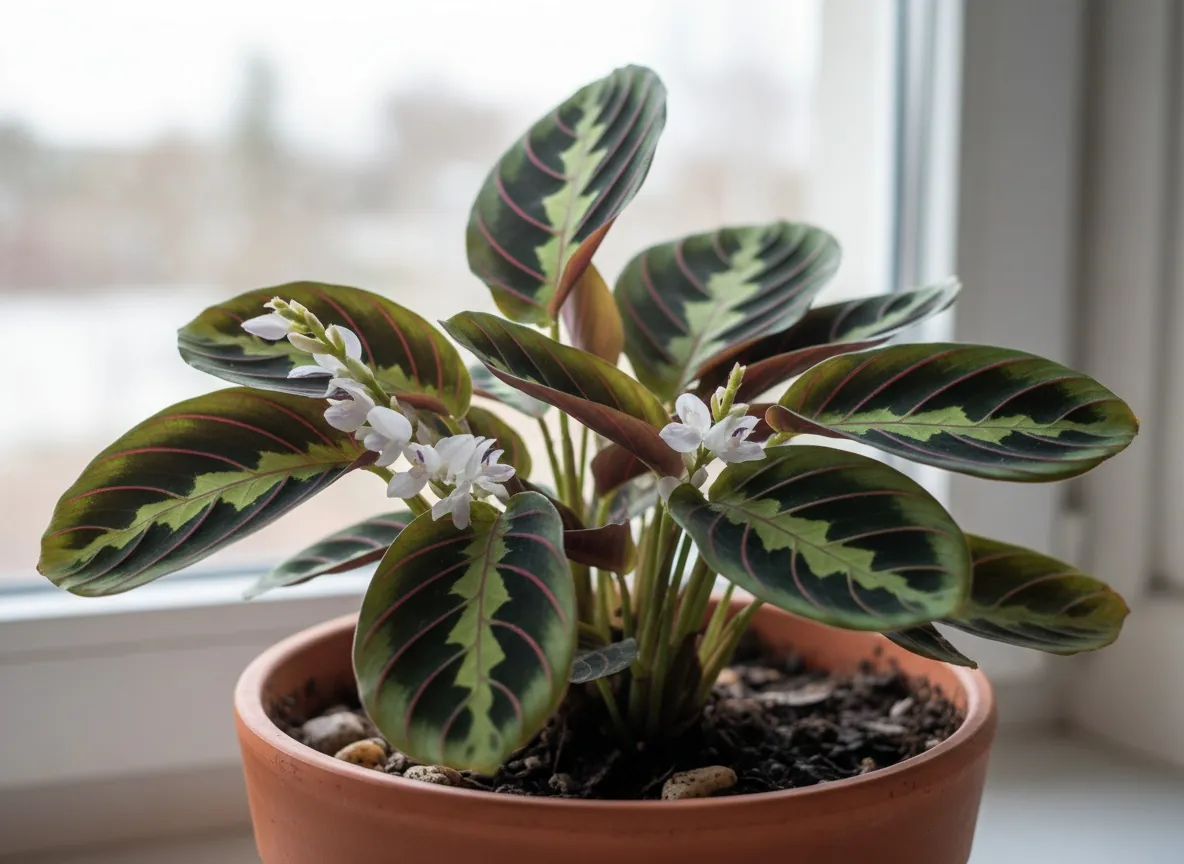
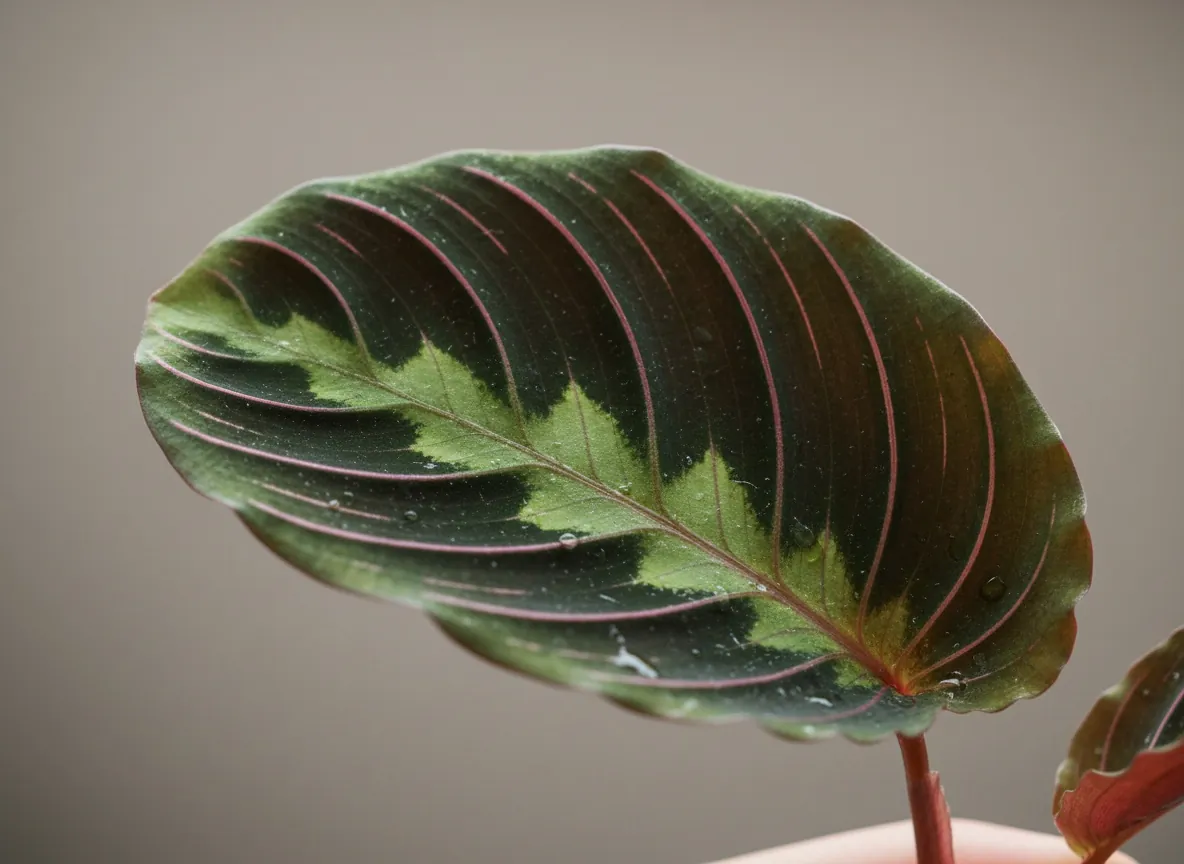
It forms a low, spreading clump with creeping shoots. The oval, velvety leaf blades have a dark green background, a light zone along the midrib and clearly marked red or silvery lateral veins. The underside of the leaf is sometimes purple. The flowers are small, whitish to lilac and unshowy — indoors they appear rarely.
Growing and care
Watering
The substrate is to be constantly slightly moist, never wet or dried out. Sensitive to calcium and chlorine — water with stood, boiled or rain water at room temperature.
Fertilizing
Use half the dose recommended on the packaging — the prayer plant copes badly with salination of the substrate.
Planting
A light peat substrate with added perlite and bark; a flat, wide pot suits the shallow root system.
Pruning
Cut out dried and damaged leaves at the base of the stalk; shortening long runners thickens the clump.
Companion plants
Good companions
A close relative from the same family with identical requirements — partial shade, humid air and soft water.
The fern raises the air humidity around itself, which the prayer plant makes use of; both like diffused light.
Bad companions
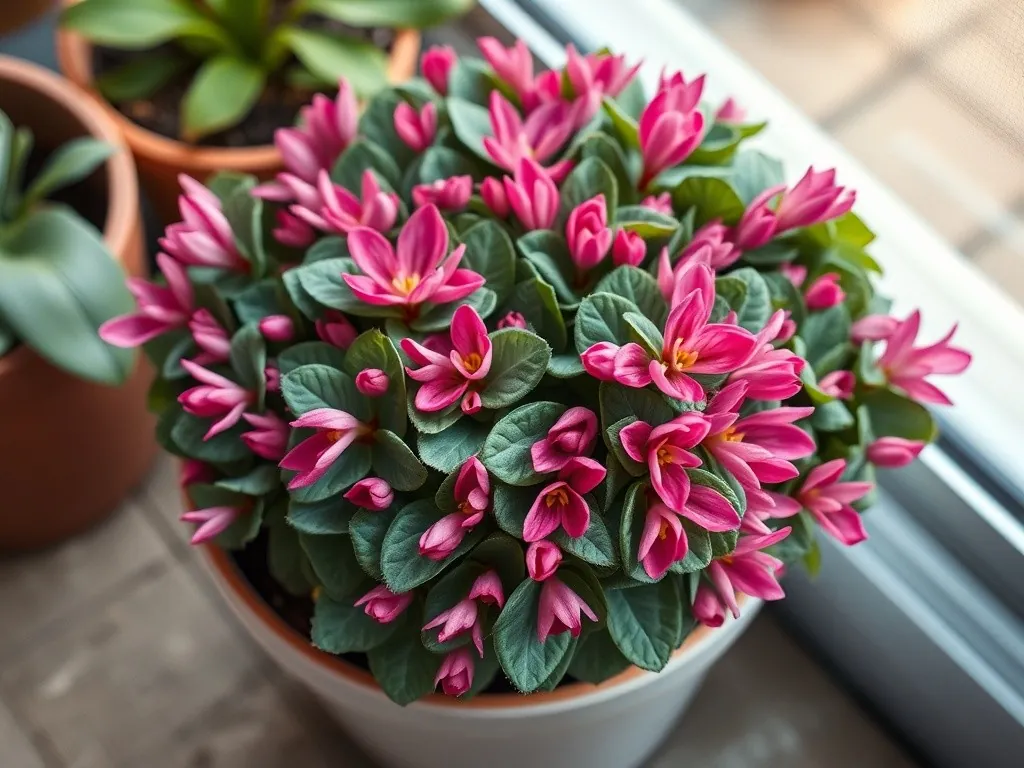
The succulent requires the substrate to dry out and harsh sun — under such a regime the prayer plant dries up and loses its colouring.
The evidence level indicates whether the relationship is backed by research, observation, or gardening tradition.
Toxicity
| For whom | Level | Notes |
|---|---|---|
| Humans | None | — |
| Dogs | None | Regarded as a safe plant — it does not contain the calcium oxalates typical of the arum family. |
| Cats | None | — |
History and origin
The genus commemorates the 16th-century Venetian physician and botanist Bartolomeo Maranta. The species was described from Brazil in the 19th century, and as a house plant it spread across Europe in the 20th century along with the fashion for plants with decorative leaves that cope in poorly lit interiors.
Uses
For interiors with diffused light: bathrooms with a window, bedrooms, offices away from a south-facing window. It looks excellent on a shelf or in a hanging planter, where the trailing shoots are visible. Safe for homes with animals.
Trivia
- The leaves rise and fold like hands in prayer at dusk, and in the morning they drop back to the horizontal — the movement is caused by changes of pressure in the pads at the base of the leaf stalks (nyctinasty), governed by the plant's daily rhythm.
- The arrowroot family supplies arrowroot starch, obtained from the rhizomes of the related arrowroot species.
Frequently asked questions
Why are the prayer plant's leaves browning at the tips?
This is almost always the result of hard tap water or air that is too dry, not a disease. Water with stood or rain water and raise the humidity — stand the pot on a tray of moist expanded clay or in the company of other plants.
Why does the prayer plant not fold its leaves at night?
The movement of the leaves depends on a clear difference between day and night. If the plant stands in a room lit until late, or is dried out and weakened, the rhythm disappears. Give it darkness at night and regular watering.
Is the prayer plant safe for a cat?
Yes, Maranta leuconeura is regarded as non-toxic to cats and dogs. It is one of the few striking foliage plants that can be kept in a home with animals without fear of poisoning.
Sources
- Plants of the World Online (POWO)Database (GBIF, POWO…)
- Missouri Botanical Garden — Maranta leuconeuraInstitution / botanical garden
My note
A private note for this plant — saved in your browser.