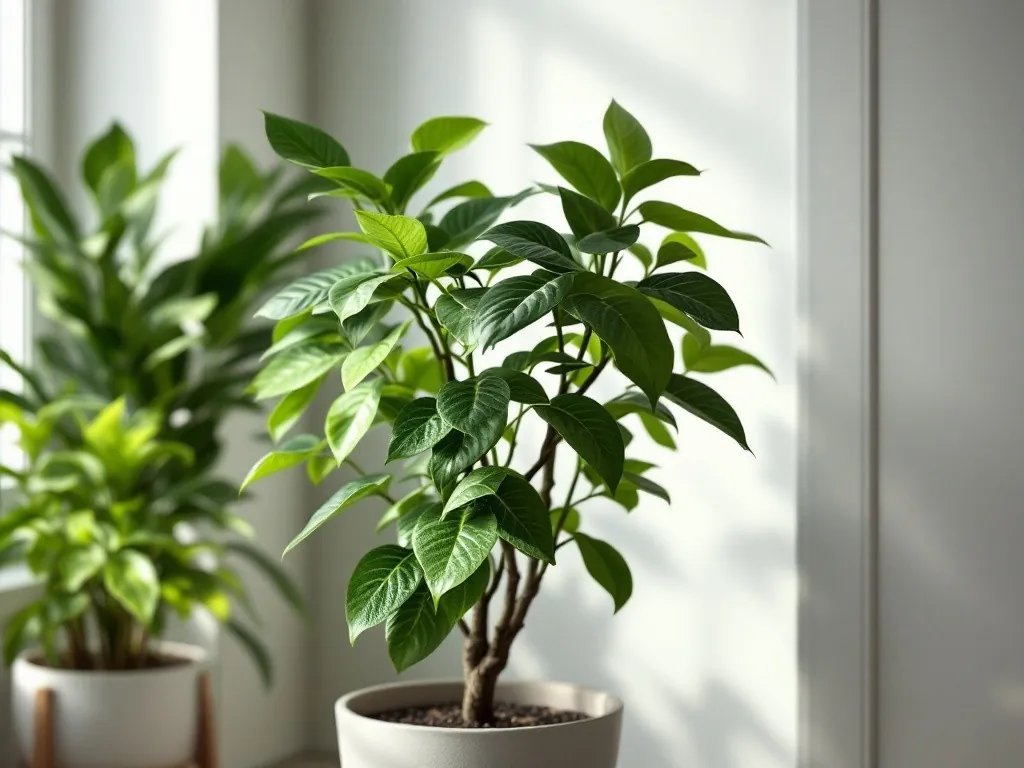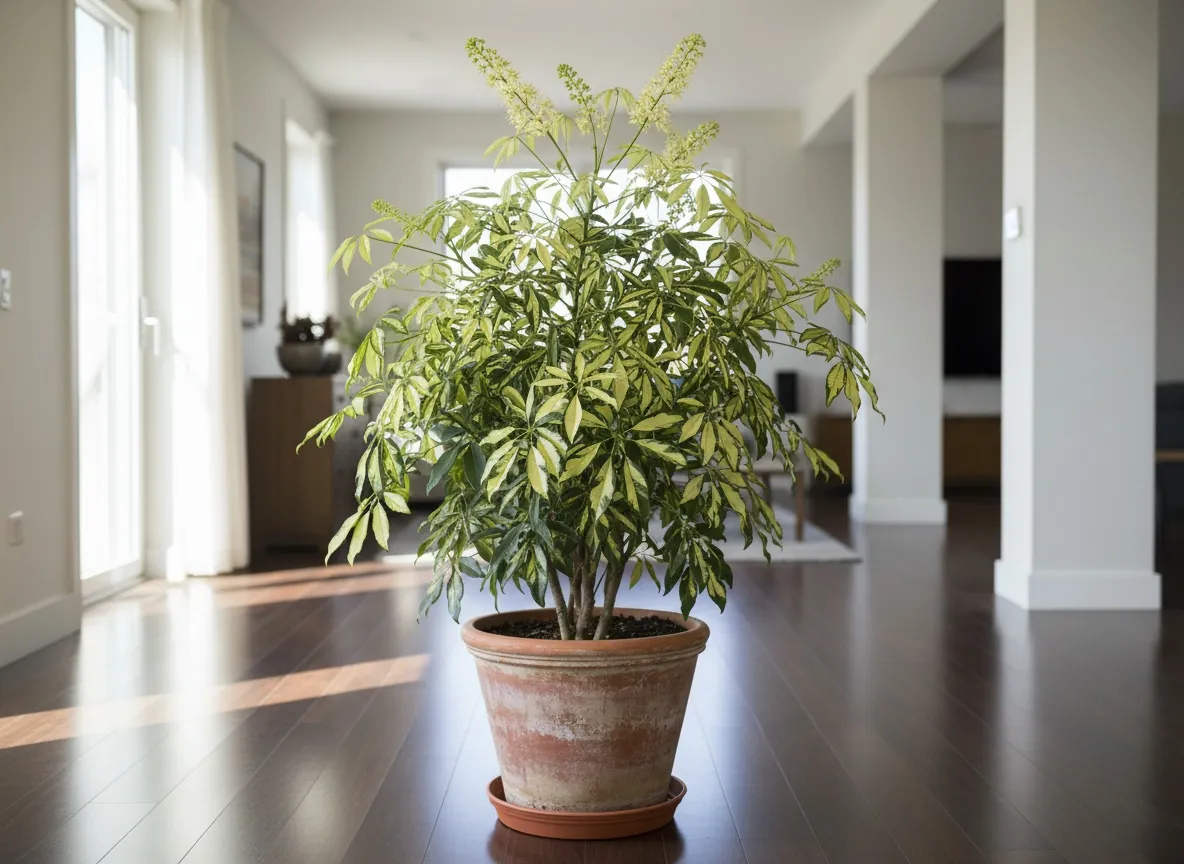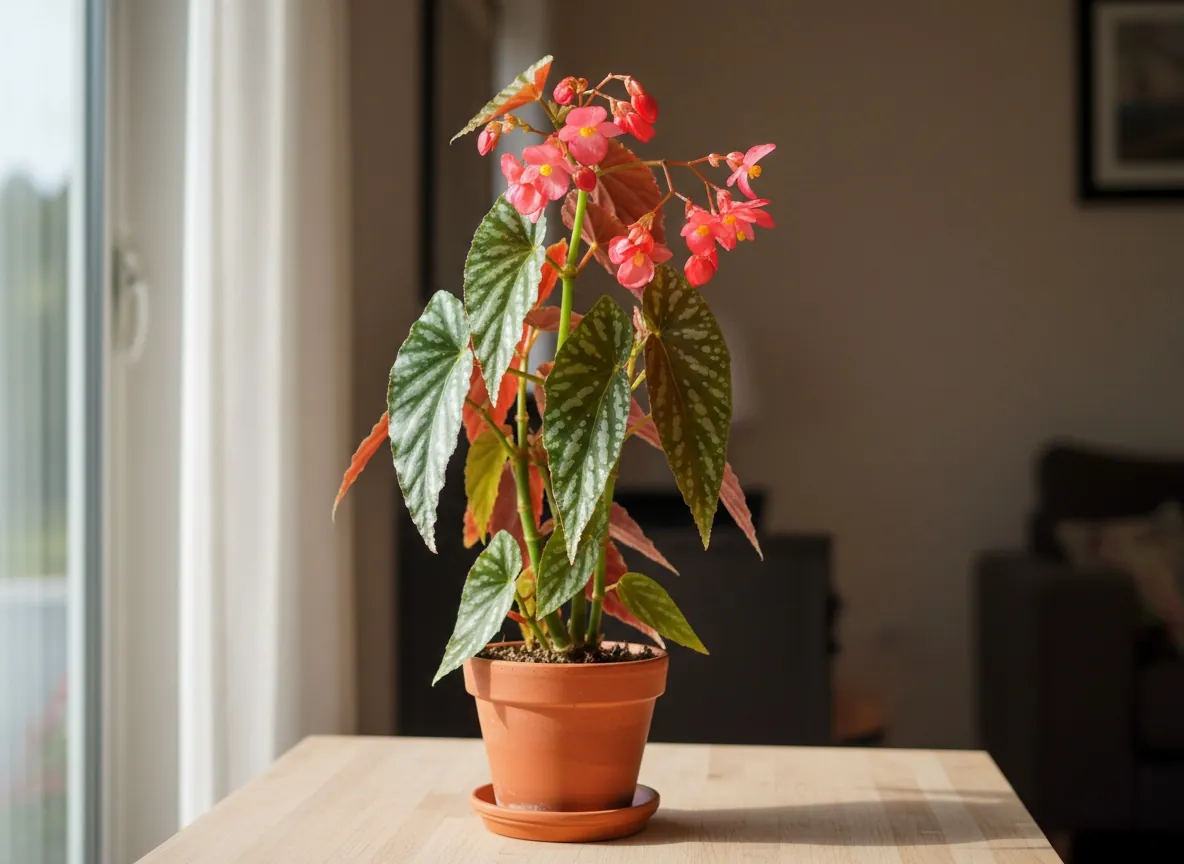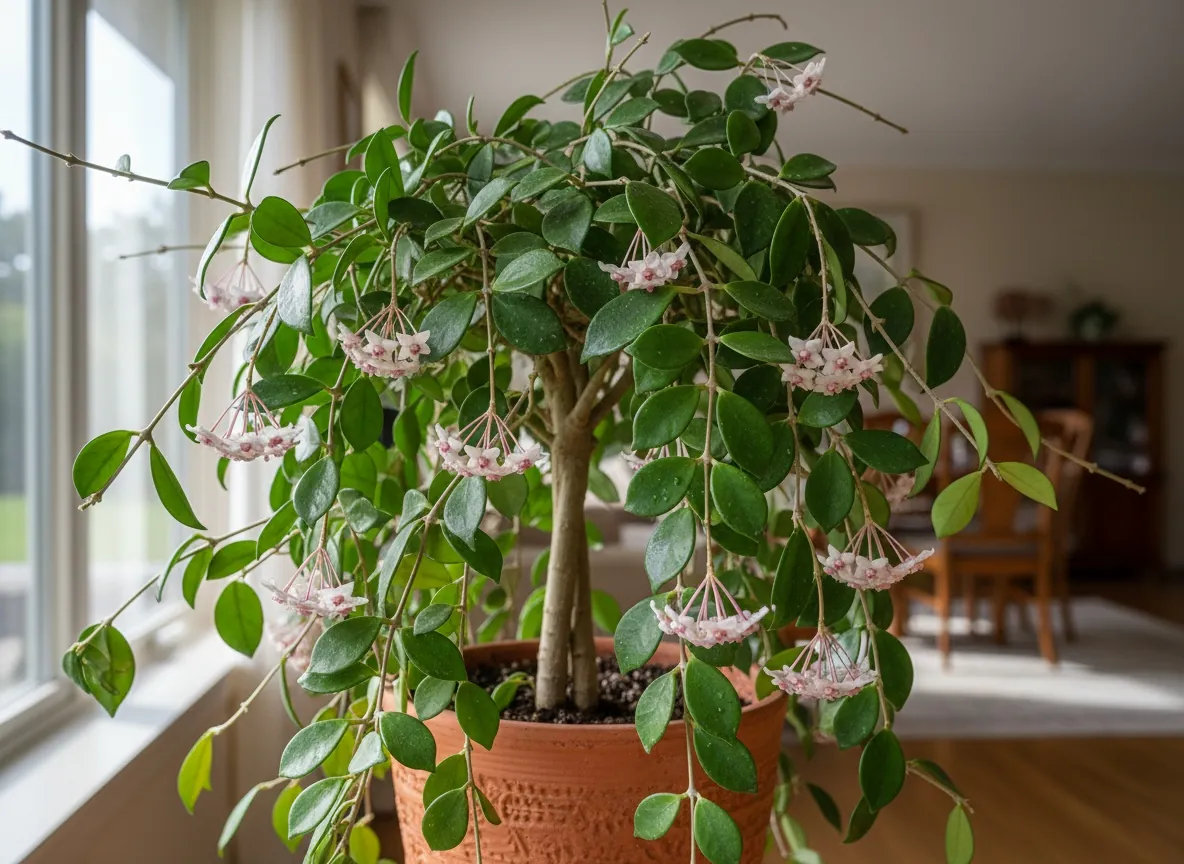
In short
- Very sensitive to being moved, draughts and sudden changes — typically drops some leaves after being relocated.
- Likes a bright spot, but ideally without prolonged, harsh southern sun.
- Water moderately, only once the top layer of the growing medium has dried out.
- Tolerates pruning and shaping well — suitable for growing as a bonsai or on a single trunk.
- Its milky sap is mildly irritating and toxic — take care when pruning and in households with pets.
Botanical data
- Family
- Moraceae (Moraceae)
- Height
- 1–3 m
- Width
- 0.6–1.5 m
- Habit
- Upright
- Growth rate
- Moderate
- Position
- Full sun, Partial shade
- Soil
- Humus-rich, Loamy
- pH reaction
- pH 6–7
- Moisture
- Moderate
- Bloom
- —
- Hardiness
- —
- Propagation
- From cuttings, By layering
Characteristics
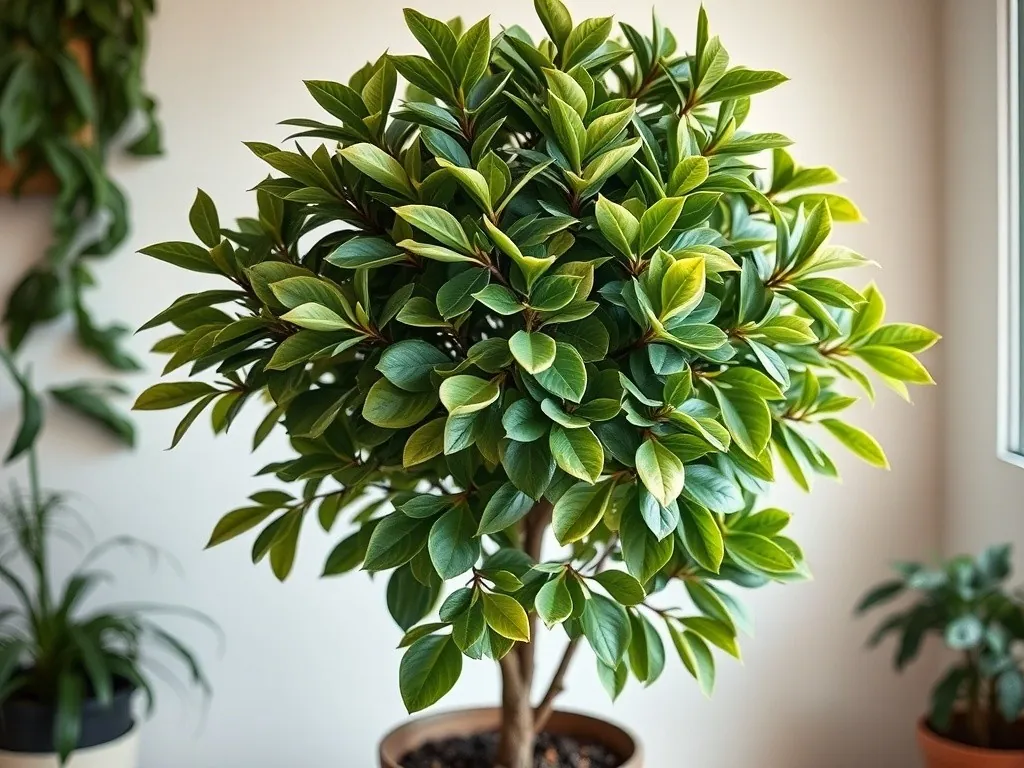
Forms an upright trunk with a dense crown of thin, drooping branches bearing glossy, elliptical leaves with a pointed tip. In pot culture it rarely flowers or fruits, being grown solely for its decorative habit and foliage.
Growing and care
Watering
Very sensitive to being moved, draughts and sudden changes in conditions — responds with heavy leaf drop. It is best to find it a permanent spot and avoid moving it unnecessarily.
Fertilizing
In winter, with weaker growth, reduce fertilising to a minimum or stop it altogether.
Planting
Universal potting compost with added perlite for better drainage; a pot only slightly larger than the previous one.
Pruning
Shorten shoots that have grown too long and unruly, shaping a compact crown; the weeping fig tolerates pruning well and can be trained on a single trunk in bonsai style.
Companion plants
Good companions
Similar light requirements (bright spot without full sun) and air humidity — they grow well together indoors.
Similar growth rate and tolerance of office conditions — a common, well-established plant pairing for interiors.
Bad companions
Zamioculcas needs very infrequent watering and long drying-out of its growing medium — under a shared watering schedule, either the weeping fig dries out or the zamioculcas rots.
The evidence level indicates whether the relationship is backed by research, observation, or gardening tradition.
Toxicity
| For whom | Level | Notes |
|---|---|---|
| Humans | Mild | The milky sap that leaks from cut stems and leaves can irritate the skin and mucous membranes. |
| Dogs | Mild | Eating the leaves can cause irritation of the mouth, drooling and vomiting. |
| Cats | Mild | Symptoms similar to those in dogs — digestive tract irritation after eating the leaves. |
History and origin
It reached Europe in the 19th century as an exotic novelty from collections of tropical plants, and from the mid-20th century onward, alongside the growth of heated interiors and office buildings, it became one of the most widely planted ornamental plants in the world.
Uses
A popular plant for homes, offices, hotels and shopping centres — as a single specimen, as a braided indoor hedge made from several plants, or trained as a shaped bonsai tree.
Trivia
- The weeping fig is sometimes called the "mood barometer" among houseplants — it very quickly signals displeasure by dropping its leaves.
- In the wild it can begin life as an epiphyte, wrapping its roots around another tree until it eventually surrounds it completely.
Frequently asked questions
Why did my weeping fig drop its leaves after moving house?
This is a typical stress response to changed conditions — different light, temperature or humidity. In a stable, bright spot, the plant usually rebuilds its foliage within a few weeks.
How often should you water a weeping fig?
Usually every 4–6 days in summer, less often in winter, every 8–12 days — always checking the moisture of the growing medium at a depth of 2–3 cm with your finger before watering again.
Can a weeping fig be shaped as a bonsai?
Yes, the species tolerates root and crown pruning as well as wiring of the branches very well, making it one of the most frequently chosen fig species for bonsai in home conditions.
Sources
- Plants of the World Online (POWO) — Ficus benjaminaDatabase (GBIF, POWO…)
- Missouri Botanical Garden Plant Finder — Ficus benjaminaInstitution / botanical garden
My note
A private note for this plant — saved in your browser.