In short
- Position: bright, but without direct sun at midday.
- Water sparingly — only after the top layer of the substrate has dried out.
- Sensitive to fluoride in tap water: brown leaf tips are the typical symptom.
- After the trunk is cut back it reshoots with several new stems — easy to rejuvenate.
- Toxic to dogs and cats (saponins) — not for a home with animals.
Botanical data
- Family
- Asparagaceae (Asparagaceae)
- Height
- 1–3 m
- Width
- 0.5–1.2 m
- Habit
- Upright
- Growth rate
- Slow
- Position
- Partial shade
- Soil
- Humus-rich, Sandy
- pH reaction
- pH 6–7
- Moisture
- Moderate
- Bloom
- —
- Hardiness
- —
- Propagation
- From cuttings, By layering
Characteristics
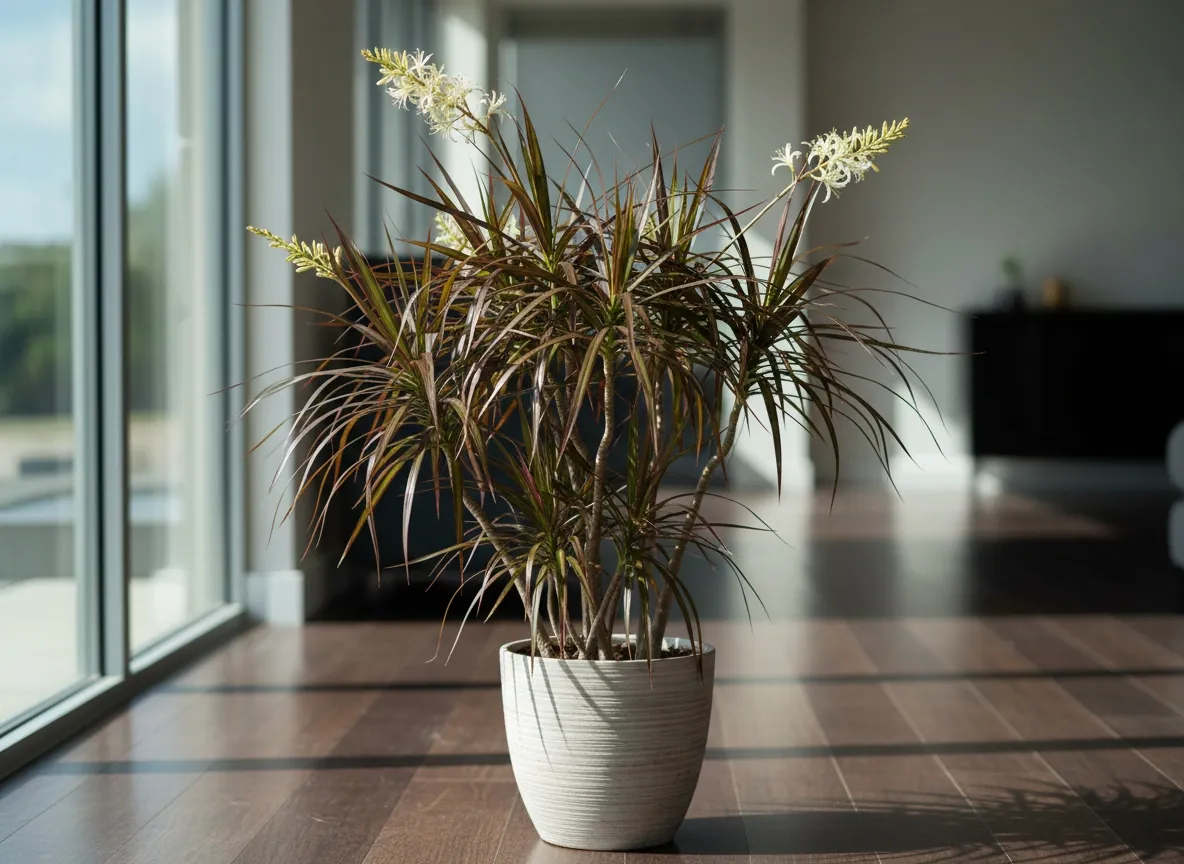
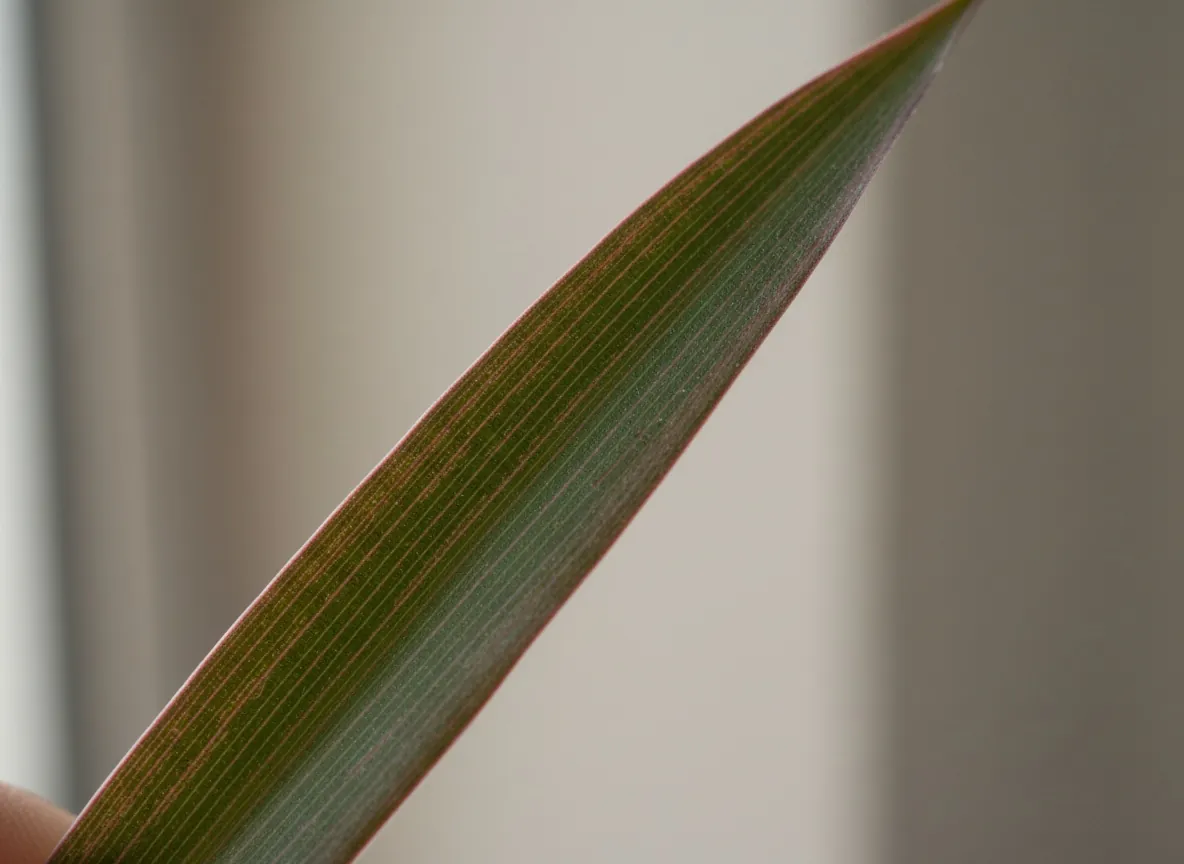
Over time it forms a thin, woody trunk topped with a rosette of leaves; the lower leaves naturally dry off and drop, exposing the characteristically ringed stem. The leaves are narrow, stiff, 30–60 cm long, dark green with a distinct red or maroon margin. Cultivars such as 'Tricolor' or 'Bicolor' have additional cream and pink stripes.
Growing and care
Watering
Water only after the top 3–4 cm of the substrate has dried out. Sensitive to fluoride and salts from tap water — it responds with browning leaf tips, so stood, rain or distilled water is best.
Fertilizing
Half the dose recommended by the manufacturer — the dragon tree grows slowly and the substrate is easily salinated. Do not fertilise in winter.
Planting
A well-drained substrate for green plants with added perlite or coarse sand; the pot must have a drainage hole and a drainage layer.
Pruning
Shorten the stem at any height with a sharp, clean tool — below the cut the plant usually puts out 2–3 new branches, and the severed top can be rooted.
Companion plants
Good companions
Both tolerate infrequent watering and diffused light — a maintenance-free pair for a bright corner of the room.
A similar watering rhythm and tolerance of dry indoor air; both have upright habits and complement each other nicely.
The trailing shoots of the pothos cover the bare trunk of the dragon tree, and the light requirements of both plants are almost identical.
Bad companions
They need full, direct sun, in which the leaves of the dragon tree fade and scorch at the edges.
The calathea needs a constantly moist substrate, and under such a watering regime the dragon tree rots at the roots.
The evidence level indicates whether the relationship is backed by research, observation, or gardening tradition.
Toxicity
| For whom | Level | Notes |
|---|---|---|
| Humans | Mild | Contains saponins; eating the leaves may cause irritation of the mouth and stomach complaints, but serious poisonings are rare. |
| Dogs | Moderate | Saponins cause vomiting, drooling and loss of appetite. |
| Cats | Moderate | In cats, dilated pupils and lethargy are described alongside vomiting — the dragon tree is among the plants clearly inadvisable in a home with a cat. |
History and origin
The species was described from Madagascar, where it belongs to the endemic flora of dry scrub. It reached European homes in the 20th century and quickly became one of the staple office plants — mainly because it forgives irregular watering and the dry air of central heating. Modern molecular research has folded the former genus Pleomele and some of the sansevierias into the genus Dracaena.
Uses
For bright living rooms and offices, as a specimen plant in a tall container giving the interior a vertical line. It looks good combined with low plants covering the surface of the pot.
Trivia
- The rings on the trunk are scars left by fallen leaves — they allow the plant's growth history to be read approximately.
- The name “dragon tree” refers to the related dragon's blood tree (Dracaena draco), from which the red resin known as dragon's blood was obtained.
Frequently asked questions
Why does the dragon tree have brown, dry leaf tips?
Most often this is a reaction to fluoride and salts in tap water, to which the dragon tree is exceptionally sensitive. Watering with stood, rain or distilled water and limiting fertilisation helps. A second cause is very dry air near a radiator.
The dragon tree is losing its lower leaves — is this a disease?
Usually not. The gradual drying and shedding of the lowest leaves is natural — this is how the characteristic trunk with a rosette at the top is formed. Only mass yellowing of leaves throughout the crown is worrying, as it points to overwatering.
How do you shorten a dragon tree that has grown too tall?
In spring, cut through the trunk at the chosen height with a sharp, clean tool. Below the cut the plant will usually put out two or three new shoots, and the severed top can be rooted in water or moist substrate as a new plant.
Sources
- Plants of the World Online (POWO)Database (GBIF, POWO…)
- Missouri Botanical Garden — Dracaena marginataInstitution / botanical garden
My note
A private note for this plant — saved in your browser.