In short
- Very strongly nectar-rich — in summer a carpet of thyme literally hums with bees and bumblebees.
- Tolerates light treading: suitable between paving slabs and for a thyme lawn.
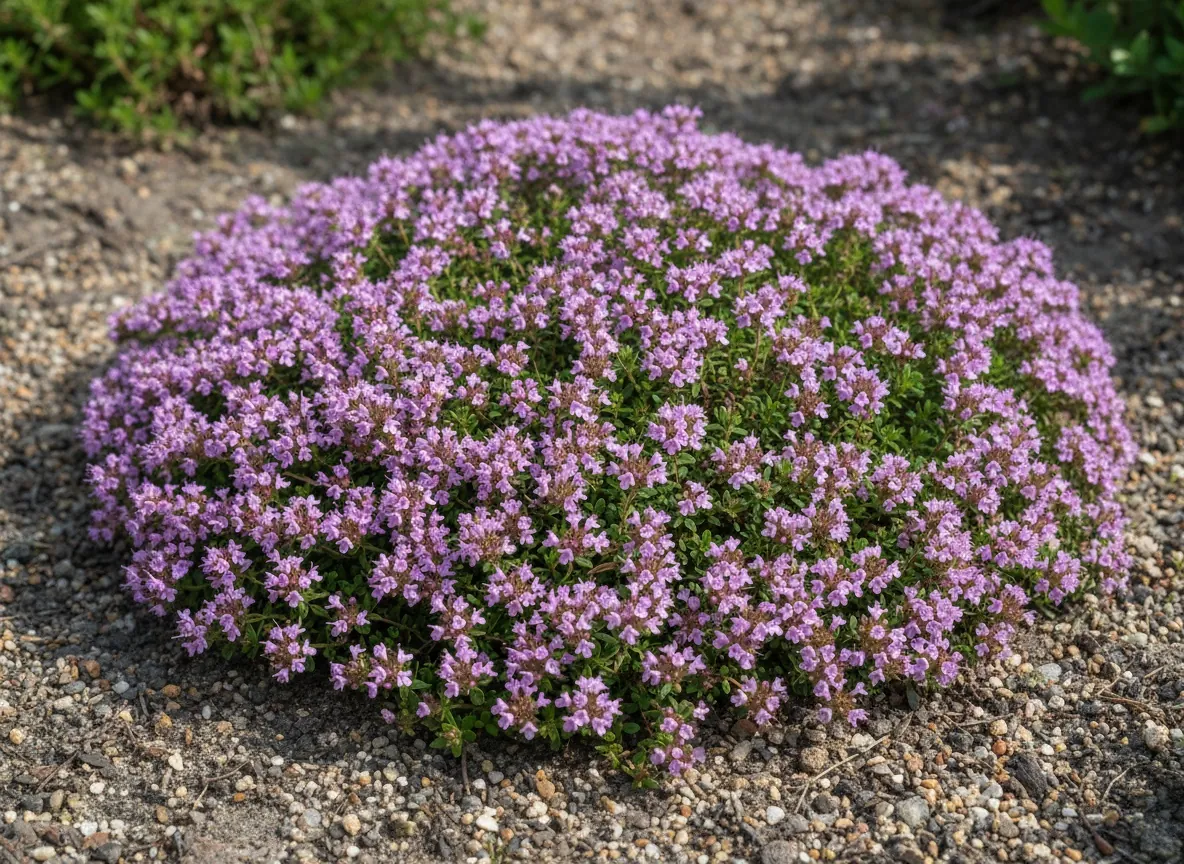
- Evergreen and creeping, a mere 3–10 cm high — a classic ground-cover plant for the rock garden.
- Requires full sun and lean, dry, well-drained soil; fertilising harms it.
- Thyme herb (Serpylli herba) is a herbal raw material with an expectorant action.
- Trim by a third after flowering — otherwise the carpet becomes woody over time and goes bald in the middle.
Botanical data
- Family
- Lamiaceae (Lamiaceae)
- Height
- 0.03–0.1 m
- Width
- 0.3–0.5 m
- Habit
- Creeping
- Growth rate
- Moderate
- Position
- Full sun
- Soil
- Sandy, Chalky
- pH reaction
- pH 6–8
- Moisture
- Dry
- Bloom
- June–September
- Hardiness
- USDA 4a–9a
- Propagation
- From cuttings, By layering, By division, From seed
Characteristics
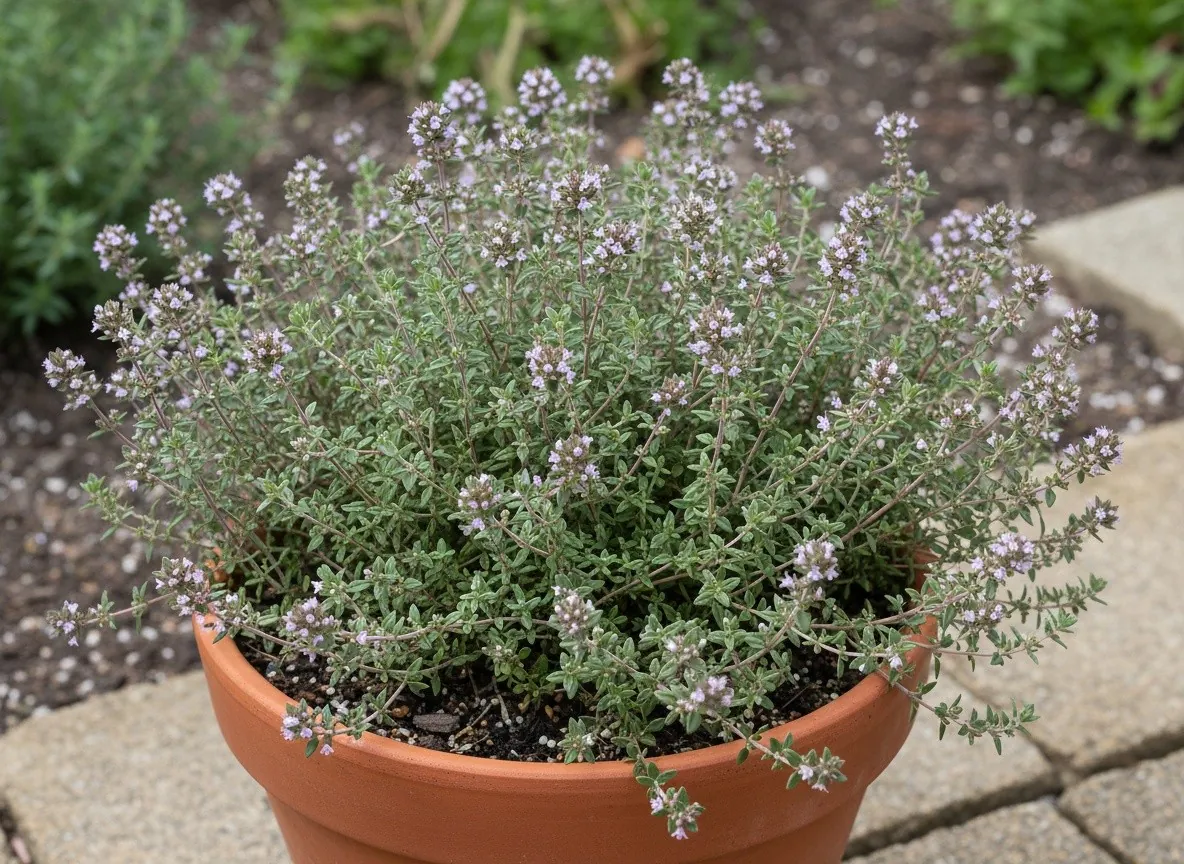
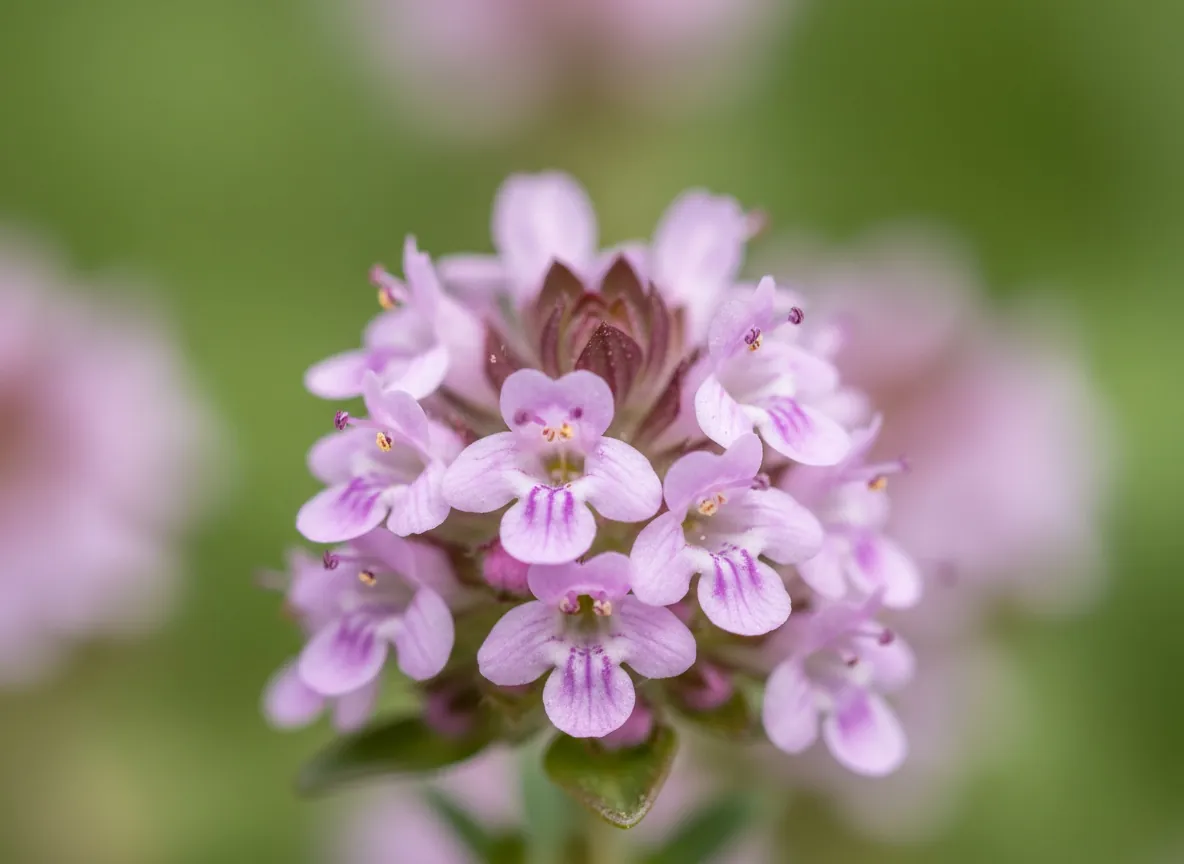
It forms a flat, dense carpet of thin, creeping and rooting shoots, from which short, flowering branches rise. The leaves are very small, elliptical, dark green, leathery and densely covered with oil glands — crushed, they smell intensely, spicily and sharply, though somewhat more mildly than common thyme. The small, two-lipped flowers in shades of pink and violet are clustered into globular heads at the ends of the shoots and appear from June right through to September. With age the centre of the clump becomes woody and bald if the plant is not cut back after flowering.
Growing and care
Watering
An established carpet gets through drought without any watering at all — this is a plant of dunes and sandy grassland. Watered and fertilised it grows loosely, smells more weakly and dies out more quickly in winter. In a container, water only once the substrate has dried out completely.
Fertilizing
Fertilising harms thyme: on fertile soil it grows rank, the carpet loosens and it loses its aroma, because the proportion of oils in the herb falls. The only thing sometimes needed is raising the pH on soil that is too acid.
Planting
A lean and well-drained substrate — on garden soil it is essential to mix in coarse sand or gravel, and to top-dress the surface layer with fine grit. Grit beneath the shoots keeps the crown dry and markedly improves overwintering. Between paving slabs, plant in joints filled with a mixture of sand and a little compost.
Pruning
Cut or trim the carpet by roughly one third, just above the leafy part of the shoots. The operation thickens the carpet and delays it becoming woody; the cut shoots are ready for drying straight away.
Companion plants
Good companions
A textbook rock garden duo: the same requirements — full sun, lean and well-drained substrate, no watering — and at the same time a completely different texture, a fleshy rosette beside a small-leaved carpet.
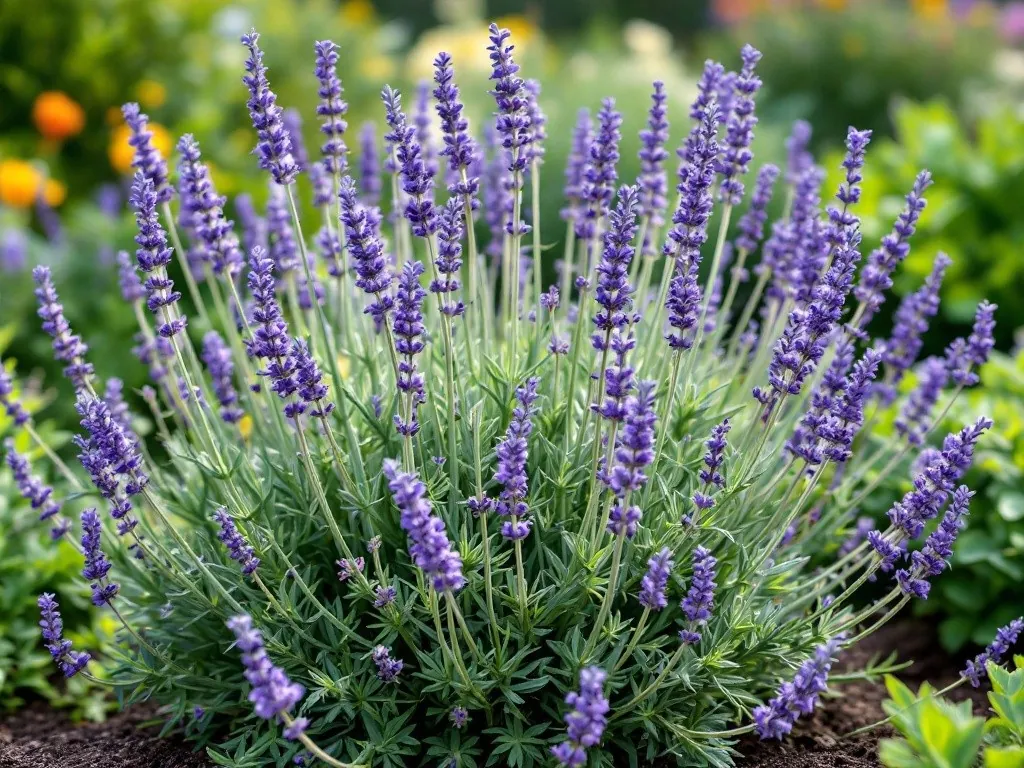
Mediterranean classics: both tolerate drought and require well-drained and rather alkaline soil, both are strongly nectar-rich and aromatic — and the thyme fills the space at the lavender's feet.
Plants of the same dry grassland, but spread out in time: the pasque flower blooms in March and April, the thyme from June — together they keep the rock garden in flower for half the year.
Thyme at the edge of a strawberry bed draws in bees and bumblebees, on which proper pollination depends, while also taking up space that weeds would occupy, without competing deeply for water.
Bad companions
The grass grows through the thyme carpet from below and cannot be weeded out of it without destroying the carpet — this is the most common reason why a thyme lawn loses out after a few seasons.
They require regular watering and humus-rich, moist soil — for thyme this means rotting of the shoots at ground level and losses in winter.
The evidence level indicates whether the relationship is backed by research, observation, or gardening tradition.
Toxicity
| For whom | Level | Notes |
|---|---|---|
| Humans | None | An edible and culinary plant; thyme herb is a herbal raw material. The exception is the concentrated essential oil, which irritates the skin and mucous membranes and should not be used internally without dilution. |
| Dogs | None | — |
| Cats | None | — |
History and origin
Since the Middle Ages thyme has been a common and cheap herb in Europe — it was dried, burned as incense, put into straw mattresses and used for coughs. Thyme herb still appears in pharmacopoeias today as a raw material with an expectorant and antibacterial action, owed above all to the thymol and carvacrol contained in its oil; it is milder and less concentrated than the herb of common thyme, which is why it is sometimes recommended for children. The Polish name “macierzanka” is usually derived from the word “macierz” — mother, which is connected with the herb's former use in women's medicine and with its role in rituals.
Uses
For rock gardens, on dry slopes and walls, between paving slabs and steps, on green roofs and as a low thyme lawn in places with moderate traffic. Excellent in containers, troughs and stone bowls on a terrace or balcony facing south. In a productive garden it is worth planting it beside crops that need pollination, and drying the herb cut after flowering for tea and seasoning.
Trivia
- Thyme is crucial to the survival of the large blue butterfly. Its caterpillars begin life on thyme, then drop to the ground and secrete substances mimicking the scent of ant larvae of the genus Myrmica — the ants carry them into the nest, where the caterpillars calmly eat the ant brood until they pupate. All it takes is for thyme to disappear from the grassland, and the butterfly disappears too.
- Thyme honey is among the most highly prized in the world — Greek honey from Hymettus, produced mainly from the flowers of wild and common thymes, was already a luxury commodity in ancient Athens.
- It is one of the few ornamental plants that treading does not harm but actually benefits: crushed shoots release their oil, so a path planted with thyme is fragrant at every step.
Frequently asked questions
Can you walk on thyme — is it suitable as a lawn?
Yes, it tolerates light treading and has for years been planted between slabs, along paths and as a low thyme lawn. It has two limitations, however: it will not withstand the intensive traffic that a grass lawn takes, and it does not tolerate competition from running grasses, which grow through the carpet and cannot be weeded out of it. It works best in sunny and dry places walked on from time to time rather than every day. In return you get a surface that is fragrant at every step and flowers for the bees.
Why has my thyme gone bald in the middle of the clump?
This is the natural ageing of the plant: the lower parts of the shoots become woody, lose their leaves and stop regrowing, and the carpet takes on a ring shape. This is prevented by trimming by about a third right after flowering — but only in the leafy part, because thyme regrows very poorly from old wood, exactly like lavender. A clump that has already gone bald is most easily rejuvenated: root a few cuttings from young shoots, or heap soil onto the creeping shoots so that they root, and remove the old centre. The carpet itself is worth renewing roughly every 4–5 years.
How does breckland thyme differ from common thyme?
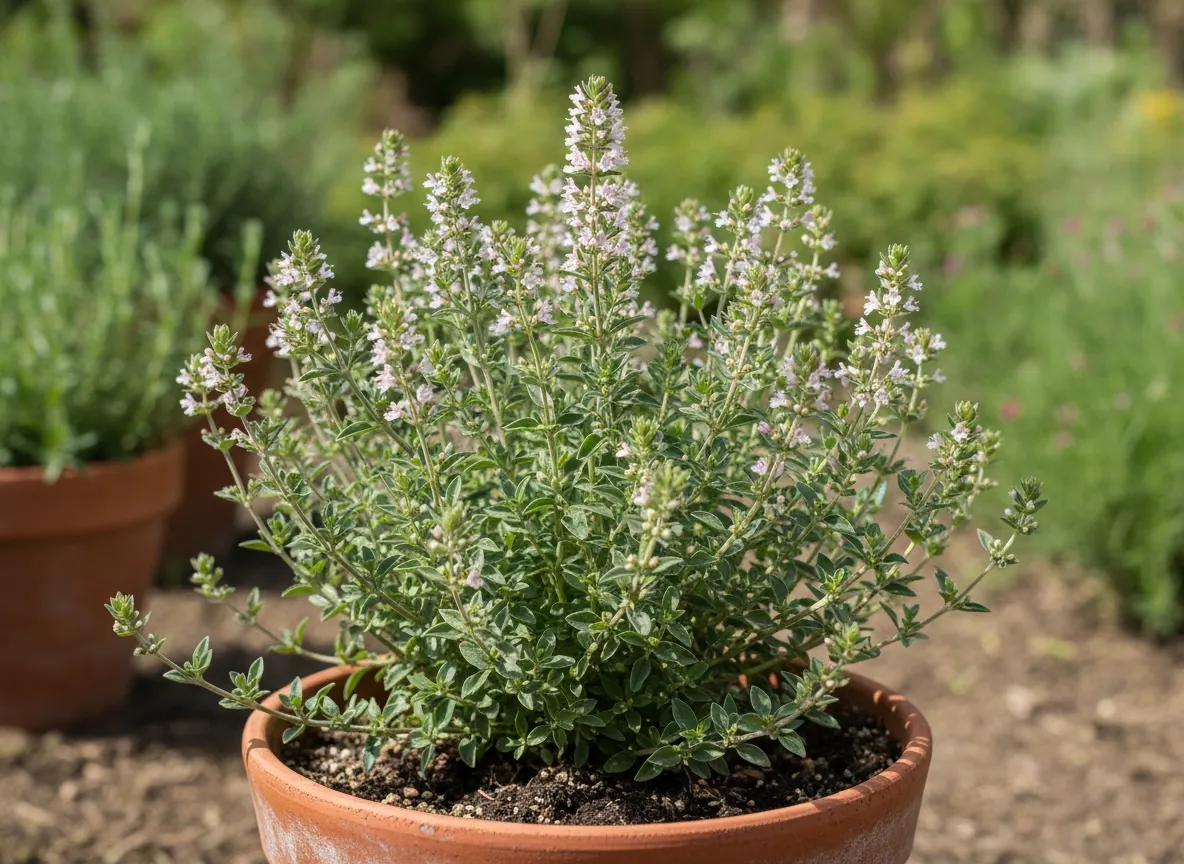
They are close relatives from one genus, but with a different habit and use. Breckland thyme is native to Poland, creeps along the ground and forms a carpet a few centimetres high — it is planted mainly as a ground cover and nectar plant. Common thyme comes from the Mediterranean region, grows as a low, upright subshrub and has a stronger, more concentrated aroma, which makes it the better culinary seasoning. Breckland thyme herb is milder and more often used in cough mixtures, including for children.
Sources
- Plants of the World Online (POWO) — Thymus serpyllumDatabase (GBIF, POWO…)
- Missouri Botanical Garden — Plant Finder: Thymus serpyllumInstitution / botanical garden
My note
A private note for this plant — saved in your browser.