In short
- Site: sun or partial shade, fertile, loamy-humus soil.
- Flowers very early (February–March), before the leaves emerge — the pollen is spread by wind.
- The fruits (hazelnuts) ripen in September–October.
- Frost-hardy, tolerates the Polish continental climate well.
- Requires annual thinning of the old shoots for good fruiting.
- Readily visited by squirrels and birds feeding on the nuts.
Botanical data
- Family
- Betulaceae (Betulaceae)
- Height
- 3–6 m
- Width
- 3–5 m
- Habit
- Spreading
- Growth rate
- Moderate
- Position
- Full sun, Partial shade
- Soil
- Loamy, Humus-rich
- pH reaction
- pH 6–7.5
- Moisture
- Moderate
- Bloom
- February–March
- Hardiness
- USDA 4b–8a
- Propagation
- By layering, From cuttings, From seed
Characteristics
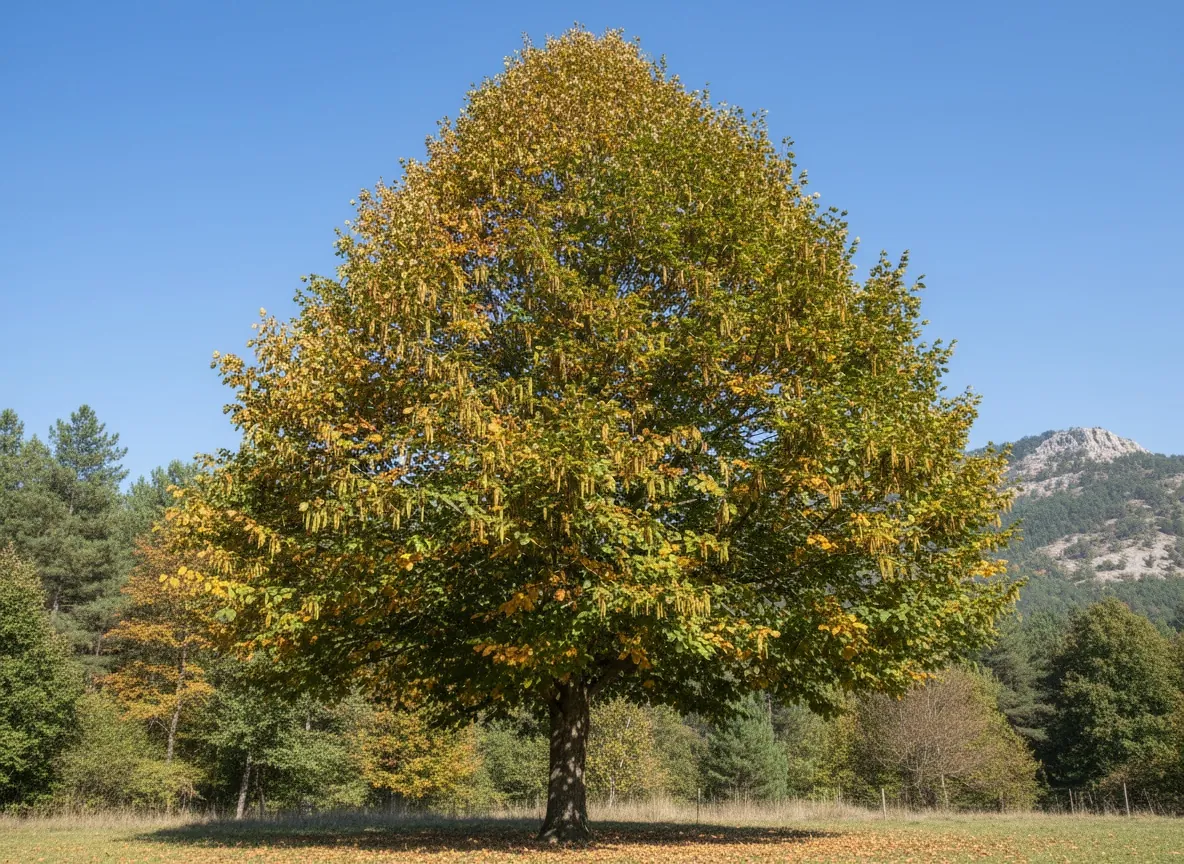
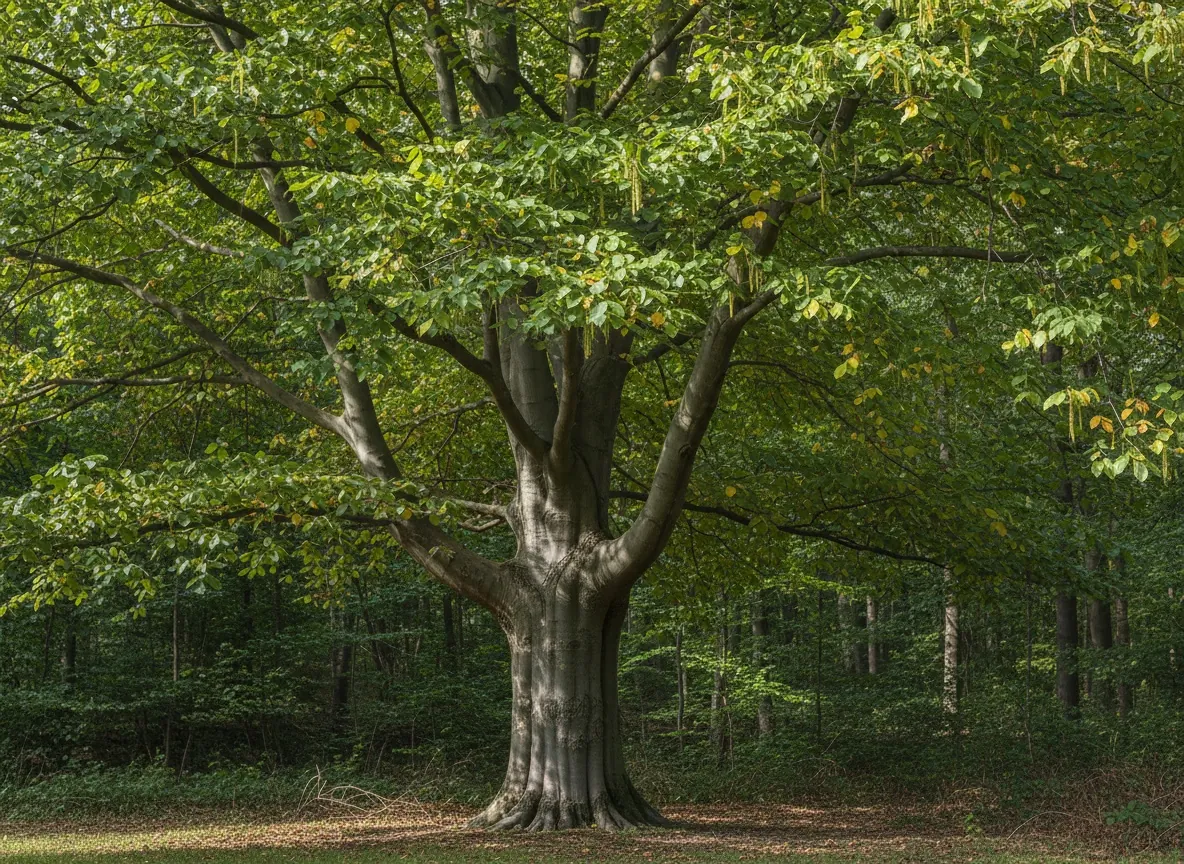
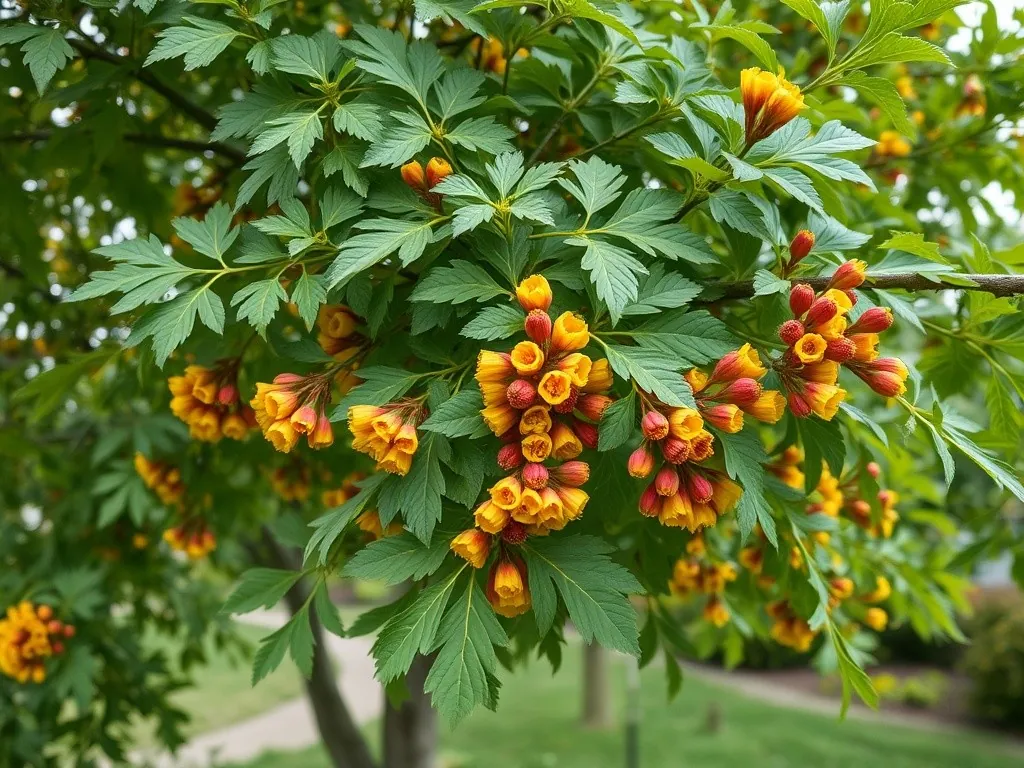
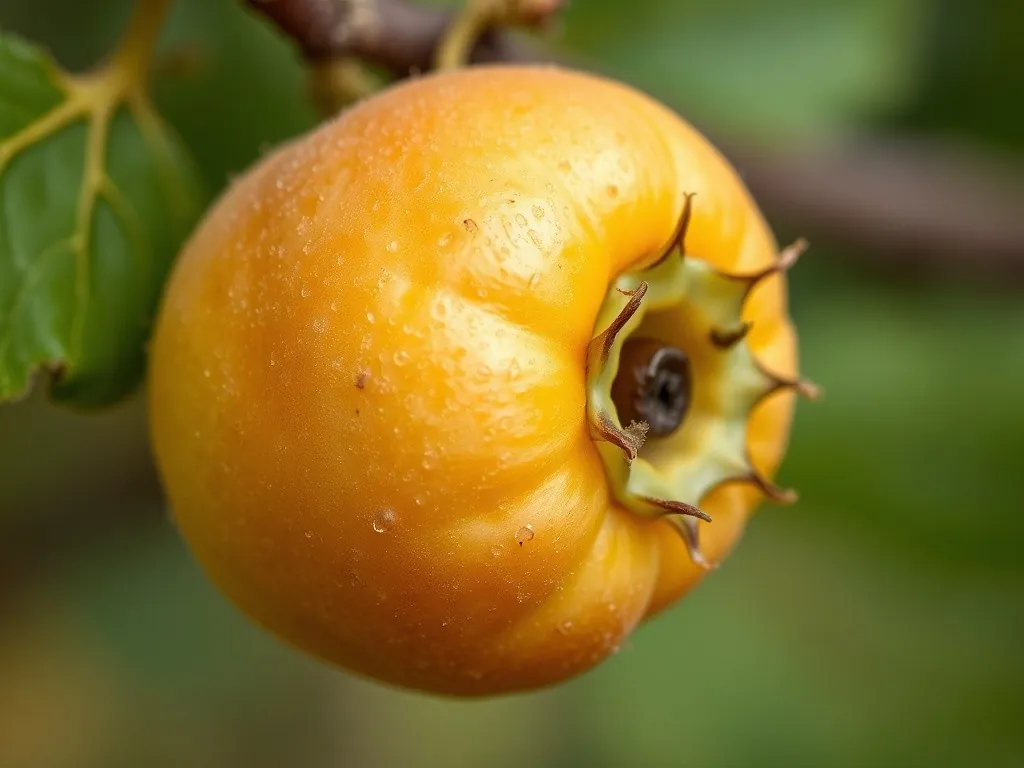
It forms a dense, multi-stemmed shrub with a broad, spreading crown. The leaves are roundish, slightly heart-shaped at the base, with a toothed margin. The male flowers are gathered into characteristic, hanging catkins visible as early as winter; the female flowers are small and inconspicuous. The fruit is a hard nut surrounded by a leafy husk (involucre).
Growing and care
Watering
Water young shrubs regularly in the first 2 years after planting. Mature plants tolerate short dry spells but dislike permanently waterlogged soil.
Fertilizing
Moderate nitrogen doses in spring support shoot growth; excess reduces fruiting.
Planting
Dig a wide planting hole, mix the soil with compost; on heavy soils improve the structure with sand or gravel.
Pruning
Each year remove a few of the oldest shoots at ground level and thin out the interior of the shrub — this improves fruiting and light penetration.
Companion plants
Good companions
Similar site requirements and comparable growth rate — a proven combination in mixed hedges.
They tolerate the partial shade under the hazel canopy well and do not compete strongly for water given adequate spacing.
Both species form waterside thickets valuable to birds and complement each other well in height.
Bad companions
The dense crown and extensive, shallow root system of the hazel cast strong shade and compete for water, harming sun-loving species.
Hazel prefers neutral soil, blueberry requires strongly acidic soil — the conflicting soil requirements make growing them together in one spot difficult.
The evidence level indicates whether the relationship is backed by research, observation, or gardening tradition.
Toxicity
| For whom | Level | Notes |
|---|---|---|
| Humans | None | The nuts are fully edible and nutritionally prized; they are one of the most common food allergens — people allergic to hazelnuts should avoid them. |
| Dogs | None | — |
| Cats | None | — |
History and origin
The hazel has accompanied humans for millennia — traces of hazelnut gathering are found as early as Mesolithic sites. In old Poland, fences were woven and baskets made from the pliable shoots, and the nuts were an important part of the diet in autumn and winter. Today it is cultivated both as a fruit shrub and as a component of hedges and plantings for wildlife.
Uses
For orchards, informal hedges, field copses and plantings that support birds and small mammals. It also works well as ground cover on slopes and field boundaries.
Trivia
- Hazel flowers so early that its pollen is sometimes one of the first signs of the allergy season.
- The cultivar with twisted, corkscrew-like shoots (Corylus avellana 'Contorta') is a popular ornamental plant regardless of fruiting, especially in winter.
Frequently asked questions
When does hazel begin to fruit?
Usually the first nuts appear 4–5 years after planting, and the shrub reaches full fruiting after 8–10 years.
Are two shrubs needed for fruiting?
Hazel is self-fertile to a small degree, but yields much more abundantly when a second cultivar grows nearby — the male and female flowers on the same shrub usually mature at different times.
Why does my hazel not fruit despite abundant flowering?
The most common causes are frosts during the flowering period (February–March), which destroy the female flowers, and the absence of a second pollinating cultivar nearby.
Sources
- Plants of the World Online (POWO) — Corylus avellanaDatabase (GBIF, POWO…)
- RHS — Corylus avellanaInstitution / botanical garden
My note
A private note for this plant — saved in your browser.